Space Litter: When does the garbage pick up truck come?

Space Litter: When does the garbage pick up truck come?

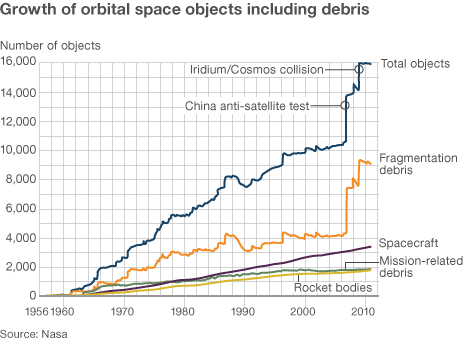
It’s getting crowded up there: 15,000 pieces of junk plus 1000 active satellites, and counting.

• Sources include defunct satellites, rocket stages used to place satellites in orbit, bolts and other mission-related debris, and fragments from the intentional or accidental breakup of large objects. Also, the rare failed spacecraft that has stalled in orbit, such as the Russian Phobos–Grunt probe that just crashed to earth.

• The single largest debris generating event was in 2007, when China destroyed its polar orbiting satellite with a missile, resulting in 3000 trackable objects and 150,000 fragments of >1 cm size.The accidental collision of the Russian Cosmos 2251 and US Iridium 33 satellites in 2009 was responsible for another jump in space debris in 2009. Together, these two events effectively wiped out all space debris mitigation efforts until then (see graph, image 2).

• The risk of collision and damage at low earth orbit (<2000 km) is now at a few percent, comparable to other types of satellite failure like electrical defects. The Kessler syndrome describes a potential domino effect or feedback runaway (http://en.wikipedia.org/wiki/Kessler_syndrome). Space elevators, listed in the recent BBC poll as one of the top 20 predictions for the next 100 years, would almost certainly intersect with this debris.

Read more:http://blogs.scientificamerican.com/guest-blog/2012/01/14/where-did-all-that-space-debris-come-from/

Posted in Rajini Rao | 40 Comments

Title

Posted in Rajini Rao | Leave a comment

2012-01-17

2012-01-17

Posted in Rajini Rao | 1 Comment

2012-01-17

2012-01-17

Posted in Rajini Rao | 7 Comments

They should make a movie out of this!

They should make a movie out of this!

Originally shared by Derya Unutmaz

Beautifully choreographed symphony of cells…

Posted in Rajini Rao | 14 Comments

Happy Birthday, Dr. King: We are All Children of Africa.

Happy Birthday, Dr. King: We are All Children of Africa.

“Through our scientific and technological genius we’ve made of this world a neighborhood. And now through our moral and ethical commitment we must make of it a brotherhood. We must all learn to live together as brothers–or we will all perish together as fools. This is the great issue facing us today. No individual can live alone; no nation can live alone. We are tied together.”

(From the Commencement Address for Oberlin College, Ohio, ‘Remaining Awake Through a Great Revolution’ Dr. Martin Luther King, Jr. ; Jun 1965)

The video is a musical celebration of humanity, its origins and challenges. Featuring Jacob Bronowski, Alice Roberts, Carolyn Porco, Jane Goodall, Robert Sapolsky, Neil deGrasse Tyson and David Attenborough.

Posted in Rajini Rao | 10 Comments

Two to Tango: The Calcium Pump

Two to Tango: The Calcium Pump

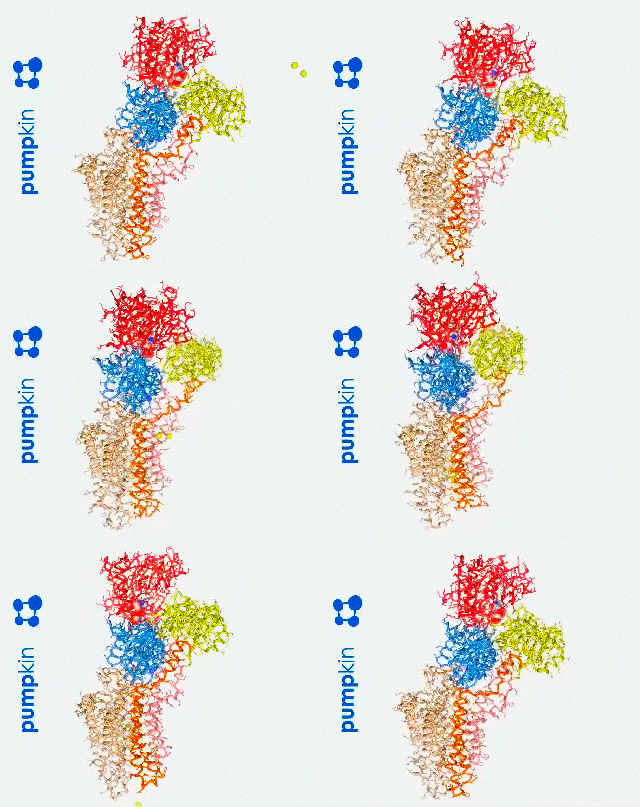
A molecular dance: Powered by ATP (near the red domain), calcium ions (yellow spheres) flow through this transport protein to generate huge chemical gradients, 10,000 times more concentrated on one side of the membrane than the other. As a result, when a signal arrives at the cell membrane, ion channels open and calcium ions can rush down their chemical gradient in waves (e.g., Intracellular Calcium Ion Flux of Tissue Engineered Cardiac Model). Calcium binds to sensor proteins which then signal a variety of events, ranging from muscle contraction, gene regulation, secretion of insulin, release of neurotransmitter, cell division and movement.

History: In 1883, Sidney Ringer was studying the contraction of isolated rat hearts suspended in a solution made from London tap water. The heart beat perfectly. When he replaced tap water with distilled water, it stopped. Ringer had serendipitously discovered that calcium in the ‘hard’ water was a critical messenger for muscle contraction, in a way that had nothing to do with its role in bones and teeth.

Family relations: The first ion pump of this type (P-type ATPase) was the sodium pump, discovered by Danish scientist Jens Skou in 1957, for which he won the Nobel prize. There are 36 variants in the human genome and they pump different ions such as calcium, protons, potassium and copper. They share a common mechanism in which the phosphate group of ATP becomes chemically attached to the pump protein in each cycle, transiently, to form a phosphoenzyme intermediate (hence the term, P-type).

Pumps in Medicine: The sodium pump is a target for cardiac glycosides (derived from foxgloves and milkweed) used in treating heart failure. The gastric proton pump is the target of blockbuster drugs used for controlling stomach acidity. (See: “Proton Pump Inhibitors” PPI animation for Perrigo Company) Calcium pumps are being tested in gene therapy and as targets for cancer.

Google+ Collaborations: ★ Many thanks to Kevin Staff ★ who generously donated his time to make this animated gif from this molecular simulation: http://www.pumpkin.au.dk/research/download-gallery/

♫ Konstantin Makov suggests that you watch the Calcium Pump dance while listening to Libertango, because the ATPase reminds him of a couple dancing while being pierced with the arrow of amore (calcium!). Thank you Konstantin for the charming suggestion! ♫ Astor Piazzolla – Libertango

For #ScienceSunday hosted by Allison Sekuler and Robby Bowles .

Posted in Rajini Rao | Tagged | 21 Comments

Singer Natalie Merchant brings 19th century poetry back to life with her astonishingly lovely voice.

Originally shared by GOOD MUSIC

Singer Natalie Merchant brings 19th century poetry back to life with her astonishingly lovely voice. Here she is with Nursery Rhyme of Innocence and Experience written by Charles Causley (1917 – 2003).

I had a silver penny

And an apricot tree

And I said to the sailor

On the white quay

‘Sailor O sailor

Will you bring me

If I give you my penny

And my apricot tree

A fez from Algeria

An Arab drum to beat

A little gilt sword

And a parakeet?’

http://www.nataliemerchant.com/r/leave-your-sleep/lyrics/nursery-rhyme-of-innocence-and-experience

Posted in Rajini Rao | 12 Comments

Free fall through the Brain: Science, Art and Music!

Free fall through the Brain: Science, Art and Music!

Recommend watching in full screen mode.

Array tomography from the Stanford lab of Stephen J. Smith (http://smithlab.stanford.edu/Smithlab/Smithlab_Home.html)

Original musical score composed and performed by Catherine Rose Smith (http://web.me.com/catherine.rose.smith).

Reference: Micheva, K.D., Busse, B.L., Weiler, N.C., O’Rourke, N., Smith, S.J (2010) Single-synapse analysis of a diverse synapse population: Proteomic imaging methods and markers. Neuron 68:639-653.

Green: Thy1-H-YFP (Layer 5B Neuron Subset); Red: Synapsin I (Synapses); Blue: Tubulin (Dendrite, Axon Cores)

Posted in Rajini Rao | 2 Comments

A House is a House for Me.

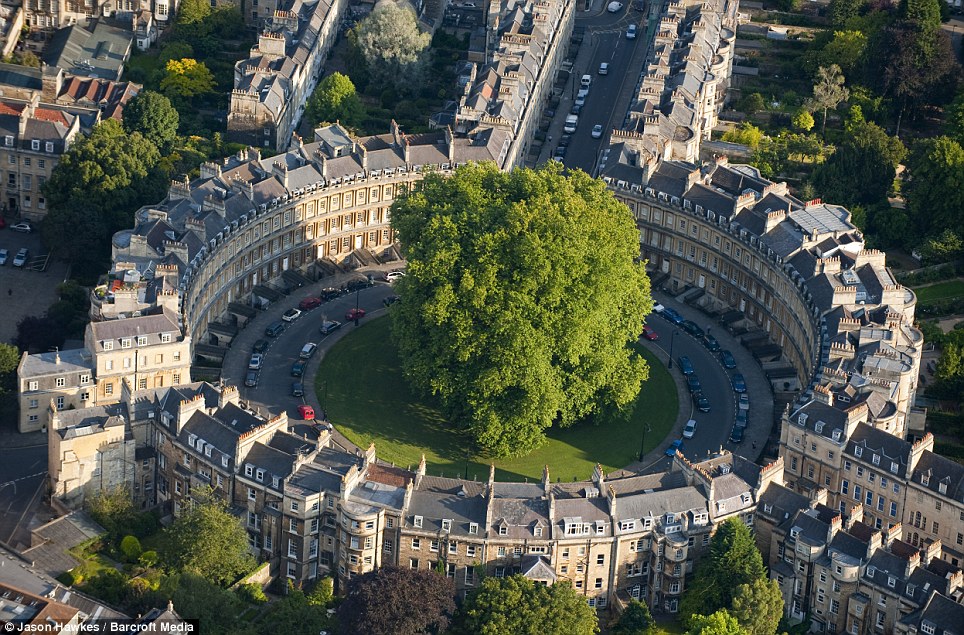
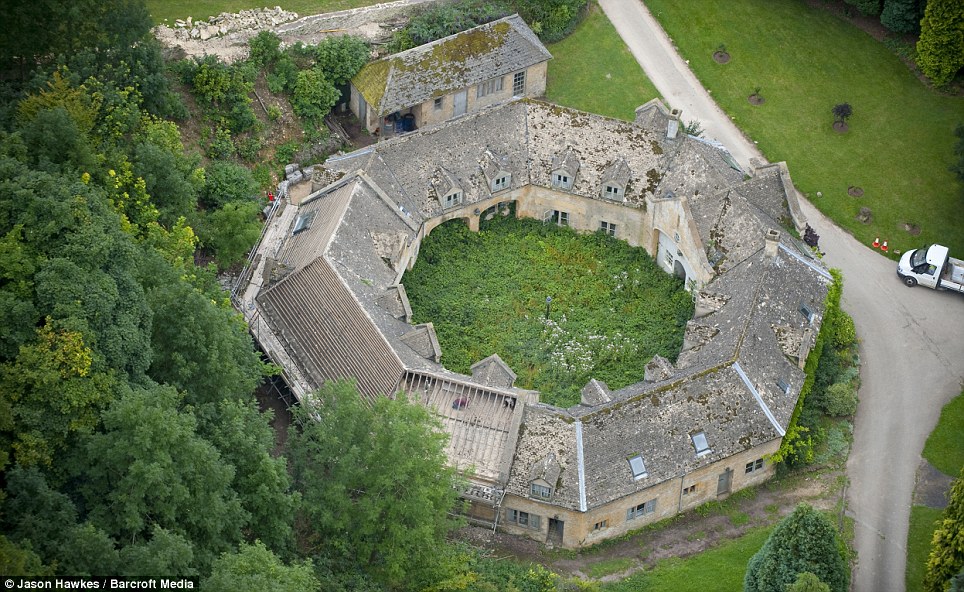
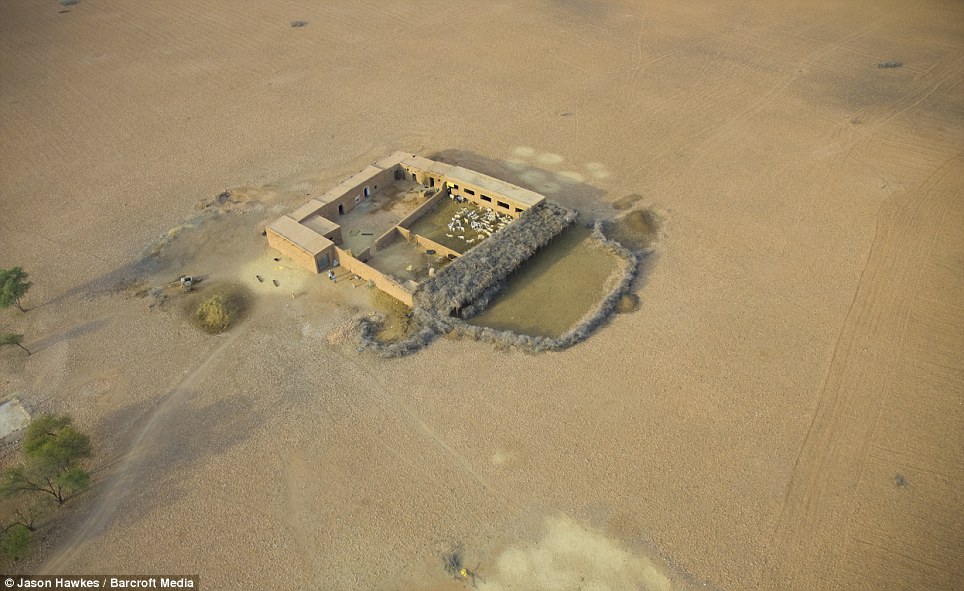
A House is a House for Me. Aerial photographs of houses, by Jason Hawkes, reminded me of the charming book-length poem by Mary Ann Hoberman that I used to read aloud for my kids many years ago:

A hill is a house for an ant, an ant.

A hive is a house for a bee.

A hole is a house for a mole or a mouse

And a house is a house for me!

The poem becomes whimsical:

A box is a house for a teabag.

A teapot’s a house for some tea.

If you pour me a cup and I drink it all up,

Then the teahouse will turn into me!

The author admits:

Perhaps I have started farfetching…

Perhaps I am stretching things some…

A mirror’s a house for reflections…

A throat is a house for a hum…

Can’t disagree with her conclusion, though:

A flower’s at home in a garden

A donkey’s at home in a stall

Each creature that’s known has a house of it’s own

And the earth is a house for us all!

To my G+ friends with little kids, enjoy!

Stunning aerial photographs of nature and humanity at: http://www.jasonhawkes.com/#/Hero%20Portfolio/Hero%20/1/

Posted in Rajini Rao | 9 Comments