The gum-chewing, bored looking US customs officer gave me an expert once-over as I dragged my world weary rag tag family towards the airport exit. “Any mangoes, miss?”
I have a theory that men in uniform have been trained to call all women Miss, even if it is obvious that we are biologically and socially old enough to qualify as their mother.
“No, haha!”, I responded, thawing on cue and smiling confidentially. He could have charmed my ATM password out of me at this point, had I known it myself (which I don’t).
“How about meat products?” My eyebrows drew together in disapproval. “Of course, not”. Was it not obvious from our ascetically, if not aesthetically, scrawny slender musculature that we had been weaned on protein poor vegetarian food since birth?
Hastily, aware of his slip, he turned his attention to the oddly sized package on our luggage cart, “What’s that?”
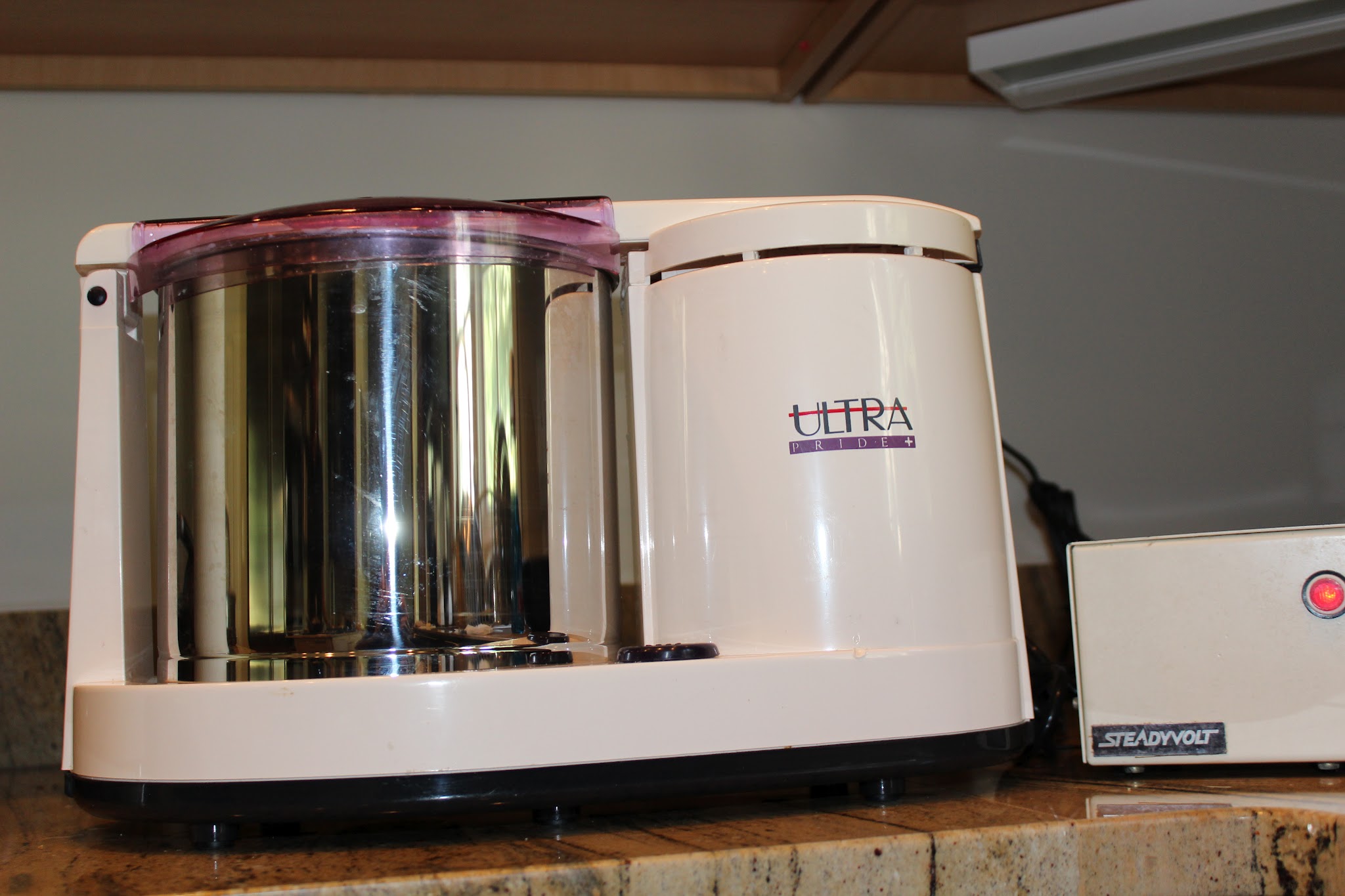
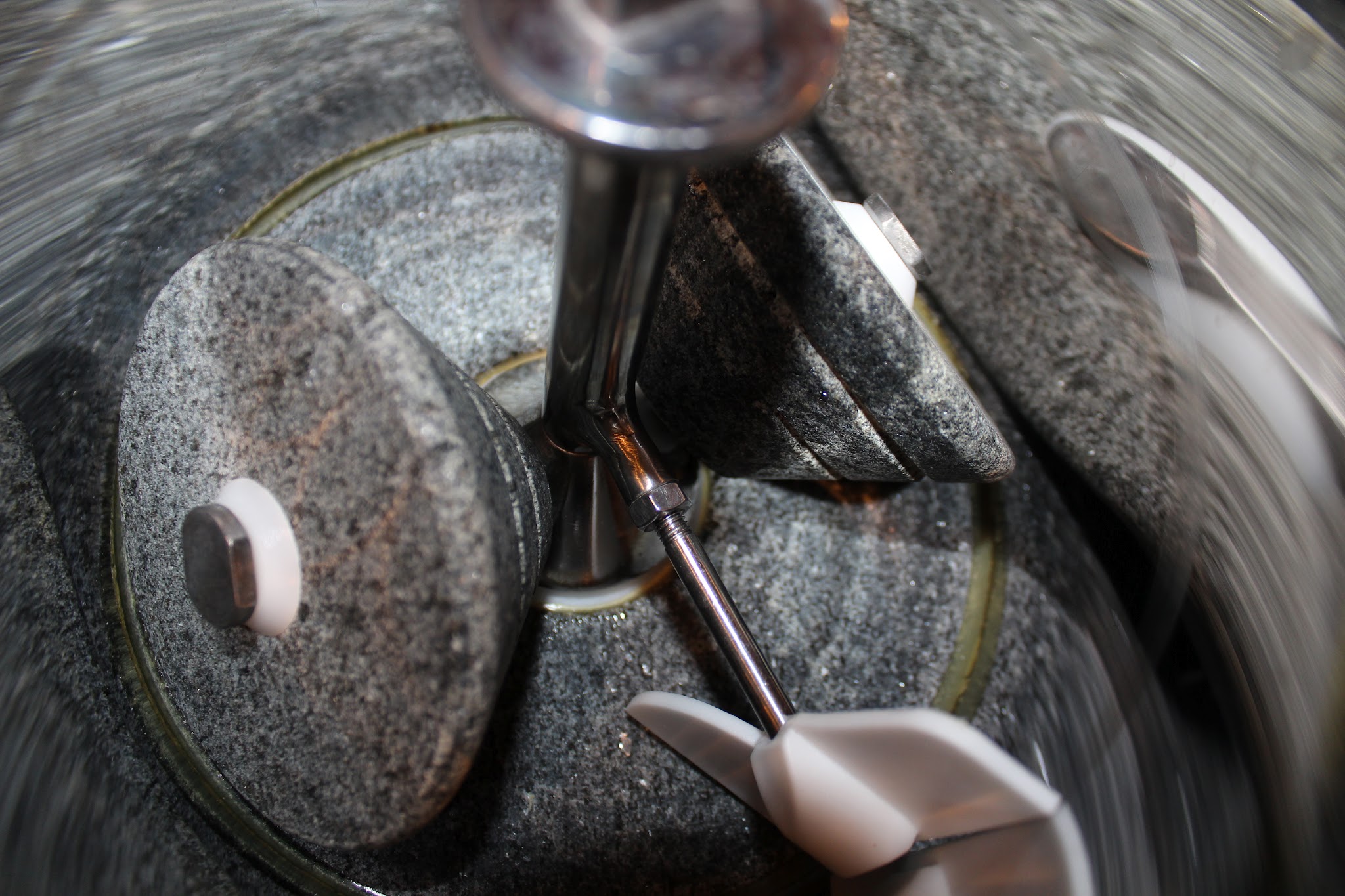
I straightened my aching, tote bag burdened shoulders with pride. “That is a table top granite wet grain grinder”. Pausing only to note his mild interest, I launched forth saying more or less the following (possibly, more): It has two granite cones that rotate within a motorized, spinning stainless steel chamber with an attached paddle and stone base. It is used for grinding lentils and rice to a fine, fluffy batter that is fermented to make dosas. An ordinary blender with a steel blade is marginally adequate but a grinder is best for the authentic silky feel to the crepe.
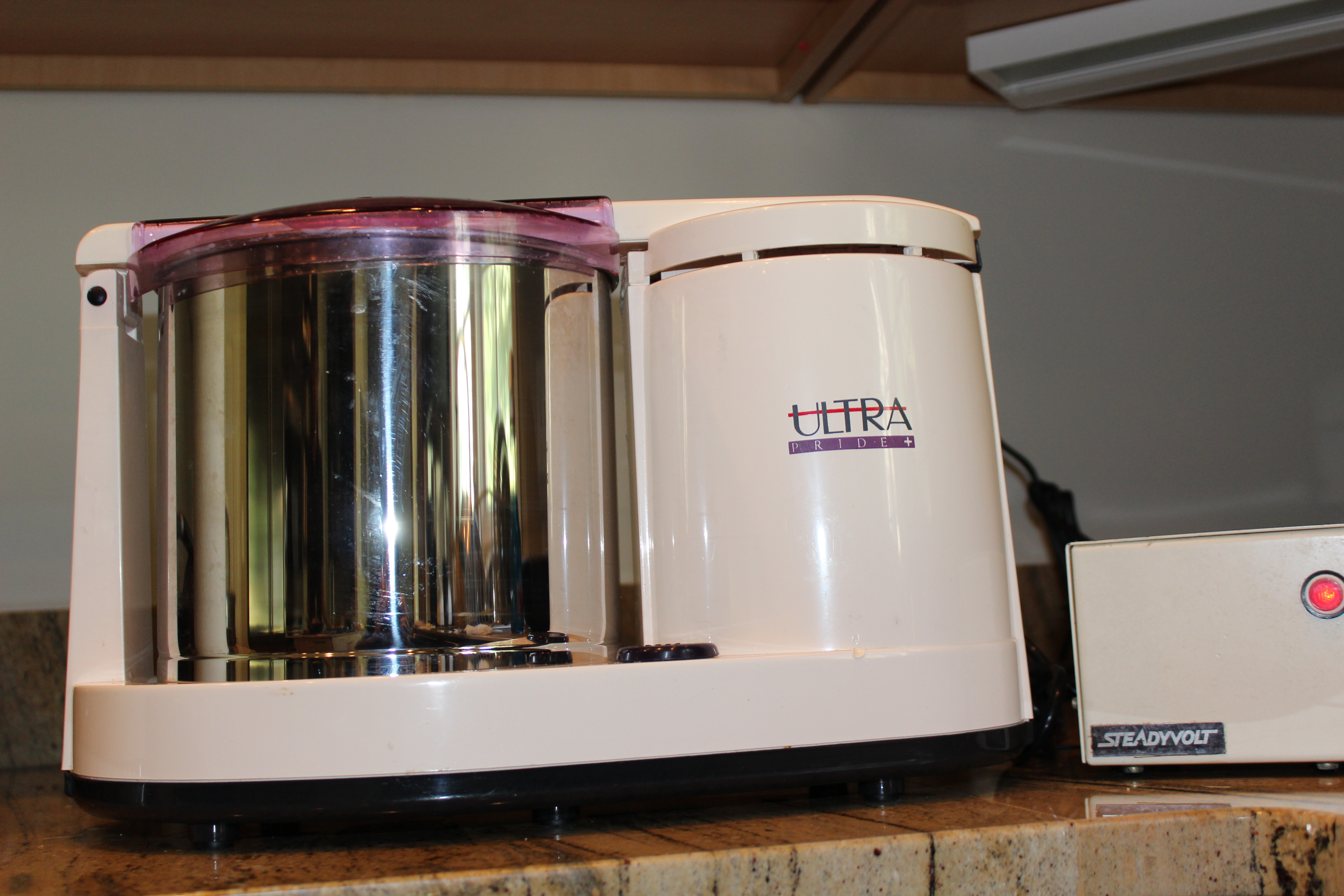
Wet Grain Grinder aka Kitchen Conversation Piece.
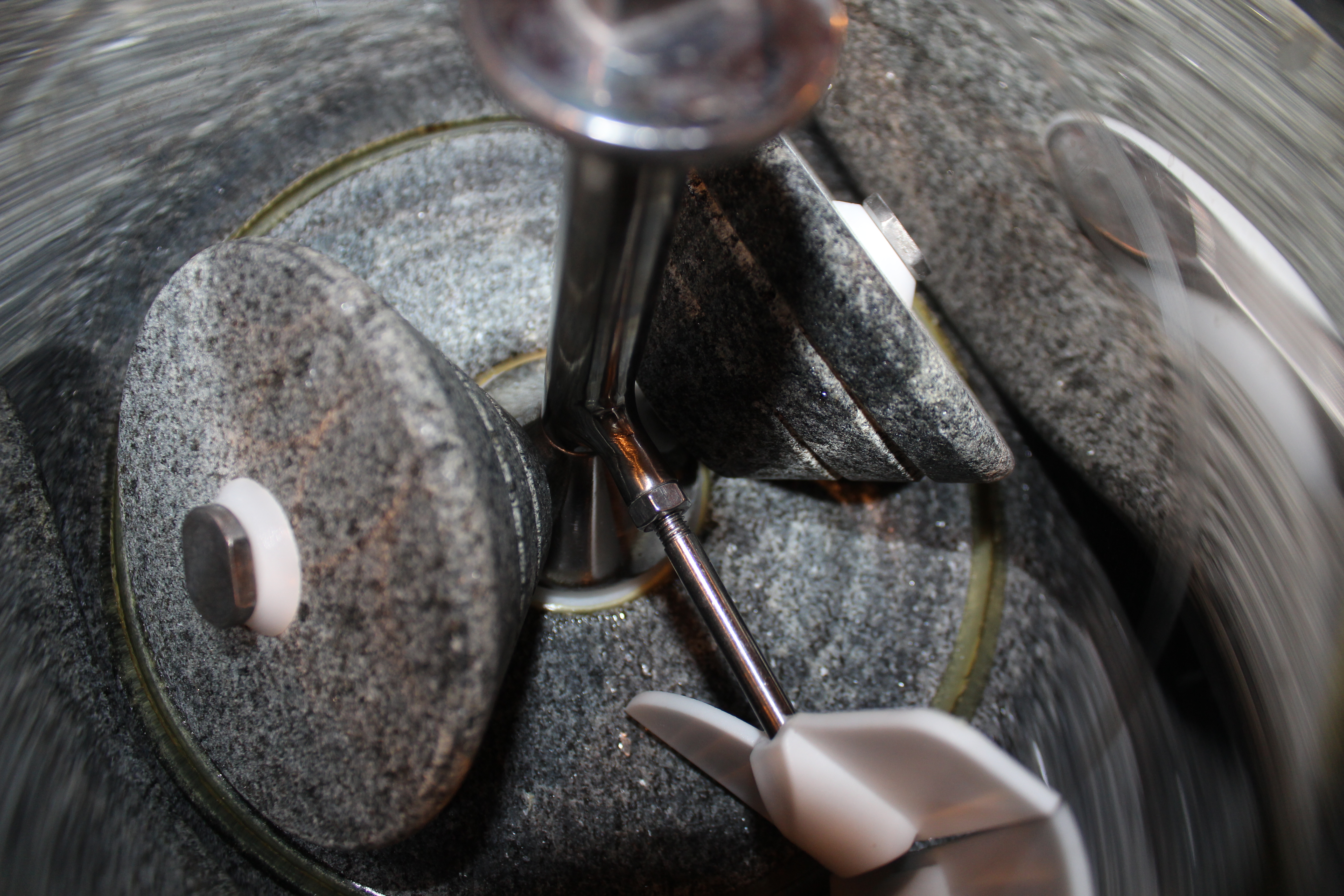
Inside view of grinder.
Somewhere in the midst of this monologue, I caught the warning glint in my husband’s eye. You know, the one that is reserved for the rare times my professorial pontifications get the better of me. Right, moving along. It’s not like I was using a PowerPoint presentation, I muttered to myself indignantly. Actually, I did do just that at Airport Security in Tel Aviv. But that’s another
This one goes out to all the Customs Officers, Security Personnel and Police who shamelessly flatter by calling me Miss.
Masala dosas: Recently voted the number one food from around the world to try before you die. Not to hasten you to an early grave, but you must experience the dosa. There are multiple steps and prior planning involved: If you have not made these before, it helps, as we say to the summer students in my lab, to pay attention. (I didn’t take as many photographs as I should have, so I’ll update with more images later).
- Make the Batter
- Separately soak rice and urad dal (Vigna mungo) under an inch of water for 6-8 hours or overnight. Confusingly, this lentil is black when whole, and white when halved and hulled.
If you like your dosas soft, use a 3:1 ratio. If you like them crisp, increase the proportion of rice to 4:1. I used 3.5 cups of rice and 1 cup of urad dal.
- Grind the softened lentils for 20 minutes in the granite grinder with enough water to make a smooth batter. If you don’t have this
useless conversation piece, go ahead and use an ordinary blender.
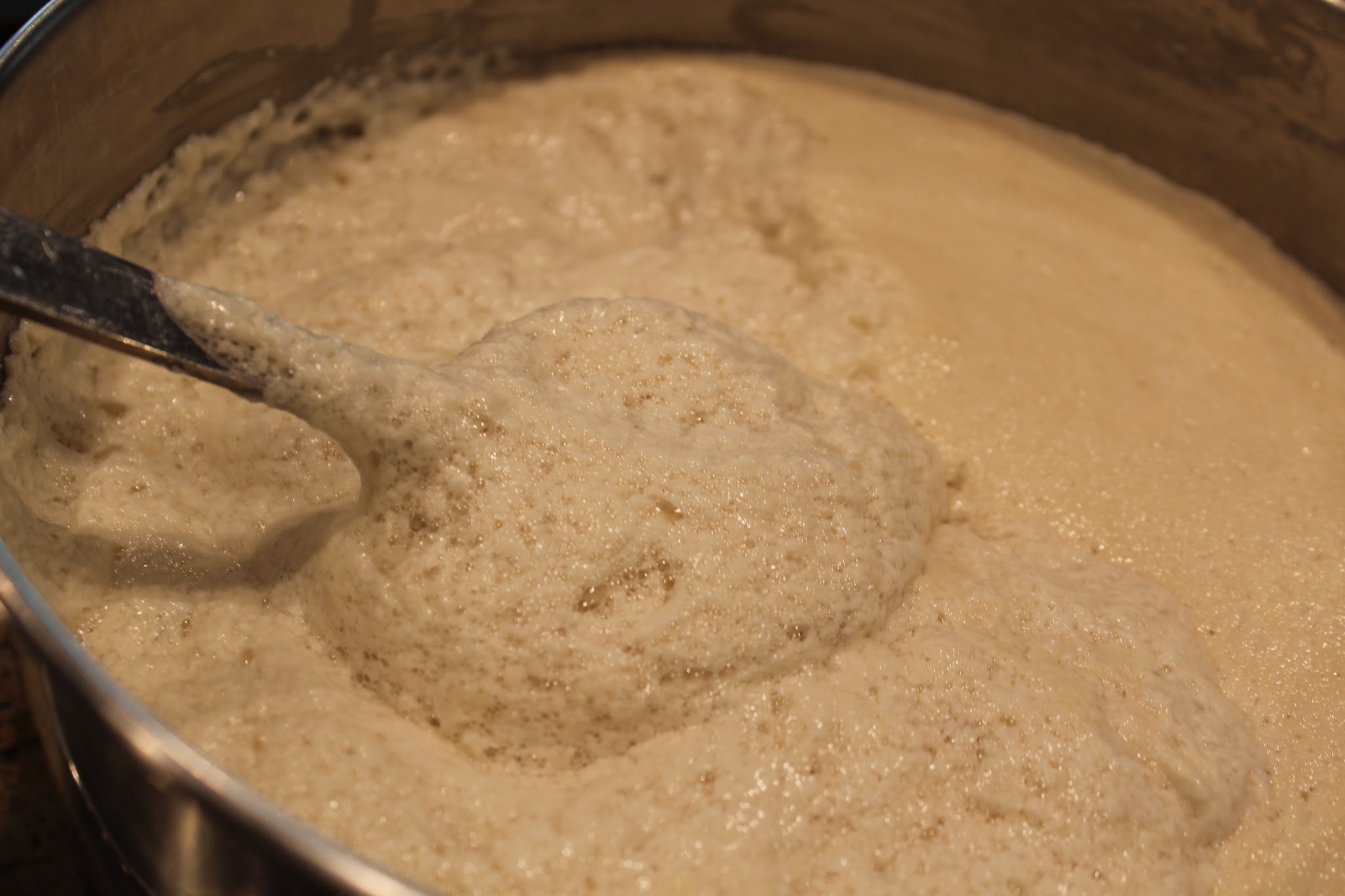
The batter is perfect when a fluffy spoonful floats when dropped into water!
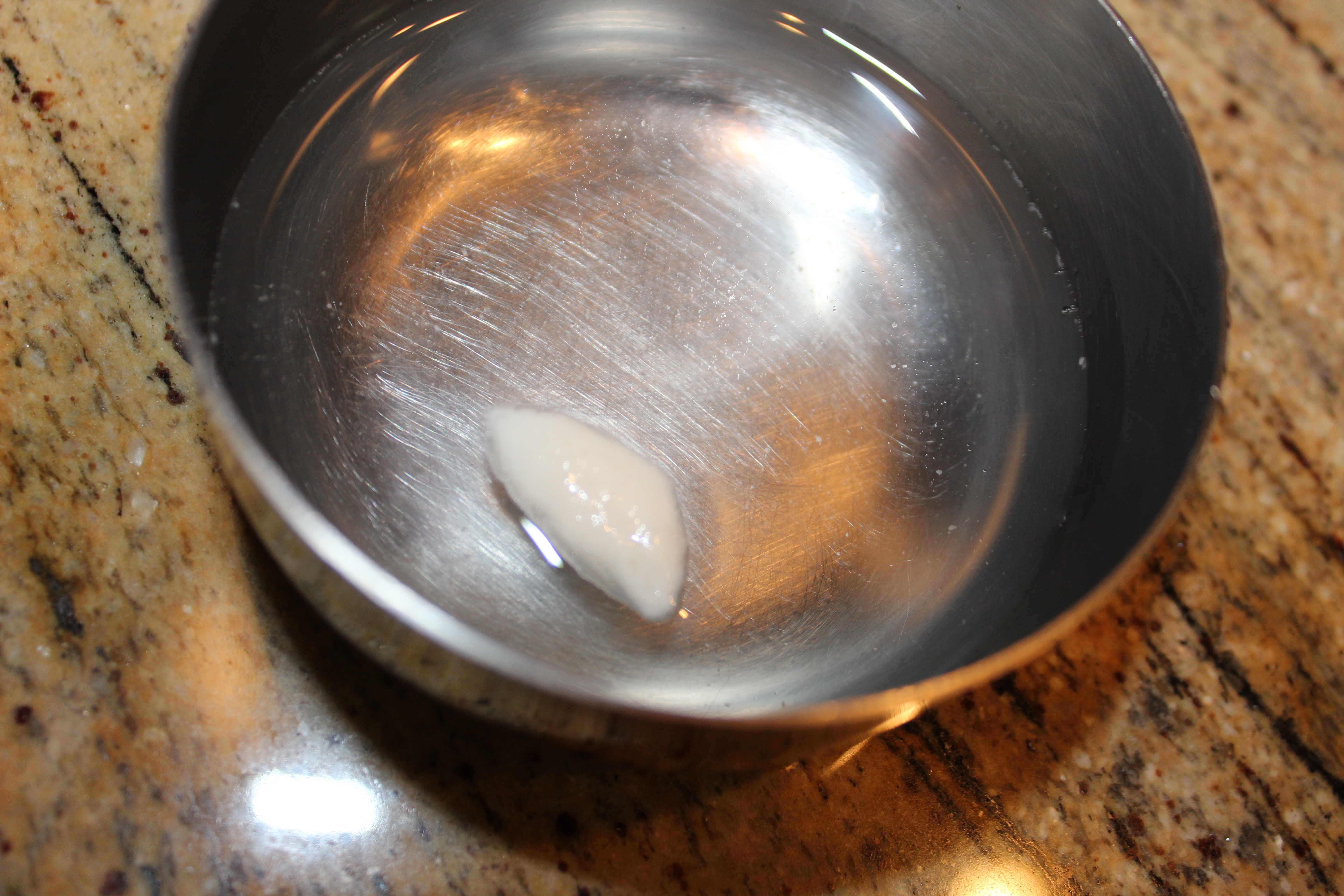
Lentil batter so light and fluffy that it floats.
- Scoop it out and transfer to a large pot with enough room for rising. Do the same with the softened rice: this is going to have a more gritty texture.
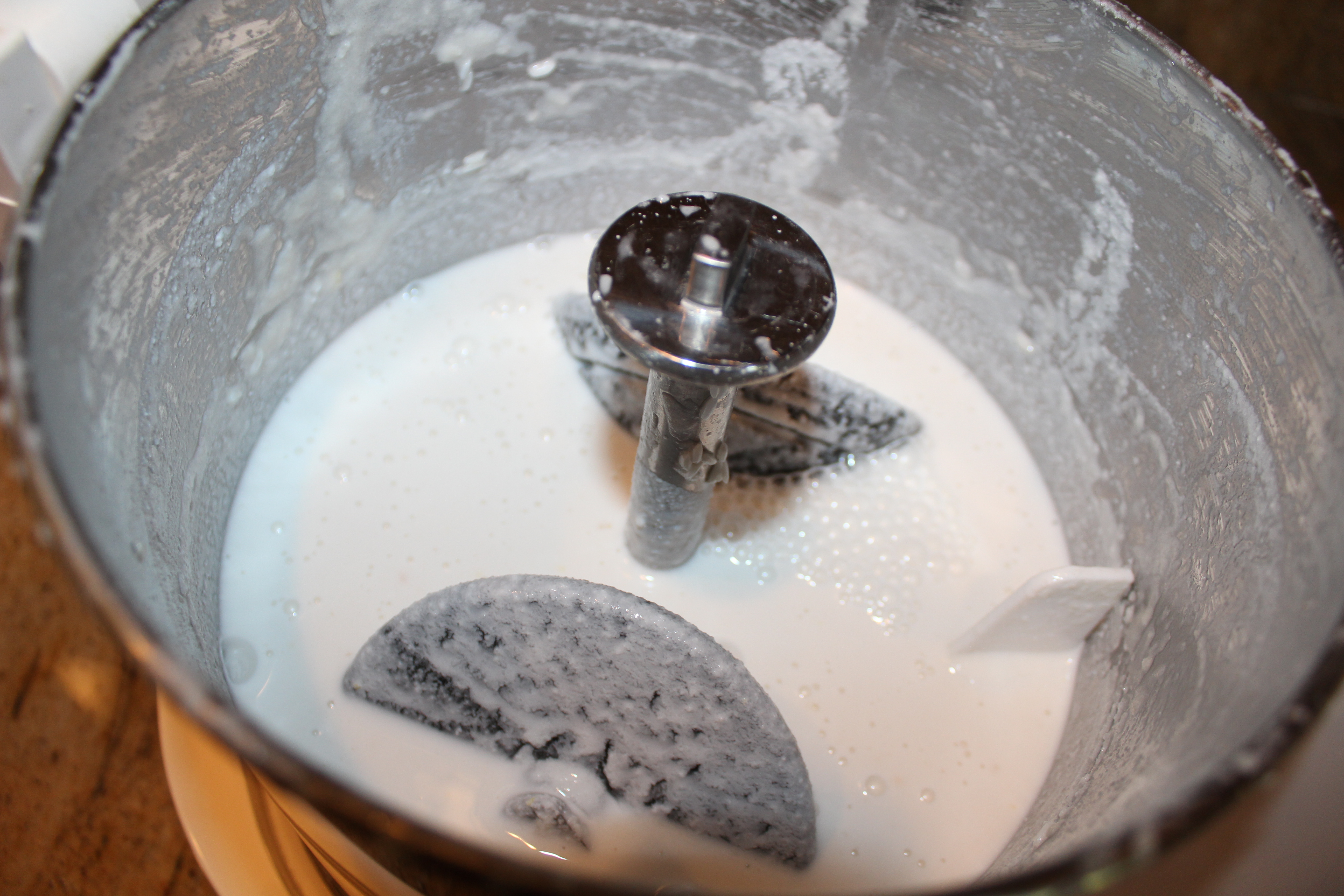
Grinding the rice.
- Mix in with the lentil batter along with a teaspoon of salt.
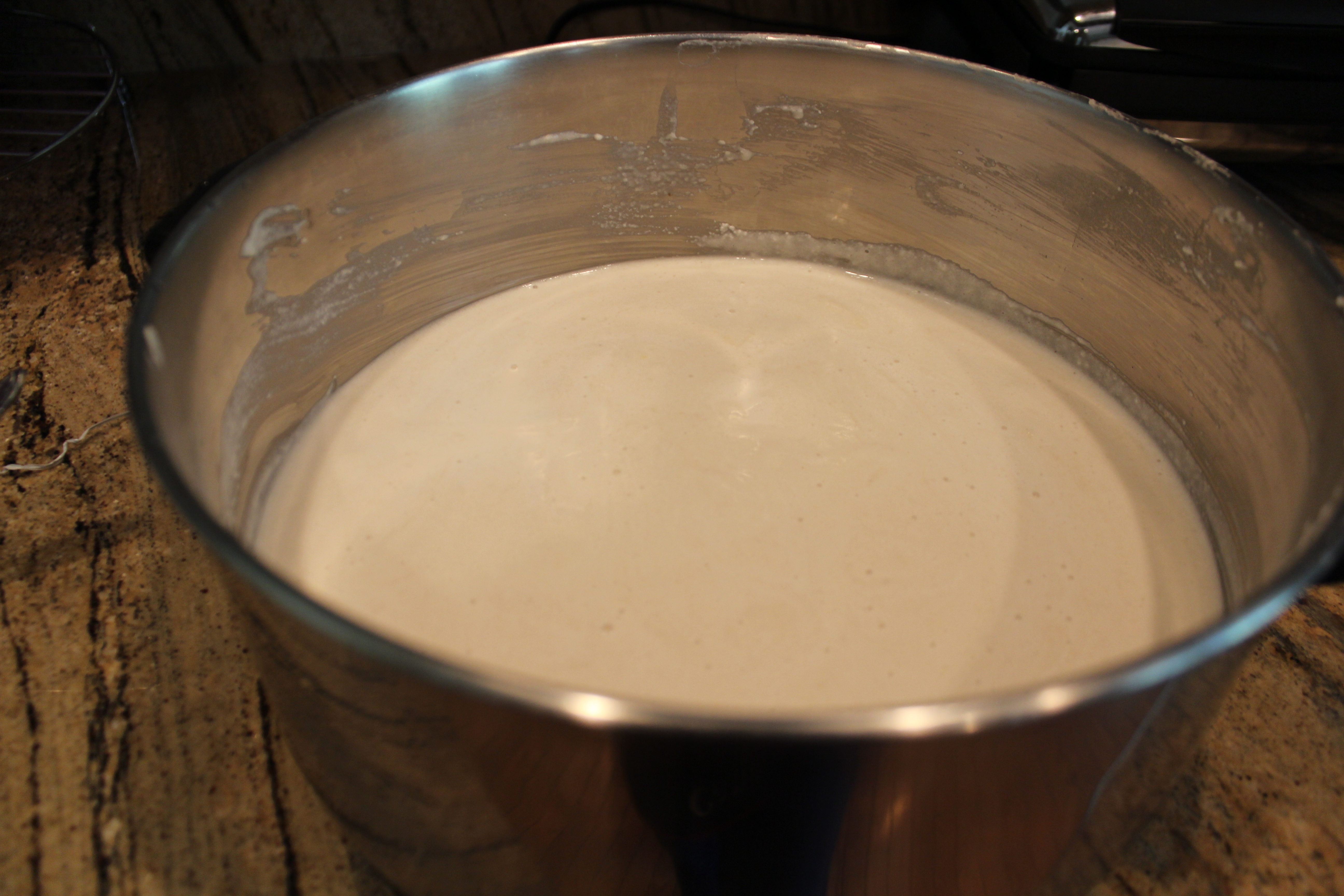
Dosa batter, just ground.
- Cover, and place in a warm spot to ferment. My remodeled kitchen has a warming drawer that can be set to 85F, perfect for culturing yogurt, raising dough or fermenting dosa batter. I’ve also left the lamp on in my oven to provide mild warmth.
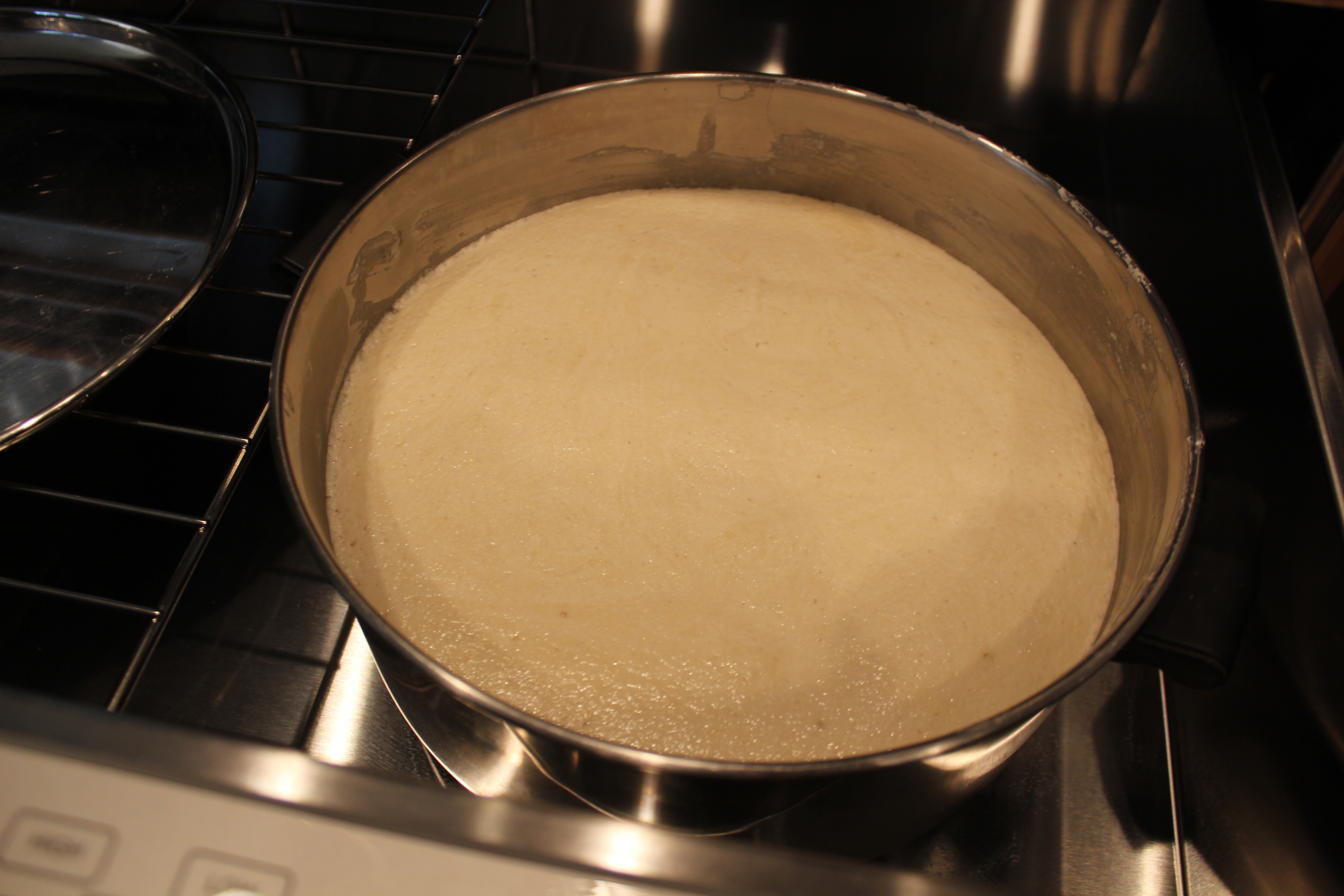
Let rise in a warm spot.
After an overnight incubation, the batter should be full of bubbles. Don’t let it go too long, or the batter gets excessively sour (refrigerate, if you are not ready to use it).

Yeast Alive! Fermented batter.
- Make the Chutney
To make a chutney, you will need a bunch of coriander (cilantro), a cup of grated coconut (I buy mine pre-grated from the frozen section of an Indian grocery store), a teaspoon of tamarind pulp (from soaking dry tamarind pods, or as a concentrate), a few green chilies, and spices for tempering.
- Grind all the ingredients (other than tempering spices) together in a blender, using judicious aliquots of water, titrating it to the right chutney consistency. Season with salt and remove to a bowl.
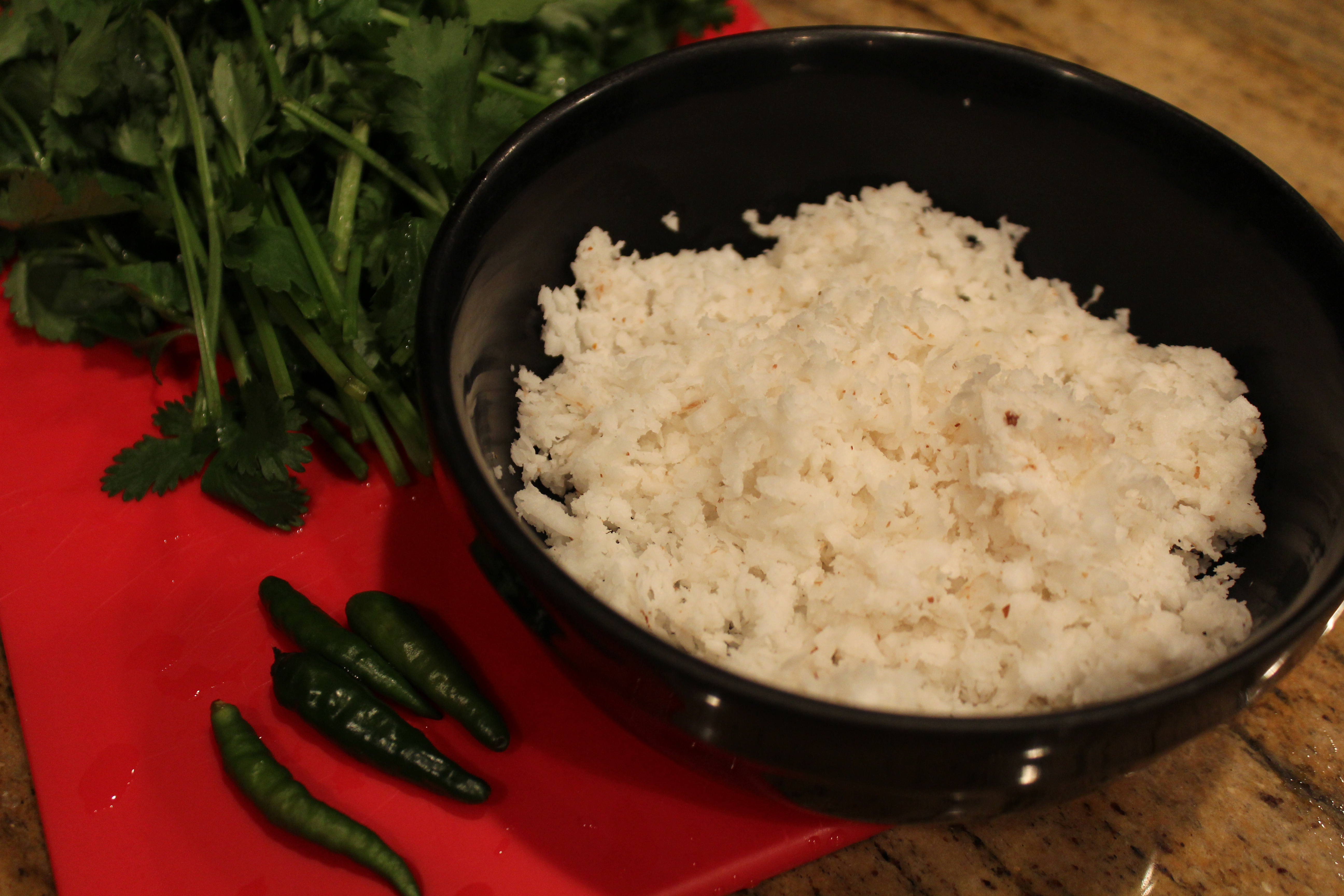
Coriander bunch, green chilies and coconut.
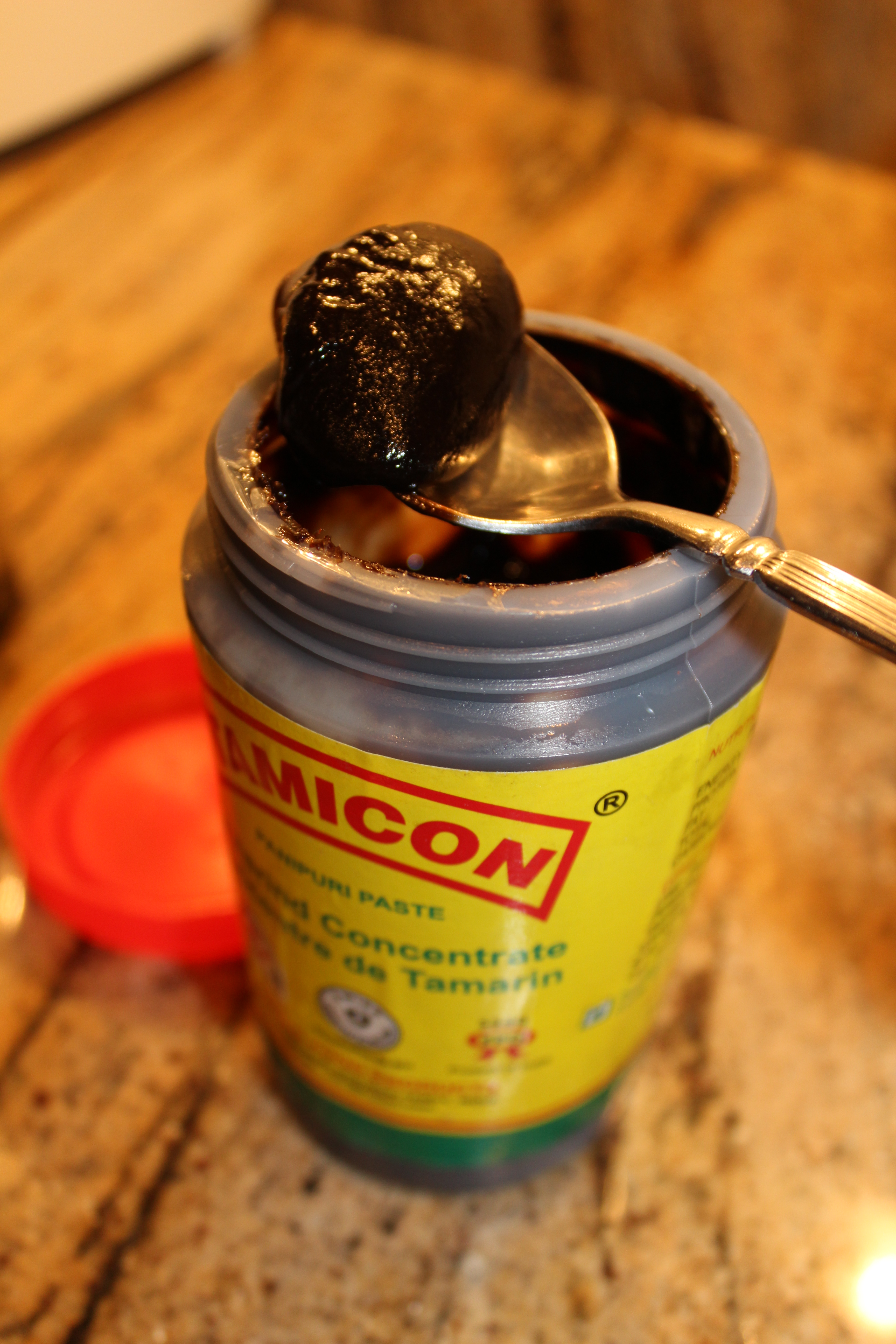
Tamarind concentrate.
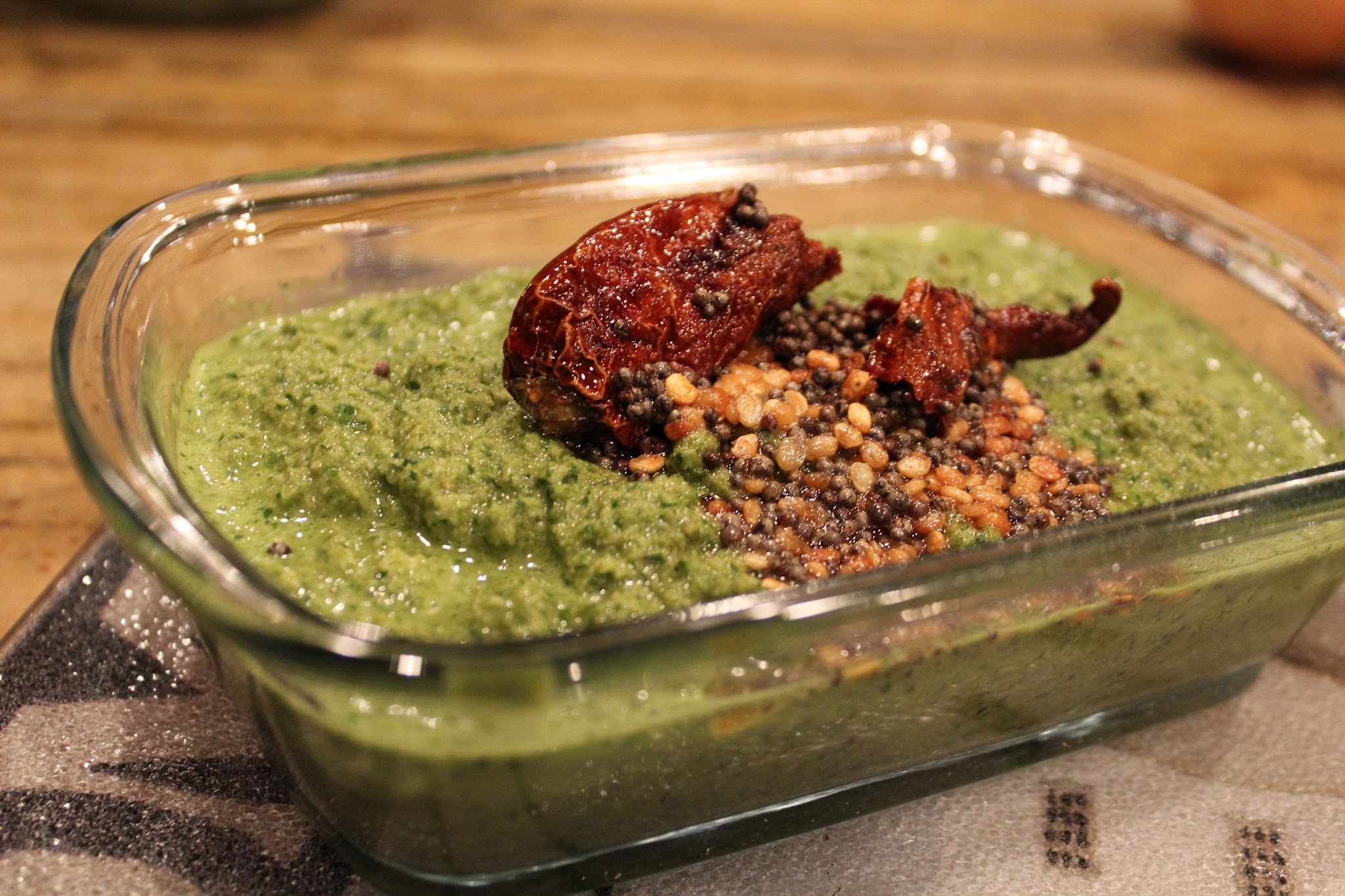
- Temper the chutney with a teaspoon each of urad dal and mustard seeds, plus 1-2 dry red chilies. Heat together in a small pan until the mustard seeds turn gray and pop.
You can flavor with a pinch of asafoetida if you are a purist. (Other chutney versions use garlic. I don’t out of deference to my late grandmother whose disapproval would time-travel through the etheric past to haunt me). Toss atop the chutney for a satisfying sizzle. Your kitchen will smell delightfully of fresh herb and roasted nuts, unless you used too much asafoetida in which case it will not.

Coriander chutney
- Make the Potato Filling
- Boil a few potatoes, peel and roughly cube. Chop a small onion. You can chop a few green chilies, or leave them whole.
- Begin with the same tempering as with the chutney above. This flavors the oil and provides a nutty crunch in contrast to the soft and creamy potato filling.
- Lightly saute the onions. Add the cubed potatoes and chilies. Season with salt, and turmeric for that golden color.
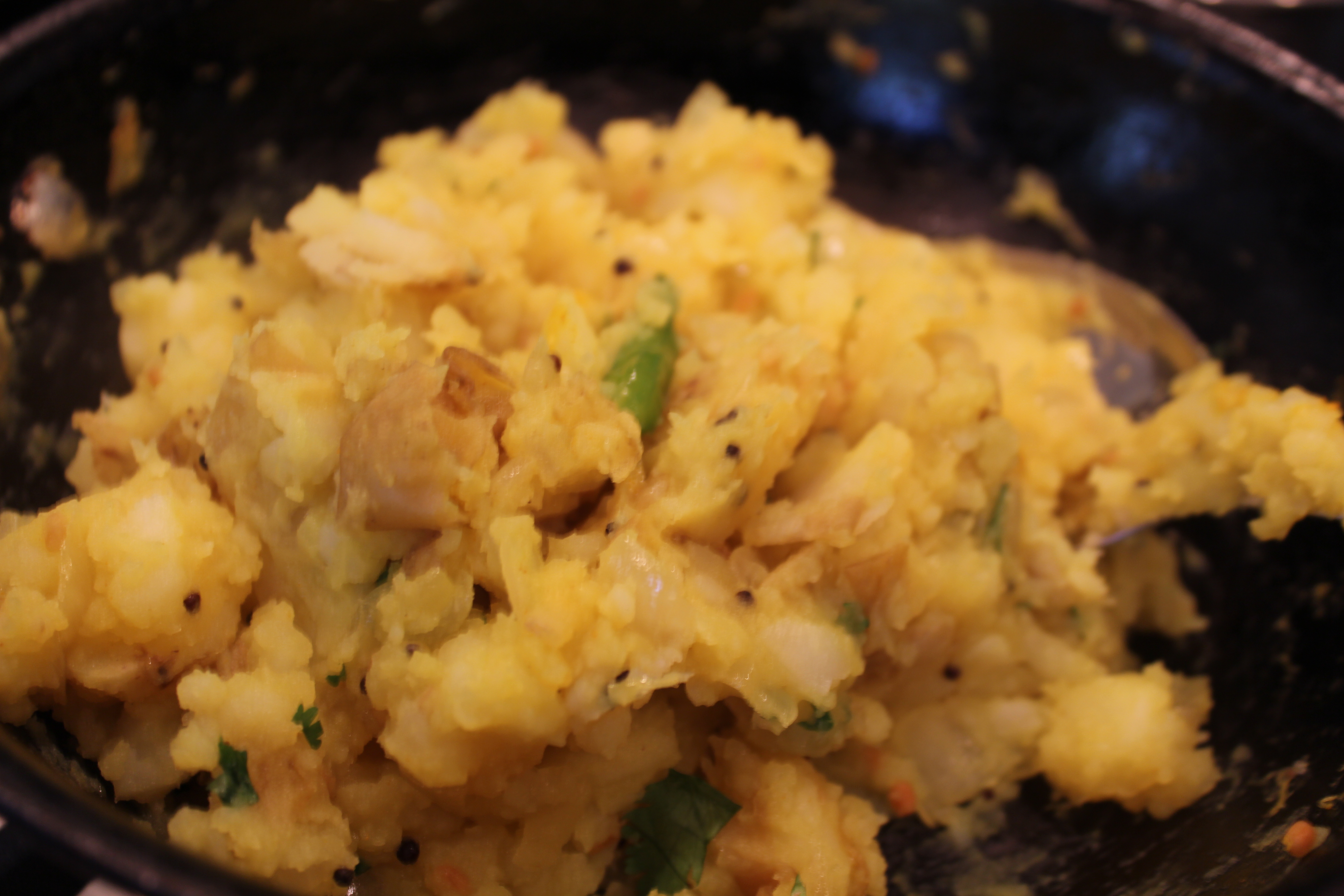
Potato stuffing for dosa
- Add a few tablespoons of water and mash the potatoes with the back of your spoon to make the mixture soft and spreadable. Finally, squeeze on some lemon juice and garnish with chopped cilantro. You can add cashew pieces too.
To Make Dosas:
Heat a nonstick or seasoned cast iron griddle. Set aside some vegetable oil. I add some toasted sesame oil for a more aromatic mix.
- Pour a ladleful of batter in the center. Using the back of the ladle and gentle pressure, quickly make an outwardly spiraling circle. The alternating thin/thick texture of the dosa conveys both soft and crispy textures in every delicious and contradictory mouthful. Sprinkle about a teaspoon of oil, cover with a lid. After a couple minutes, test the edges to see if it releases easily. Fermented dosas cook quickly.
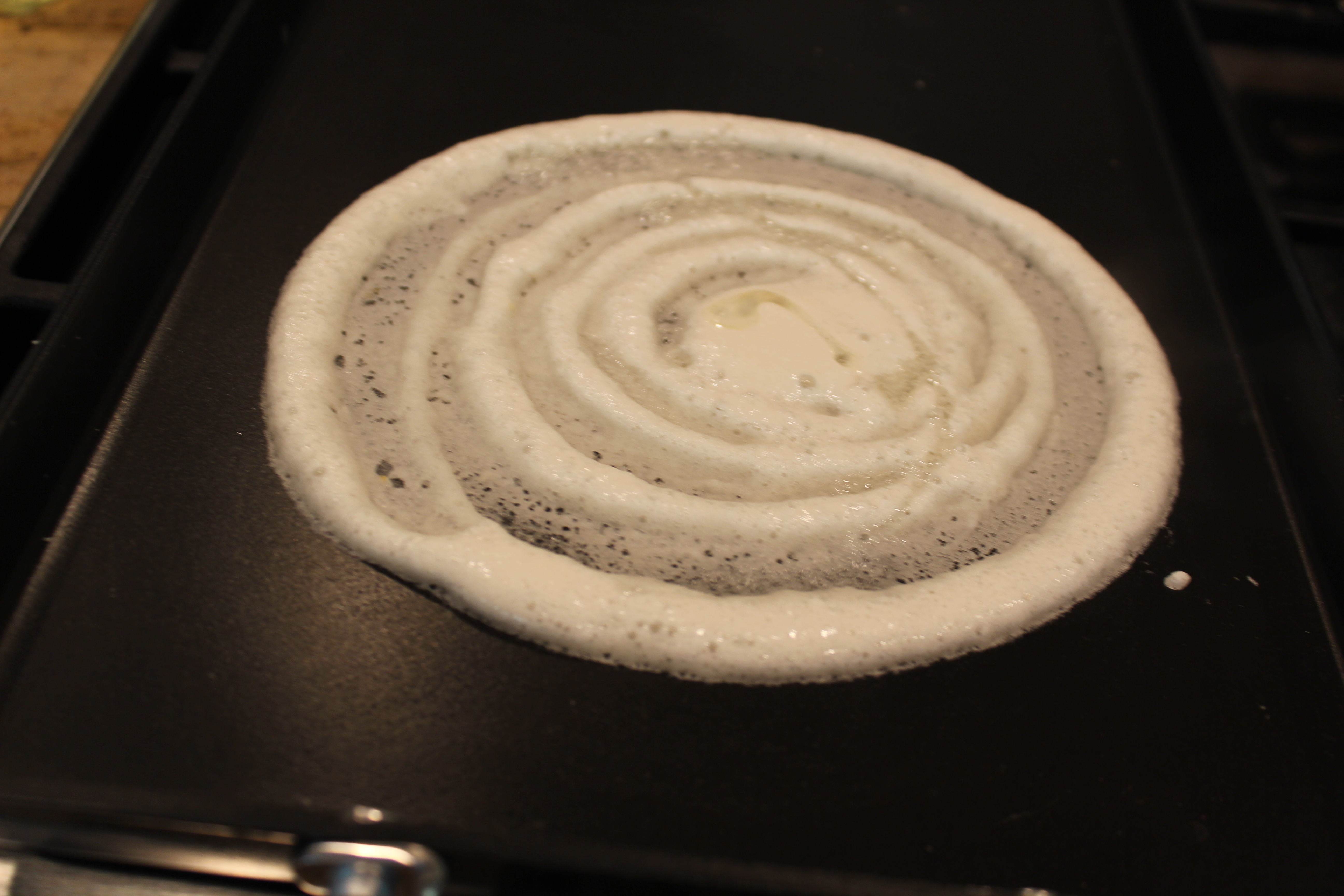
Dosa batter on a griddle.
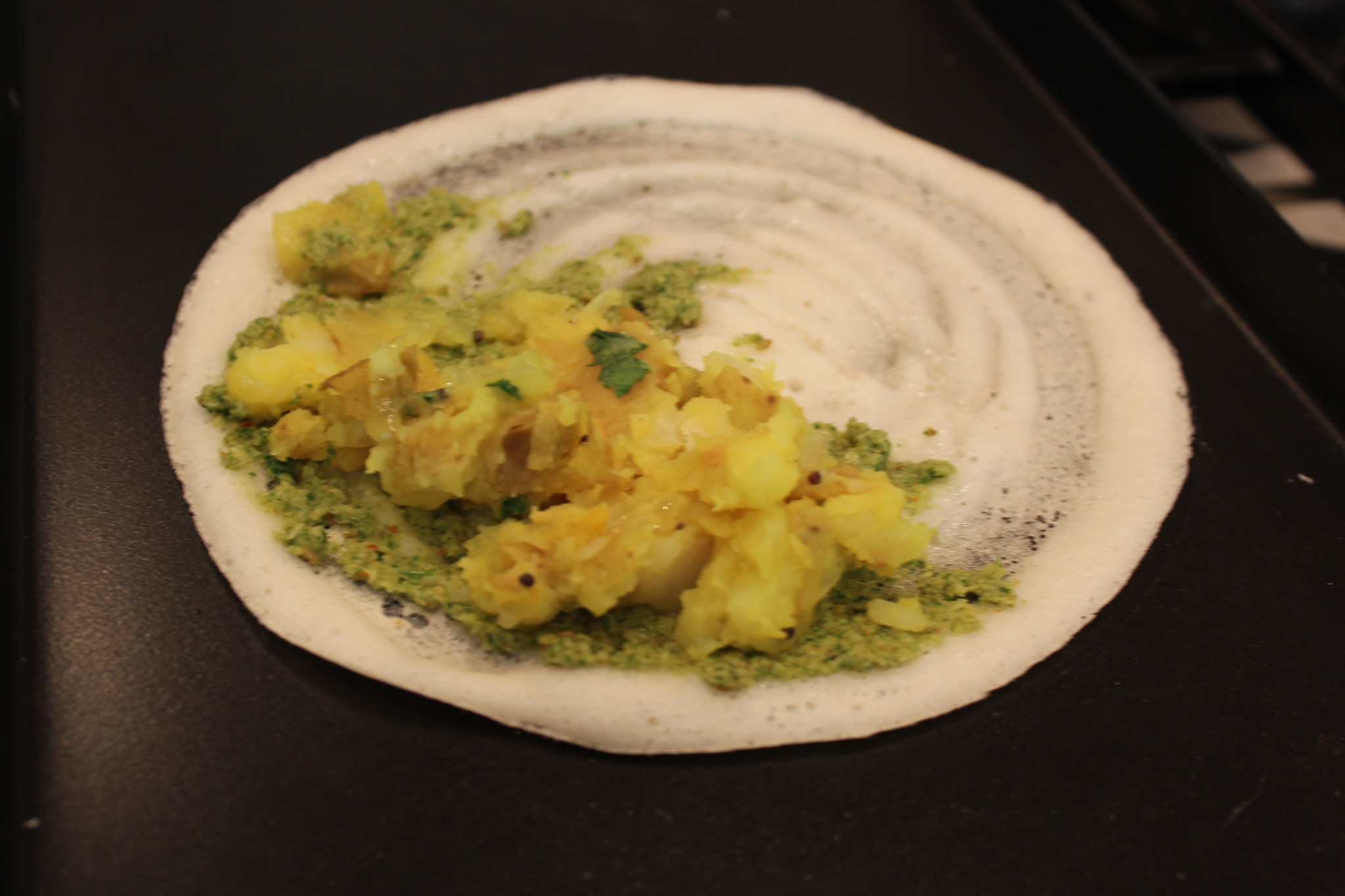
- Spread first chutney and then potato filling over half the dosa surface and then flip the other half over. Other dosa conformations include triangle and roll. Serve hot and golden! Top with unsalted butter or ghee for a rich flavor. (I ran out of gun powder, alias chutney pudi. That intriguing condiment awaits my upcoming trip to India).
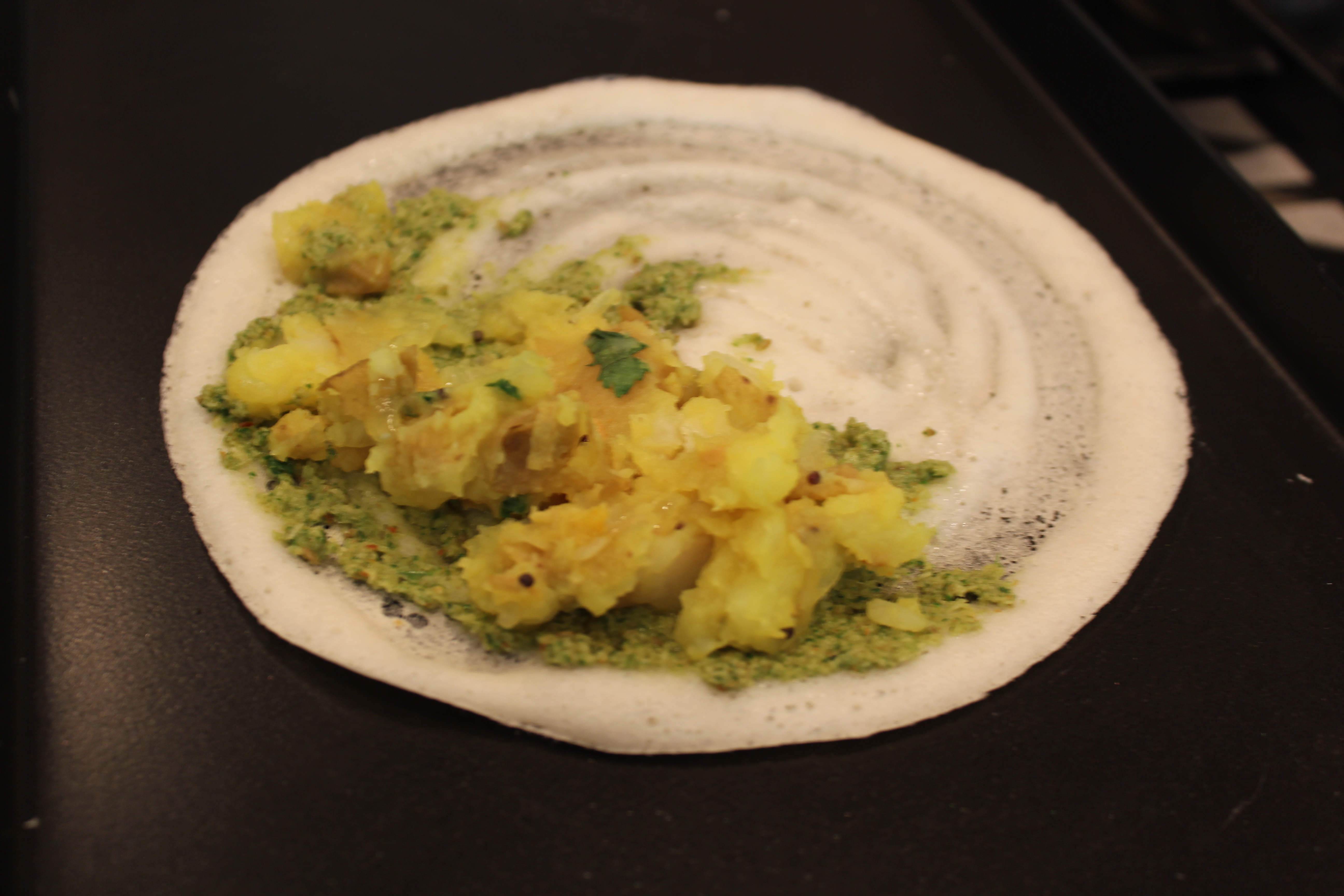
Spread with chutney and potato stuffing, then fold over.
Take Two: Adai (non fermented dosa)
Should the microbial reactions in the fermentation prove too off putting or enzymatically challenging for some, I offer you a non-fermented variation with less prep time. This is a protein and lentil rich, crunchy dosa known as Cabbage Adai.
You will need rice, and four types of lentils: Tuvar dal, Channa dal, Urad dal and Moong dal.
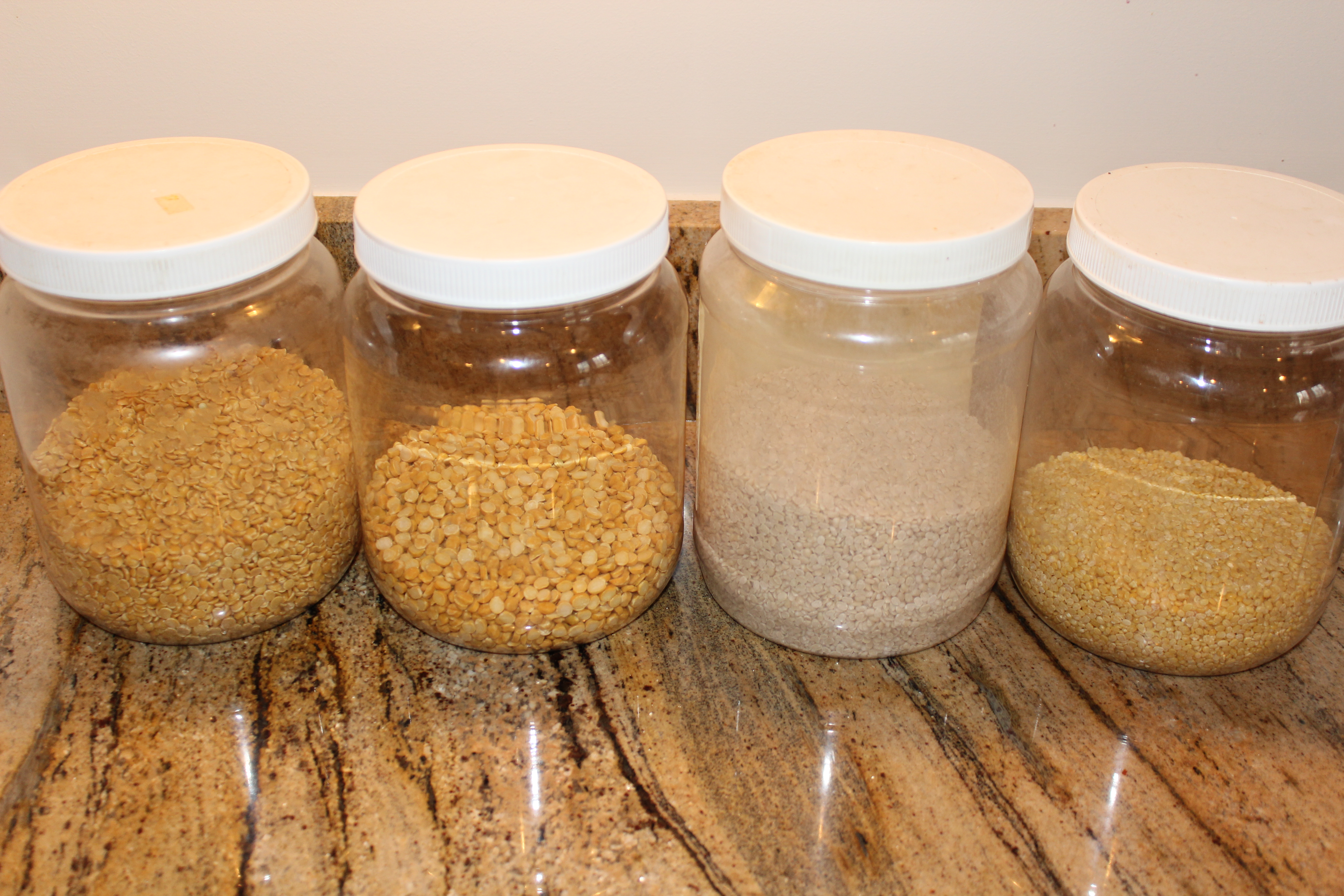
From L to R: Toovar, Channa, Urad and Moong dals.
- For one measure each of the four dals, use 1.5 measures of rice. I used a quarter cup measure.
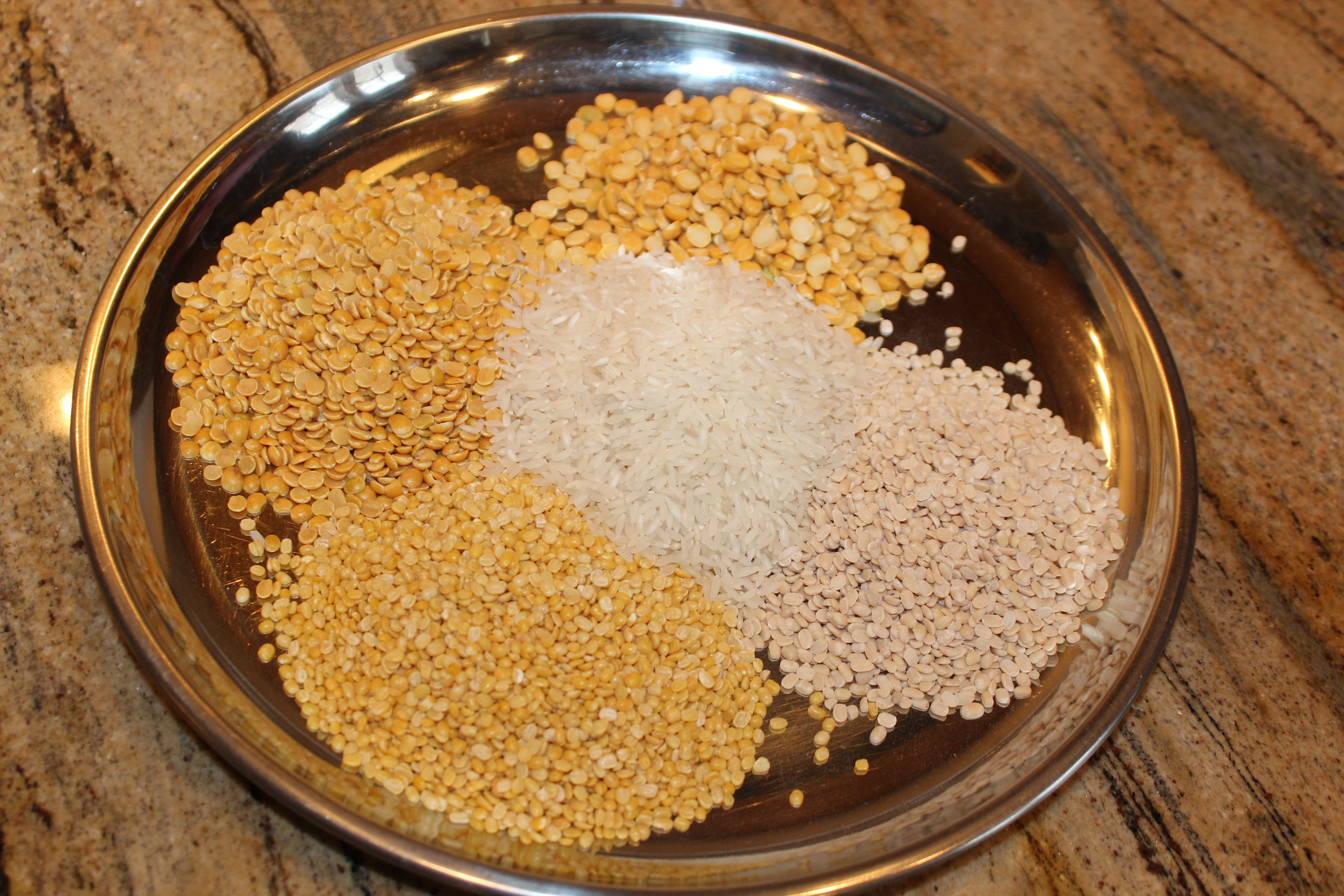
Mix lentils and rice in the ratio 1:1:1:1:1.5
- Soak the rice and dals with a few pepper corns and dry red chillies for a couple of hours.
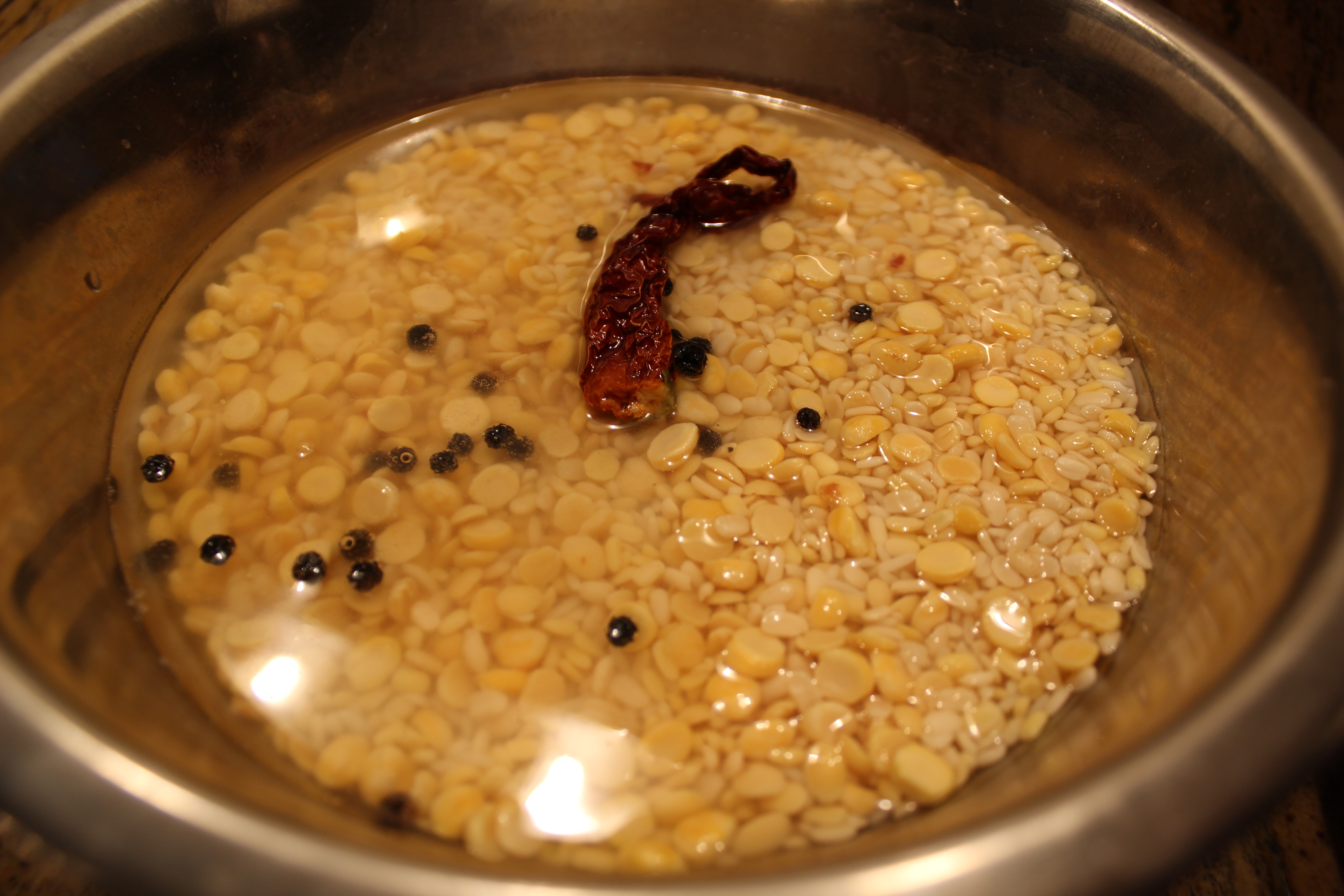
Presoaked rice and lentils
- Grind it all together. An ordinary high-speed blender is fine. Leave some bits for texture.
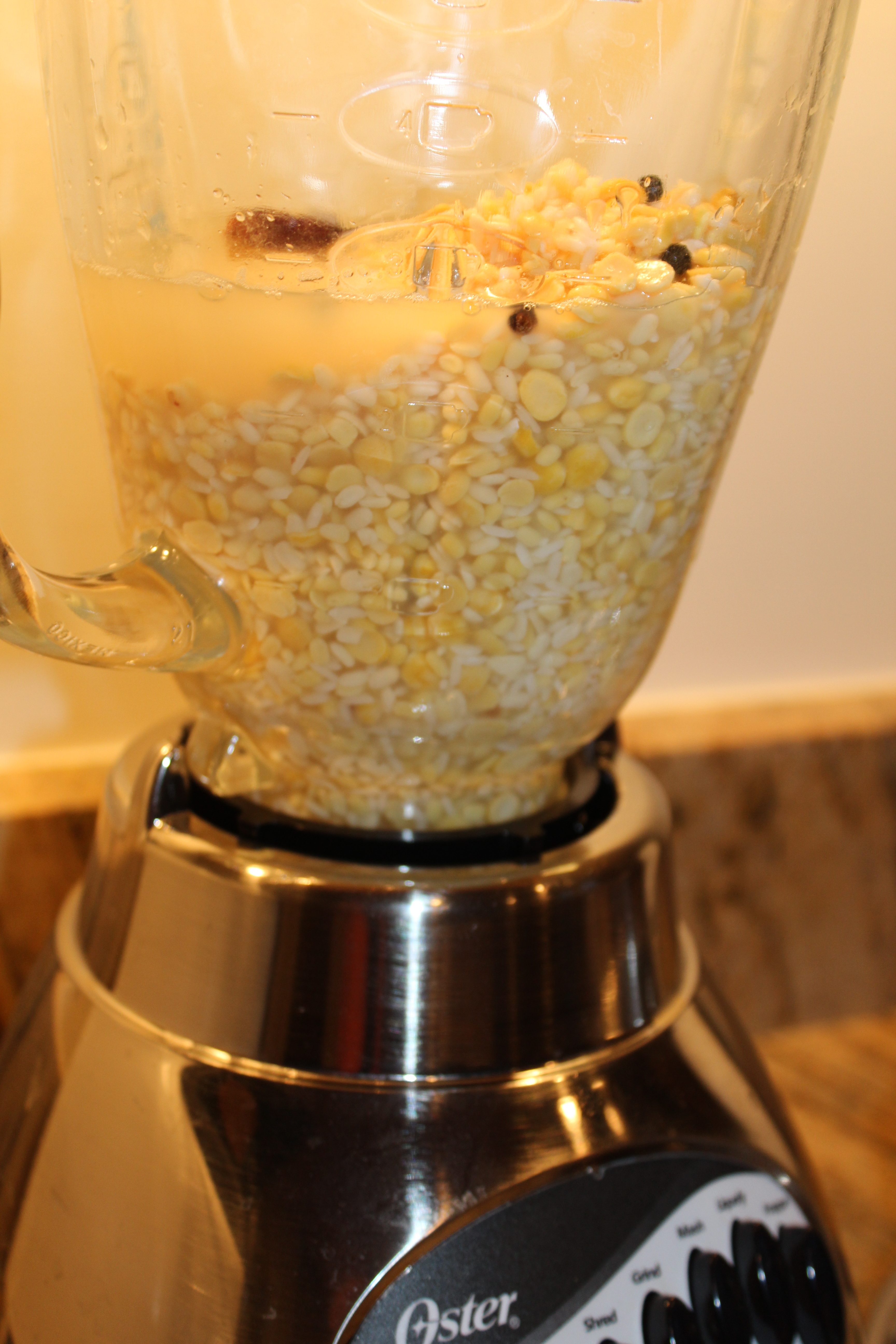
Blend together rice and lentils
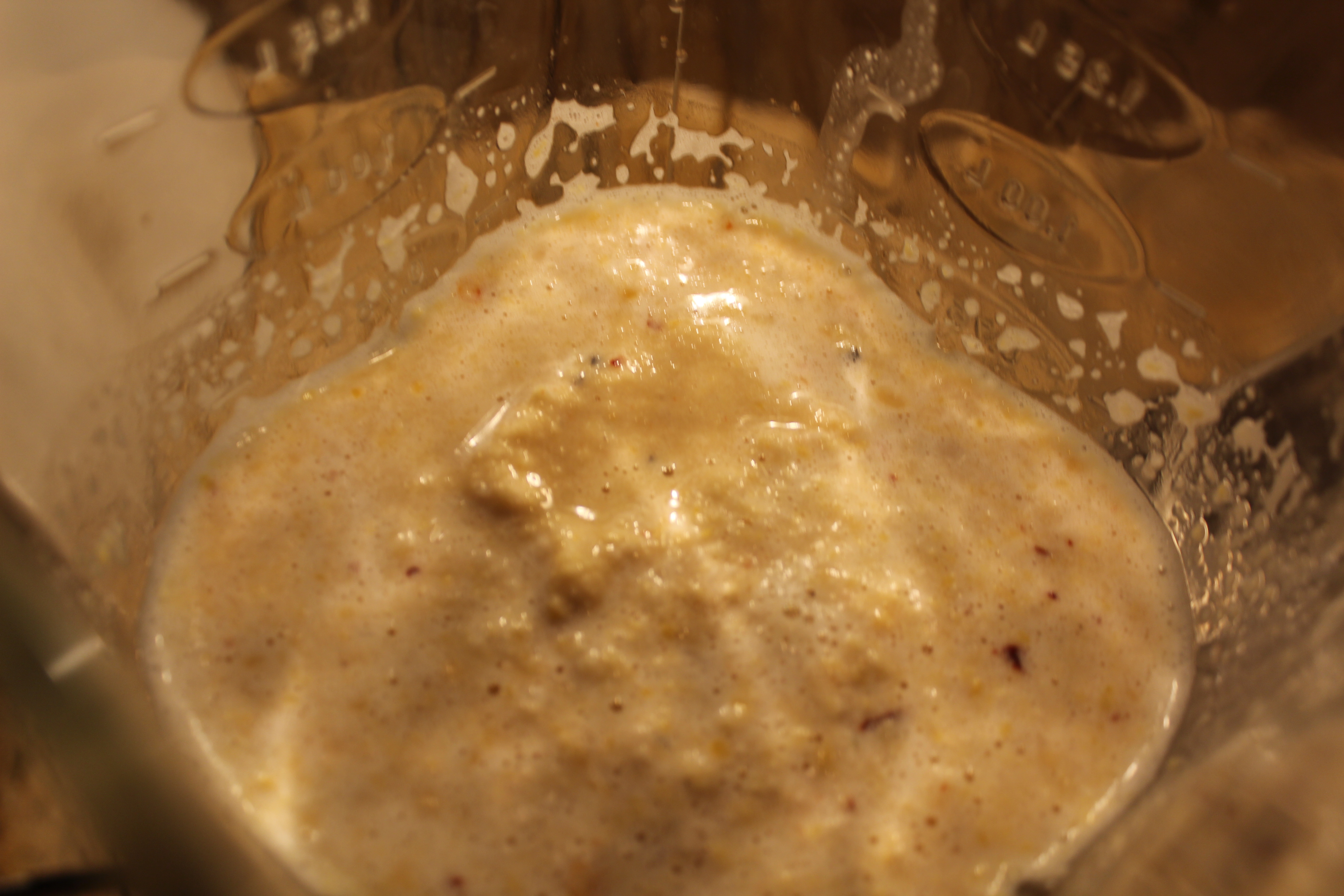
Batter for Adai
- Chop about a third of a small cabbage finely, and add it to the batter with salt to taste.
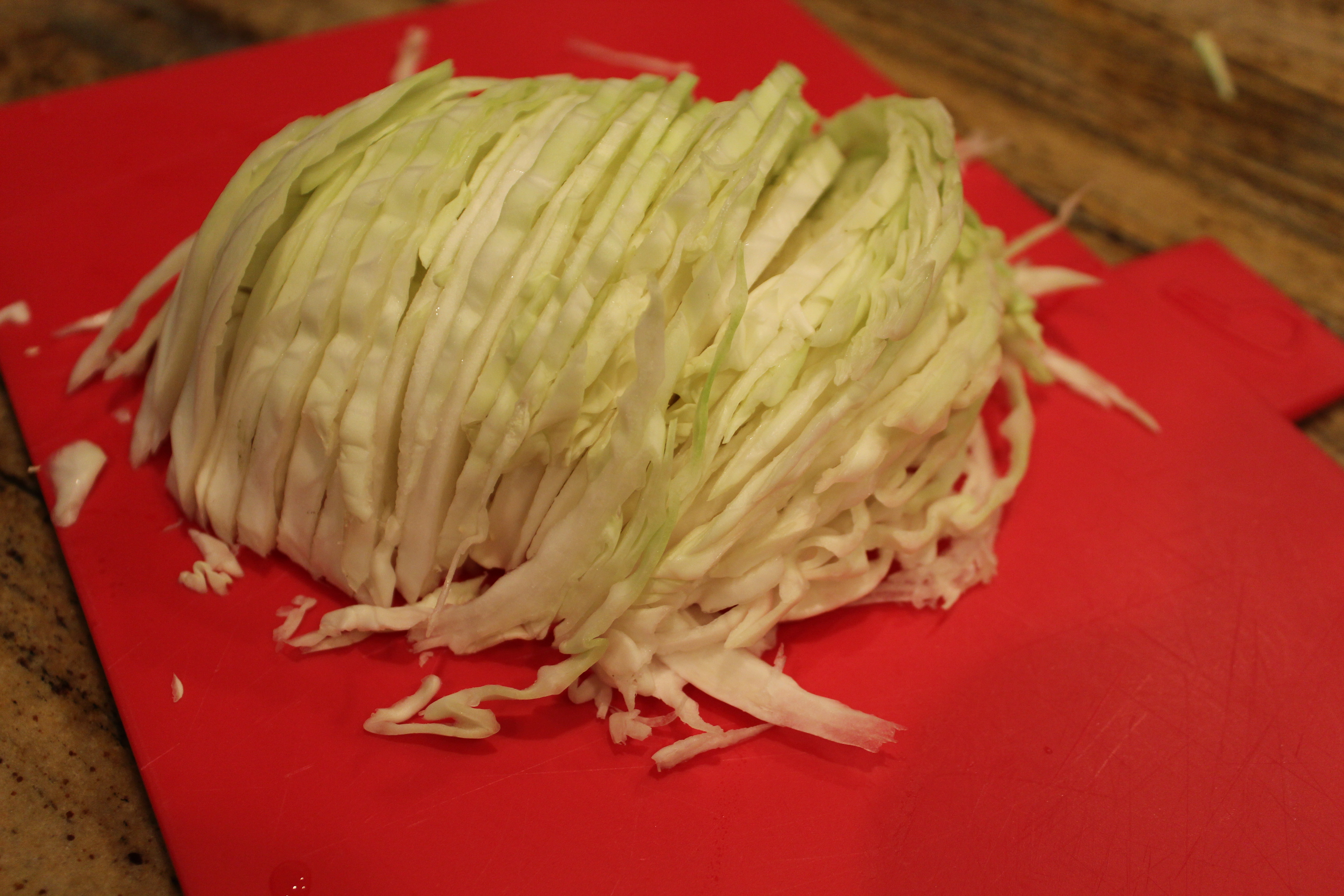
Slice cabbage lengthwise
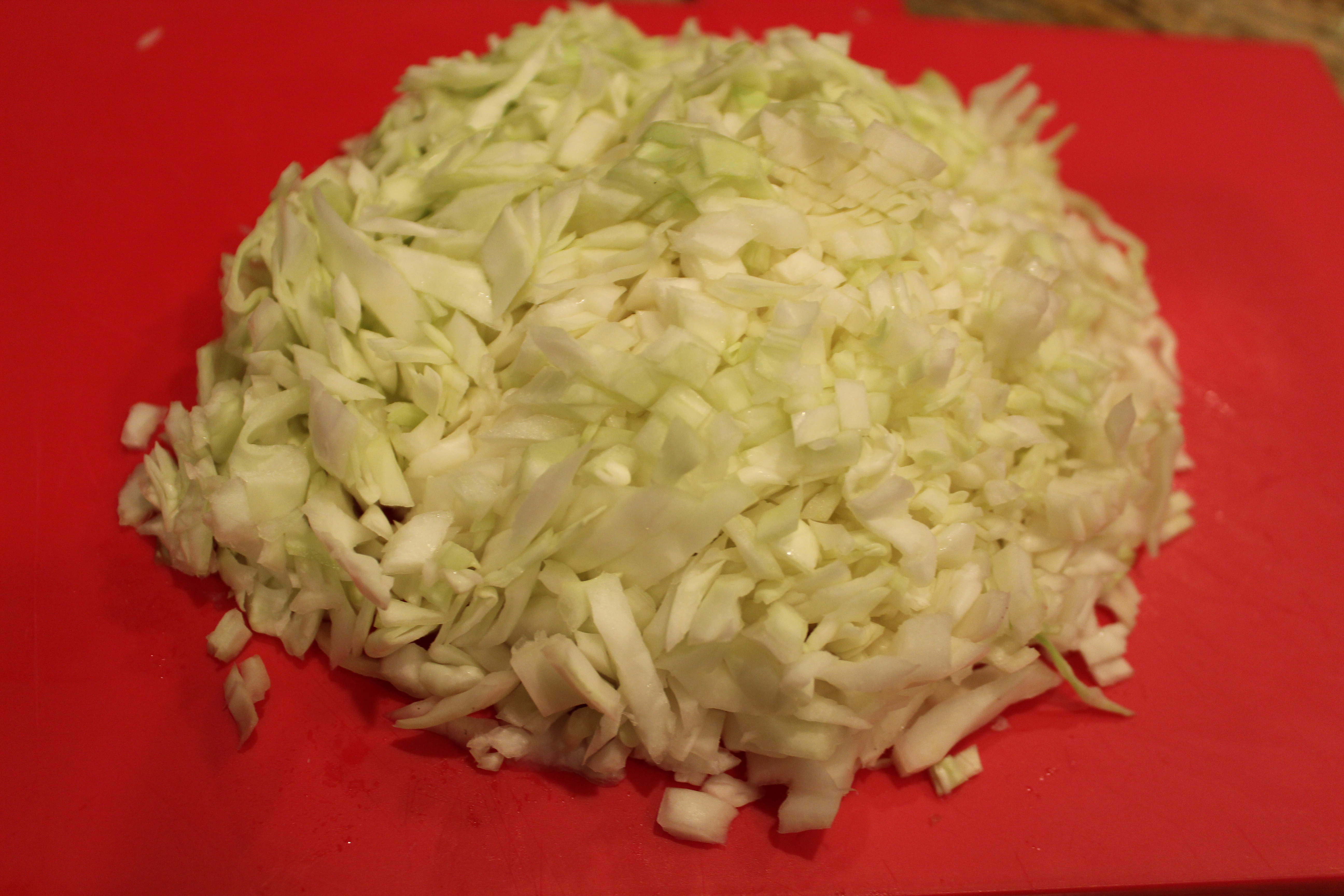
Then crosswise…
- Make the dosas as before.

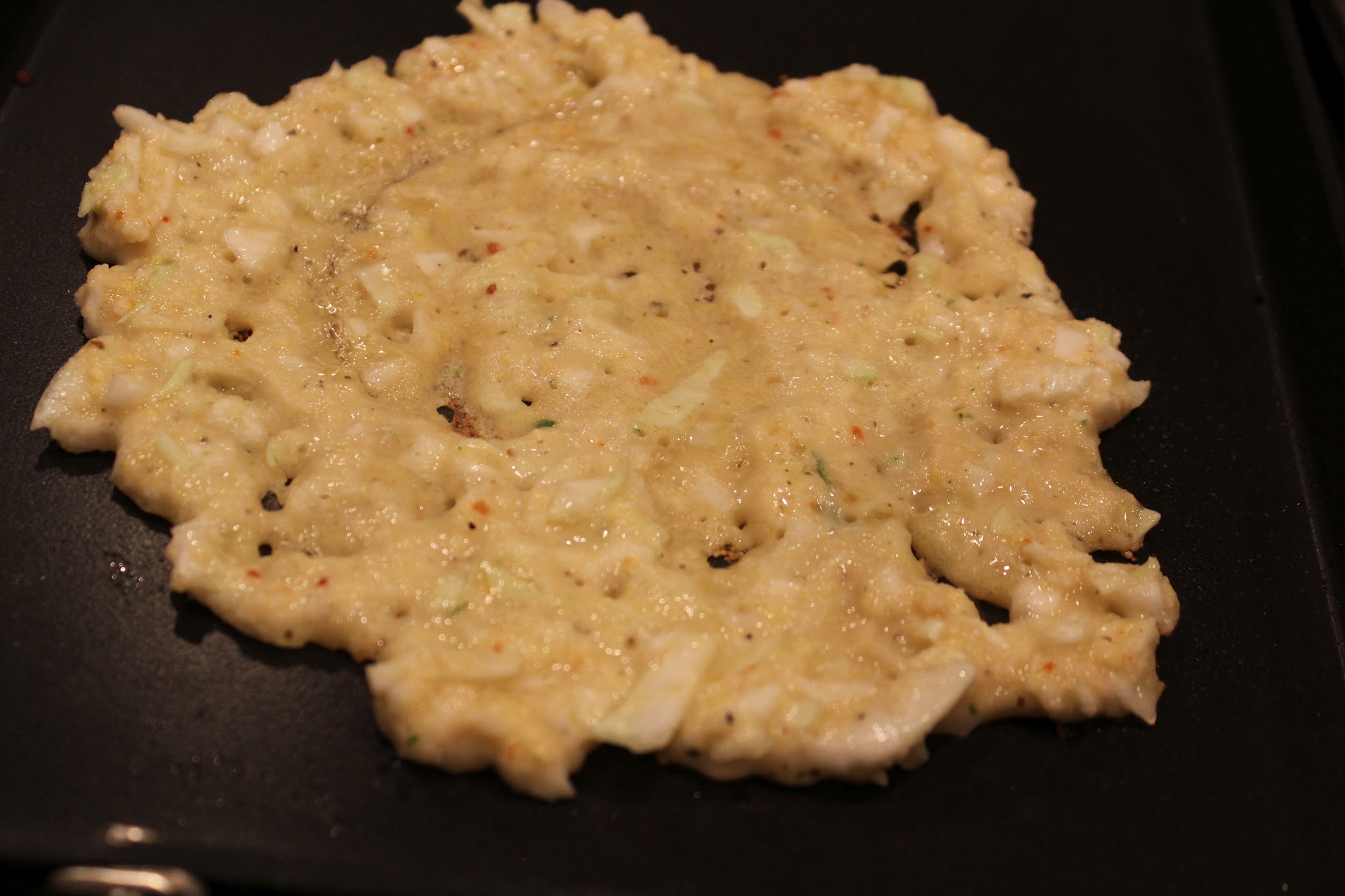
Spread out the batter.
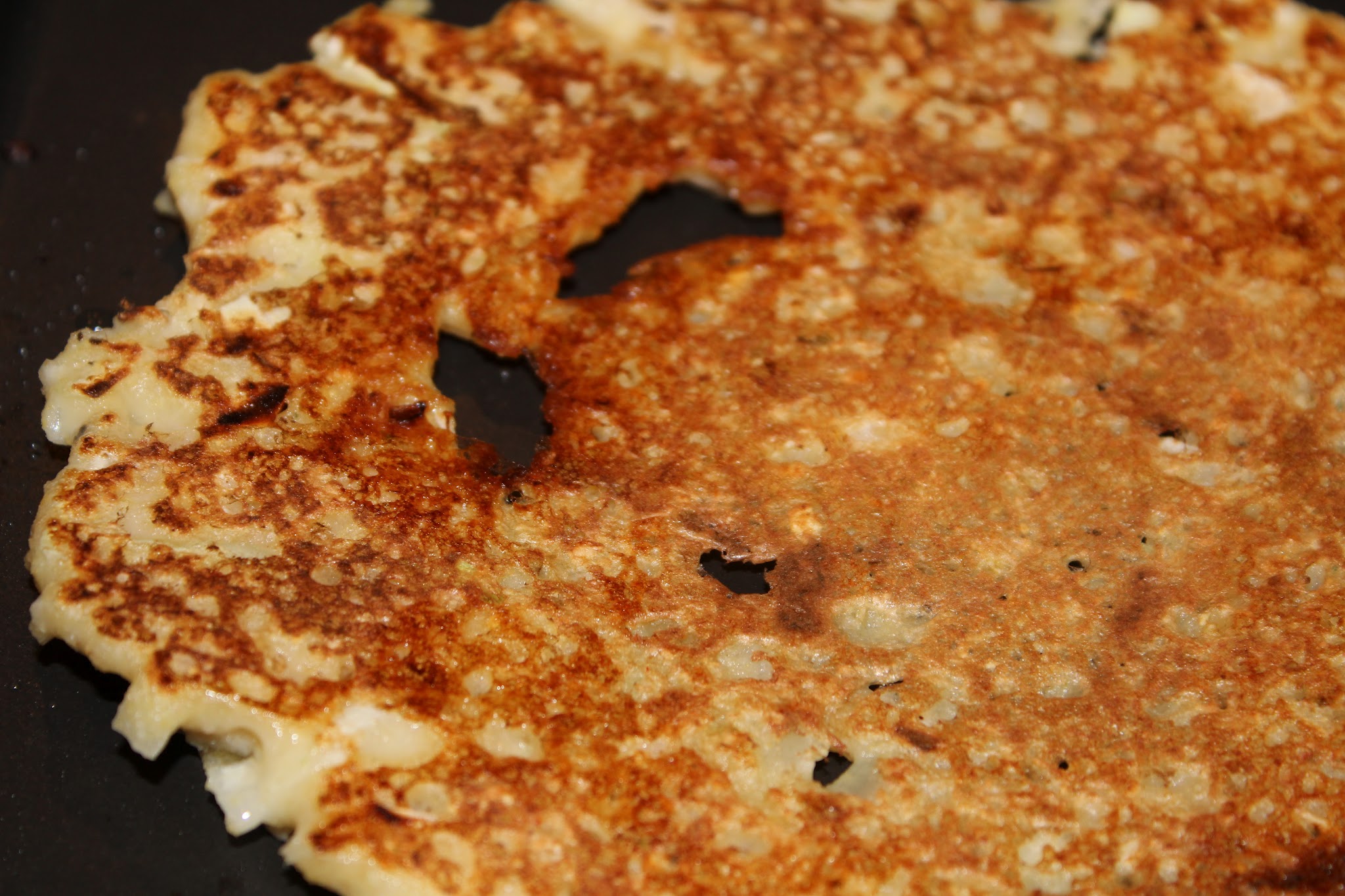
- This time, you need to flip them since these dosas are thicker and need a couple more minutes to cook.
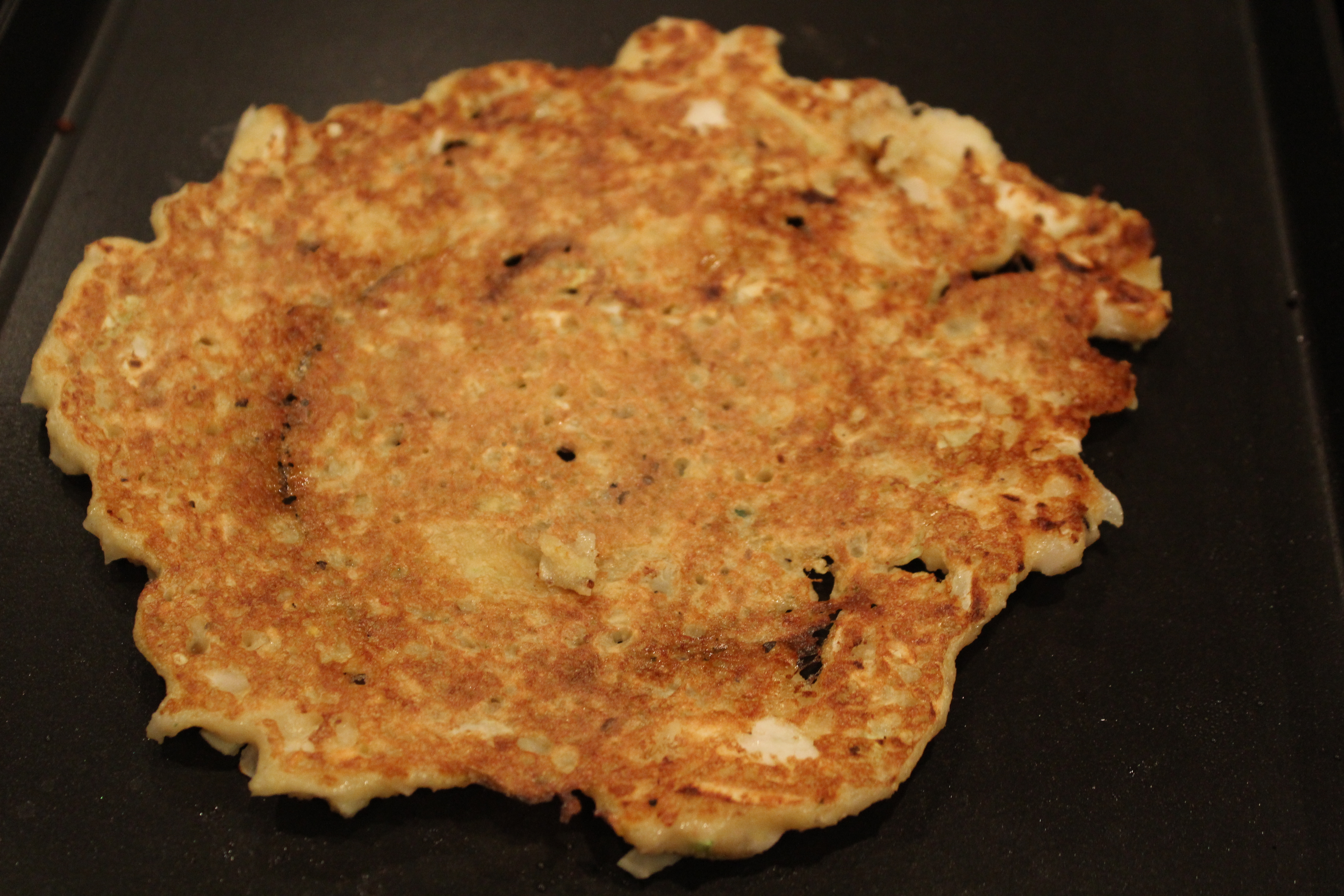
Flip it once to cook the other side
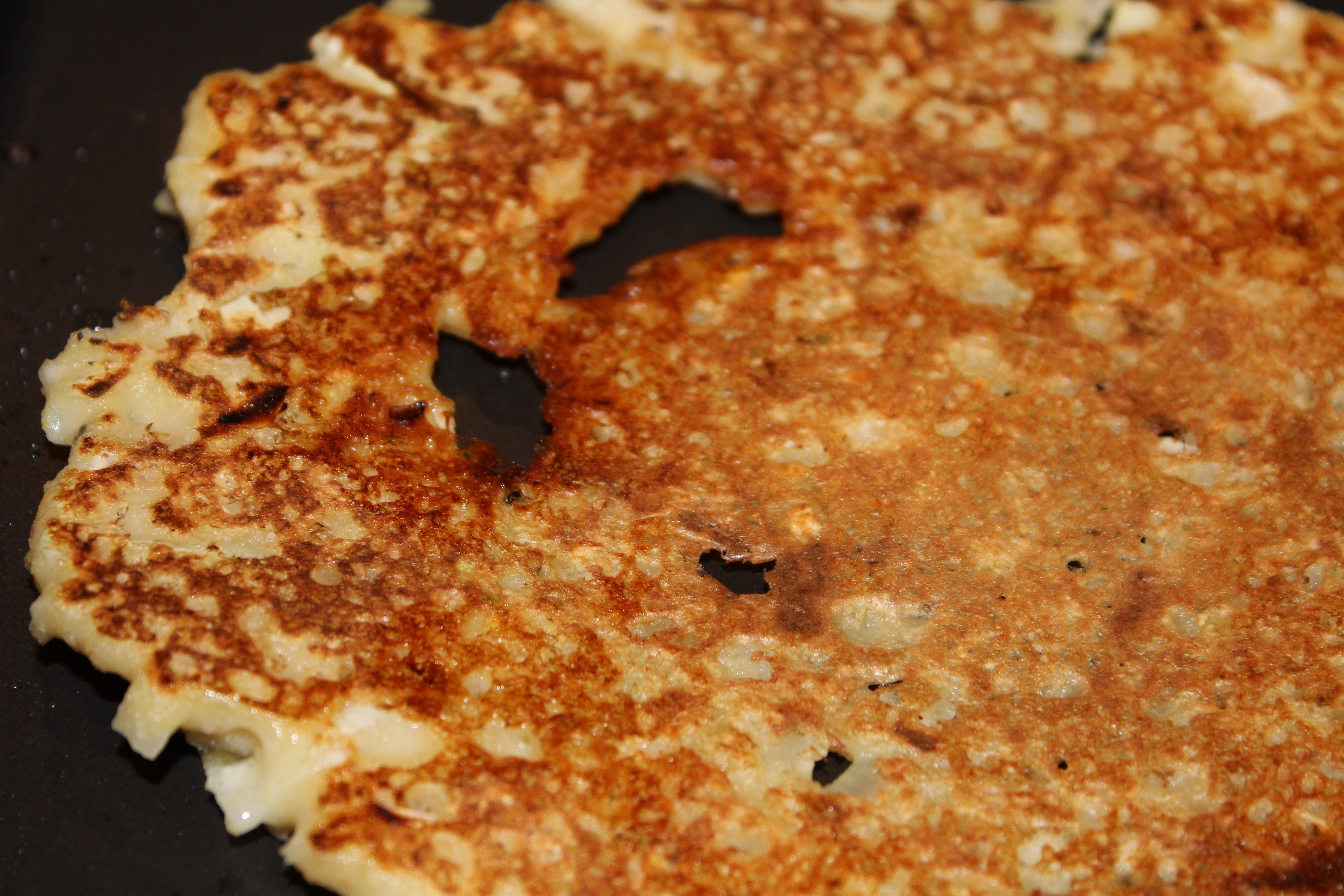
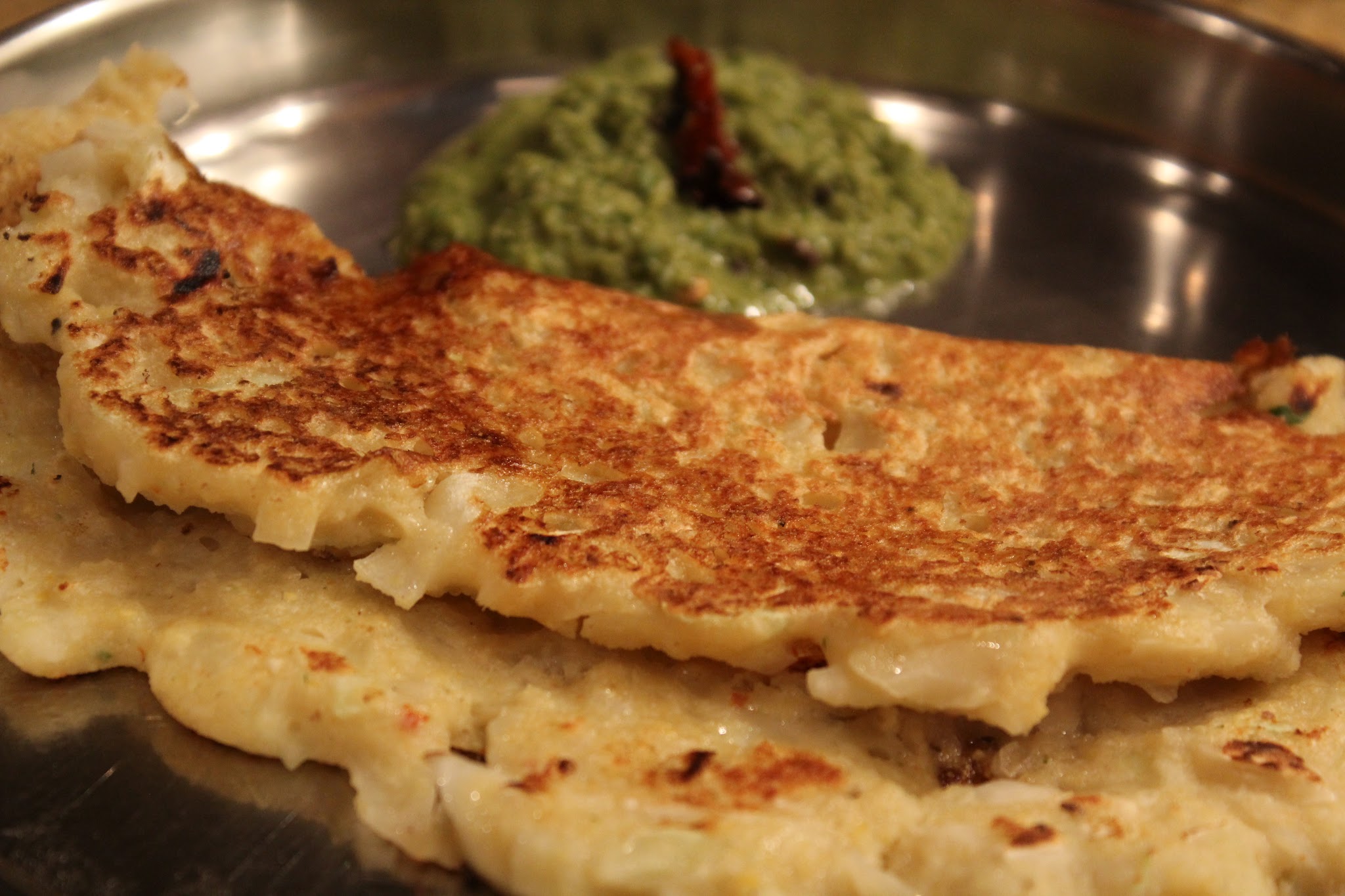
Adai closeup.

Cabbage Adai with Coriander Chutney.
There are endless variations on the dosa. You can use different flours (wheat, semolina), different toppings (fresh tomatoes, cilantro and onions) and make them without the tedium of presoaking and grinding. Remember, the clock is ticking so try them any which way!











 madame scientist's not-so-mad musings