Triumphantly, I produced my find of the day, Trigonella foenum-graecum, much like a conjurer hopes to elicit oohs and ahhs for pulling the proverbial rabbit out of a hat. It was a perfect specimen, clover –like leaves of pale green, a few diminutive flowers dusting their yellow pollen on to my veined kitchen counter.
The family was less appreciative. What is that? Are you going to cook that today? My husband raised a dubious eyebrow. He was thinking, no doubt, of the exponential decay from verdant green to liquid mess that still occurred with distressingly short t1/2 despite the two compressors atop our shiny new stainless steel refrigerator. Even those exotically unstable elements like Calfornium-253 or Thulium-167 had enviably longer half-lives than the greens in our fridge. On the defensive, I pretended that I had planned all along to cook them right away. Which was not a bad idea: a social media guru had challenged me online to write a blog in 12 minutes, in retribution for my laughing at a fellow blogger who wrote a blog about writing a blog in under 12 minutes, and this seemed a good enough reason to write.
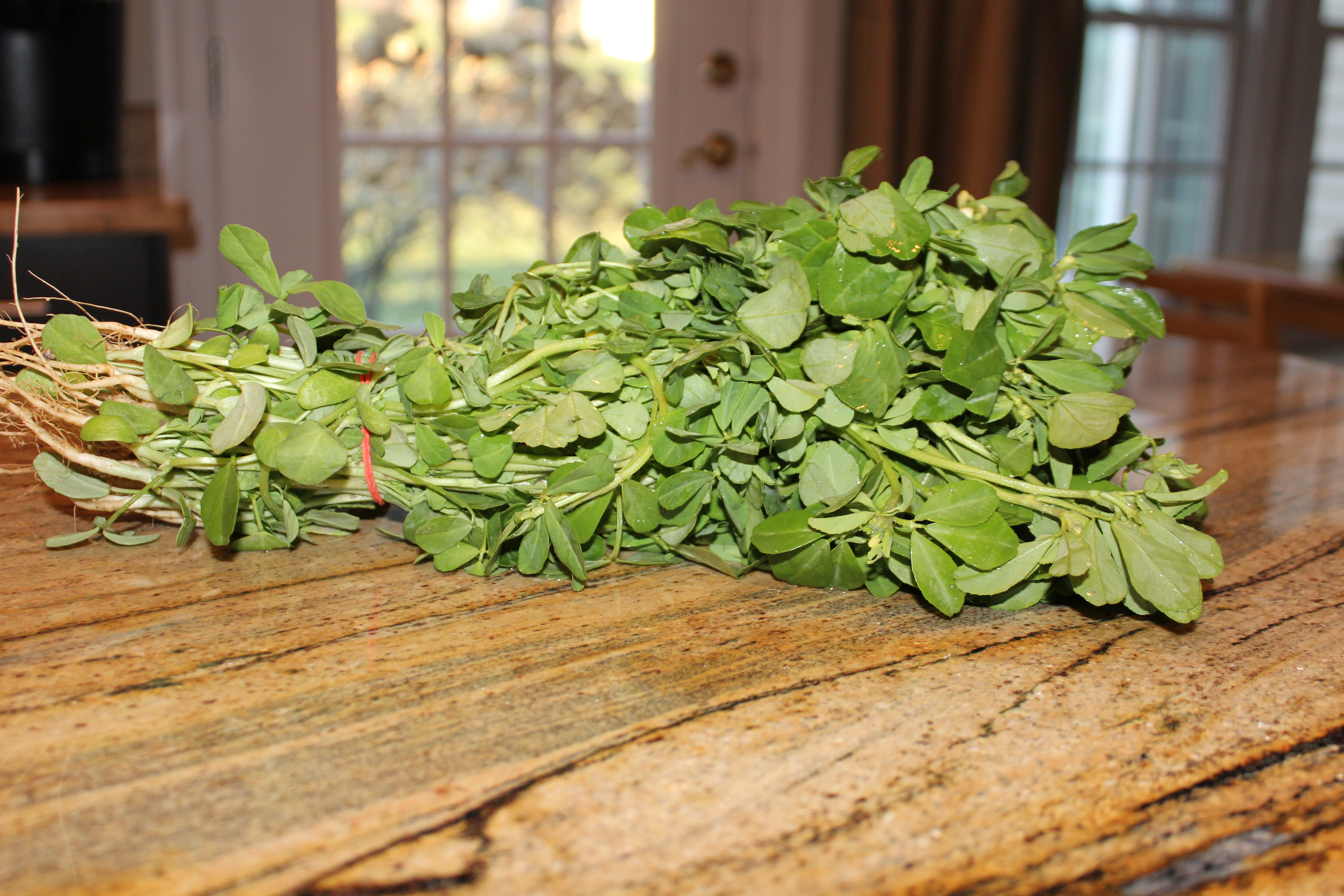
Fenugreek (Trigonella foenum-graecum) leaves
First, the basics. Fenugreek (“methi”) leaves are slightly bitter, but long prized for their medicinal properties throughout the near East. Indeed, they are mentioned in the oldest surviving book of Latin prose, De Agri Cultura, written by Cato the Elder around 160 BC. The dried leaves are called “Kasoori methi” and have a unique fragrance, while the amber yellow seeds are quite bitter and ground into spice mixes. Oddly, fenugreek extract is used to flavor artificial maple syrup. Possibly the best known folk tale about fenugreek is that it is lactogenic, but I shall gloss over this as the days when I was a glorified milk bottle for my two offspring have, thankfully, long passed.
Begin with the tedious task of stripping the leaves from the woody and bitter stems. This is boring enough to require fortification of the spirits, with spirits (a nice Malbec, in this instance), so that one simply cares less.

Prep time: strip leaves from stems
To keep the rest of the preparation simple and quick, I chose to make Alu Methi, or Potatoes with Fenugreek leaves. It is a good idea to diffuse the slight bitterness of the greens over the blandness of potatoes or perhaps a mild dal or lentil.
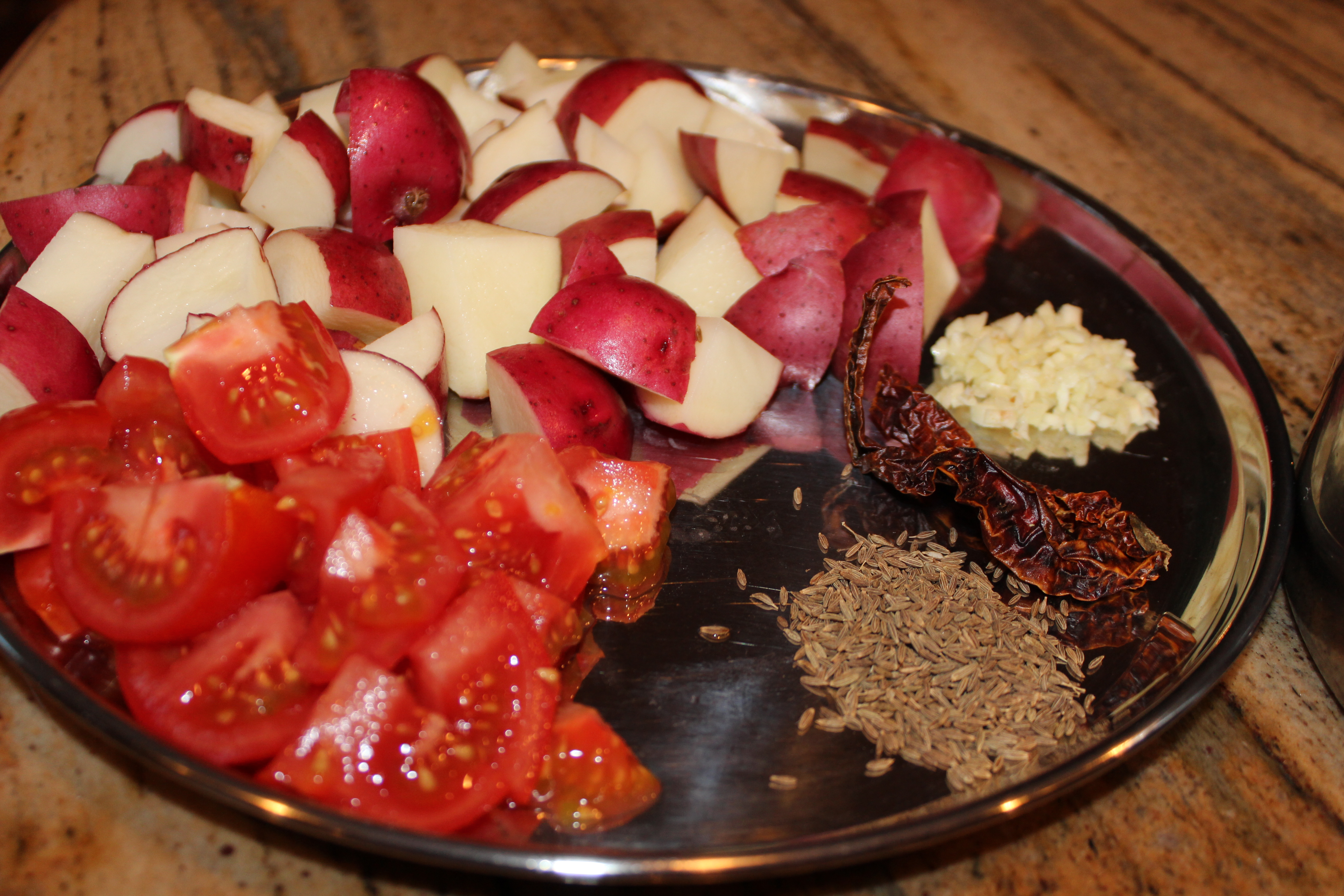
Alu Methi ingredients: cubed potatoes, minced garlic, dry red chilli pods, cumin seeds and chopped tomatoes
I used 5 smallish red potatoes, cut into cubes. Other ingredients included two minced garlic cloves, a couple of chopped tomatoes, a tablespoon of whole cumin seeds and a couple of dry (whole) red chillies for flavor. Of course, salt to taste and turmeric for its lovely color.
Start by heating a tablespoon or two of oil in a heavy bottomed pan. Add the cumin seeds, dried chilli pods and minced garlic; let sizzle.

Sizzling spices
Add cubed potatoes, salt to taste and sprinkle some turmeric powder. Mix well and cover, to cook on medium heat at first, then continue on low.

Toss the potato cubes with spices
When done, this is a perfect version of the American Home Fries, elevated from the mundane.
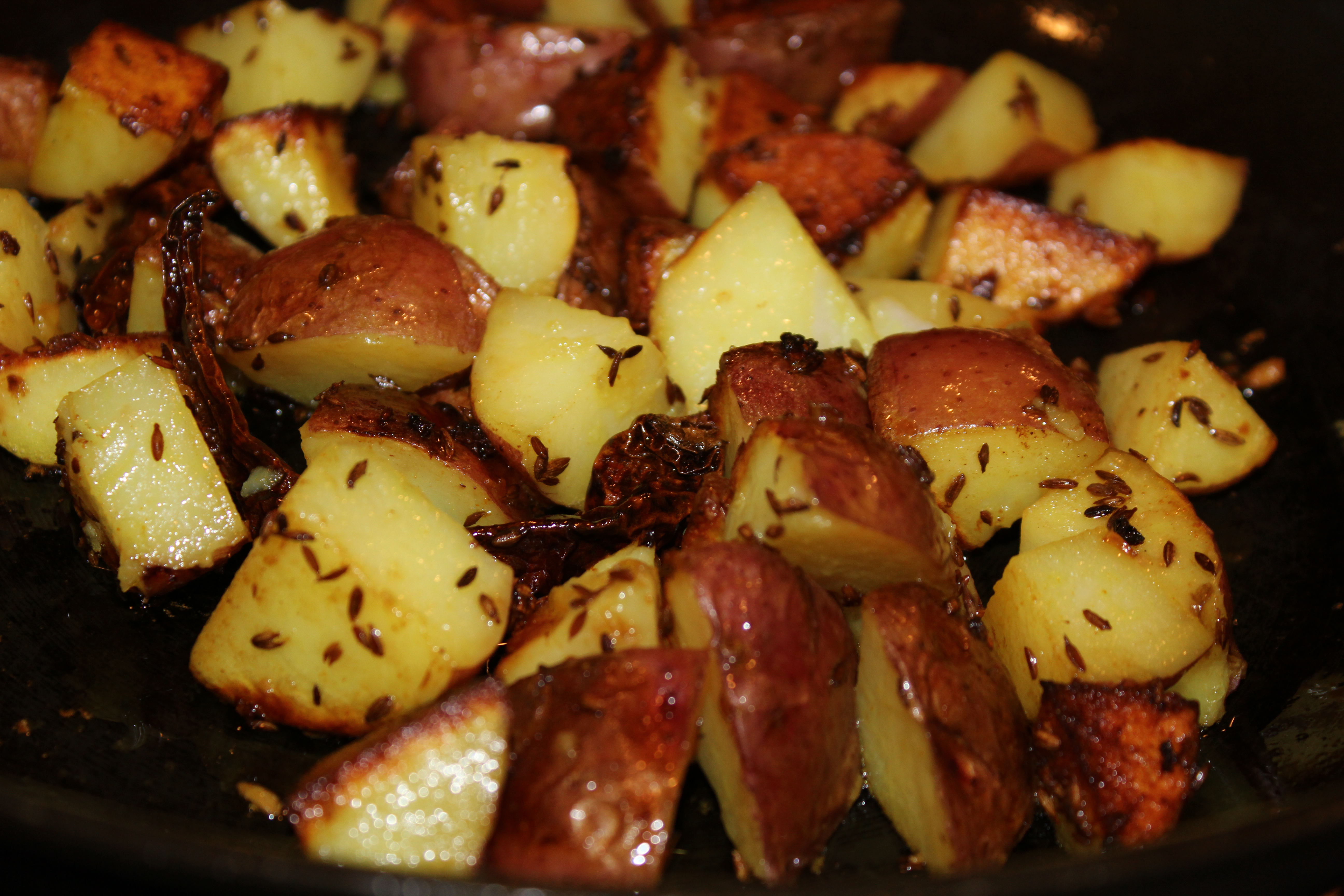
These could well be spiced Home Fries!
Run a knife over the greens, to coarsely chop. Add them to potatoes and toss gently so as not to bruise the delicate greens. At this point, I re-season with a judicious sprinkle of salt.
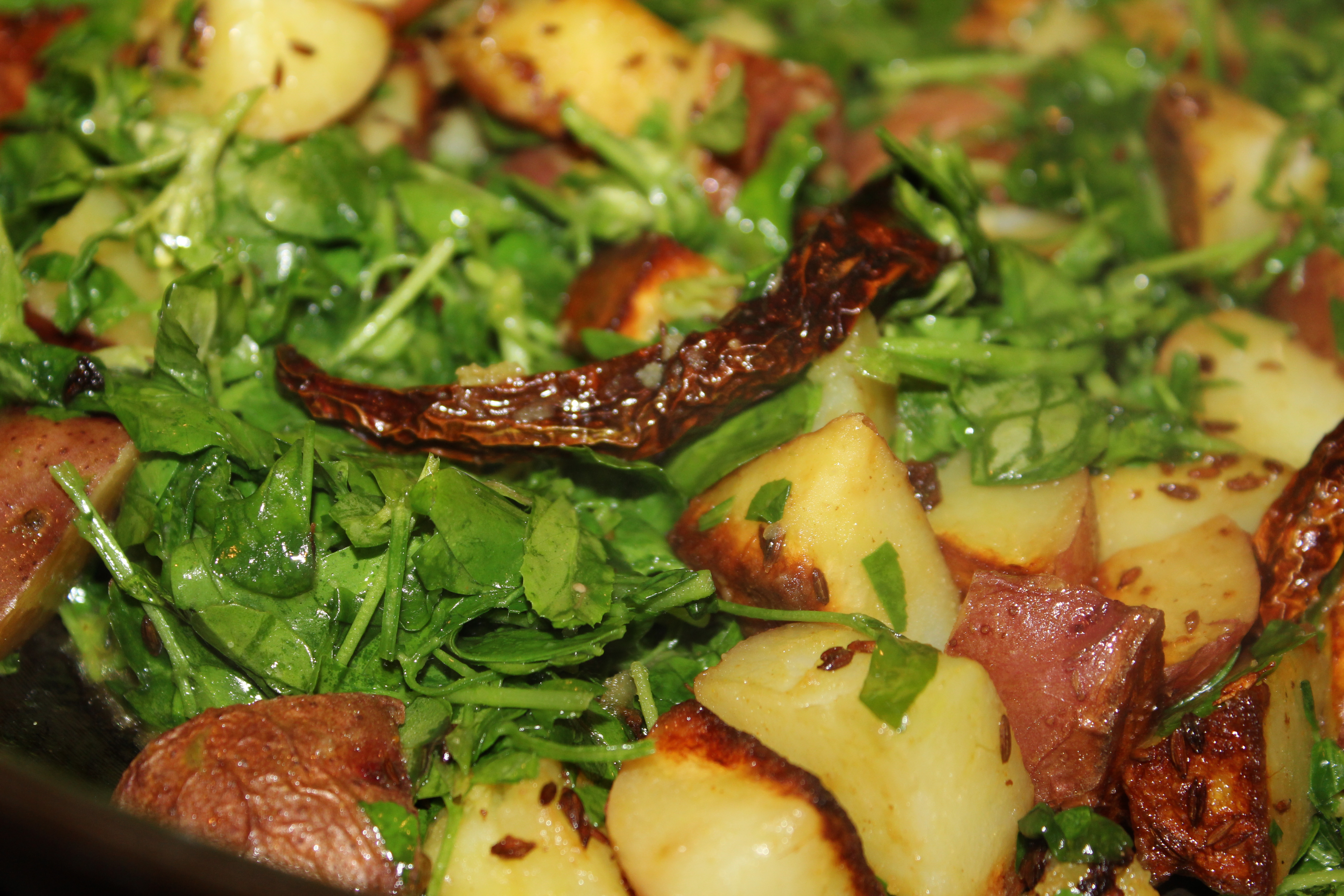
Gently toss in the chopped fenugreek leaves
Cover and continue to steam-cook on low heat for a few minutes. They should look heavenly when done!
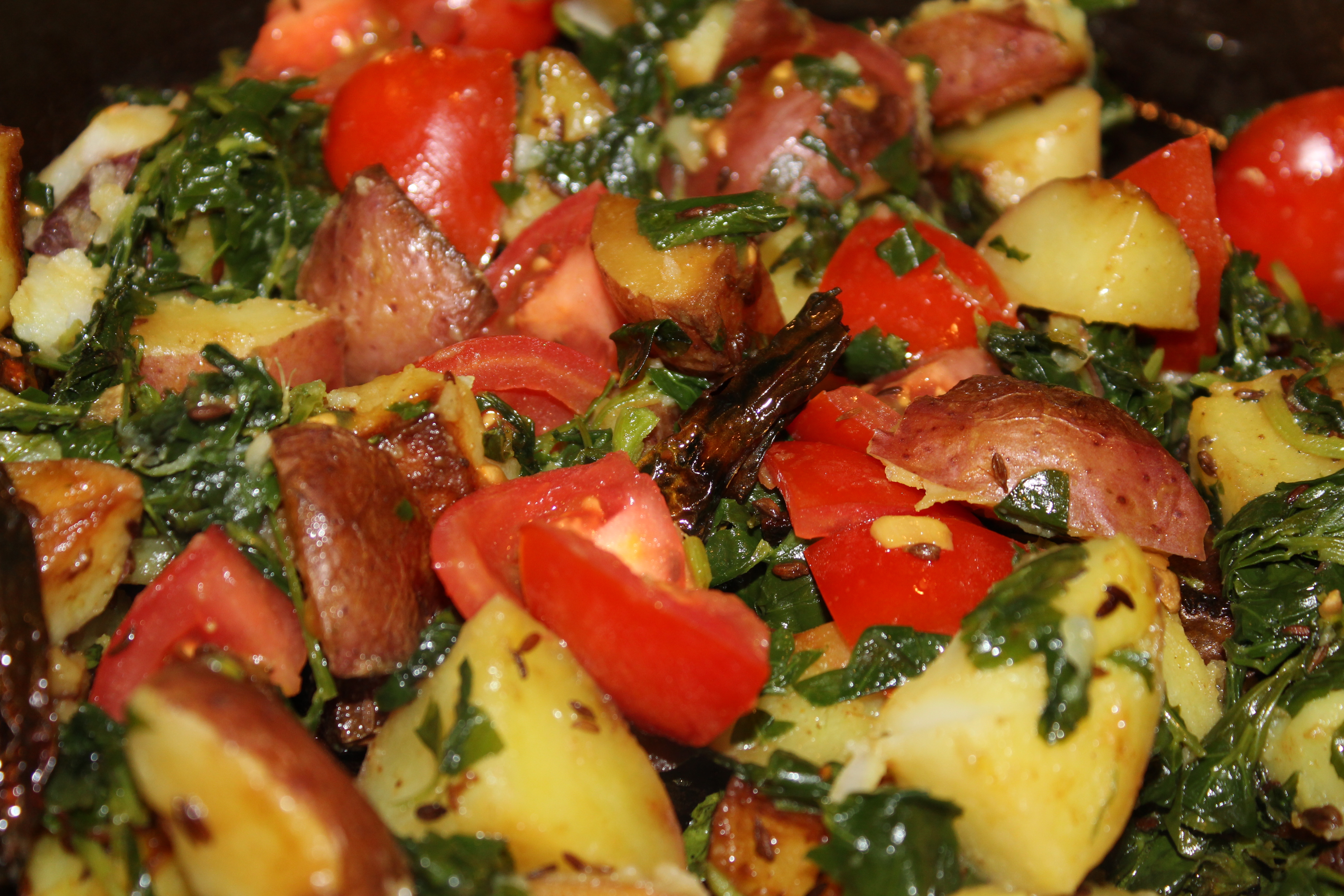
Heavenly fenugreek and potatoes
At this point, I toss in the cubed tomatoes, squeeze some fresh lemon juice and half a teaspoon of sugar. This balances out the mildly bitter flavor to perfection. You could add chilli powder, but I know that I am pushing it with my 13 year old’s finicky taste buds, so I choose to be prudent.
There you have it: Alu Methi– a simple but flavorful combination, perfect alongside some Indian bread (naan) or pita. A little bit of bitter makes it better. An analogy for life.
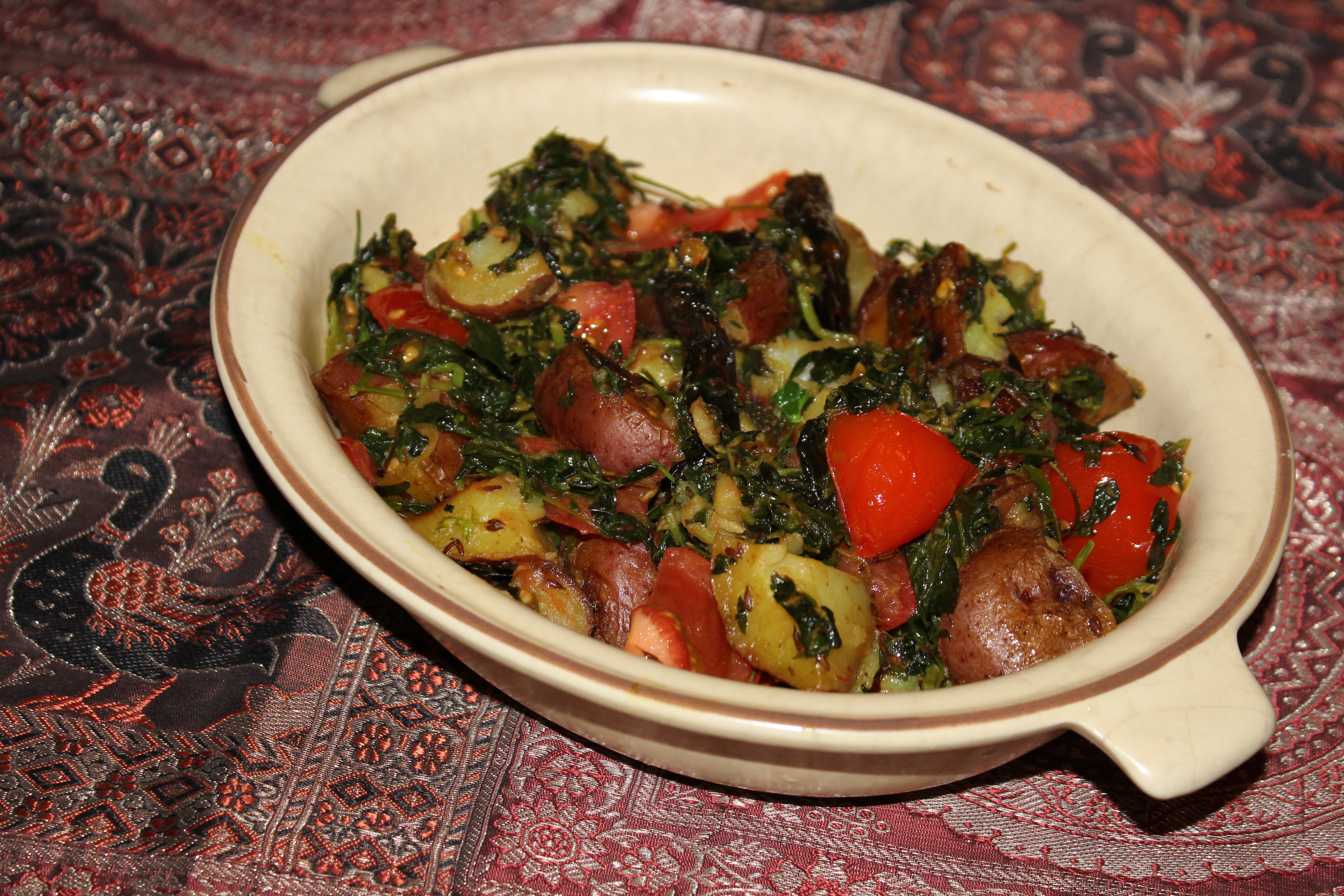
Alu Methi











 madame scientist's not-so-mad musings