


Recent Comments
Earth Hour March 31st, 8:30 pm
• To see a world in a grain of sand, and a heaven in a wild flower, Hold infinity in the palm of your hand, and eternity in an hour. William Blake
• There are no passengers on Spaceship Earth. We are all crew. Marshall McLuhan
• We are on a spaceship; a beautiful one. It took billions of years to develop. We’re not going to get another. Now, how do we make this spaceship work? Buckminster Fuller
• In a sense, each of us is an island. In another sense, however, we are all one. For though islands appear separate, and may even be situated at great distances from one another, they are only extrusions of the same planet, Earth. J. Donald Walters
• Another world is not only possible, she is on her way. On a quiet day, if you listen carefully, you can hear her breathing. Arundhati Roy
Originally shared by Jose M. G. Guerreiro
Calling All Science Writers! We now have a new category just for you.
Thank you for all the science-y goodness that you send our way, every day. Please sign up (http://goo.gl/hLqzn) so we can add you to Science on Google+: A Public Database and don’t forget to Follow this page to allow us to share circles. If you know any science writers on G+, please share. Thanks!
Rich Pollett Koen De Paus Jennifer Ouellette Jenny Winder Sakis Koukouvis Ed Yong Carl Zimmer Bora Zivkovic David Brin Maggie Koerth-Baker Chris Mooney
♬ THE PHANTOM OF THE OPERA: Some unabashed melodrama to end your week on a high note! Emmy Rossum and Gerard Butler sing Past the Point of No Return.
Past the point of no return
No backward glances
Our games of make-believe are at an end.
Past all thought of “if” or “when”
No use resisting
Abandon thought and let the dream descend.
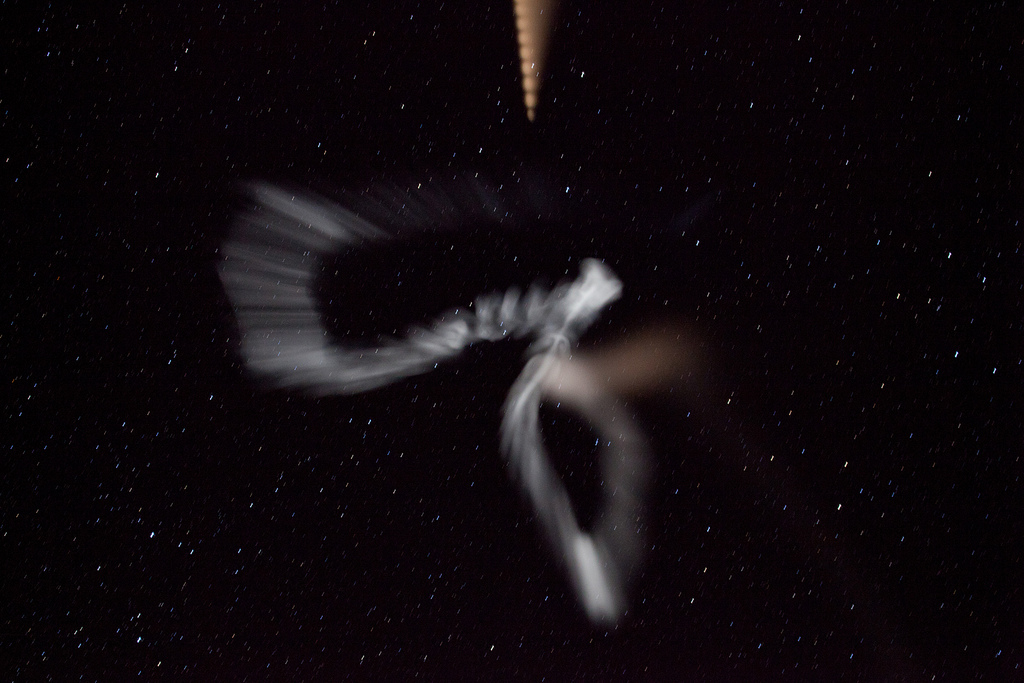
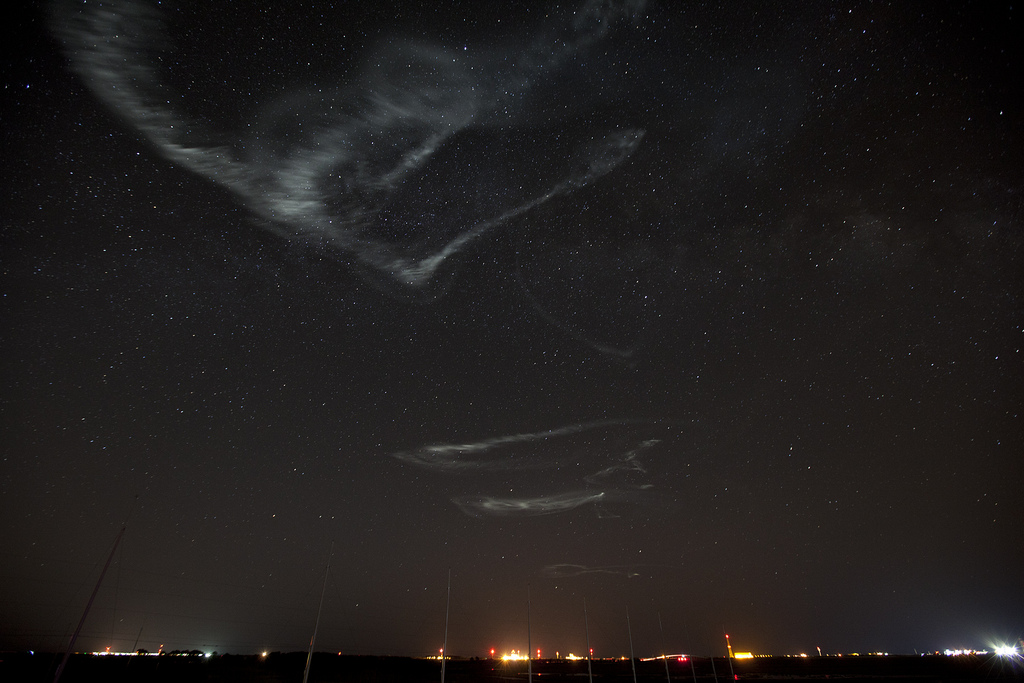
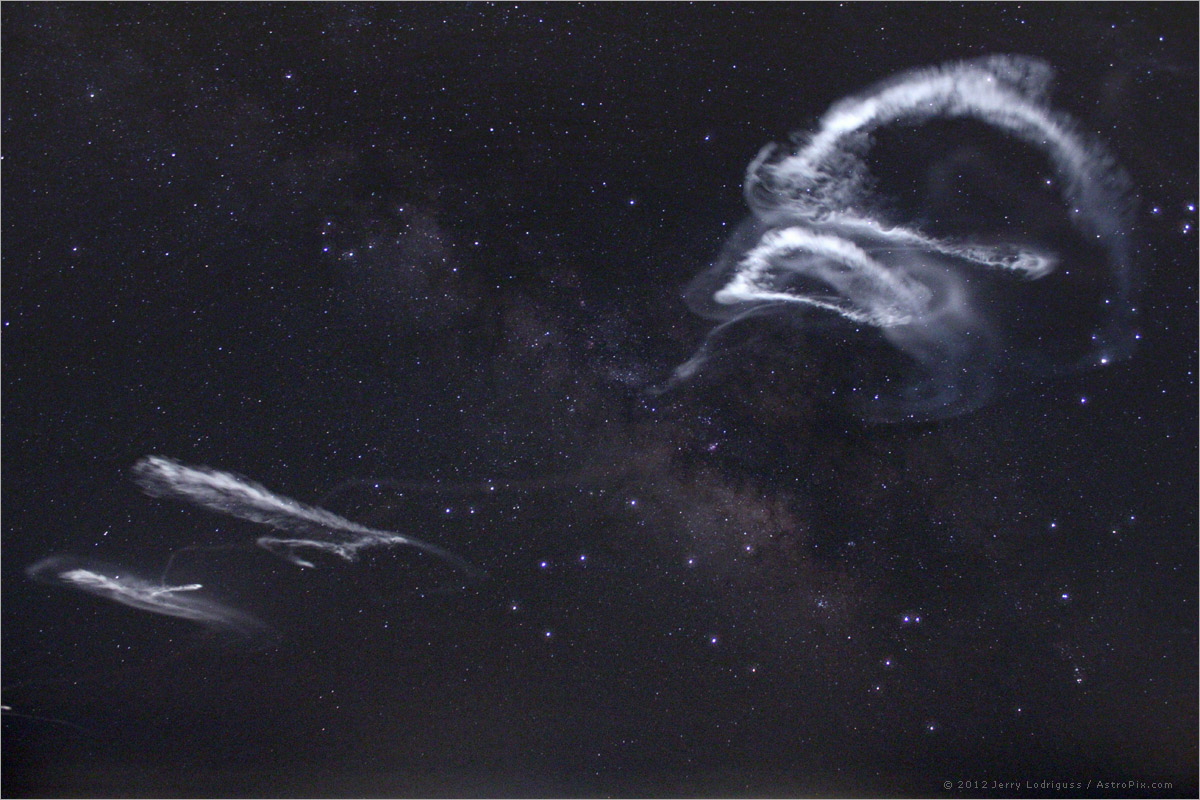
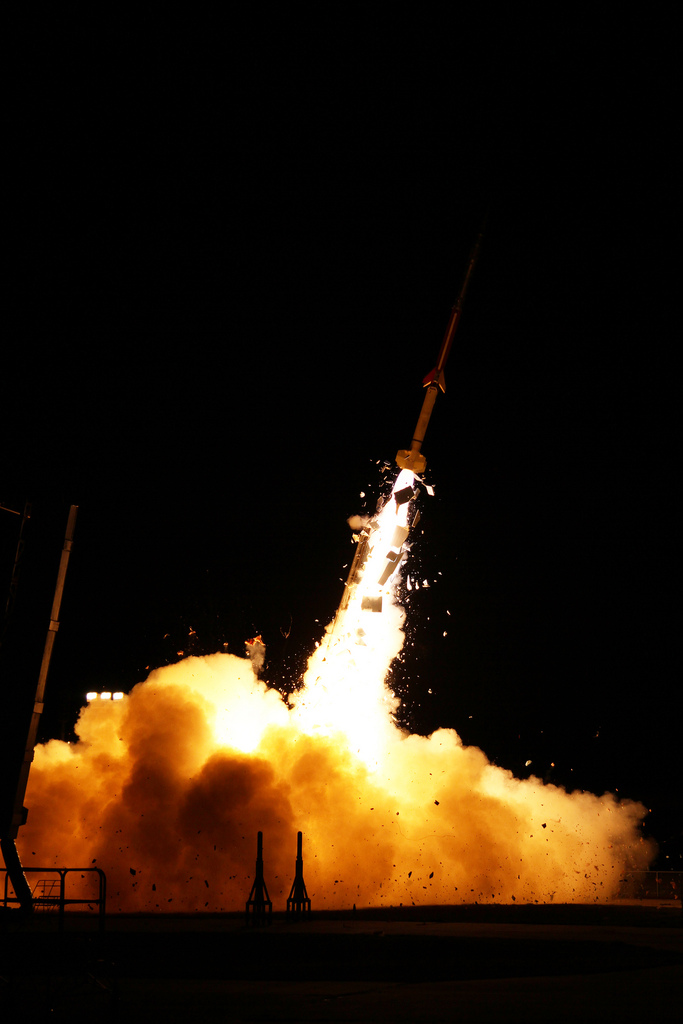
Launch Madness: NASA fires 5 rockets in 5 minutes. Two days ago, 5 ATREX sounding rockets were fired from NASA’s Wallops Flight Facility in Virginia as part of a heliophysics study of the upper level jet stream.
• At the edge of space, 60 to 65 miles above Earth’s surface, winds achieve astonishing speeds of 200 to 300 miles per hour. This highly electromagnetic layer can damage man-made satellites and disrupt communications systems.
• Each rocket released a harmless chemical tracer, trimethyl aluminum (TMA), which forms milky, white clouds that track the winds in space. In addition, two of the rockets carried instrumented payloads to measure pressure and temperature during their short flights.
• “This area shows winds much larger than expected,” says Miguel Larsen, a space scientist at Clemson University who is the principal investigator in charge of these five rockets, known as the Anomalous Transport Rocket Experiment (ATREX). “We don’t yet know what we’re going to see, but there is definitely something unusual going on. ATREX will help us understand the big question about what is driving these fast winds.”
Sources: http://www.nasa.gov/mission_pages/sunearth/missions/atrex-nightlight.html
http://apod.nasa.gov/apod/astropix.html


 madame scientist's not-so-mad musings