The Master Archer
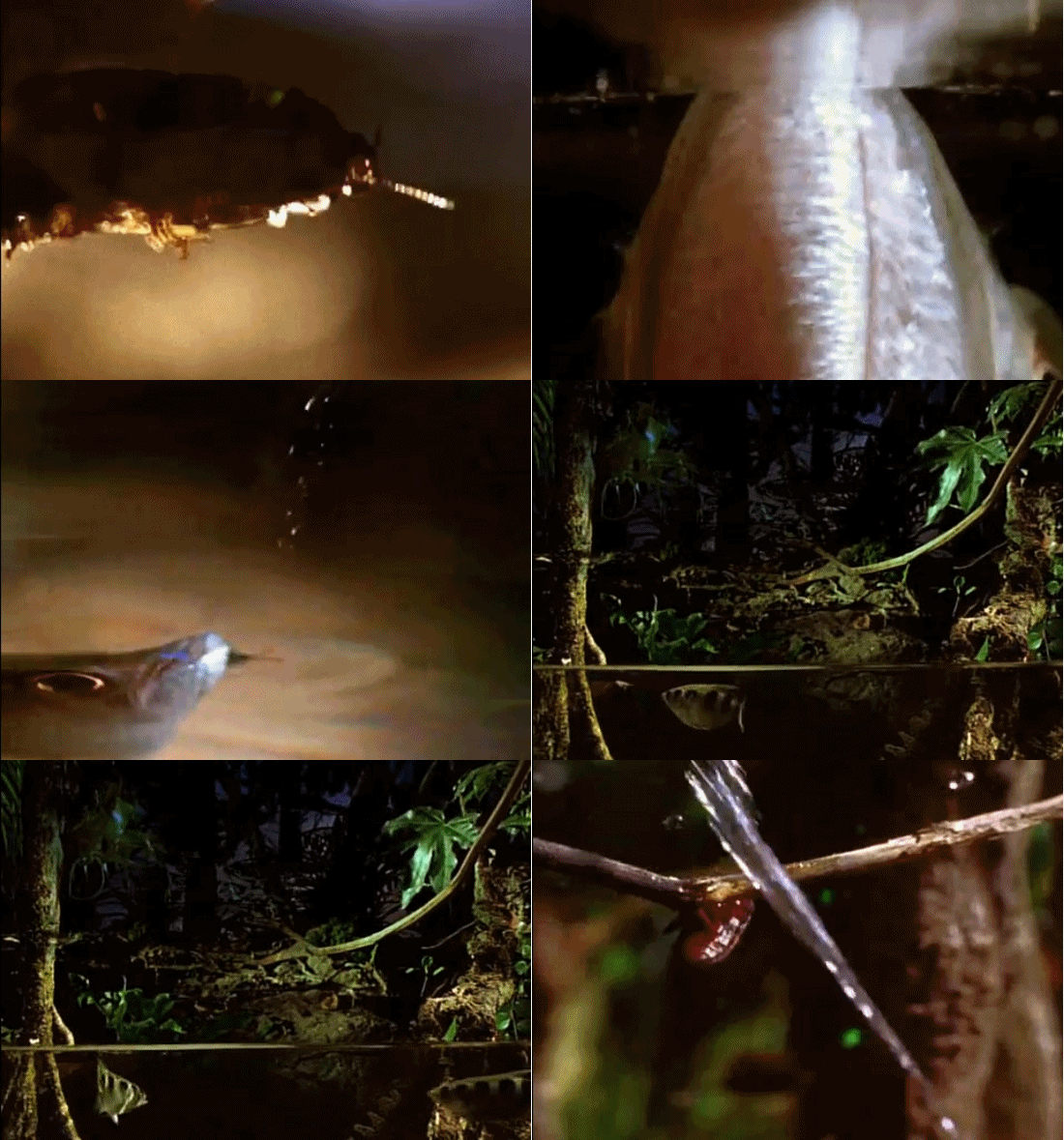
▶ Lurking under the water surface in the estuaries and mangroves of India and Polynesia, the archer fish Toxotes (from the Greek Τοξοτης for archer) precisely aims a ballistic jet of water that knocks off a hapless insect from the shrubbery above, sending it tumbling into the water where it is promptly devoured. To dislodge prey anchored firmly to the vegetation with forces up to 10 times their body weight, the water jet must achieve a power of 3000 Watts/kg within a fraction of a second. Since this intrepid hunter was first described 250 years ago, scientists have puzzled over this mastery of archery.
▶ Fishy Physics: Biologists first considered a mechanism similar to the chameleon, where energy is stored in coils of collagen inside the tongue (explained in the Chameleon Catapult post http://goo.gl/B5fPVS). But dissection of the archer fish revealed no such specialized structure. Besides, they calculated that muscle power could maximally account for ~15% of the observed force of the water jet. Researchers then resorted to analysis of high speed video recordings of the archer fish in action. What they saw was a thin jet of water with a “head” that becomes increasingly bigger during flight. Surface tension and inertia hold the head together, pushing the tail jet into the head forming hammer-like pellet which strikes with deadly force. A fancy term for this is hydrodynamic amplification, and the physicists among you may enjoy reading about the “Ohnesorge number” and “Rayleigh-Plateu Instability” in the referenced paper. The rest of us will be intrigued by the similarity to Drop on Demand Inkjet Printing which similarly uses an explosively ejected drop of ink, as in Canon’s Bubble Jet printer (http://en.wikipedia.org/wiki/Inkjet_printing). The archer fish achieves all this at a low evolutionary cost by gulping a small amount of air into a gun-barrel shaped groove in its mouth and closing its gills before delivery. Just like Diana the huntress amplified her muscle power with a bow, this little fish also exploits an external hydrodynamic lever to capture its prey.
REF: Vailati et al. (2012) PloS ONE; open access http://goo.gl/DHZ1C
H/T to PJ Rosenberg for inspiring this post with the gif image he shared to the Science on Google+ community (http://goo.gl/fPDy2u).
#ScienceSunday






 madame scientist's not-so-mad musings