Art of Neuroscience The beauty of astrocytes, purkinje cells and neurons is revealed in these images!
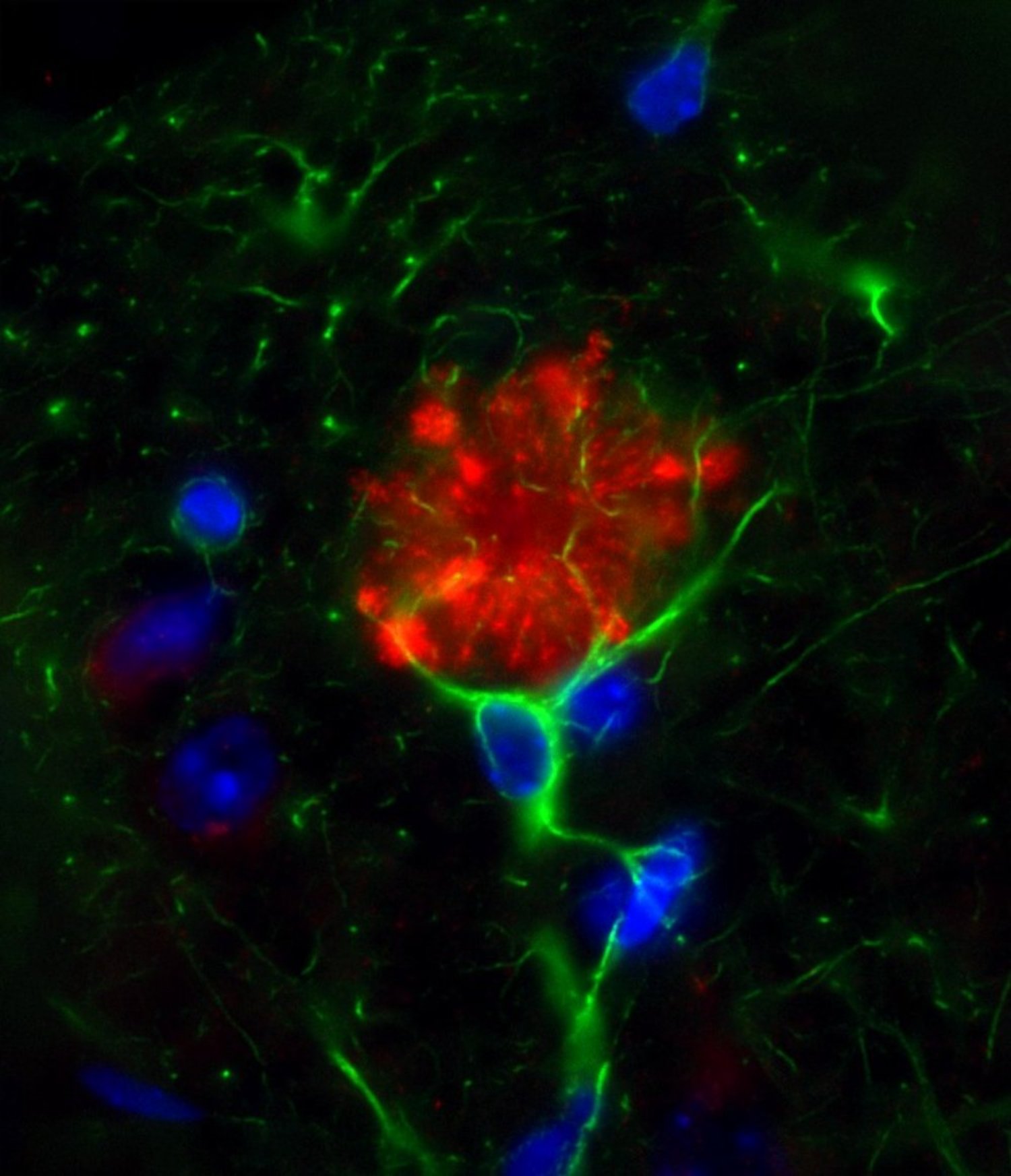
A Rose : Astrocyte cell stained green for GFAP wrapping its arms around a plaque of amyloid precursor protein (red) in the brain of an Alzheimer mouse. Nuclei in blue.
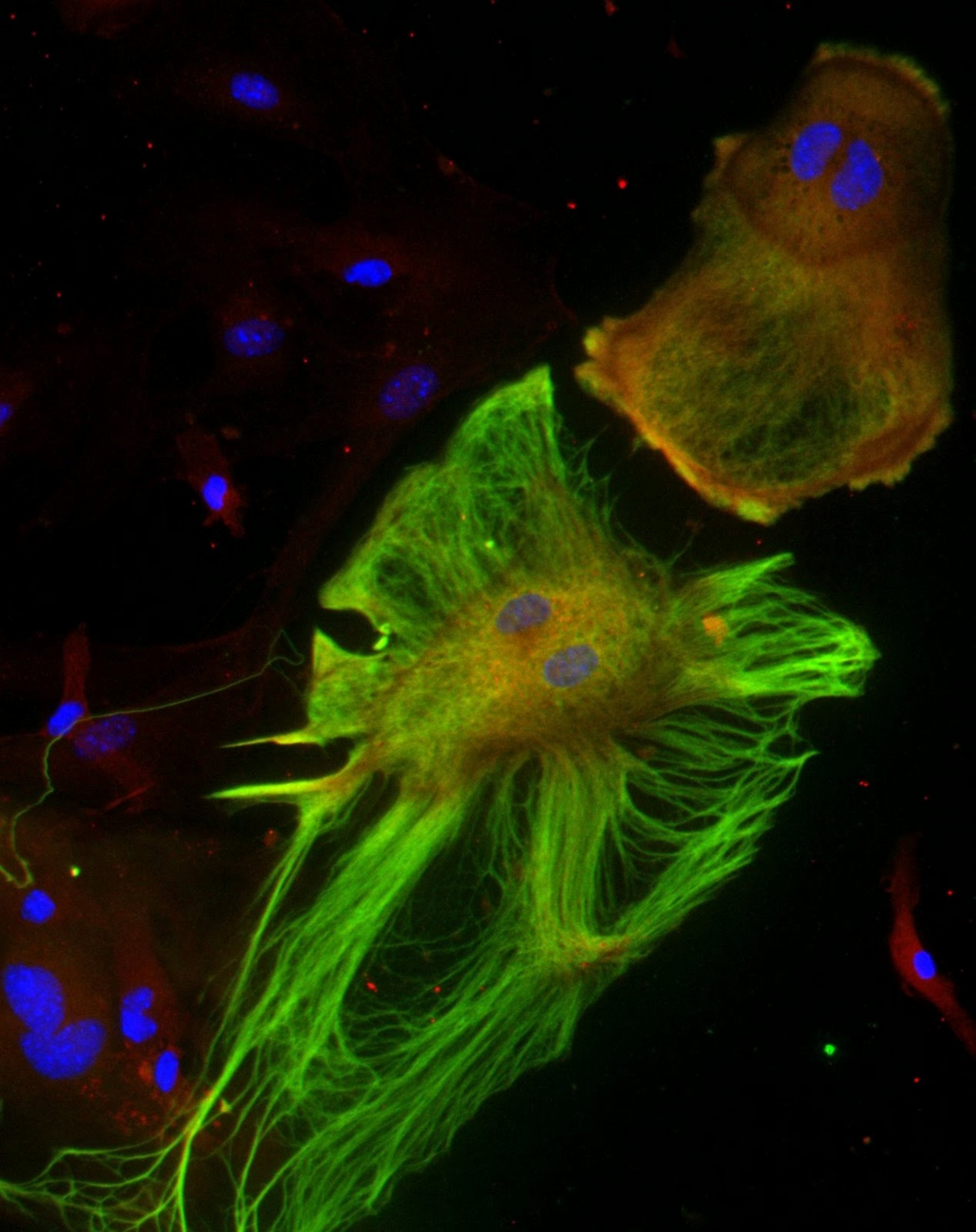
Boo! : Mouse astrocytes stained for GFAP isoforms (red and green) with sad nuclei ‘eyes’ in blue.
Butterfly : Tracing of Purkinje neurons
Neuro-dominoes : Two CA3 neurons from hippocampus, filled with dye, and arranged in a dancing collage.
Improbable Research From the folks who award the Ig Nobel Prizes, comes this exciting research find 🙂 Walking with coffee: when and why coffee spills
I nearly spilled my coffee, laughing! See you all in Baltimore at the American Physical Society Meeting on Monday, because you’re not going to want to miss this. Also add to your itinerary: Abstract: H15.00008 : “Oenodynamic”: hydrodynamic of wine swirling.
Kathak is one of six distinct styles of Indian classical dance. It has roots in story telling..the word “katha” comes from Sanskrit for story. Although it originated in the temples of ancient India, Kathak was adopted in the courts of Mughal kings. As many as 150 ankle bells ( ghungru ) are worn to emphasize the flamboyant and intricate footwork. Kathak resembles Spanish flamenco dancing apparently because it was exported via the Romani people, thought to have originated and migrated from the Indian subcontinent around the 11th century!
Kathak incorporates three styles: natya , expressive or dramatic dance; nritta , pure and abstract dance which is often highly rhythmical; and nritya , the fusion of these two elements.
The link I chose is an exuberant, more modern interpretation. If you like it, check out a more classical clip from the same dancers, Nirupama and Rajendra: Dance India 2010
#womanspace The picture below is a hilarious response to the unfunny 1950’s style article published in Nature, the hallowed ground for science publishing. Read the article and tell me what you think.
As one woman scientist, Anne Jefferson, put it so well: The story hearkens back to the “good old” sexist days when men did important things (like write books about virology) and women did unimportant things (like keep their families fed and clothed); when men couldn’t be bothered to be useful around the house and even when women did manage to get science degrees they were better employed as cooks and errand runners. The writer makes the explicit assumption that all of his (and, thus Nature’s) readers are male and have a “significant female other” who helps with their shopping. The story uses a cliched trope that women have an alternate reality, but then adds the extra punch that we aren’t even smart or observant enough to know it. As a woman scientist reading this article, it seems in every way designed to make me feel othered and excluded from the scientific academy .




 madame scientist's not-so-mad musings