Sleepless in Seattle? We spend a third of our lives asleep. But some of us suffer profound sleep deficits and abnormal circadian rhythms that are linked with psychiatric disorders, hypertension, cardiovascular disease, learning and memory problems and general mortality.
Twin studies have shown a strong genetic component (40% heritability) to sleep. Sleep duration is a polygenic trait- influenced by many genes. Several clock genes are known. A study just published in Molecular Psychiatry uncovers a new player: ABCC9, better known as SUR2, is critical for the release of insulin in response to blood glucose levels. Mutations in SUR2 were previously linked to childhood diabetes. SUR is also the acronym for Sulphonyl Urea Receptor, for a drug used to treat diabetes.
In this new study, investigators performed GWAS (Genome Wide Association Study; want to sound science-y? Say gee-wahs) on >4000 people to identify SNPs (Single Nucleotide Polymorphisms, i.e., gene variants), linked to sleep duration. To confirm the link, they knocked out the same gene in the fruit fly nervous system ( Drosophila ) and found a dramatic decrease in night sleep, but not in daytime sleep (apparently, flies sleep both during the day and night! How to tell if a fly is asleep? No movement for 5 min is assumed to mean that the fly is in the arms of Morpheus). In fact, onset of night sleep was delayed by 3 h.
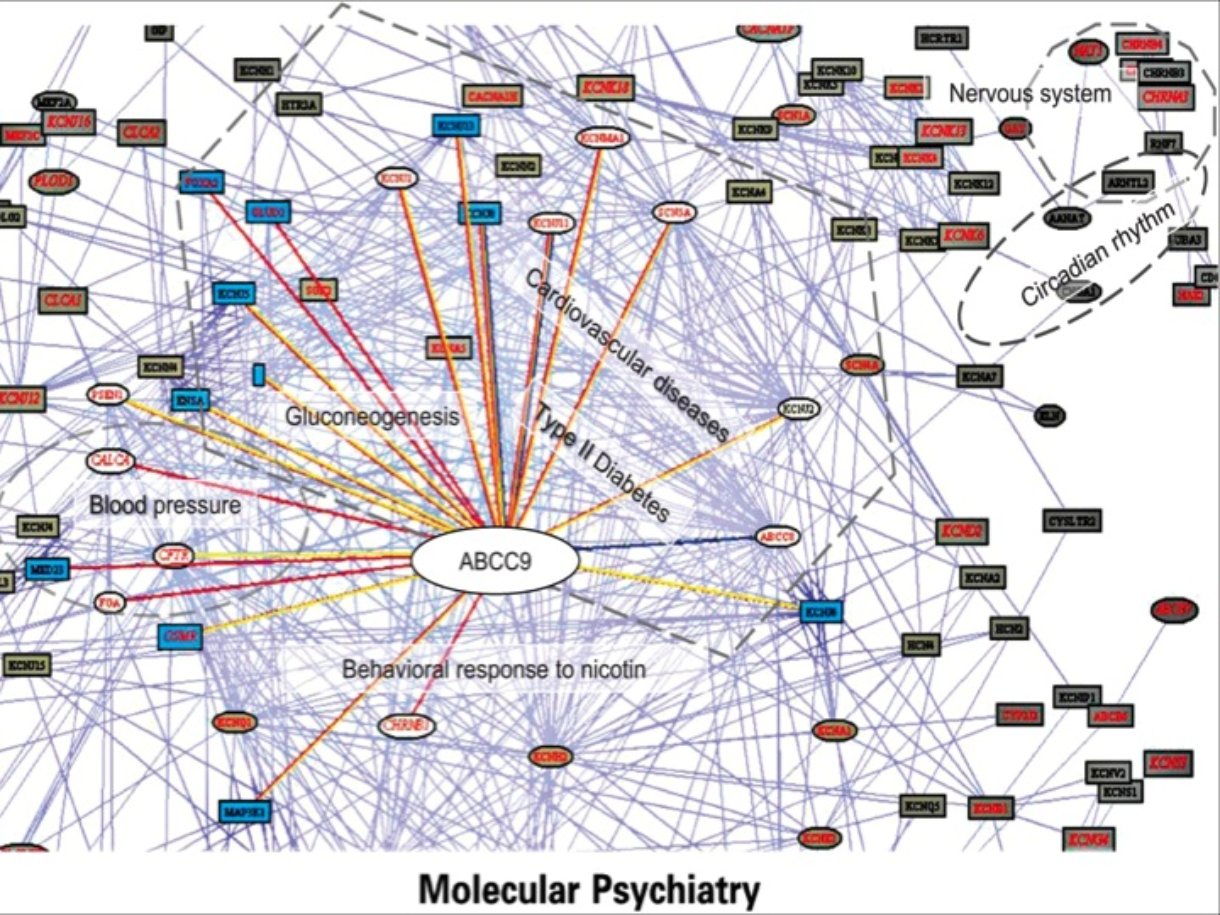
So what is the connection to sleep? ABCC9/SUR2 is part of an ATP-regulated potassium channel that links metabolic state (i.e., carbohydrate availability) to cortical neuron responses. It is thought that KATP channels balance adaptive response to stress and the metabolic resources to ensure survival. Other potassium channel regulatory genes have also been shown to alter fruit fly sleep. They have been called Hyperkinetic and Sleepless (so my lede was not that farfetched after all!).
Image: ABCC9 genetic interaction network (generated with SNPs 3D). Oval nodes represent genes associated with diseases, and rectangular nodes represent other genes. Genes in red have deleterious SNPs.
Hand Shadow Art brilliantly done, in homage to the city of Calcutta. Natives will recognize the iconic Victoria Memorial, Howrah Bridge, boats on the Ganges, the endangered Sundarbans tiger, Nobel laureate poet Rabindranath Tagore, and more.
Citizens of the world on Google+ can appreciate some creative hand art!
Carbon fiber. Stronger than steel. Beauty and function. Colorless rayon or polyacrylonite fibers are pulled over hundreds of reels 200m long and baked at temperatures as high as 1,400 Celsius (2,550 Fahrenheit). Only carbon atoms remain, neatly arranged and now black, 1/10th the width of human hair.
50,000 of these are bundled into a thin thread, capable of lifting a tonne of weight. The threads are woven into mats, cut and placed in molds, put in vacuum, immersed in resin and cured by heating. Within minutes, they harden to create body parts for a car, 5x stronger than steel, 2x more rigid but 60% less in weight. That alone could reduce a car’s fuel consumption by 30 percent and cut greenhouse gas and other emissions by 10 to 20 percent [source: Oak Ridge National Laboratory].
With their swoopy carbon fiber bodies, the BMW i3 city car and sportier i8 look like the auto show concepts that never get beyond auto shows. In fact, they are just two years from production.
‘Tis the Season! I was picking up groceries at the store this evening to the piped tunes of X-Mas music. Evidently, the season of cheer is here. Nothing will get you in a cheery mood better than this performance extraordinaire! Enjoy…
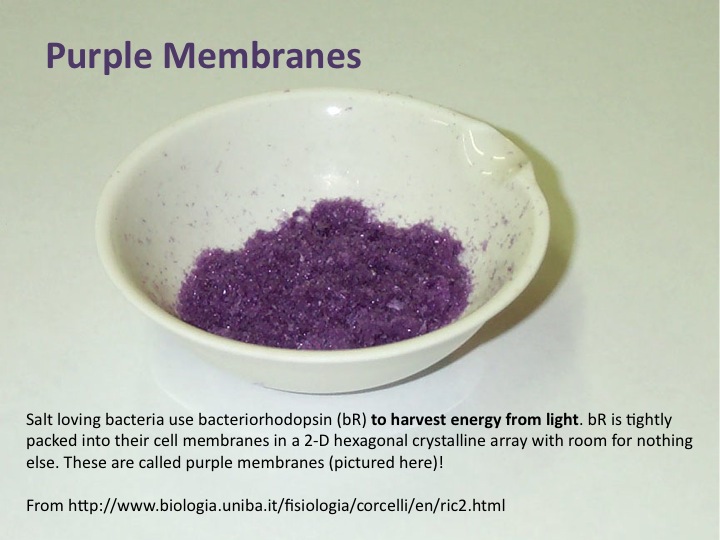
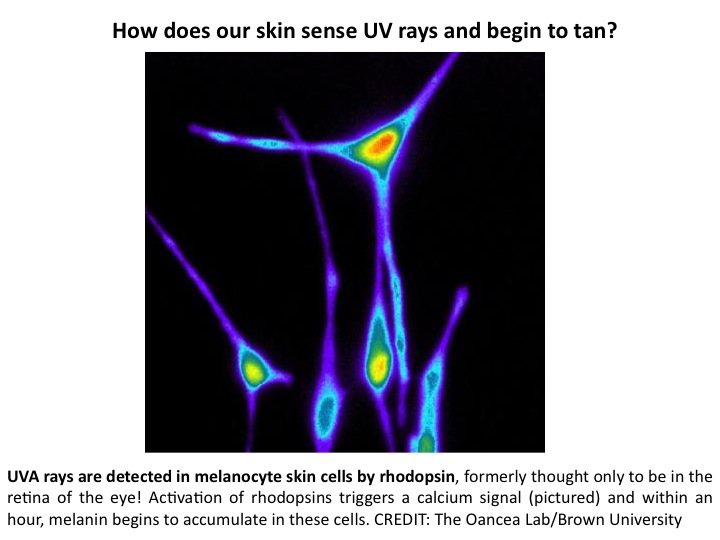
From Purple Membranes to Pigmented Proteins: How Rhodopsins Sense and Harvest Light.
An estimated 13% of bacteria in the nutrient poor, high radiation sunlit surface of oceans were found to contain variants of the protein proteorhodopsin, which could allow them to harvest electromagnetic energy from light.
The most intensely studied light harvesting protein is bacteriorhodopsin. It uses light energy to pump protons out of the bacterial cell. Just as a waterfall can drive a turbine to generate electricity, the protons can run back into the cell and turn the rotary motor of the ATP-synthase, to make the main currency of energy used by the cell (ATP).
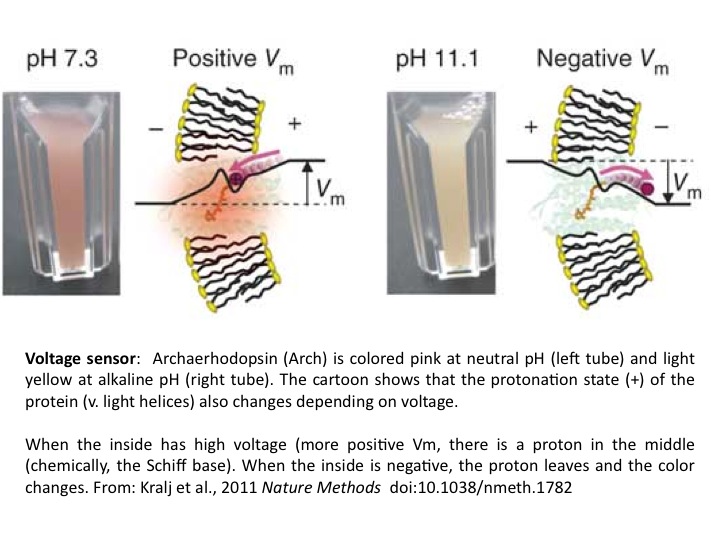
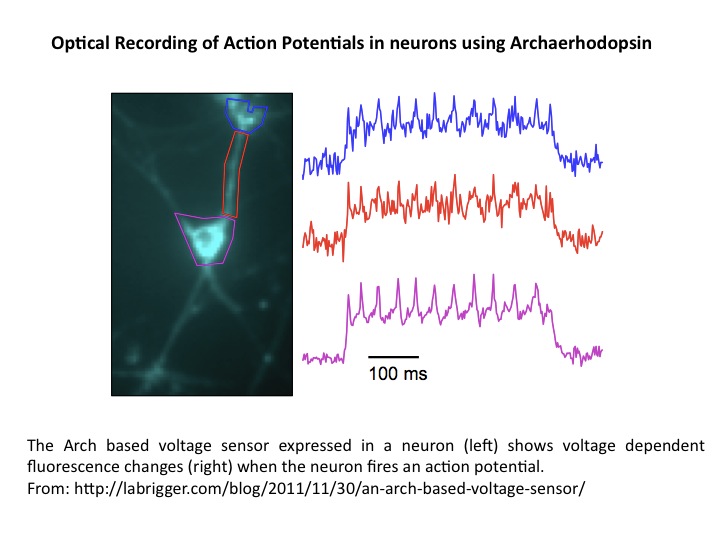
How do rhodopsin-like proteins sense light and extract energy from it? Can we use them to fire action potentials in neurons by the flick of a light switch, or to restore vision to the blind? A recent paper reported using a rhodopsin variant as a voltage sensor, to detect action potentials in neurons…how does that work? What do carrots have to do with all this?
Answers are in the images..if you have questions, ask. I teach this stuff and love it!
For all serious science geeks, including Koen De Paus , and Rich Pollett , who rashly agreed to read this.





 madame scientist's not-so-mad musings