On The Shoulders of Giants

On The Shoulders of Giants

♀ A sepia print of an Indian woman, a Japanese woman and a woman from Syria, dated 1885. What do they have in common? Extraordinarily, each was the first licensed female medical doctor in their country of origin. They were trained at the Women’s Medical College in Pennsylvania, the first of its kind in the country. This was a time before women had the right to vote. If they did attend college at all, it was at the risk of contracting “neuralgia, uterine disease, hysteria, and other derangements of the nervous system” (according to Harvard gynecologist Edward H. Clarke). 

An all-woman medical school was first proposed in 1846, supported by the Quakers and the feminist movement. Dr. Ellwood Harvey, one of the early teaching faculty, daringly smuggled out a slave, Ann Maria Weems, dressed as a male buggy driver, from right outside the White House. With his reward money, he bought his students a  papier maché dissection mannequin. Eventually, poverty forced him to quit teaching, but he still helped out with odd jobs. What a magnificent man!  

Fate and fortune were to buffet Ms. Joshi’s life. Married at age 9 to a man 11 years older, her husband turned out to be surprisingly progressive. After she lost her first child at age 14, she vowed to render to her “poor suffering country women the true medical aid they so sadly stand in need of and which they would rather die than accept at the hands of a male physician”. She was first offered a scholarship by a missionary on condition that she converted to Christianity. When she demurred, a wealthy socialite from New Jersey stepped in and financed her education. She is believed to be the first Hindu woman to set foot on American soil. I didn’t arrive until 1983 😉

Times were tough then. The fate of these three intrepid pioneers was a sad one. Joshi died of tuberculosis in India at the age of 21, without ever practicing. Fittingly, her husband sent her ashes back to America. Islambouli was not heard of again, likely because she was never allowed to practice in her home country. Although Okami rose to the position of head of gynecology at a Tokyo hospital, she resigned two years later when the Emperor of Japan refused to meet her because she was a woman. 

Times have changed. My own mother was married at the age of 13 to a man also 11 years her senior. My father recalls helping my mother with her geography homework in high school. She never did attend college, despite being a charismatic woman with quicksilver wit and efficiency. Little wonder then, when I was accepted into graduate school in the US, unmarried and 21 years young, my parents staunchly stood behind me against the dire predictions of friends and relatives (“She’ll come back with a yellow haired American!” “Haven’t you read Cosmopolitan magazine? They are all perverts there!”). Happily, I escaped perversion, earned my doctoral degree and even gained a supportive spouse of my own. In 2004, I became only the 103rd woman to be promoted to Professor in the 111-year history of the Johns Hopkins medical school, and the first in my department, the oldest Physiology department in the country. If I have seen further it is by standing on the shoulders of giants

#STEMwomen   #ScienceEveryday  

More reading: http://www.pri.org/stories/2013-07-15/historical-photos-circulating-depict-women-medical-pioneers

Posted in Rajini Rao | Tagged , | 149 Comments

Victorian Diatom Art

Victorian Diatom Art

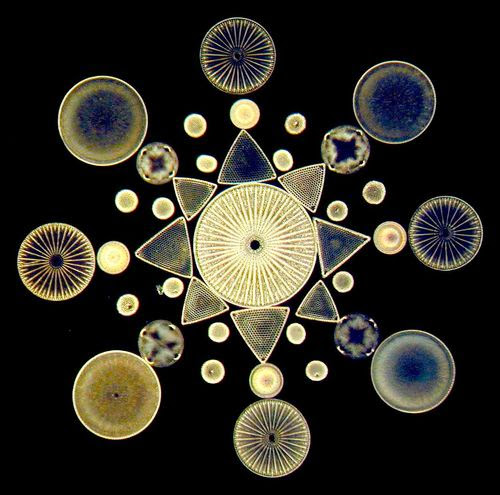
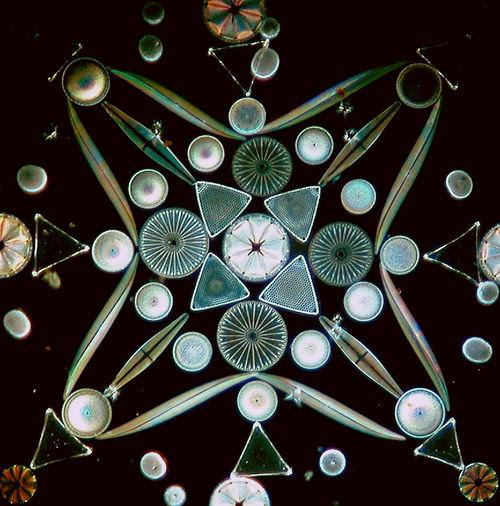
In the mid to late 19th century, people became increasingly fascinated with science. Rising literacy led to a demand for books, and an anonymous book titled Vestiges of the Natural History of Creation became the rage (http://goo.gl/fYMl0m). Darwin proposed his theory of natural selection. Microscopes became cheap and readily available. They were used not only for scientific discovery, but also as tools for popular entertainment. Microscope clubs popped up and amateurs made their own slides. Clever entrepreneurs took advantage of the public’s interest to make microscopic art by arranging hundreds or even thousands of tiny diatoms, butterfly scales or even beard hair (!) to generate these astonishing works of beauty. One such artist, Henry Dalton, used a boar hair and his own breath to move particles into position under a microscope. A newspaper article described him thus: “Although Dalton was dissipated, he excelled most of his imitators in this peculiar line of art” (http://goo.gl/tYPIUq).

Source: Exhibition Mounts by Watson & Sons, London circa 1885. 

http://www.victorianmicroscopeslides.com/slideexb.htm

Reading: Antique microscopy slides reveal obsession with science http://goo.gl/c8a3d8

#ScienceEveryday when it’s not  #ScienceSunday  

Posted in Rajini Rao | Tagged , | 100 Comments

Of Onion Jam and Patriarchal Hegemony

Of Onion Jam and Patriarchal Hegemony

◑ What, you may justifiably wonder, does onion jam have to do with the patriarchal hegemony? Nothing, of course. Unless, you count yourself a member of my mad menagerie. Still, if you’re looking for some delicious comfort food that’s out of the ordinary, and willing to pay a paltry remuneration by nodding sympathetically through my maternal musings, Read On!

◑ Like any self-respecting feminist, I yearned for my pragmatic teenage daughter to espouse the cause. More women in STEM! Independence! Equity! So when she won a merit scholarship at one of the Seven Sisters colleges, I exerted my not-inconsiderable persuasive powers to get her to go there. Four years later, she’s back, with a degree in neuroscience but somewhat bruised around the edges. Well, the college website did say heady and nervy, and that’s what we got. After looking up the patriarchal hegemony on Wikipedia, and nodding every time she said, That’s so hetero-normative, I sought a meeting of the minds in the old standby of comfort food.
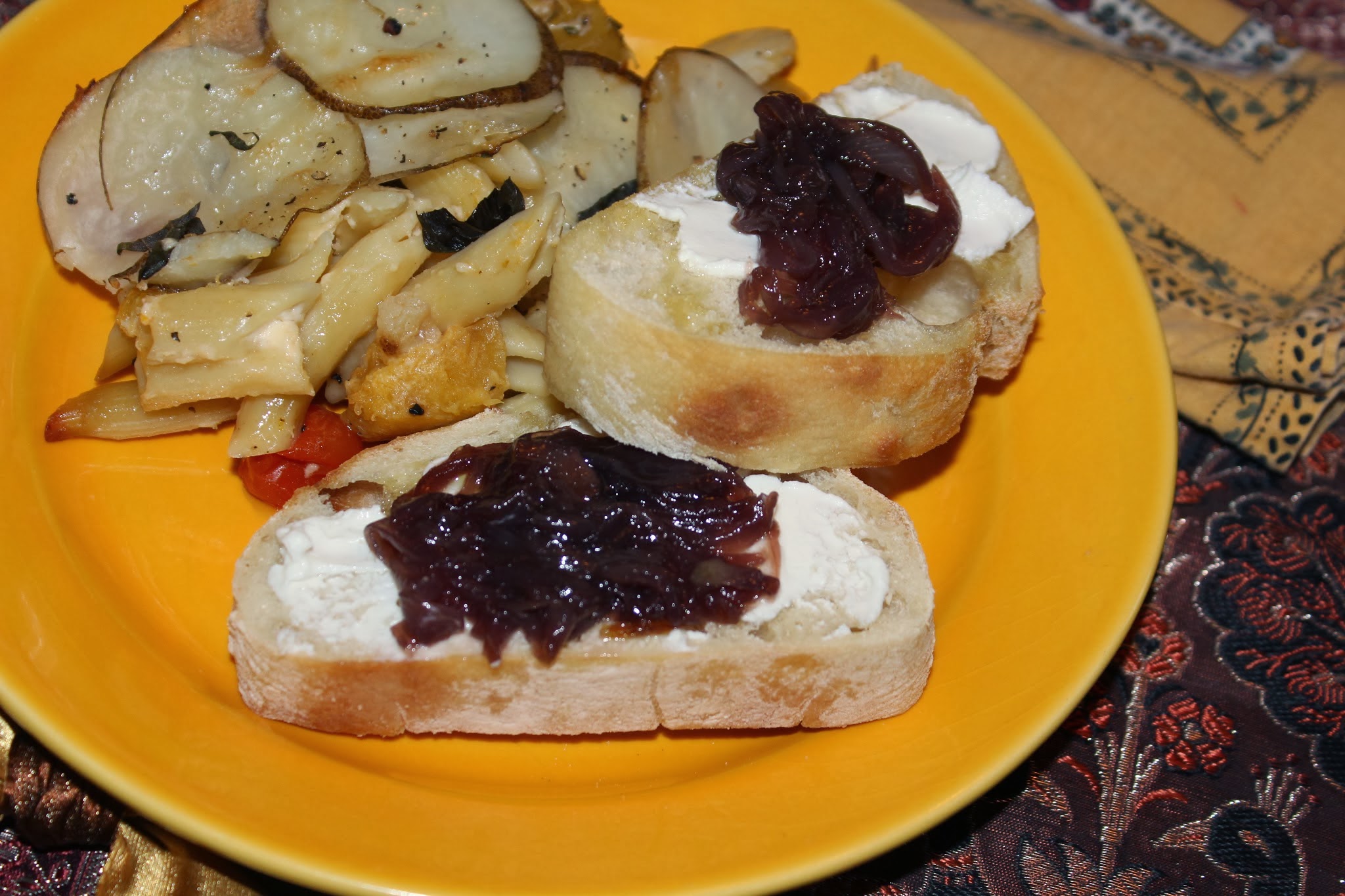
◑ This being the child who asked for caramelized onions as pizza topping and used words like ramekin and macerate in her vocabulary, I turned to a A French girl “cuisine” for a recipe for onion marmalade (http://goo.gl/jWyAXQ) . The first time we made it, we dutifully converted the metric measures to American. Too bad we didn’t follow them. Since then, we’ve confirmed by innumerable replications (p <0.005) that it always tastes delicious. I served it with a side of penne, baked in a creamy sauce tossed with roasted vegetables and topped with a layer of potatoes. 

Recipe and More pixhttps://madamescientist.wordpress.com/2014/03/09/of-sweet-onion-jam-and-patriarchal-hegemony/

Posted in Rajini Rao | 88 Comments

Of Sweet Onion Jam and Patriarchal Hegemony

What, you may justifiably wonder, does onion jam have to do with the patriarchal hegemony? Nothing, of course. Unless, you count yourself as a member of my mad menagerie. Still, if you’re looking for some delicious comfort food that’s out of the ordinary, and willing to pay a paltry remuneration by nodding sympathetically through my maternal musings, Read On!

Comfort Food for my Feminist

Comfort Food for my Feminist

Like any self-respecting feminist, I yearned for my pragmatic teenage daughter to espouse the cause. More women in STEM! Independence! Equity! So when she won a merit scholarship at one of the Seven Sisters colleges, I exerted my not-inconsiderable persuasive powers to get her there. Four years later, she’s back, with a degree in neuroscience but somewhat bruised around the edges. Well, the college website did say heady and nervy, and that’s what we got. After looking up the patriarchal hegemony on Wikipedia, and nodding every time she said, That’s so hetero-normative, I sought a meeting of the minds in the old standby of comfort food. This being the child who asked for caramelized onions as pizza topping and used words like ramekin and macerate in her vocabulary, I turned to a French recipe for onion marmalade. The first time we made it, we dutifully converted the metric measures to American. Too bad we didn’t follow them. Since then, we’ve confirmed by innumerable replications (p <0.005) that it always tastes delicious.

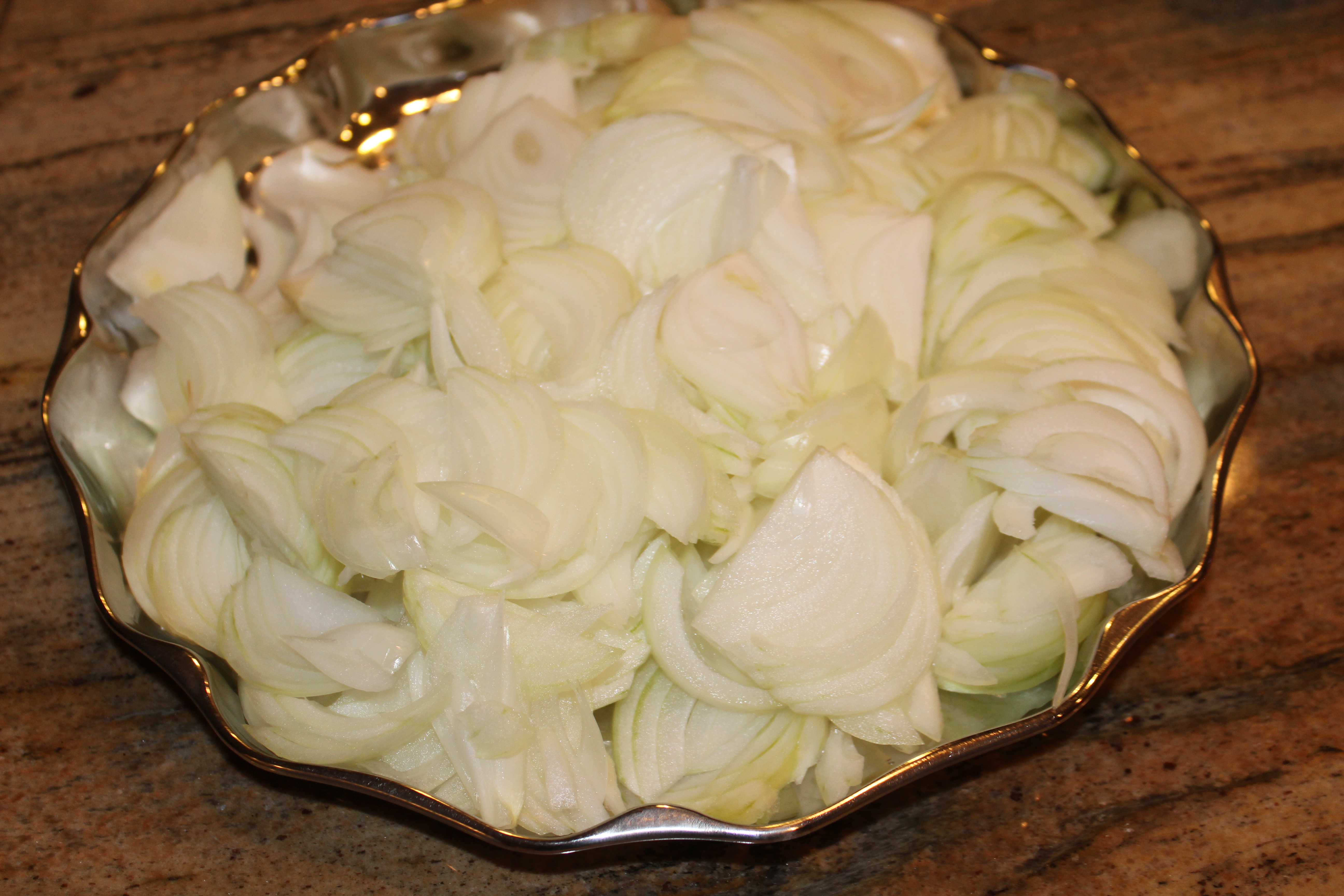
You need large, sweet onions. Lots of them.

Start with large, sweet onions. Lots of them.

Slice them thinly. Or not. They'll all melt together anyway.

Slice them thinly. Or not. They’ll all melt together anyway.

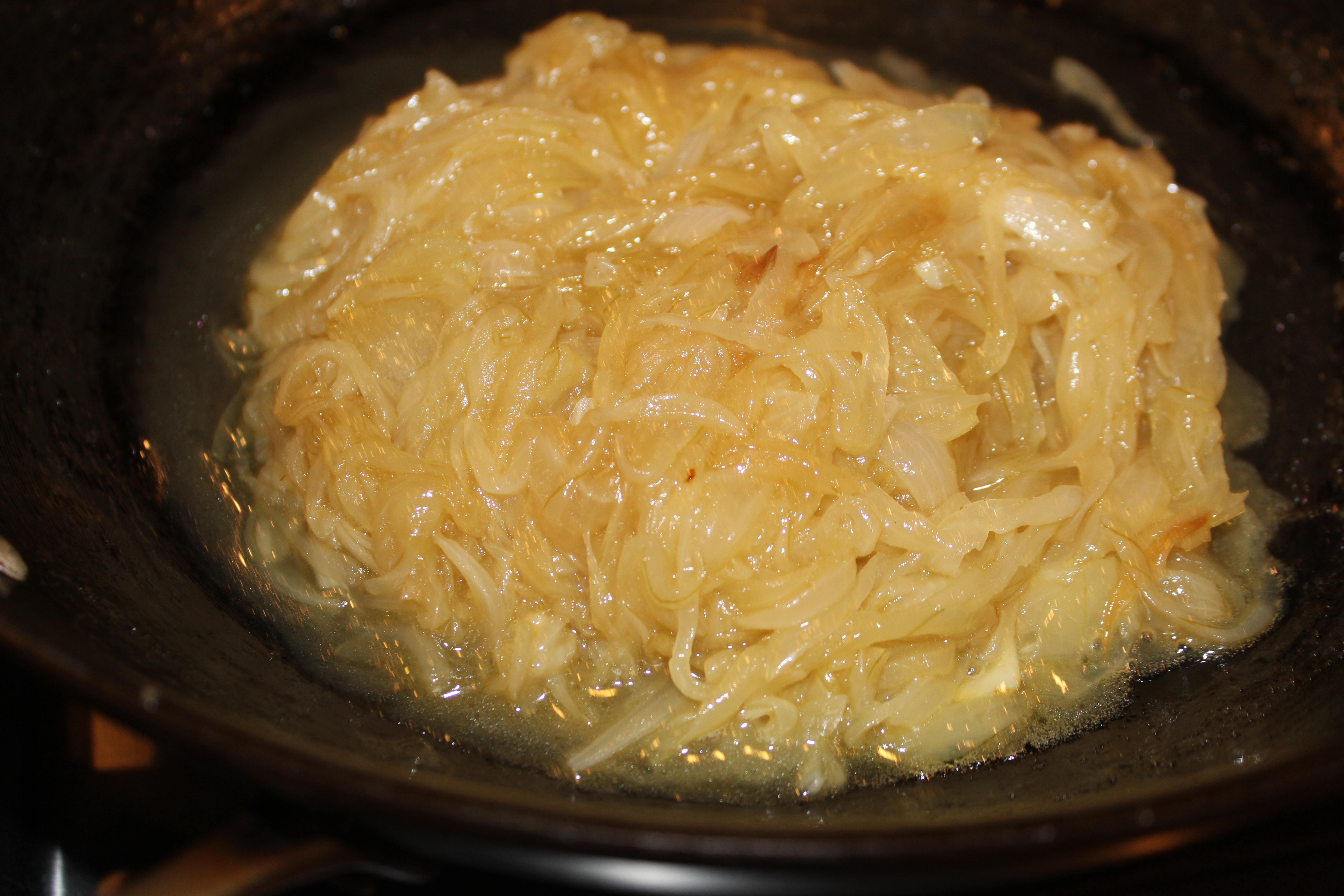
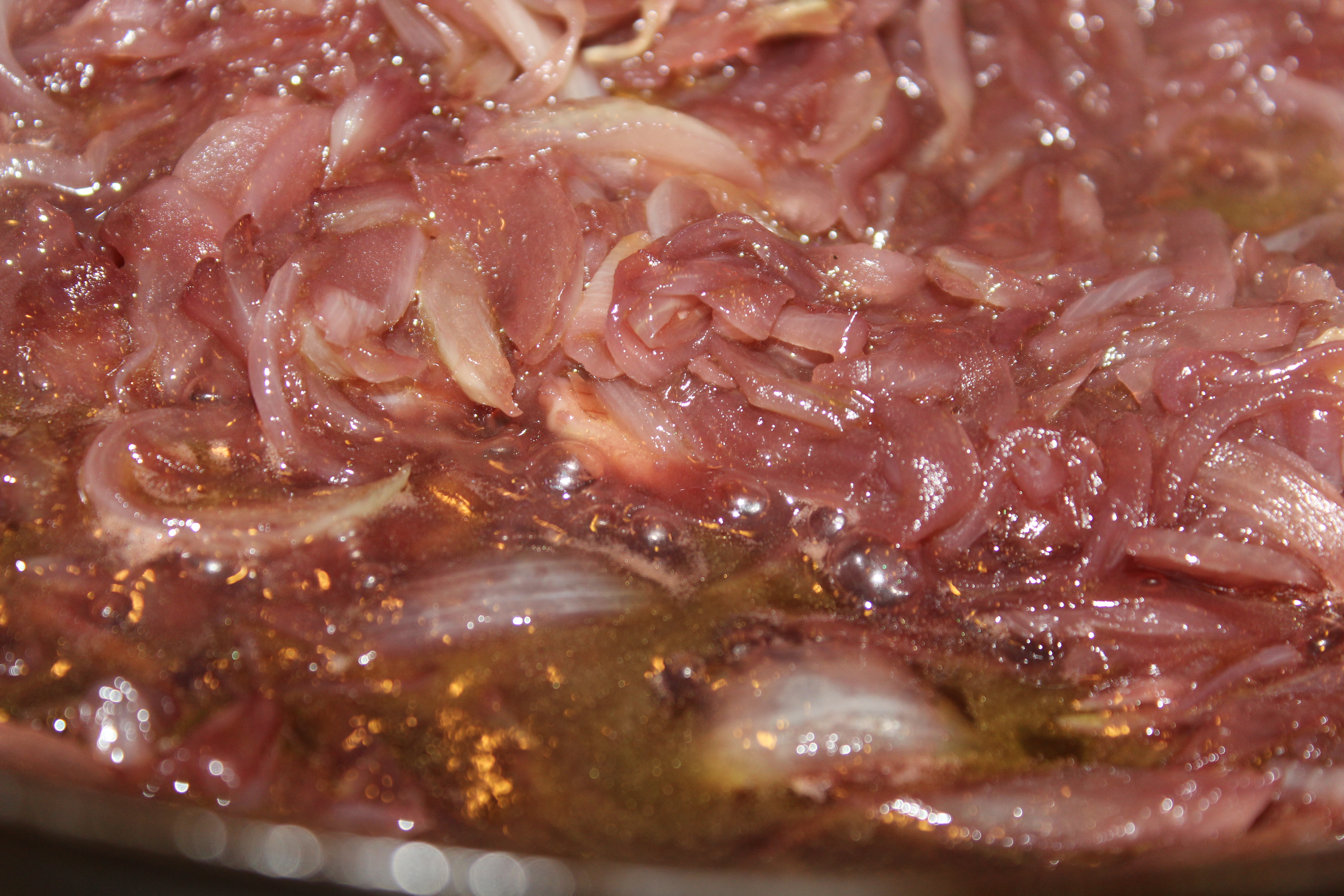
In a quarter cup of olive oil, saute sliced onions, initially on medium high heat until they come together en masse.

In a quarter cup of olive oil, saute sliced onions on medium heat until they come together en masse. Then turn the heat down to low and leave them alone.

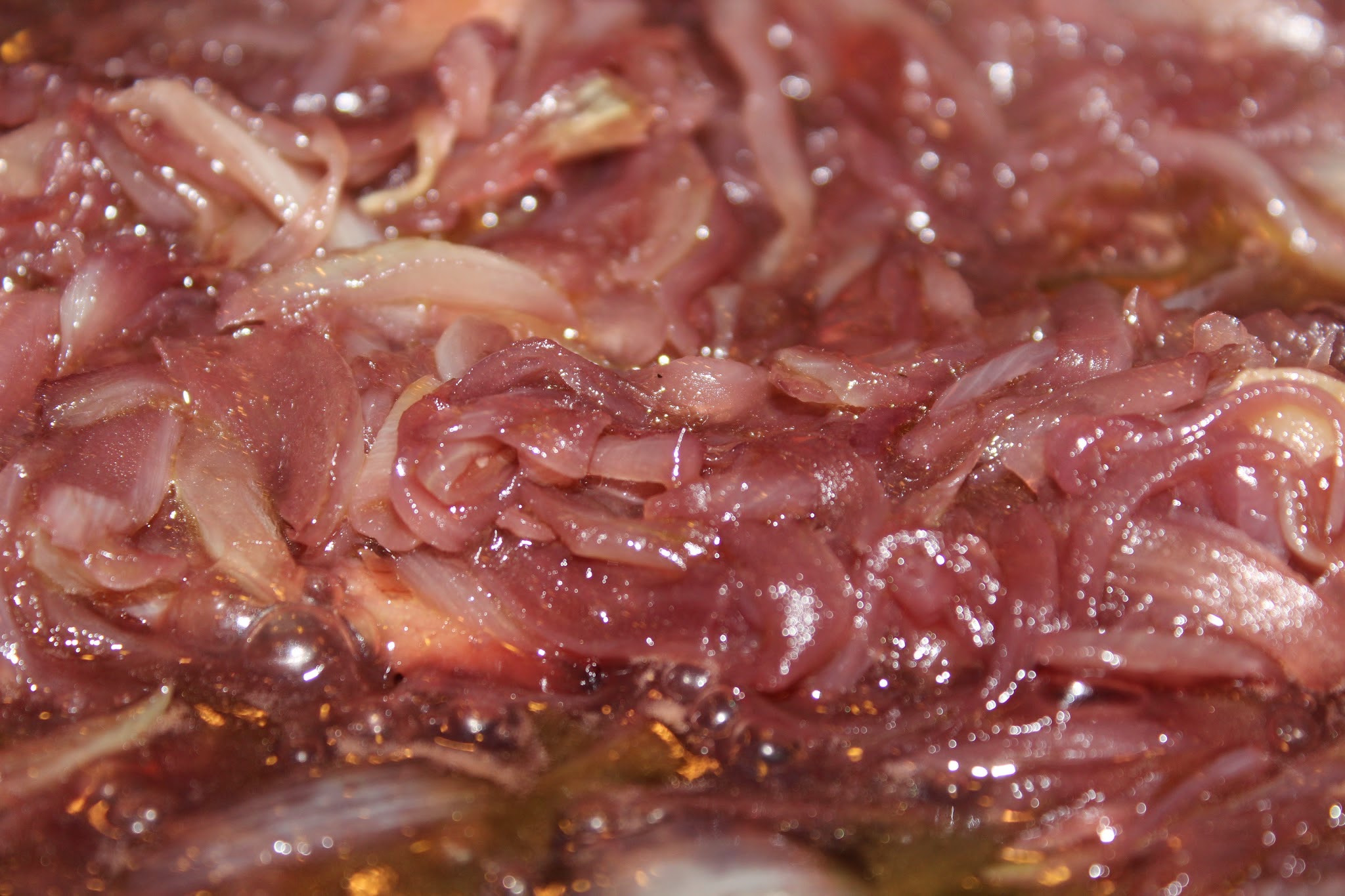
  • After the onions have been cooking for a long time on low heat, they get nice and caramelized. How long? An hour. Or two. As long as your patience. Then you may bring out the wine! Add about a cup of good red wine. To the onions! Okay, you may also have a fortifying glass. Or two. Continue to cook the onions until the wine evaporates. I usually turn the heat up first until it bubbles merrily, then turn it back down. Then add sugar. I think about a third of a cup. Actually, we just shake some out of the sugar canister.

Wine the onions!

Wine the onions!

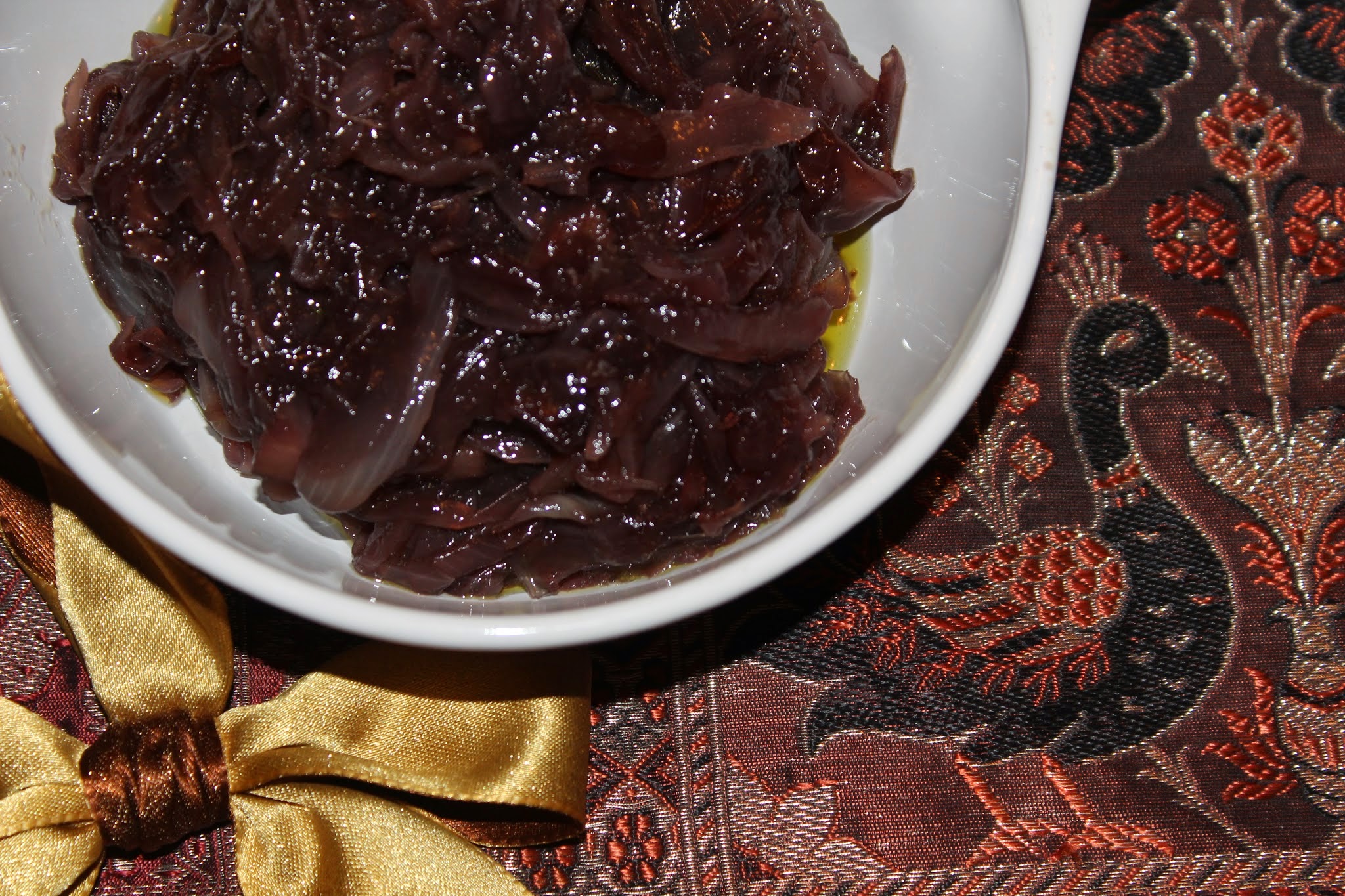
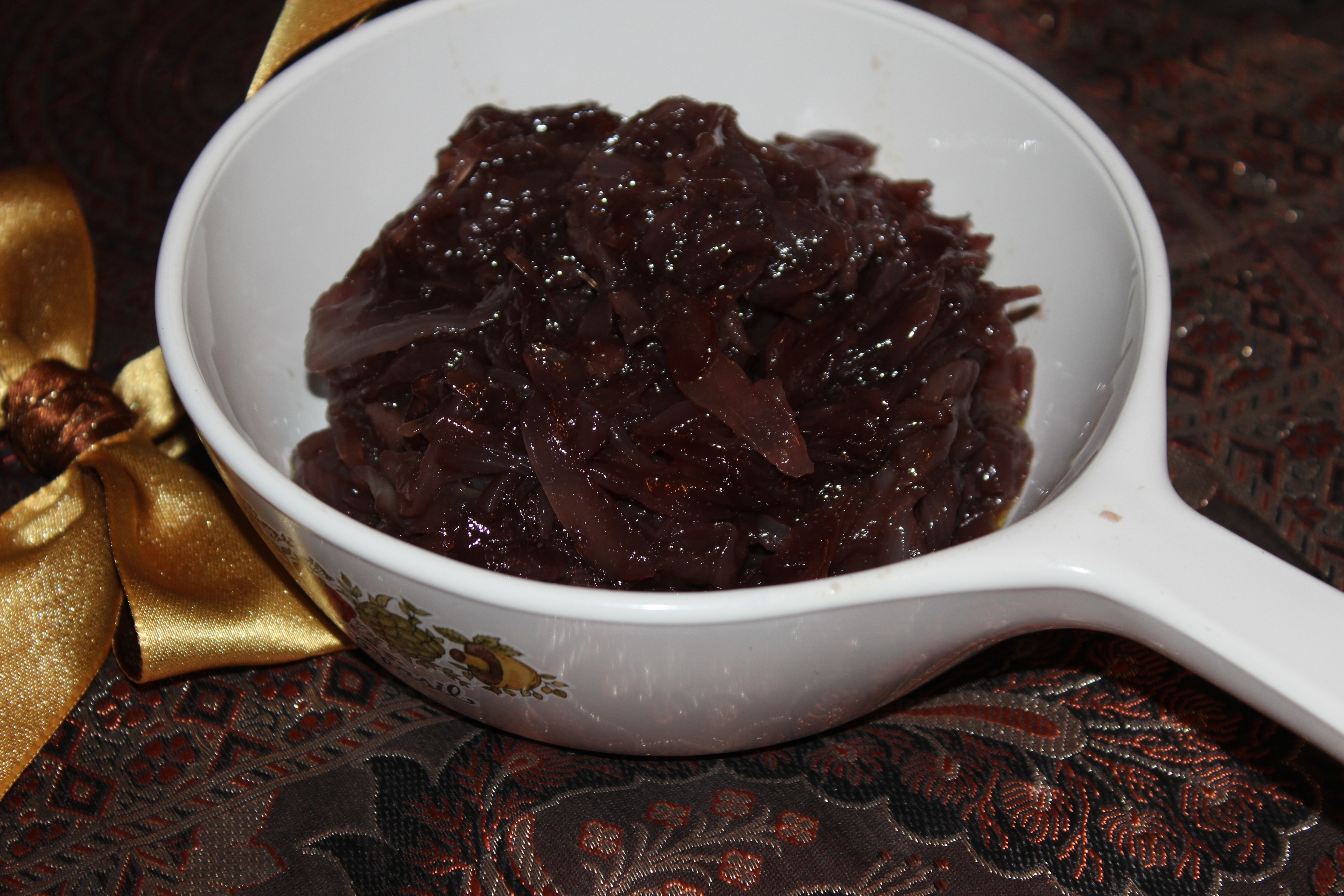
  • Eventually, the onions coalesce into one darkly rich, sweet and tart jammy concoction.

Onion Jam

Onion Jam

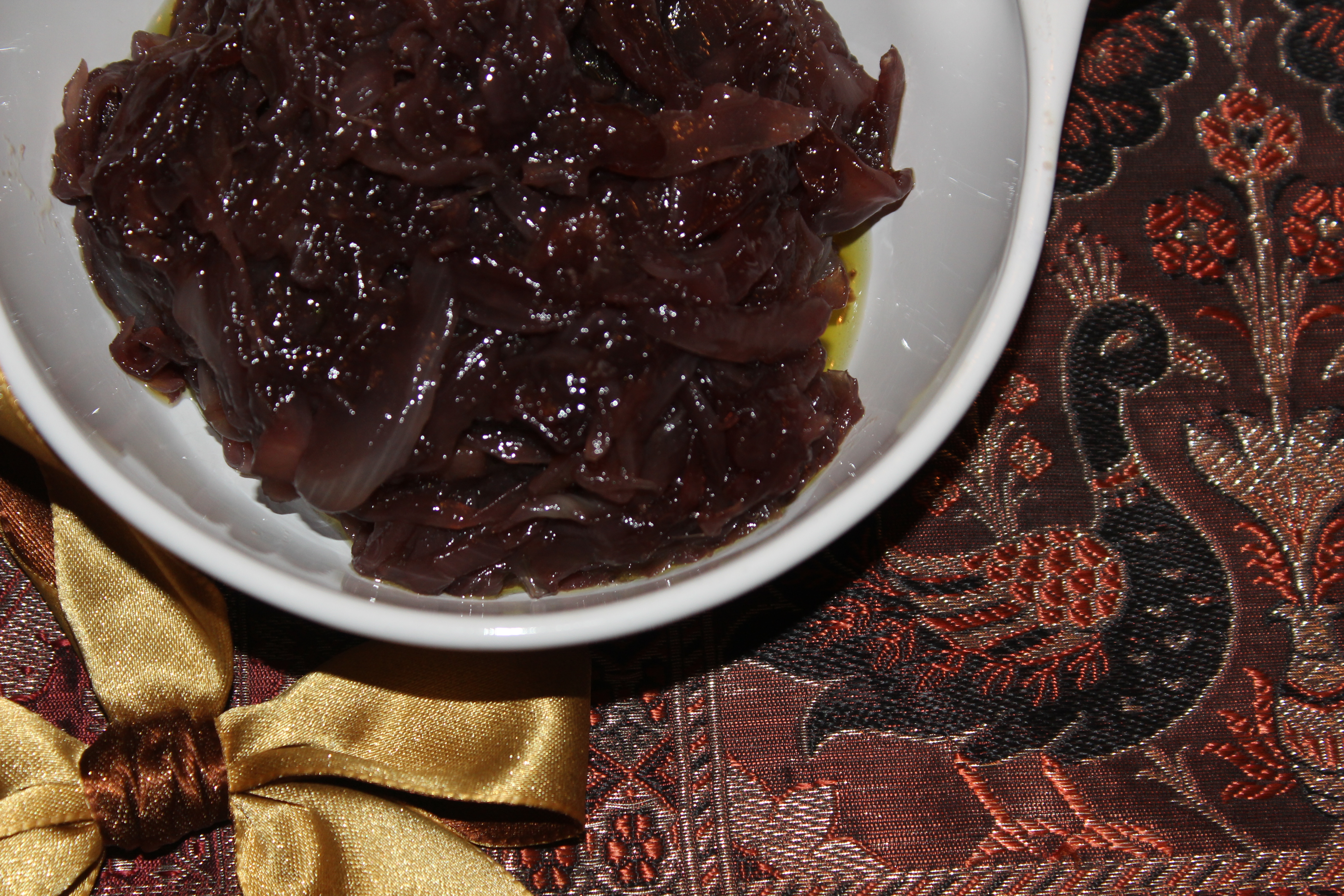
  • A little bit of olive oil oozes out the edges. Mix it in before spreading.

Dark, rich and satisfyingly sweet.

Dark, rich and satisfyingly sweet.

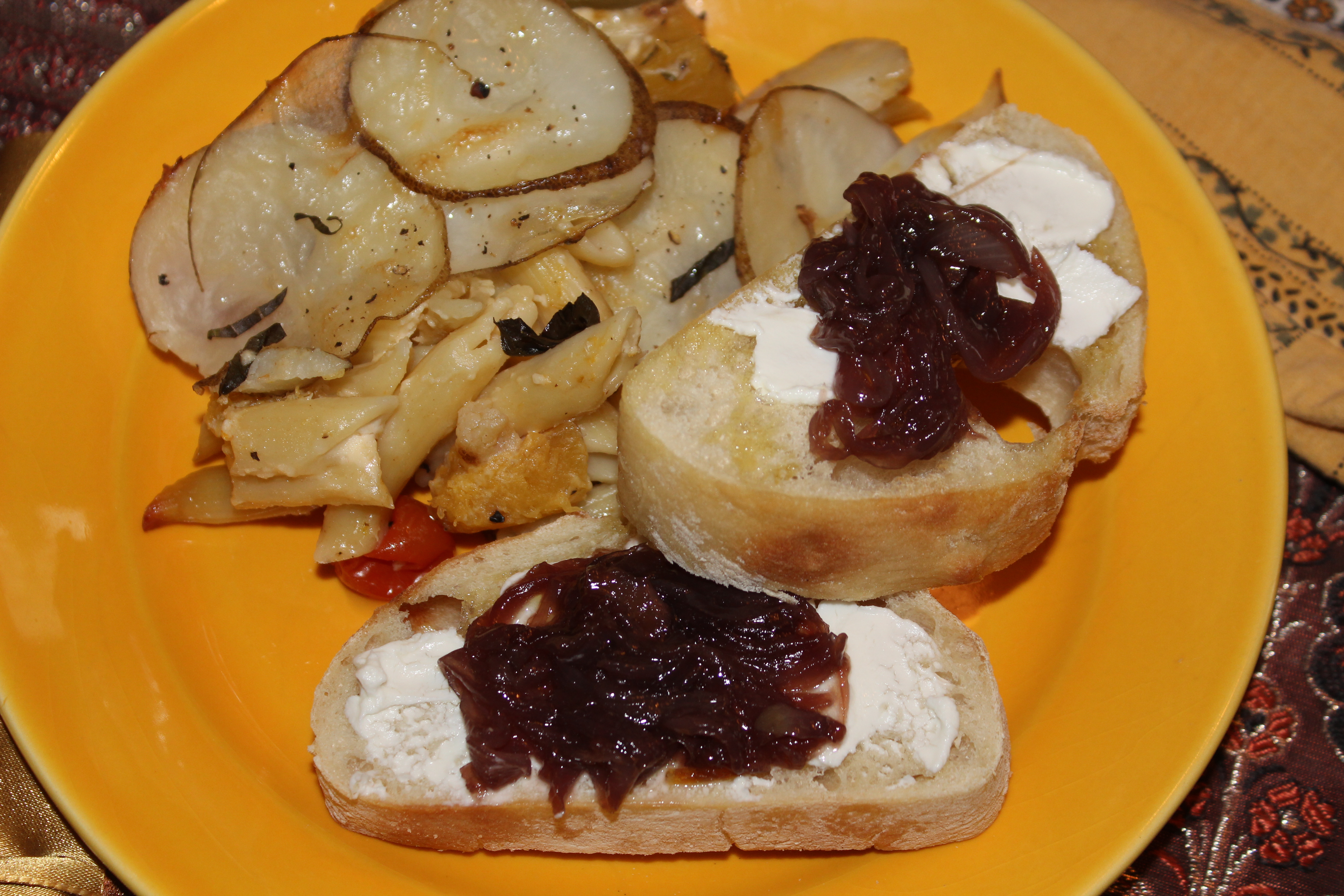
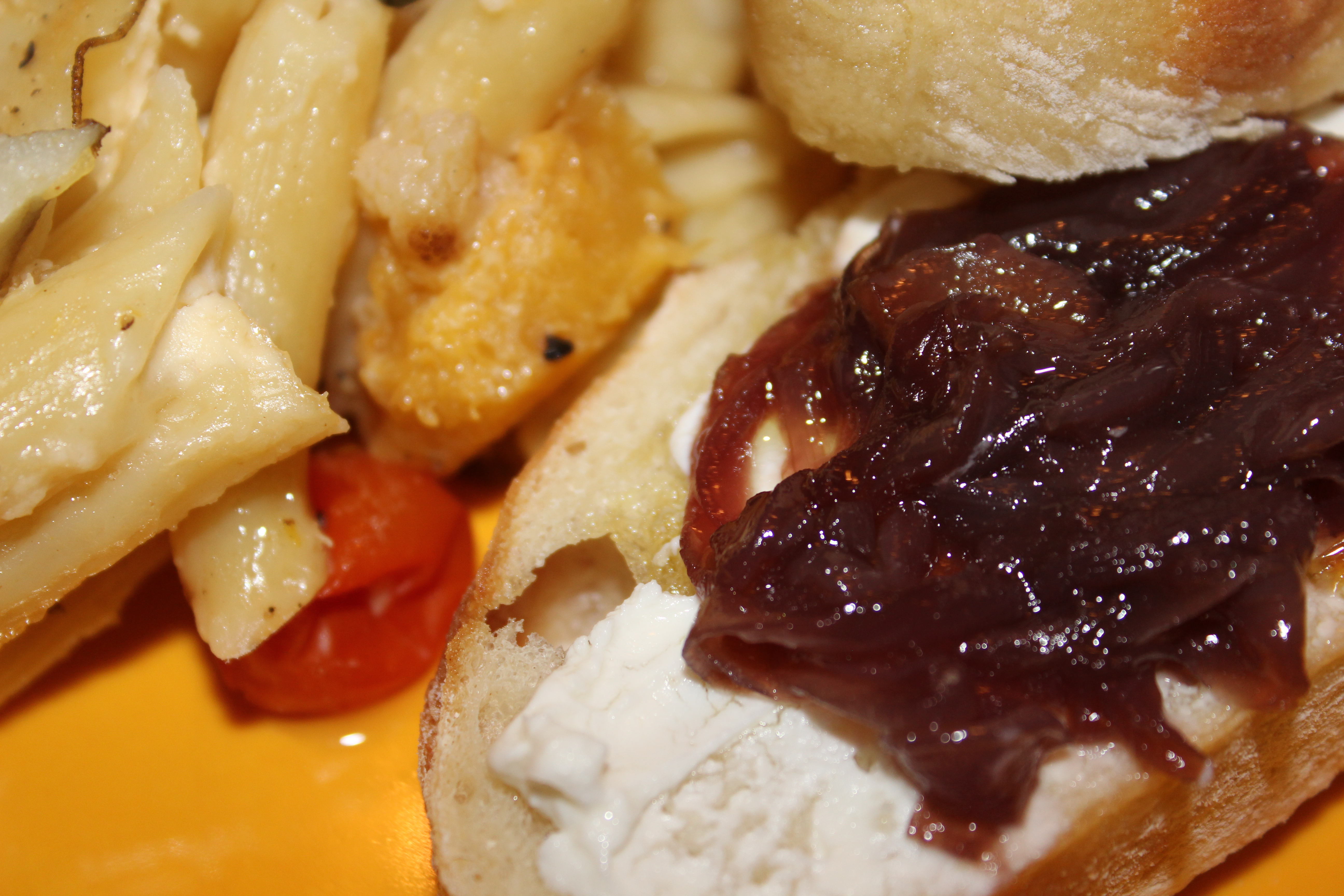
  • It tastes great spread on toasted bread, topping off some goat cheese. Or Brie. Or cream cheese.

Onion Jam on Goat Cheese

Onion Jam on Goat Cheese

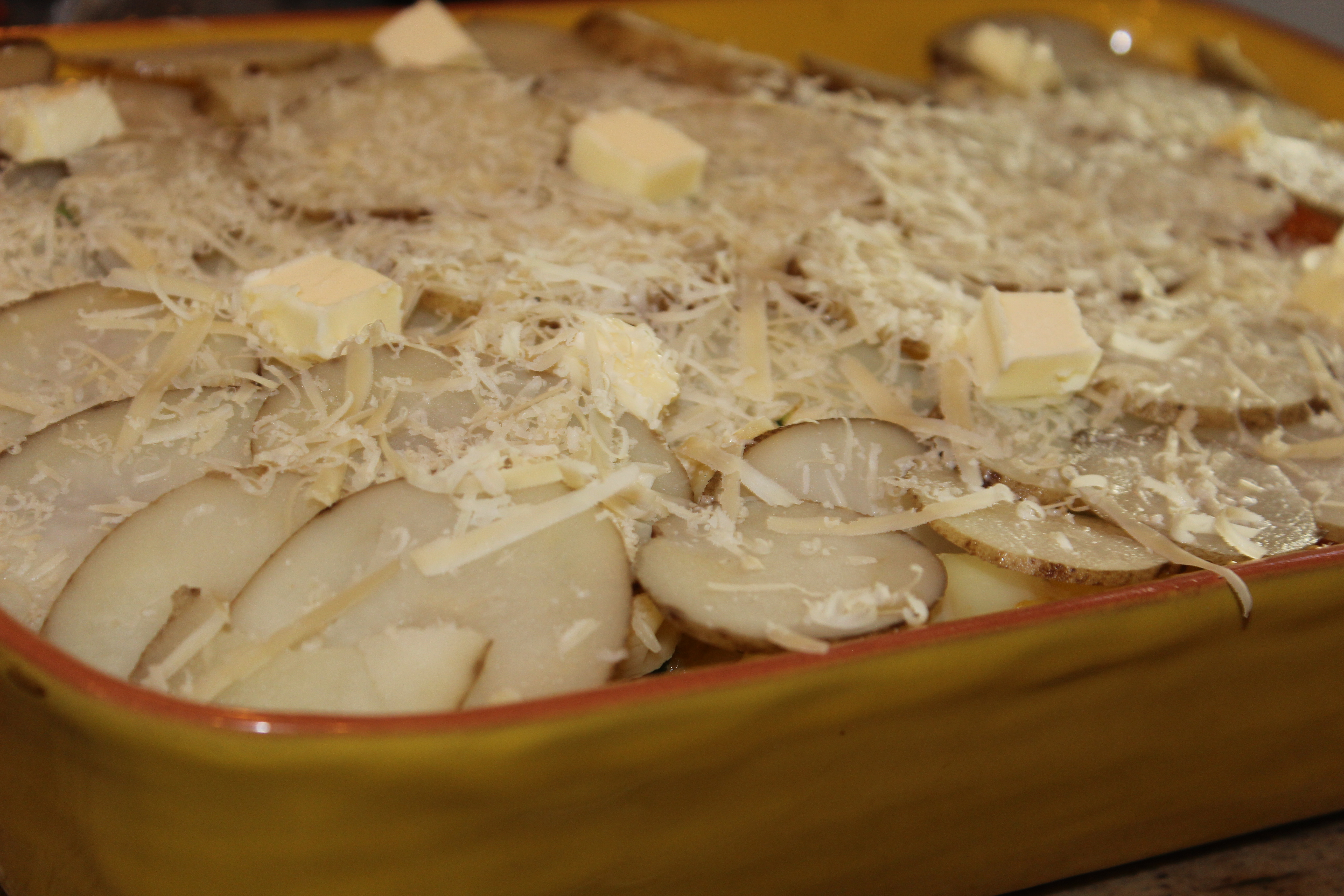
  • I served it with a side of baked penne, tossed with roasted vegetables in a creamy sauce and topped with a layer of thinly sliced potatoes.

Pasta and potato casserole

Pasta and potato casserole

A medley of vegetables tossed with penne in a creamy sauce.

A medley of vegetables tossed with penne in a creamy sauce.

Top with sliced, partly boiled potatoes. Dot with butter and sprinkle your favorite melting cheese.

Top with sliced, partly boiled potatoes. Dot with butter and sprinkle your favorite melting cheese.

Comfort food for the collegiate.

Comfort food for the collegiate.

The Womyn Child. Hopefully contemplating a viable future.

The Womyn Child. Hopefully contemplating a viable future.

Stormy seas off Nassau Island

Stormy seas off Nassau Island

Posted in Baking, Family Life, FOOD, Humor, Vegetarian | Tagged | 5 Comments

SOFTWARE UPDATE: Gene Editing Could Rescue AIDS Patients

SOFTWARE UPDATE: Gene Editing Could Rescue AIDS Patients

HIV Gains Foothold: The human immunodeficiency virus, HIV, gains entry into immune T cells by initially binding to the cell surface receptor protein CD4 and then recruiting a co-receptor, usually CCR5. Infected T cells eventually die and the patient becomes susceptible to other infections, described as acquired immunodeficiency syndrome or AIDS. 

As Luck Would Have It: About ~700 years ago, a chance mutation in the CCR5 gene appeared that inactivated the receptor. This mutation, CCR5-Δ32, has a slight negative fitness effect because CCR5 is one of many chemokine receptors important in the inflammatory immune response. The mutation should have dwindled or disappeared. Instead, the mutation underwent intense positive selection, now prevalent in ~10% of the European population. Modeling studies suggest that the mutation helped fight off small pox virus, conferring an unexpected survival benefit. Today, it provides resistance to HIV: one copy of the mutation delays AIDS onset ~ 2 years, while 2 copies confers resistance to the common HIV-1 R5 strain. 

The Berlin Patient: A famous case of “natural gene therapy” involved Timothy Ray Brown who was being treated for HIV infection in the mid-nineties. Brown then developed leukemia in 2006 and his condition deteriorated. He received a stem cell transplant from a German donor whose CCR5 genes carried the resistant mutation. Not only did the treatment cure Brown’s leukemia, it also eliminated the HIV infection (http://en.wikipedia.org/wiki/The_Berlin_Patient).  

Gene Editing: Recent efforts are designed to be more accessible for AIDS patients. The idea is to remove T cells from the patient, manipulate the CCR5 gene to insert mutation, then re-introduce the modified T cells back into the patient. A small-size feasibility and safety study was reported this week (http://goo.gl/TlRBrG) involving 12 patients: 6 received modified T cells and were taken off anti-retroviral therapy for 4 weeks. The results were promising! T cell counts increased in the treatment group, and the modified cells outlasted the unmodified cells by 7-fold. The paper is behind a paywall, so please ask if you have questions!  The news story is here: http://goo.gl/j5jkws

Image shows an immune T cell (yellow) in the lower right, budding off particles of HIV (green) seen in a colored transmission electron micrograph from  http://www.sciencephoto.com/media/549097/. To the upper left, is a molecule of CCR5 (yellow) embedded in the cell membrane (grey lipid) from Wikimedia (http://goo.gl/svUNsE).

#ScienceEveryday   #ScienceSunday  

Posted in Rajini Rao | Tagged , | 59 Comments

Dance of the Peacock Spider

Dance of the Peacock Spider

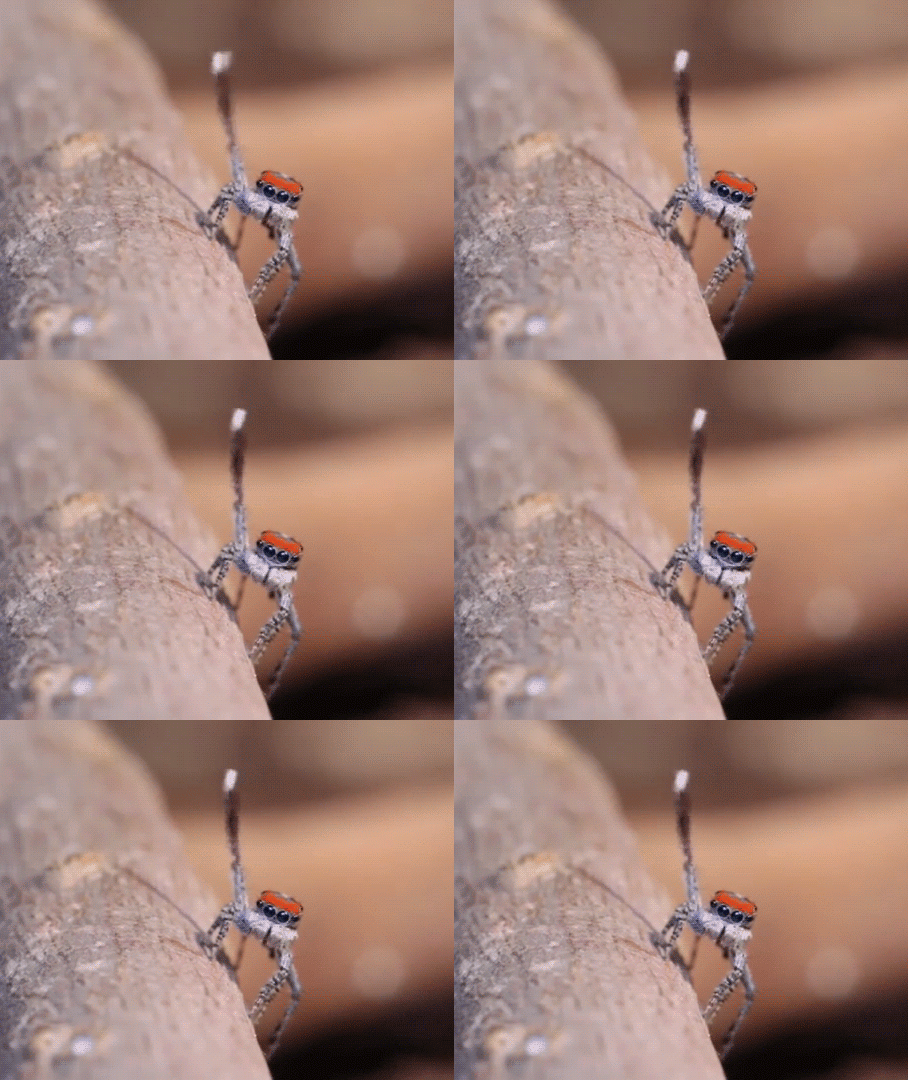
Doing the Y: Only 4 mm in size, the Australian male peacock spider (Maratus volans) puts on an impressive courtship display, rivaling the Village People in Peacock Spider Dances to YMCA . Described by researchers as multi-modal, the dance includes 3rd leg waves, synchronized unfurling of colorful belly flaps, abdominal bobbing and pedipalp flickers. As if these visual displays were not enough, the spider generates bursts of vibrations carried through the ground to signal his passion for his lady love. 

Darwin’s Dilemma: Is there an selective advantage to such complexity? How did it evolve? As the rituals get more elaborate, there may be diminishing returns given the limitations of biological cost and sensory perception. Translation: is it a waste of time? 🙂 But studies show that redundant signals allow our spidery suitor to adapt to varied environments. Too dark to see the colorful fans? The seismic display compensates for lack of light.It is thought that each signal carries a different message for the female to evaluate. It’s also an exercise in self preservation: males risk falling prey to the cannibalistic tendency of the female spider. Web building male spiders generate shudder vibrations that measurably calm the female’s aggression. Others present a silk-wrapped nuptial gift that distracts the female long enough to get the deed done. An unusual tactic called thanatosis is to is to feign death when the female shows signs of terminating the romantic act. Once the female has dragged off the motionless male, she begins to feed on his nuptial gift upon which the male quickly revives to resume mating!

So humans, do you see any parallels in strategy? Perhaps, you too met your mate on the web?

▶Nuptial gifts: http://goo.gl/VCsbzN

▶Spider Shudders: Male courtship vibrations delay predatory behaviour in female spiders. Wignall and Herberstein (2013) http://goo.gl/wT29bD

▶Dance Moves: Multi-Modal Courtship in the Peacock Spider, Maratus volans. Girard et al. (2011) http://goo.gl/SlIK1E

▶Gifs: via http://biomorphosis.tumblr.com/

#ScienceSunday  

Posted in Rajini Rao | Tagged | 112 Comments

An Academic Valentine: The Science Behind Flower Color

An Academic Valentine: The Science Behind Flower Color

Morning Glory Buds are Red

And they Open to Bright Blue

But in NHX1 Mutants

They can’t Change their Hue

✿ We all know that roses are red and violets are blue, but did you also know that vacuolar pH determines their hue? Flowers are colored by anthocyanin pigments that collect in the vacuoles of petal cells. Their color is determined by the acidity, or pH of the vacuole. Vacuolar pH is set by a balance of proton (H+) pumps and leaks. A family of leak proteins known as sodium hydrogen exchangers is found in all cells from yeasts, plants and animals. They work to keep vacuoles and other cell compartments from becoming too acidic.A dramatic example is that of the Japanese morning glory (Ipomoea nil) where mutants in the leak protein, NHX1, fail to achieve that brilliant blue when they flower. The first NHX1 gene was cloned by our lab from yeast in the mid-nineties. More recently, mutations in the human genes have been linked to autism, Alzheimer’s disease, seizures and cognitive disabilities, in ways that we are only just beginning to understand.

#valentinesday    #AcademicValentine   #ScienceEveryday  

✿ Image: From the review by Jon Pittman http://www.frontiersin.org/Journal/10.3389/fpls.2012.00011/full 

Posted in Rajini Rao | Tagged , , | 50 Comments

///oo/\ Tarantula!

///oo/\ Tarantula!

▶ All arthropods (insects, spiders and crabs) have a hard exoskeleton, which they must shed at intervals, to catch up on their growth. Known as ecdysis (from the Greek ekduo to strip off), the process is carefully coordinated, risky in the wild, and fraught with difficulties.

▶ For several days or even weeks before the molt, a tarantula will appear moody and sluggish, refusing to eat. It spins a cradle, called molting web (seen to the left of the gif), and lays on its back. Its heart rate increases dramatically and hemolymph (“blood”) is pumped into the upper body (cephalothorax) so it nearly doubles in size. The pressure cracks the carapace along the sides and front. Wave like muscle contractions in the abdomen push the old exoskeleton, lifting it off like the lid of a can. Now comes the tricky part: the spider must work its legs out of the old shell, with forward facing hairs and bristles keeping it from slipping back inside. 

One well-placed kick, and the ordeal is over – here, have a cigar! 

♺▶ Fun Facts (aka everything you wanted to know about molting but were afraid to ask):

● Before the molt, the spider secretes a digesting fluid that loosens and eats away at the old cuticle (yum!).

● While spiderlings molt several times a year, mature females, who can live up to 40 years molt every other year. Unfortunately, many males do not survive their last adult molt, because their male sex organs get stuck in the exoskeleton (sorry, guys!). 

● The molt lasts from ~20 minutes, in babies, to several days in the adult (ladies, you sympathize, right?). 

● During a molt, spiders also shed their fangs, chelicerae (which they use for grasping), their throats and stomach lining, female genital organs (omg!), and the lining of their “book lungs”. 

● A spider that has lost a leg can regenerate one during a molt.  

Credit: This has been a fun Google+   #collaboration  with the lovely Carmelyne Thompson  for   #ScienceEveryday . Carmelyne gif-ed the ecdysis time-lapse for this post, after we discussed another cool spider molt gif on her post (http://goo.gl/fVo5fp). If you don’t have Carmelyne in your circles for more science fun, you should! 

More reading: http://goo.gl/U6w0cV

Posted in Rajini Rao | Tagged , | 144 Comments

Hair, Tooth or Scale?

Hair, Tooth or Scale? 

Although at first glance, these three appendages appear to have little in relation to one another, there are intriguing hints of a common developmental origin. Can you guess the identity of today’s Science Mystery Pix?

The Toothless Men of Sind: Our story begins in 1875, with Charles Darwin describing the curious case of a Hindu kindred whose males suffered a near absence of teeth and hair. This inherited condition, known as ectodermal dysplasia, was tracked down to defects in genes coding for a signaling protein (ectodysplasin-A or EDA) and its receptor (EDA receptor or EDAR). Similar hairless and toothless mutations were found in the mutant mouse strains Tabby and Downless, pointing to a common developmental origin for hair and teeth. 

Fighting Tooth and Scale : Which came first, teeth or scales? It is thought that the earliest teeth arose in shark-like fish that lived in the Early Devonian period, about 400 million years ago. The pointy tooth-like scales found near the mouth of fossils would have helped grasp prey or fight predators. Eventually, these transformed into the teeth of modern day mammals. 

A Fishy Tale: Now for the final link! Mutants of the medaka fish (Oryzias latipes), originally isolated from wild populations, are viable and fertile but completely lack scales. Named rs-3 (for reduced scale-3), the mutation affected the same ectodysplasin-A receptor (EDAR), which is required for the initiation of hair development in mammals. So what do you think..is the image a 20x magnification of hair, tooth or scale?

REF: http://www.ncbi.nlm.nih.gov/pubmed/11516953 

http://news.discovery.com/animals/dinosaurs/teeth-prehistoric-111117.htm

Image from Dr. Havi Sarfaty of the Israel Veterinary Association and winner of Nikon Small World competition. 

  #ScienceSunday  #ISeeTheWorldWithScience  

Posted in Rajini Rao | Tagged , | 79 Comments

Homo aquaticus: The Science of an Underwater Gill

Homo aquaticus: The Science of an Underwater Gill

In 1962, underwater explorer Jacques Cousteau predicted the arrival of Homo aquaticus: people surgically equipped with gills who could live and breathe in any depth for any amount of time without harm. Lately, there has been a lot of buzz about Triton, a conceptual gill (http://goo.gl/pWkd5k) that supposedly could allow humans to breathe underwater. There are many reasons why this device is still in the realm of science fiction. But first, it’s helpful to understand how some animals breathe air underwater. 

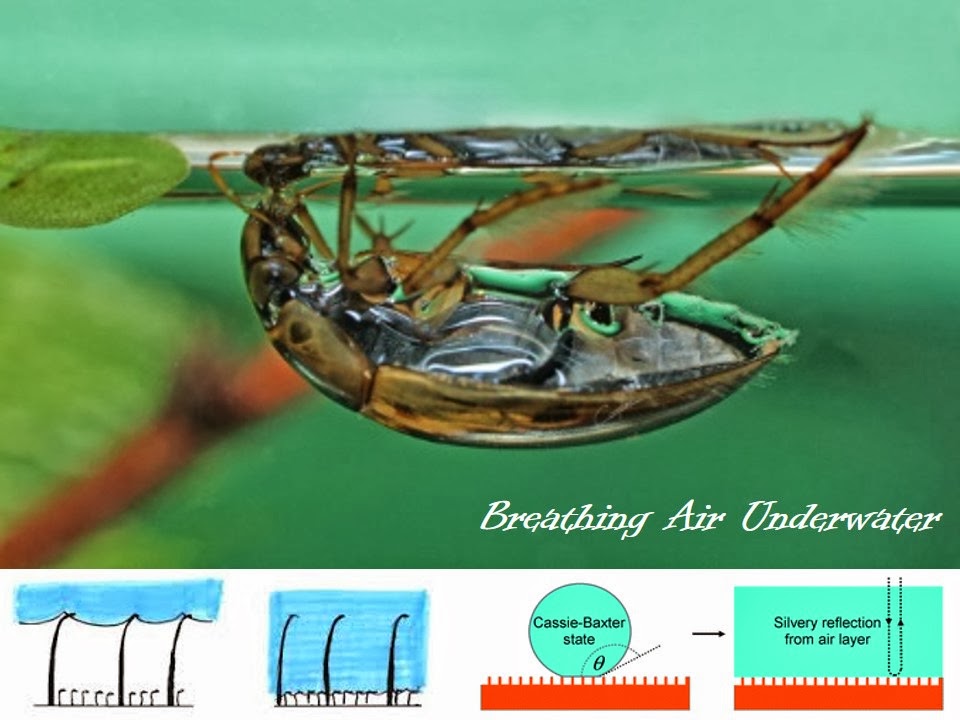
Breathe, Breathe in the Air: Like us, insects breathe oxygen from air, using a system of canals connected to the outside by breathing holes or spiracles. So how do aquatic insects survive submerged underwater, often for their entire lives? Mosquito larvae develop tiny snorkeling tubes, called siphons, that poke out of the water for regular refills. Others, like mayflies and damselflies, develop biological gills that extend into the water to extract oxygen by diffusion. The champion for ingenuity, however, is the diving beetle which carries a bubble of water tucked under its body, seen as a silvery sheath in the photograph. The air bubble is a short term supply of oxygen, that is replenished from the surrounding water based on a few simple physical principles that are fun to consider!

Love is like Oxygen: Water contains dissolved oxygen, reaching up to 5% in volume in icy-cold streams, but much less than the 20% found in the atmosphere. As oxygen is consumed by the insect, it creates a partial pressure difference inside the air bubble.  This is “corrected” by dissolved oxygen that diffuses in from the water.  There is a lot of unused nitrogen in the air bubble, 80% by volume, which is free to diffuse out , also creating a similar partial pressure deficit.  Because there is very little dissolved nitrogen present in water (it has lower water solubility than oxygen), some of the nitrogen’s partial pressure deficit is “corrected” by oxygen diffusing in, enriching the insect’s air supply.  So as long as the rate of oxygen diffusing in keeps up with the rate at which it is consumed by the insect, all is well. Unfortunately, the surrounding pressure of the water can shrink the size of the bubble over time, reducing the surface to volume ratio and hampering gas exchange. That’s why some insects make the occasional trip to the water surface, to refill their air bubbles. For those insects that don’t have this option, a plastron is the answer. 

What the Fakir?: A plastron is a special array of rigid, closely-spaced hydrophobic hairs (setae) that create a fixed “airspace” next to the body.  Air trapped within a plastron operates as a physical gill (just like air in a bubble) but this airspace cannot shrink in volume because a double layered fortress of setae prevents encroachment of surrounding water.  Think of the analogy of a fakir lying on a bed of nails: while one nail can puncture through his skin, lying on many nails effectively distributes his body weight so that the skin, like the surface of water (inset images below), is not broken. Also, the setae do a good job of repelling water using the lotus effect covered in an old post (http://goo.gl/yW7QpC). 

Triton or not Triton?: Back to the beginning, will a physical gill work for humans? Humans need a lot more oxygen than beetles, so enormous surface areas will be needed to extract oxygen from water. Too much or too little oxygen in the air we breathe can be toxic. Still, a terrier named Muggins survived a 3 hour dip in the Mississippi river using articificial gills. Check out the story (http://goo.gl/xdJeQd) and tell me if you think  Homo aquaticus  will soon be in a pool near you!  

Images: Diving beetle by Ernie Cooper (http://goo.gl/EWMwjx); Inset http://goo.gl/ci28mS

#ScienceEveryday  

Posted in Rajini Rao | Tagged | 45 Comments