
2012-01-13

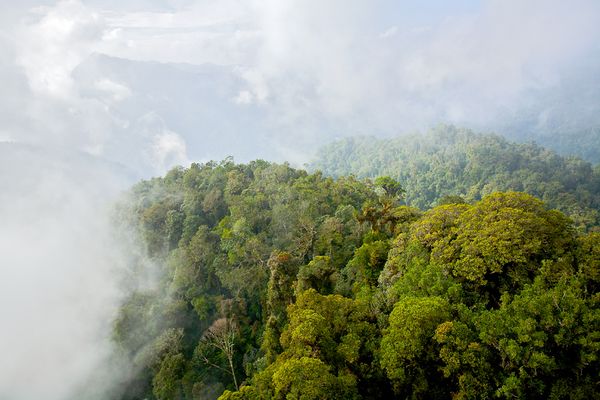
Lost World. A pristine wilderness in the island of New Guinea first investigated as recently as 2005, turns out to be a “megadiverse hotspot” of strange new creatures.
The Pinocchio frog male sports a protuberance on his nose that points up when he is energetically calling out, but deflates when he is less excited 🙂 “Exactly what it is for, no one really knows for sure”, says Paul Oliver.
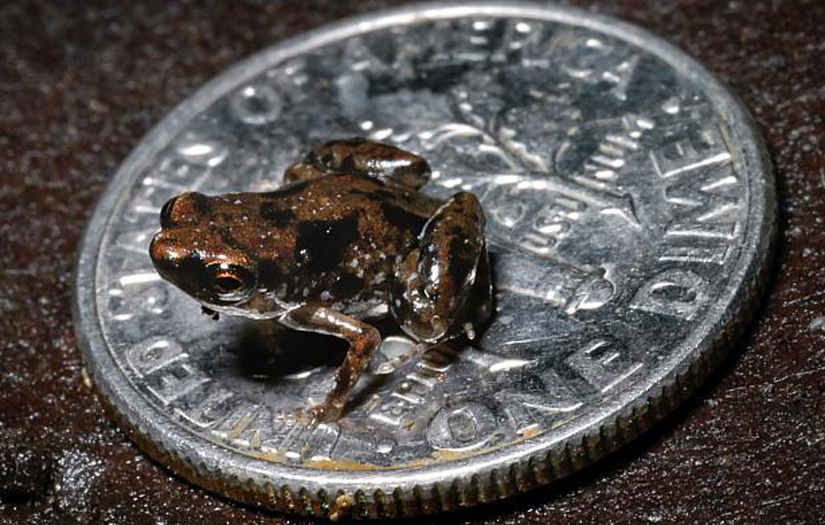
The smallest living vertebrate has just been found! As reported in yesterday’s issue of PLoS ONE , it is a frog that measures only 7.7 mm long, just beating out a previously known small fish that measured 8 mm. To compensate for its diminutive size, it has been given a long name: Paedophryne amanuensis is one species. The male’s call resembles the chirping of a cricket,extending only 50 cm to the neighboring frog living under the leaf litter of the forest. Listen: http://hosted.ap.org/interactives/2012/tiny-frog/
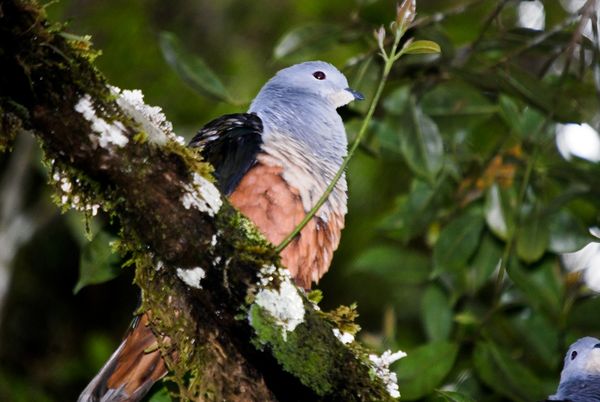
Other strange animals include the smallest wallaby (described as “a gentle creature”), a huge wooly rat (“rather tame”), an unusually colorful pigeon that was caught gawking at the mating ritual of bower-birds (“voyeuristic behavior”; I am not making this up), and a “gargoyle-faced” gecko (I disagree; it looks just as handsome as any other gecko, IMO).
Something to think about : vertebrate sizes vary by 3000 fold, from these tiny <10 mm frogs to the blue whale that averages 26 m. Scientists had assumed that only aquatic habitats supported extreme sizes, but this turns out not to be true. Extreme miniaturization means that all sorts of developmental compromises have to be made. For example, these frogs have fewer toes. Researchers are thrilled by their new find because “such discoveries are increasingly critical in this time of global amphibian declines and extinctions” .
PLoS ONE paper (open access): http://www.plosone.org/article/info:doi/10.1371/journal.pone.0029797#pone-0029797-t003
Lost World story: http://news.nationalgeographic.com/news/2010/05/photogalleries/100517-new-species-lost-world-foja-science-pictures/
More: http://news.discovery.com/animals/new-guinea-lost-world.html


Footprints on Genetic Islands. The giant Galapagos tortoise once flourished on Floreana Island but was thought to have become extinct shortly after Charles Darwin made his historic voyage to the Galapagos Islands in 1835. Because these colonies remained isolated from each other, tortoises evolved into distinct species that helped inform Darwin on his theory of natural selection. It was possible that some tortoises could have cruised to neighboring Isabela Island on pirate or whaling ships.
Scientists from Yale found genetic evidence of these giant tortoises in young (~15 yr old) hybrid individuals found on Isabela Island’s Wolf Volcano indicating that the purebred parents (expected to live up to 200 years) may still alive. To do this, they analyzed fast evolving genetic markers (DNA microsatellites) from 84 hybrid tortoises and calculated that there would need to be at least 38 founders of the supposedly extinct Chelonoidis elephantopus species.
This raises the hope that this historical species may be resurrected using captive breeding programs. This is also the first time that a species may have been rediscovered by tracking genetic footprints of its hybrid offspring. All that’s left is to track their physical footprints on Isabella Island!
Abstract: http://www.cell.com/current-biology/abstract/S0960-9822%2811%2901376-5





 madame scientist's not-so-mad musings