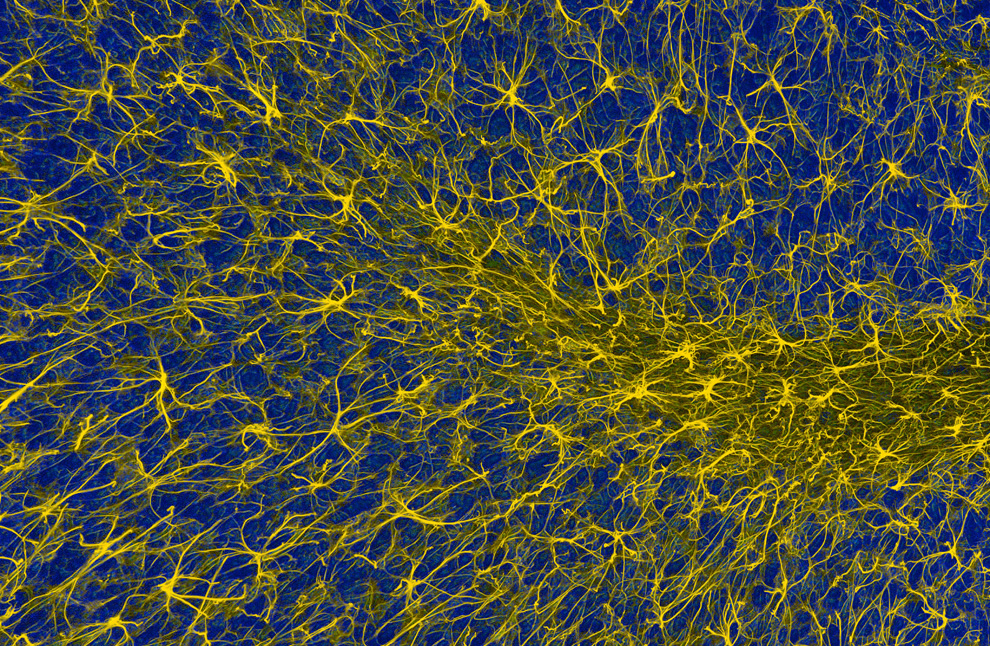
Cellular or Celestial? A tapestry of stars, like “the heavens’ embroidered cloths, enwrought with golden and silver light”, astrocytes tile the entire central nervous system in a continuous and essentially non-overlapping manner that is orderly and well organized. A single astrocyte may contact 100,000 synapses!
Astrocytes regulate blood flow to neurons, release gliotransmitters and signal one another through calcium waves.
Rotational Movement Discovered in Cells. Spatial organization of cells into ducts and acini (spheres) results in tissue architecture of organs such as lungs, salivary or mammary glands. To do this, cells need to polarize, or preferentially organize in space. Loss of polarity is one of the earliest signs of cancer malignancy.
Mina Bissell’s group at Lawrence Berkeley Labs discovered a new form of cell movement required to form spherical structures. The video shows rotation of cells around a central axis, resulting from centripetal force caused by contraction of crescent shaped actin-myosin complexes (“muscle-like”) in the cytoskeleton. Rotation is slow, about once an hour, may be clockwise or anti-clockwise, and the axis may shift but the motion is cohesive.
Without this movement, “the cells lose their way and do not form structures that allow mammary cells to make and secrete milk,” says lead author Tanner. “In order to form a polarized sphere, the cells have to be properly oriented so that certain components are up and certain components are down.” Cancer cells move randomly, but the authors were able to coax them with inhibitors to revert from their cancer phenotype and form spheres, which has significant implications in breast cancer treatment.
Ref.: Kandice Tanner, et al., Coherent angular motion in the establishment of multicellular architecture of glandular tissues, Proceedings of the National Academy of Sciences, 2012; [DOI: 10.1073/pnas.1119578109] open access
Spider Sight! Humans perceive depth using binocular vision, used to advantage in 3D movies that relay slightly different images to each eye. Since insects do not have widely spaced eyes as we do, they move their heads side to side and use motion parallax to gauge depth.
Jumping spiders can execute remarkably precise jumps over gaps to catch their prey, but use neither of these techniques. They not only have enlarged main eyes that give them visual acuity, but also two or three pairs of secondary eyes. Their eyes have not just one layer of retina, but multiple layers. The way they perceive depth is by an unusual method of fuzzy logic. While the first layer focuses image sharply, the light falling on the second layer gives a fuzzy image. The amount of defocus in this second layer gives them a clue to depth. Both layers are tuned primarily to green light. When spiders were shown flies bathed in green light, they were able to capture them accurately. However, if green light was missing from the spectrum, they consistently missed their jumps.
The Glia Club. Neurons are flashy, but an estimated 90% of your brain is made up of glial cells! Derived from the Latin word for “glue”,glia hold your brain together, allowing neurons to communicate. For too long, glia have been dismissed as the domestic servants of the electrically elite neurons: feeding them, mopping up neurotransmitters in a synapse, and repairing injured or diseased neurons.
• But it’s the variety and number of our glia that make our brain unique. Only vertebrates have special glial cells that wrap around nerve axons providing electrical insulation (seen as white matter in the brain), making transmission of action potentials 50-100 times faster!
• A postmortem of Einstein’s brain revealed no clues to his genius from his neurons. Interestingly, he had disproportionately larger numbers of glial cells in his cerebral cortex, an area involved in complex reasoning,math and imagery. Astrocytes, a type of glial cell, have bushy processes that can make as many as 30,000 connections to neighboring neurons. Researchers are trying to figure out exactly how these cells influence neurons.
• Glia communicate using chemical signals in the form of calcium waves, seen in the time lapse image. Calcium makes a fluorescent indicator glow, with brightness color-coded into warmer colors. The glia are responding to firing of action potentials in the long axons of neurons, seen as lightning bolts. Glia synchronize their signals by gap junctions or specialized channels between cells.
Dedicated to Glia – The Social Glue founded by Gregory Esau Jeff Jockisch and others..check them out. For #ScienceSunday curated by Allison Sekuler and Robby Bowles .
Anther. From the Greek antheros or anthos, meaning flower. The anther sits atop the stamen of a flower, housing the pollen (red cells) which are the male spores of the flower. Pollen are surrounded by nourishing tapetal cells seen as green strips.
Image by Heiti Paves, Tallinn University of Technology, Estonia
Spectacular! Shot by Terje Sørgjerd who writes, “I spent a week capturing one of the biggest aurora borealis shows in recent years. Shot in and around Kirkenes and Pas National Park bordering Russia, at 70 degree north and 30 degrees east. Temperatures around -25 Celsius. Good fun.”
Originally shared by ****
What happens when a Coronal Mass Ejection hits the Earth?
The Science of Snoring! Unless you’re as cute as this hibernating dormouse, snoring is not that entertaining. In the words of Anthony Burgess, “Laugh and the world laughs with you; snore and you sleep alone.”
• Snoring is the result of neck muscles relaxing during sleep; this causes the airways to narrow, increases air turbulence and vibration of soft tissues. Men are at least twice as likely to snore as women, because of greater neck muscle bulk. Dr. Melissa Hack, chairman of the British Sleep Society, said that “women believe snoring isn’t a ‘lady-like’ thing to do.”
• There is a genetic component to snoring: men who were habitual snorers were more likely to have the Lewis blood group Le (a+b-).
• A scientific study concluded: Regular playing of a didgeridoo reduces daytime sleepiness and snoring in people with moderate obstructive sleep apnoea syndrome and also improves the sleep quality of partners.
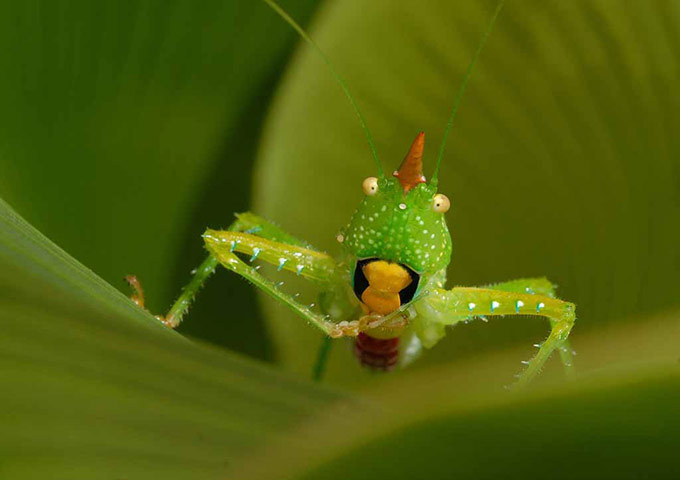
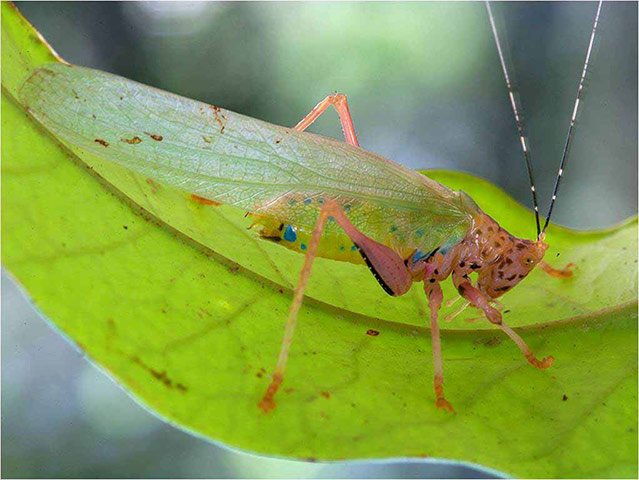
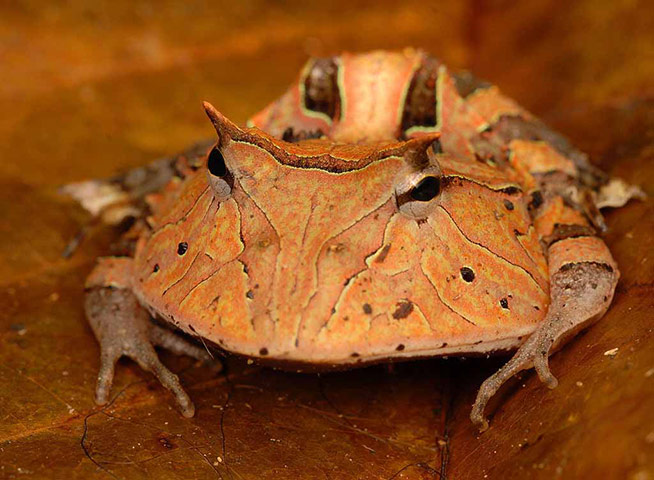
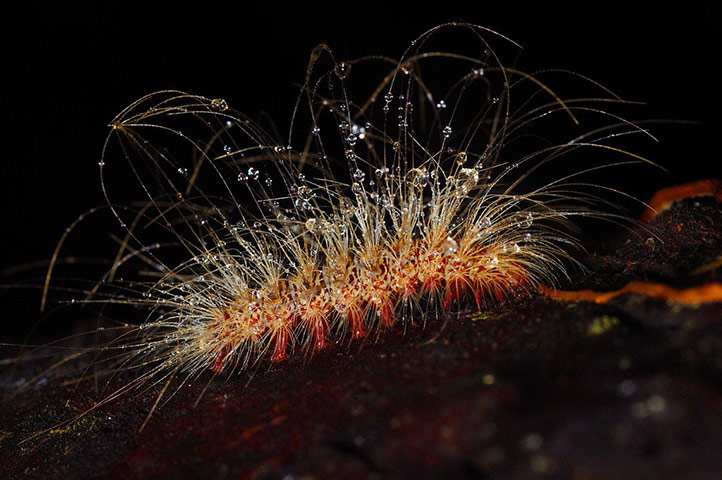
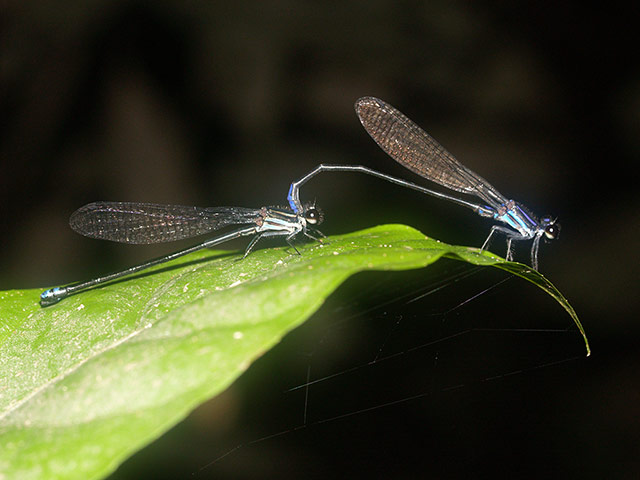
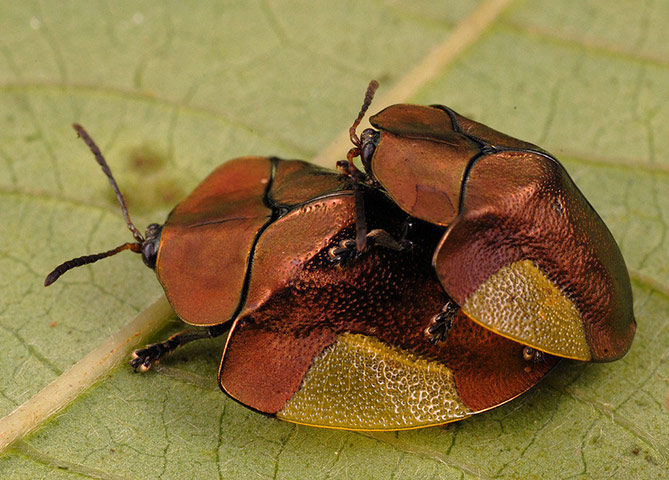
New species in Suriname. A scientific exploration of pristine tropical forests in Suriname, South America, has revealed 46 strange new species. Among them, are Katydids, named for their calls. Katydids are recognised by scientists as indicators of habitat disturbance for an ecosystem. They tend to stay within small specific habitats and do not disperse widely. They are highly sensitive to changes in their habitat, particularly fragmentation.




 madame scientist's not-so-mad musings