Herbal Cancer Cure: Weeding out the Hype

Herbal Cancer Cure: Weeding out the Hype

A recent G+ post (https://goo.gl/pGDJUZ) claimed that artemisinin, derived from an ancient Chinese herb Artemisia annua, kills 98% of lung cancer cells in less than 16 hours. What’s wrong with this claim?

◈ The comments fell into two categories: some outright disbelief If this is factual, it’d be amazing and More pseudoscience, Geesh! More common were conspiracy theories from the predictable, The W.H.O., F.D.A., C.D.C., etc. Can’t patent it, so they can’t make money off of it. to the bizarre, Funny thing is that the government gets their money off of cancer so I wonder if they’ll make this illegal and claim it’s got a side-effect that makes people experience what they would if they used Marijuana. Idk, but the government’s gonna F it up somehow. Let’s examine the claims and counterclaims. 

98% of cancer cells are killed by artemisinin…..in a culture dish! It’s easy to kill cells in a dish -just ask my students 🙂 These are in vitro findings. How about in vivo? Experiments done in rodents are indeed promising and have been reviewed and reported. Unfortunately, we scientists are excellent mouse doctors, and many drugs that cure cancer in mice under controlled, ideal lab conditions fail in the clinic. Does it work on humans? There are a few case reports of using artemisinin in humans. But, these are anecdotal and of limited use, since the patients were under chemotherapy anyway. What is needed are large scale randomized clinical trials with placebo controls to check if this herb is effective against cancers. Such trials cost a billion dollars and have not yet been done. 

Artemisinin has been safely tested in over 4000 patients…this claim from a doctor in a popular video (https://youtu.be/_Or8xLOGBu8) probably refers to a Phase I trial where only safety is monitored. Notice the doctor does not say if the herb was effective against cancer in these 4000 patients. 

The FDA will never approve it….wrong, because it is already an FDA-approved antimalarial drug. In fact, artemisinin in combination with other drugs is the gold standard for treatment of Plasmodium falciparum malaria worldwide. The WHO has negotiated with Novartis and Sanofi-Aventis to obtain the drug at cost, with no profit. 

Bottom line: Both sets of comments are off the mark! The potential of artemisinin as a cancer chemotherapeutic should not be dismissed as pseudoscience until proven otherwise. As for the conspiracy theorists, they’re just wrong.

Wiki: https://en.wikipedia.org/wiki/Artemisinin #OpenAccess REF: Anticancer Effect of AntiMalarial Artemisinin Compounds. (2015) Das, AK http://www.ncbi.nlm.nih.gov/pubmed/25861527

#ScienceSunday  

Posted in Rajini Rao | Tagged | 150 Comments

The Greening of Greenhouse Gas

The Greening of Greenhouse Gas

It’s a Gas: Driving through the Western Ghat mountains along the continental edge of the Deccan Plateau, I was charmed by this vista of sculpted terraces with verdant blades of rice emerging from submerged paddy fields. Little did I know then that paddy fields generate 50-100 million tonnes of methane each year, a potent greenhouse gas with 25 times the heat trapping potential of carbon dioxide. Although the flooded fields keep weeds at bay, microbes harbored under the warm, waterlogged soil feed on organic matter exuded by roots, releasing methane and accounting for about 20% of human-related production. In China, farmers have begun draining fields mid-season to interrupt methanogenic bacteria. But India is still responsible for nearly a third of the methane emissions. 

It’s Barley There: Now, thanks to genetic engineering, a new strain of rice yields more grain and produces less methane. Researchers spliced a gene from barley, encoding a master regulator (transcription factor) into rice. The gene, dubbed SUSIBA2 (acronym for “sugar signaling in barley 2”) increases the output of sugar and starch in the seeds, leaves and shoots of the rice plant, leaving less biomass in the root. This strongly decreased the methanogenic bacteria in the rhizosphere, or region around the root. In a 3-year field trial, methane emissions fell by 90%.

Rice, Rice, Baby: The making of starch is under the direction of a set of genes which carry in front of them stretches of DNA sequences (promoters) known as sugar responsive elements or SURE. Aren’t you loving the acronyms? When a little bit of sugar is made, SUSIBA2 is activated and it turns on genes that make even more sugar, to create a snowballing effect. The sugar is converted to starch, diverting carbon to the grains and away from the root, starving the methane producing bacteria of food. Now that’s a sweet way to cool down our planet!

This work was a collaboration between scientists at Universities and non-profit research Institutes in Sweden, China and the US. The authors have no competing financial interests. 

Paper (paywalled): http://www.nature.com/nature/journal/v523/n7562/full/nature14673.html 

#ScienceSunday  


Posted in Rajini Rao | Tagged | 61 Comments

Inferring from Infrared

Inferring from Infrared

Imagine if there was a way to know which watermelon is sweeter? When is that avocado going to ripen? How many calories, carbs or protein is in that shake? How your plants are doing? What’s in those pills your taking? A new low-cost handheld sensor on the market promises all those answers and more, in real time (https://www.consumerphysics.com/myscio/scio). The technology is based on near infrared spectroscopy. How does it work?

Calorific Rays: We all know that a prism can separate ordinary light into the vibrant colors of the rainbow. Back in 1800, musician and astronomer William Herschel wanted to know the temperature of each color. By placing a thermometer with a blackened bulb along the spectrum, he discovered that the red end was warmer than the blue. To his surprise, a thermometer placed just beyond the visible red part of the spectrum was even warmer. He had discovered infrared rays, although he didn’t realize it at the time. This is the same heat that you feel when you hold your hand near a fire.

Bond. Covalent Bond. Shaken and Stirred: Chemicals are arrangements of atoms, held together by bonds. You can think of these bonds as tiny springs in motion. They stretch, wiggle, rotate and twist. When they absorb energy, the natural vibrations of bonds increase. Because of quantum mechanical constraints, these increases occur only to discrete energy levels. Different bond types (C-O, or C-H) and different vibration modes result in a series of absorptions at different wavelengths. By looking at which wavelengths of light were absorbed by a compound, we can deduce what types of chemical bonds are in the sample. Absorbances in the near infrared region of the spectrum can be so complex that they give rise to unique fingerprints of different chemicals.

Citizen Science: Spectrometers built with near infrared technology used to be large, expensive and restricted to universities. That’s changing! The handheld spectrometer transmits chemical signatures to a smartphone which checks the pattern against a huge library of compounds in the “cloud” and returns the analysis to you within seconds. When you use it, not only will you be learning more about the chemical world around you but you’ll also be helping to build a database of knowledge of the stuff around us. Now that’s citizen science! 

REF: An introduction to near infrared (NIR) spectroscopy. A.M.C. Davies. https://www.impublications.com/content/introduction-near-infrared-nir-spectroscopy

GIFS: All gifs are from Wikipedia and are in the public domain.

Posted in science | Tagged | 87 Comments

The Peacock Problem

The Peacock Problem

‘The sight of a feather in a peacock’s tail, whenever I gaze at it, makes me sick!’ So wrote Charles Darwin in a letter to his friend, expressing his frustration at not being able to explain how natural selection could drive the evolution of this extravagantly ornamental display. Not only was there an obvious lack of survival advantage to an awkwardly heavy appendage, it came with an energy cost and added vulnerability to predators. How then, did the peacock’s tail evolve?

Once again, it was Darwin who came up with the idea of sexual selection, that depends, “not on a struggle for existence, but on a struggle between the males for possession of the females; the result is not death to the unsuccessful competitor, but few or no offspring”


By flaunting his “handicap”, the peacock signals to his potential mate that he has survived despite the negative consequences! The good gene hypothesis suggests that the ornament is a proxy for a healthy immune system and metabolic fitness. The peahen’s preference for gaudy displays drives the evolution of the tail by positive feedback: when she mates with the most fashionable male, she passes his traits on to her sons who in turn, are assured of reproductive success! Choosy mothers produce sexy sons and over many generations, runaway evolution results in strange and beautiful ornamentations like the lion’s mane, the antlers of a stag and the blue-footed booby. In the 20th century, Ronald Fisher, who is considered the greatest evolutionary biologist after Darwin, argued that the female’s preference and the male’s development of the ornament must advance together until practical or physical limits halt any further exaggeration (http://en.wikipedia.org/wiki/Fisherian_runaway). 

We’ve seen how sexual selection gives rise to the difference in appearance between male and female (sexual dimorphism). Animals that are monogamous show less sexual dimorphism. Interestingly, our pre-Homo ancestors may have been more dimorphic compared to modern humans suggesting that we have become more monogamous over time! 

REF:The sight of the peacock’s tail makes me sick: the early arguments on sexual selection. (2000) Hiraiwa-Hasegawa M. http://www.ncbi.nlm.nih.gov/pubmed/10824193

#ScienceSunday  

Posted in Rajini Rao | Tagged | 221 Comments

Affairs of the Heart: Dr. Helen Taussig

Affairs of the Heart: Dr. Helen Taussig 

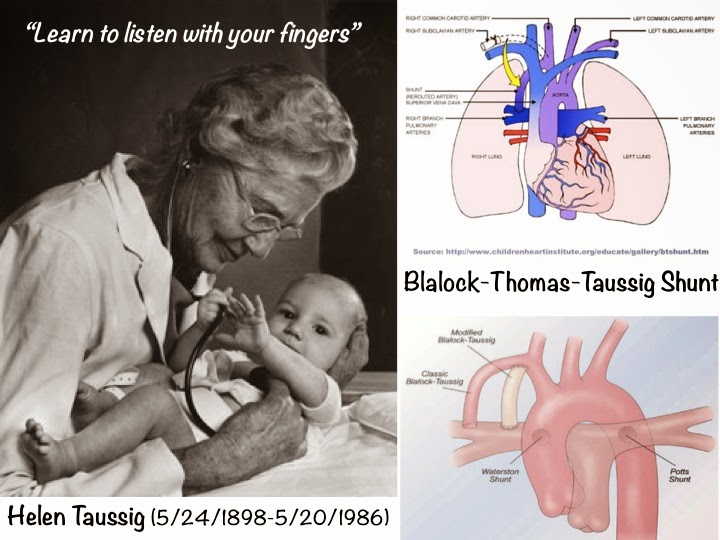
❤  On a late November day in 1944, bright sunlight streamed upon the blue-tinged body of 18 month old Eileen Saxon, who was hovering near death. Born with a congenital heart defect that prevented her blood from being oxygenated by her lungs, she now weighed little more than 9 pounds. Across the ocean, World War II raged on, but at the Johns Hopkins University hospital in Baltimore, another type of history was being made. Under the gaze of 706 doctors gathered around, Dr. Alfred Blalock meticulously rerouted an artery heading to the child’s arm, back to the lungs giving the oxygen-starved blood a second chance of rejuvenation. The anesthesiologist cried out in astonishment as Eileen’s lips turned from blue to a healthy red. That was the start of a successful procedure that would cure thousands of “blue babies” in the brand new era of heart surgery that followed. Today, we remember Dr. Helen Taussig, whose brilliant idea it was that set the stage.

❤ Born on this day, May 24, in 1898, Helen took medical classes at both Harvard and Boston Universities although neither would award her a degree because of her gender. Worse, she was forbidden to speak to her male colleagues in histology class because of fears that she would “contaminate” them. She completed her MD degree at Johns Hopkins and there, as a pediatric cardiologist did extensive work with anoxemia, or blue baby syndrome. She noticed that blue babies with an additional heart defect (called PDA) fared better, and that a shunt that mimicked PDA could be the solution. She pitched the idea of getting more blood to the lungs much “as a plumber changes pipes around” to surgeon Alfred Blalock and his technician Vivien Thomas. Thomas, a black man whose education did not go beyond high school, practiced the surgery in the animal lab and after modifying instruments for use in humans, coached Dr. Blalock through the first hundred surgeries in infants. In 1976, Hopkins awarded him an honorary doctorate. Sadly, little Eileen became cyanotic again in a few months and did not survive past 2 years even though other babies would go on to live healthy lives. Today, a modified version of the shunt is performed using a synthetic Gore-Tex graft (lower right image). 

¸¸.•*¨*•♫ Happy Birthday, Dr. Taussig!  

Image Note: Helen Taussig became deaf in later years, and actually used her fingers rather than a stethoscope to feel the rhythm of heartbeats.

More: http://en.wikipedia.org/wiki/Helen_B._Taussig_

#ScienceSunday   #STEMWomen  

Posted in Rajini Rao | Tagged , | 50 Comments

Coral Cohabiters: Time for a Status Update?

Coral Cohabiters: Time for a Status Update?

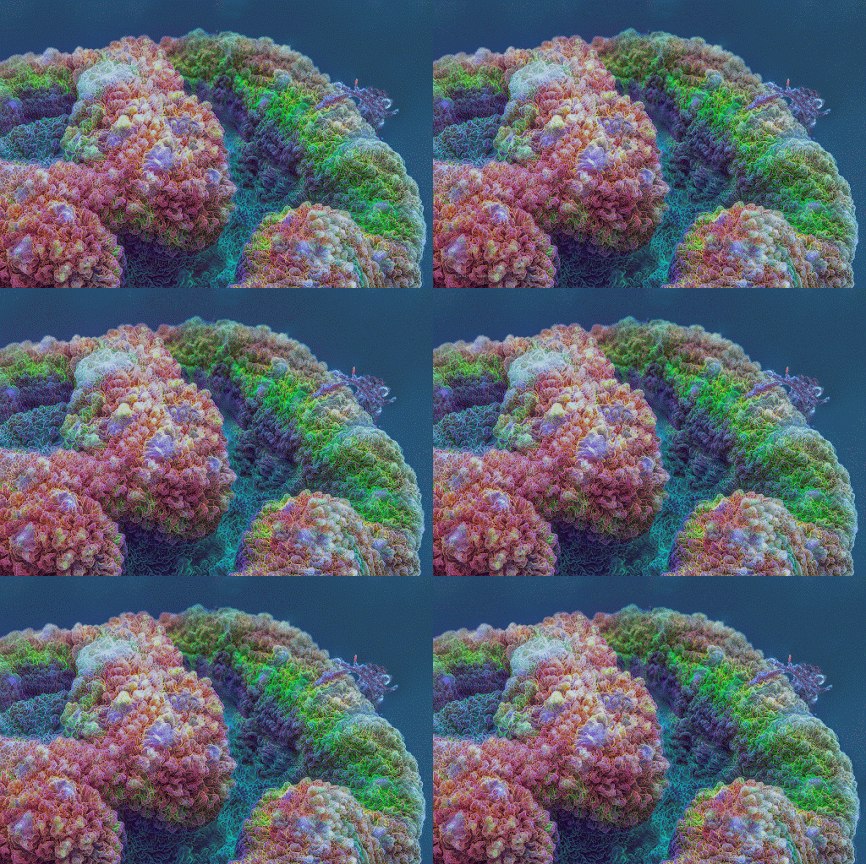
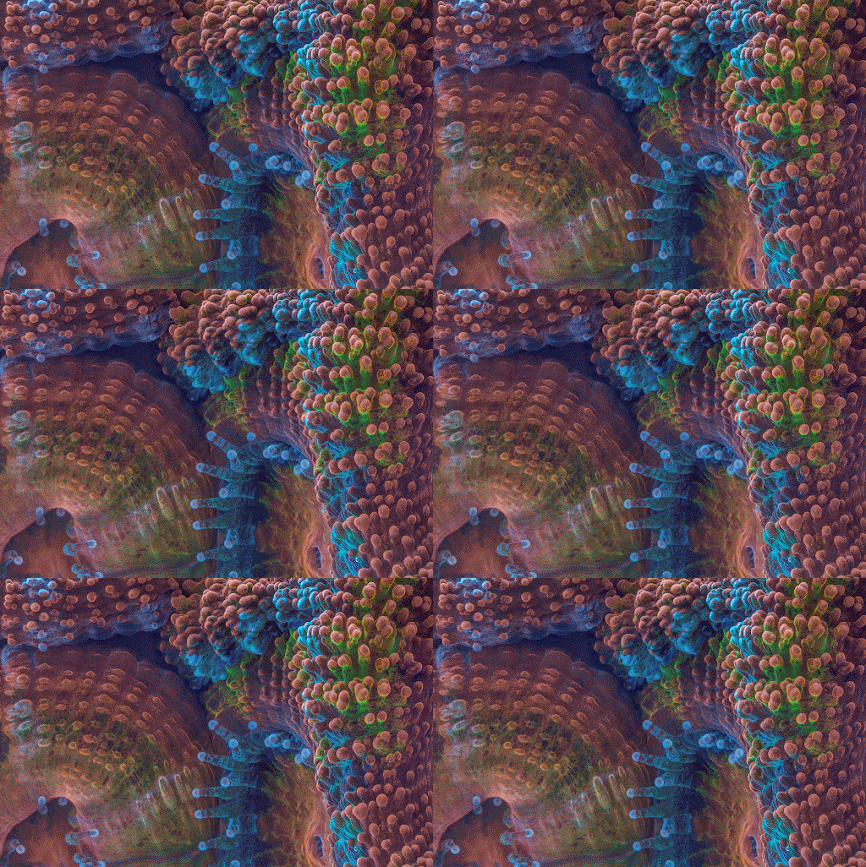
Symbiosis derives from the terms sym for together, and biosis for life. The coral reef appears to be a poster child for a lifetime of togetherness. The soft tissues of coral polyps are embedded with hundreds of single-celled, free-swimming dinoflagellates, captured from nutrient poor, crystal clear tropical waters. Photosynthesis by dinoflagellates provides 95% of the organic food used by the polyps. In return, the dinoflagellates are housed in a safe environment where their hosts supply them with carbon dioxide and minerals needed for photosynthesis. 

Friends with Benefits: Like a Facebook status, the relationship of coral symbionts is complicated. Clearly, the coral benefits: oxygen and sugars produced by trapped dinoflagellates enable these corals to grow as much as three times faster as those without symbionts. But the converse is not true: in the symbiotic relationship, it takes ~70 days for the dinoflagellates to double, in contrast to a mere 3 days outside the coral. So symbiosis has a fitness cost for the algae. In reality, the coral host is more like an active farmer, who lures and engulfs the free-living dinoflagellates into captive domestication. When the coral is stressed, it loses control of the delicate energy balance in this relationship and expels its colorful guests en masse. Coral bleaching devastates the entire reef ecology and is a symptom of climate change which brings warmer, more acidic, nitrogen rich waters.

● All relationships lie along a continuum: from truly mutualistic, where both partners benefit and the success of one is tied to the success of the other, to commensalism, where one partner benefits but the other is neither harmed nor helped, and the extreme cases of parasitism, in which one organism exploits and harms the other. Isn’t there a parallel with human relationships as well? 

The more we learn about the diversity of life and the structure of genomes, the more it appears that much of the evolution of biodiversity is about the manipulation of other species—to gain resources and, in turn, to avoid being manipulated (John Thompson, 1999). True mutualism may be rare in nature. Evolutionary selection tends to maximize individual fitness and conflict of interests are inevitable!

REF: Is the coral-algae symbiosis really ‘mutually beneficial’ for the partners? S.A. Wooldridge (2010) Bioessays 32: 615-625

IMAGES: Check out more stunning coral photographs by Daniel Stoupin at http://www.microworldsphotography.com/

#ScienceSunday  

Posted in Rajini Rao | Tagged | 61 Comments

Screws with a Twist

Screws with a Twist

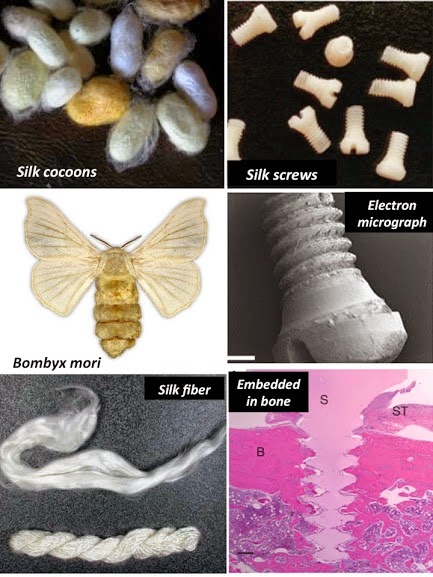
Secrets of the Silkworm: Did you know that the silkworm was domesticated in China over 5,000 years ago? Legend has it that the Empress Lei Zhu was drinking tea under a tree when a cocoon fell into the hot beverage, unraveling silken threads to reveal the Bombyx caterpillar within. Silk making was a deeply guarded secret until 550 AD, until Christian monks successfully smuggled silkworms out of China in a hollow stick and introduced them to the rest of the world. Today, there are thousands of genetically inbred and engineered strains, all completely dependent on humans for survival! 

From Steel to Silk: Fractured bones are often held in place by metal screws and plates until they heal. Removing the metal carries unnecessary risks, which can be averted using biocompatible materials that are naturally absorbed into the body over time. Silk is strong, stable to high heat of sterilization and can be fashioned into “self-tapping” surgical screws that have been successfully tested in rats. The silk screws are “radiolucent” or invisible to x-rays, allowing the fracture to be monitored post-operation, without the impedance of metal. Best of all, silk protein is digested by natural enzymes and resorbed into the body within 4-8 weeks. Researchers hope to use silk screws in facial fractures, which number in several hundred thousand each year. 

Bench to Body: (1) Fill test tube with silk solution then freeze dry. (2) Use scissors or a blender to cut into small pieces. (3) Dissolve pieces in 1,1,1,3,3,3 hexafluoro-2-propanol (HFIP) in a syringe. (4) Inject dissolved silk into bone plate or screw blank moulds. (5) Place molds in methanol for 3–4 days (to convert silk protein into β-sheets). (6) Remove and allow to dry (fume hood for 1 week then 60 °C oven for 5 days), then autoclave for stability. (8) Machine using a mill, lathe or die to obtain desired geometry. Almost DIY, right? 🙂

REF: Perrone et al., 2014 Nature Communications http://goo.gl/uYKM3N

http://en.wikipedia.org/wiki/History_of_silk

● Gary Ray R describes a different kind of biodegradable screw made of an iron alloy-ceramic composite. This material could be used for shoulder surgeries and degrades at a slower rate over 1-2 years. http://goo.gl/eWmcDV

#ScienceSunday  

Posted in Rajini Rao | Tagged | 91 Comments

Cancer or Canvas?

Cancer or Canvas?

★ Do you see cancer cells run amok or a beautiful rendition of Van Gogh’s “Starry Night”?  In this addition to my Art or Science? collection, it’s hard to pick out the microscope image from the artwork it inspired. The tiny biological details revealed by researchers at the University of Michigan Center for Organogenesis are captured in larger than life quilts by Fiber Artists @ Loose Ends who raise public awareness about the importance of the arts in healthcare settings.

★ On the Left is a cross-section of mouse skin with basal cell carcinoma, the most common form of human skin cancer. The top layer of skin is stained red, collagen fibers are stained blue and the deadly tumor cells appear in the red at the bottom. On the Right, artist Carole Nicholas renders the image with fabric and stitching to simulate the Van Gogh’s brushwork in a quilt.

★ This type of common skin cancer arises exclusively from the base of the hair follicle, where a niche of stem cells reside. When the hair follicle is in its growth phase, these cells are temporarily activated by the hedgehog signaling pathway. In cancer, this pathway is permanently on overdrive, due to mutations in genes known as Patched (PTCH) or Smoothened (SMO). If you’re curious about the origin of these amusing gene names, especially Sonic Hedgehog, Indian Hedgehog and Tiggywinkle Hedgehog, check out Buddhini Samarasinghe’s entertaining and informative post (http://goo.gl/bhlKie)! 

REF: Hutchin et al. Sustained Hedgehog signaling is required for basal cell carcinoma proliferation and survival: conditional skin tumorigenesis recapitulates the hair growth cycle.

http://genesdev.cshlp.org/content/19/2/214.long

Image Credits: Mark Hutchin, University of Michigan

Art Quilt by Carole Nicholas, Fiber Artists@Loose Ends

#ScienceSunday  

Posted in Rajini Rao | Tagged | 93 Comments

Daffodils and Dementia

Daffodils and Dementia

✿ It’s spring time in Maryland, and in the words of the poet Wordsworth, my heart dances with the daffodils. Through the long winter, I conjured up memories of these cheerful blooms in my mind:

For oft, when on my couch I lie

In vacant or in pensive mood,

They flash upon that inward eye

Which is the bliss of solitude;

And then my heart with pleasure fills,

And dances with the daffodils.

✿ But an estimated 44 million people world wide who suffer from Alzheimer’s disease are robbed of their memories by a progressive dementia. As the 6th leading cause of death in the U.S., Alzheimer’s cannot be cured or prevented. One of the handful of drugs available to improve memory loss in patients is galantamine, which is extracted from the leaves and bulbs of daffodils (Narcissus) and snowdrops (Galanthus). These extracts have been in use since ancient times. In Homer’s Greek epic, Odysseus is said to have used snowdrops to clear his mind bewitched by Circe. In the 1950s, a pharmacologist observed inhabitants of a remote Bulgarian village rubbing the extracts on their forehead and shortly after, the drug was approved for medical use. Galantamine increases the action of the neurotransmitter acetylcholine in some parts of the brain, both by making the receptor more sensitive to its action and by slowing down its removal. The drug has other interesting properties: it is said to promote lucid dreaming, improve sleep quality, memory loss in brain damage, and some autistic symptoms (http://en.wikipedia.org/wiki/Galantamine).  

✿ No drug has yet stopped the inexorable progress of Alzheimer’s. Early intervention is key to effective treatment: in my lab, for example, we are studying endosomal pathology which is the earliest sign of problems at the cellular level (http://goo.gl/DtVUFT). Yet lack of funding stifles productive research. As Newt Gingrich points out in his recent Op-Ed for New York Times, we spend only 0.8% of the estimated 154 billion dollars of annual medical costs related to Alzheimer’s disease on research to cure or prevent it

News Story: Newt Gingrich: Double the NIH Budget. April 22, 2015 http://goo.gl/Fq4PAS 

Daffodil GIF: http://headlikeanorange.tumblr.com/

#ScienceSunday  

Posted in Rajini Rao | Tagged | 133 Comments

Dotting the I

Dotting the I 

Colorful bindis are being handed out to tribal women in India by a philanthropic organization. When worn on the forehead, each dot delivers a daily dose of 100-150 micrograms of iodine (chemical symbol: I) which is absorbed by the skin. At least 70 million Indians suffer from iodine deficiency disorders. Sure, oral supplements or iodized salts are more efficient, but the tribal women won’t take them. The bindis are a socially more acceptable, and creative, approach to dietary compliance! 

Bad Air: Iodine deficiencies were described by ancient Roman writers and medieval travelers, who would encounter entire villages in the Alps or southern Europe struck by cretinism.  Thought to be due to “bad air” or “stagnant water” in the mountains, we now know that dwarfism, deformed bones and intellectual disability are due to lack of iodine-rich thyroid hormone. Goiter belts characterized the more mildly afflicted inland regions of Europe and N. America, where populations were marked by enlarged thyroids and grossly swollen throats. Along the coast, however, wave action disperses natural iodine salts from sea water into the air, from where it enters our ecosystem. No wonder, sea air was recommended for recuperating invalids. 

The Rise and Fall of I: After the discovery of iodine in 1811, Lugol’s solution (mostly potassium iodide, or KI) became the universal panacea of western medicine. Medical students were advised:

If ye don’t know where, what, and why 

Prescribe ye then K and I

But too much of a good thing led to the discovery that excess iodine actually blocked thyroid hormone production (known as Wolff-Chaikoff effect). Today, the Reference Daily Intake or RDI has decreased from 1 gram, to 150 micrograms, which many practitioners believe is too little. Proponents of iodine therapy point out the benefits in preventing breast cancer, skin disorders and more. For a fascinating history of the controversies and facts see the article in the reference. 

REF: http://www.westonaprice.org/modern-diseases/the-great-iodine-debate/

Video: Jeevan Bindi- The Life Saving Dot (1 min long)

https://youtu.be/Sclg_AfGzcE

Photo: Subir Basak 

https://www.flickr.com/photos/subirbasak/

#ScienceSunday  

Posted in Rajini Rao | Tagged | 122 Comments