Can You Guess these Scientist Silhouettes?
Write your answers in the comments.
Extra credit for a brief description of their discovery or contribution!
Source: http://hirsutehistory.com/
For #scienceeveryday when it’s not #sciencesunday .












Can You Guess these Scientist Silhouettes?
Write your answers in the comments.
Extra credit for a brief description of their discovery or contribution!
Source: http://hirsutehistory.com/
For #scienceeveryday when it’s not #sciencesunday .

Women and the Nobel Prize
Between 1901-2011, the Nobel prize has been awarded to 826 individuals: 43 of these were women (none so far in 2012). Gerti Cori was one of the first of these pioneering women. In 1947, she and her husband Carl Cori (pictured) received the Nobel Prize in Physiology or Medicine for unravelling the Cori Cycle.
Your muscles store energy as glycogen, released by oxidation. When you sprint, oxygen is in short supply, and a byproduct of incomplete oxidation, lactic acid, builds up and causes your muscles to spasm. Later, lactic acid is mopped up by the liver and converted back to glycogen by the Cori Cycle.
Via: BPoD (http://goo.gl/ccTkI) for #scienceeveryday and #stemwomen .
Stats: http://goo.gl/CBIpi and http://goo.gl/8IXBQ
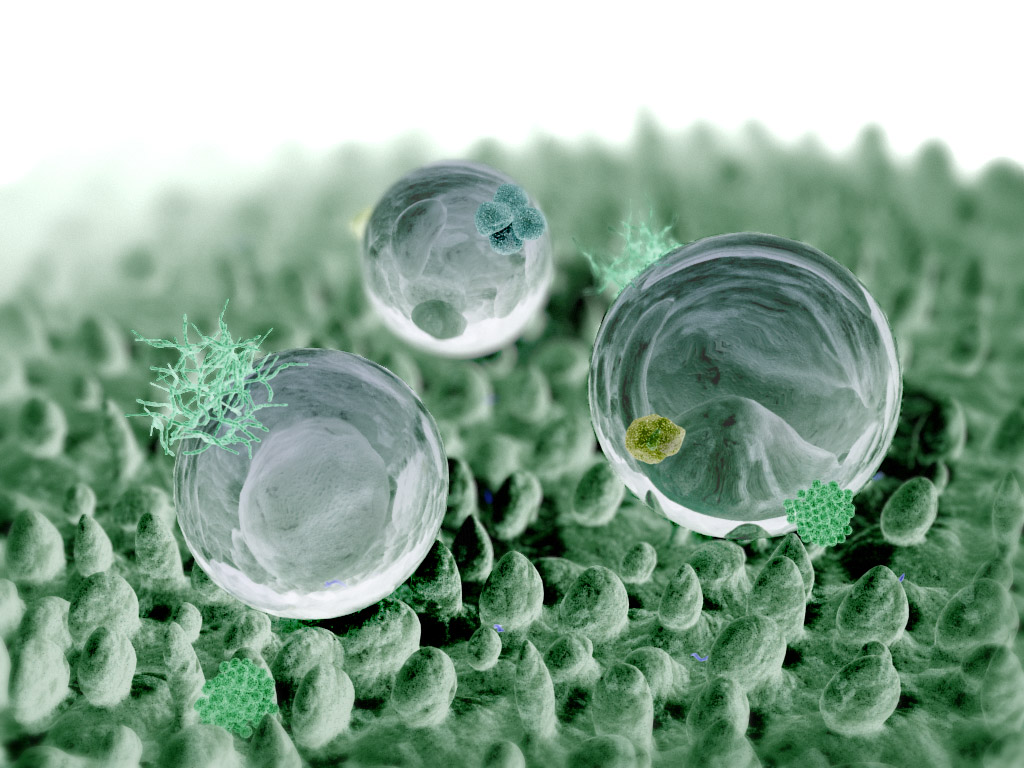
Lotus Leaves, Rose Petals and Nano-Soccer Balls: What the Fakir could these have in common? (No, I’m not using a bad word, check out the title of the respectable PNAS paper below 🙂
The Lotus Effect: A symbol of purity – the leaves of a lotus are always clean and dry. Water simply rolls off the surface, carrying dirt with it. This self-cleaning property is due to the superhydrophobic surface of the lotus leaf. Studded with micropapillae (image), water beads lie on the top like a fakir on a bed of nails. While ordinary waxy surfaces may have contact angles of >90° with the drop, fakir drops show extreme angles of 170°, minimizing contact to only 0.6% of their surface! In the virtual absence of adhesive forces, the drops skitter off, cleaning the leaf as they roll (The Lotus-Effect: CGI simulation).
The Petal Effect: While a water droplet on a rose petal is spherical, it does not roll off, even if the flower is held upside down. This is because the petal’s nanostructure allows the water to wet the space between the surface grooves, increasing adhesive forces (Wenzel model pix; http://goo.gl/GT7KF). Contrast this to the lotus leaf, where the drop sits on the ‘bed of nails’ with trapped air in between (Cassie-Baxter model pix; http://goo.gl/35Cz6).
Why do we care?: There is a wealth of nanotechnology drawing upon Nature’s brilliance. Watch this wonderful video: http://goo.gl/dXMQ2
More recently, scientists in the Netherlands figured out a way of packaging nanoparticles, that could be used to deliver drugs for example, into soccer ball-like clusters of very high density, by slowly evaporating solutions from a superhydrophobic effect. They show that fakir drops remain in the Cassie-Baxter mode without collapsing into the Wenzel mode. (Aren’t you glad you now know what that means!).
REF: Building microscopic soccer balls with evaporating colloidal fakir drops:
http://stilton.tnw.utwente.nl/people/snoeijer/Papers/2012/MarinPNAS12.pdf
#scienceeveryday #leavesonthursday
Paging Science
H/T Kevin Clift for the share.
Originally shared by Science on Google+
Science Page Circle – 10.9.12
This is a really nice set of Science Pages! Approximately 200 pages are in Science on Google+: A Public Database (see http://goo.gl/WCohT for a categorized list), and we circled 157 Science Pages in the last two days!!! Check out the new pages by adding this circle and don’t forget to share it with your friends!
If you received a direct notification about this circle and would like to be added to future circles, please fill out this form: http://goo.gl/yEg7M. Thanks in advance!
#scienceeveryday #science #publiccircles #sharedcircles
SIGNAL ACCOMPLISHMENT WINS CHEMISTRY NOBEL
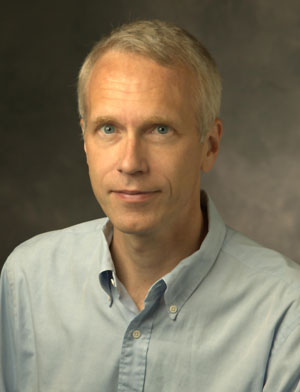
• Robert Lefkowitz (Duke University; left) and his former postdoctoral fellow Brian Kobilka (Stanford; right) take home the 2012 Nobel prize in Chemistry for their discoveries in the field of cell signaling by G Protein Coupled Receptors (GPCR). Considered the Holy Grail in the membrane protein field, these are major targets of modern drugs.
• More than 800 human genes comprise the GPCR family, making it the largest group of membrane protein receptors. Together, they detect hormones, growth factors, odorants, neurotransmitters and thousands of different ligands. The visual protein of the eye, rhodopsin, is a GPCR. They share a common structure of 7 helices that twist through the membrane, attaching to molecular switches (G proteins) on the inside. The whole structure acts as an on/off switch that sets off a signaling cascade that can be amplified and tuned. Lefkowitz cloned the first GPCR and Kobilka solved the structure of the adrenergic receptor, β2AR, that controls the flight or fight response.
Image of β2AR: http://en.wikipedia.org/wiki/File:Beta2Receptor-with-Gs.png
#scienceeveryday #nobelprize



Fragrant Fennel
The lady at the checkout line of the local grocer stared at the stout-bulbed feathery fronds with a mixture of perplexion and annoyance. Guiltily, I explained, “It’s fennel”. “What do you do with it?”, she countered. She really ought to be on G+, I thought.
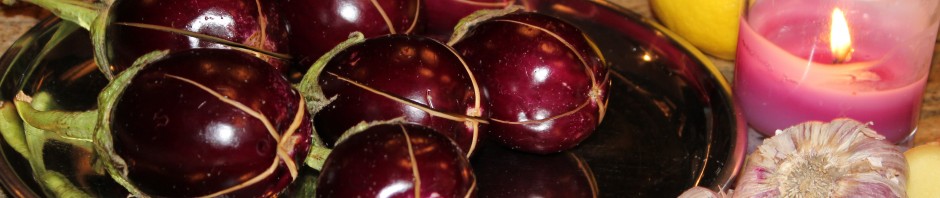
Of course, try out David Crowley ‘s hearty winter soup, what else? The goodness of potatoes, cabbage and carrots taken to a higher plane with the fragrance of fennel. I substituted a vegetable broth, allowed my husband to add his secret ingredient (psst, a few drops of Angostura bitters) and topped it off with sundried tomatoes, slivers of jalapeno, ribboned sage from the garden, dashes of pepper (red chilli and black) and grated Parmesan.
What do you like to do with fennel? 🙂
David’s Recipe: http://cookingchat.blogspot.com/2012/09/csa-day-potato-and-cabbage-soup.html
STEM CELLS STRIKE GOLD
• The Nobel Prize in Physiology or Medicine 2012 was awarded jointly to British researcher John B. Gurdon and Shinya Yamanaka from Japan “for the discovery that mature cells can be reprogrammed to become pluripotent”.
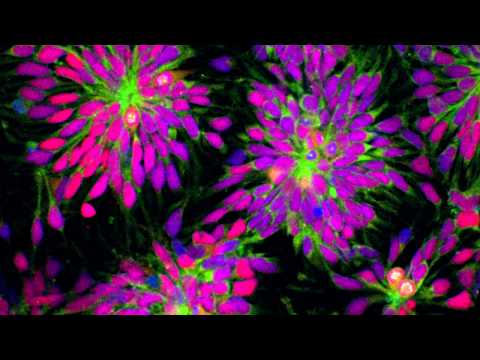
• Human induced pluripotent cells (iPSC) are stem cells made from ordinary (non-embryonic) skin cells that are given a transformational cocktail of four genes (cMyc, Oct4, Klf4, and Sox2). This allows reprogramming into any adult cell, such as human brain cells shown in the image on right. See a short video describing this in an earlier post on Dr. Yamanaka winning the Millenium Technology prize ► http://goo.gl/Y87AX
Breaking News: http://goo.gl/GNwYl
#scienceeveryday #nobelprize



Happy Birthday, Feisal: Today (October 7 in Malaysia) is the official B-Day of Feisal Kamil . You don’t need a Google search to tell you that this is one awesome G Plusser. Have a good one, and welcome to my side of that decade, Feisal 😉
Follow the tag #HappyBurpDayFK for more birthday wishes 🙂
Image credit: LP
This is the way to teach thermodynamics! 🙂
#scienceeveryday
Originally shared by ****
The 2nd Law: Unsustainable
Muse / The 2nd Law (2012)
All natural and technological
Processes proceed in such
a way that the availability of the
remanining energy decreases
In all energy exchanges, if no energy
enters or leaves an isolated system
the entropy of that system increases
Energy continuously flows from being
concentrated to becoming dispersed
spread out, wasted and useless
New energy cannot be
created and high-grade
energy is being destroyed
An economy based on endless
growth is unsustainable
Unsu…
Unsustainable
The fundamental laws of
thermodynamics will place fixed
limits on technological innovation
and human advancement
In an isolated system, the entropy
can only increase
A species set on endless
growth is unsustainable
Unsu…
Unsustainable
Llama Pharma
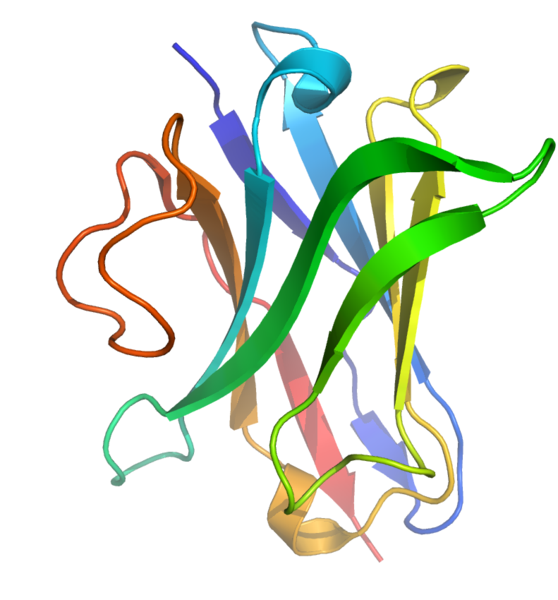
• Camelid Nanobodies for Therapy: Circulating in the healthy immune system of llamas, camels and alpacas is an unusually small version of antibody– proteins that are key to fighting infection. In contrast to our antibodies that are large and cumbersome (120-150 kilo Daltons in size), single domain antibodies made from the Camelid family are only 12-15 kDa or 4 x 2.5 nanometers in diameter.
• Potent and penetrant, these little proteins (right image) are more soluble and stable than their larger counterparts. They can get deep into tissues or cross the blood brain barrier where they have the potential to neutralize viruses, deliver toxins to cancer cells or even fight fungi in formulations of anti-dandruff shampoo. Concerned about alpaca abuse? No worries, they can be produced in bacterial factories.
Sources: (i) http://bpod.mrc.ac.uk/archive/2012/10/4
(ii) http://en.wikipedia.org/wiki/Nanobodies
(iii) Saerens et al., Single-domain antibodies as building blocks for novel therapeutics. http://dx.doi.org/10.1016/j.coph.2008.07.006
#scienceeveryday



 madame scientist's not-so-mad musings
