Men!

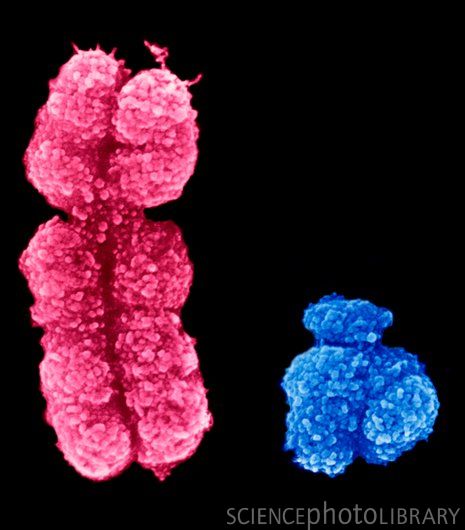
Men! Y u so SRY? There was a time when our gender was determined by environmental cues such as temperature, rather than our genes. Then, about 200-300 million years ago, the SRY gene evolved from the related SOX gene, and thus was born the Y chromosome. While all the other chromosome pairs swapped genetic material (thus repairing damaged genes), the Y chromosome began to lose its genes at an alarming rate, eventually only swapping with the X at its very tips.

Nearly Gone: Over time, the Y lost 1,393 of its 1,438 original genes:that’s a rate of 4.6 genes per million years! Today, only 19 genes are shared between X and Y.

Bombshell: In a 2002 Nature paper, Australian scientists dropped a bombshell, predicting that the Y may be lost altogether in about 10 million years! After all, spiny rats and male voles have already lost their Y, resorting to sex determining genes on other chromosomes.

Enter monkey business: A new report shows that the rhesus macaque’s Y has 20 genes shared with its X, of which 19 are shared with the human Y. This suggests that the human Y chromosome has lost only one gene since humans and macaques last shared a common ancestor 25million years ago. So the linear extrapolation model is flawed . It is likely that the genes remaining have an essential function in fertility and are not going to be shed any time soon.

Sneaky Backups: David Page of MIT found that the Y chromosome has a sneaky way of making backups: the most important genes are stored in the DNA as mirror images, or palindromes — which read the same way forwards and backwards. (It’s the Y’s way of saying “Madam, I’m Adam”.) This means that Y genes can repair themselves when they get damaged. But Jennifer Graves, the Australian scientist who published the 2002 story considers these duplications to be the chromosome’s dying gasps. “The Y could disappear tomorrow if another sex-determining gene were to arise on an autosome,” she says.

Fun reads: http://www.nature.com/news/the-human-y-chromosome-is-here-to-stay-1.10082

http://www.npr.org/templates/story/story.php?storyId=4225769

http://www.zmescience.com/medicine/genetic/y-chromosome-not-diminishing-men-extinct-0312934/http://en.wikipedia.org/wiki/SRY

Serious stuff: Hughes, J. F. et al. Nature http://dx.doi.org/10.1038/nature10843 (2012).

Posted in Rajini Rao | 30 Comments

Biology’s Birthday present for Alan Turing: Father of computer science and artificial intelligence, mathematician,…

Biology’s Birthday present for Alan Turing: Father of computer science and artificial intelligence, mathematician, cryptographer and…..biologist? 60 years after Turing published a hypothesis for pattern formation (such as zebra stripes) in biology, using math and simple diffusion, scientists have found evidence to support it. Like the yin and yang of Eastern philosophy, Turing proposed interactions between an activator (working over a short range) and an inhibitor (working over long range).

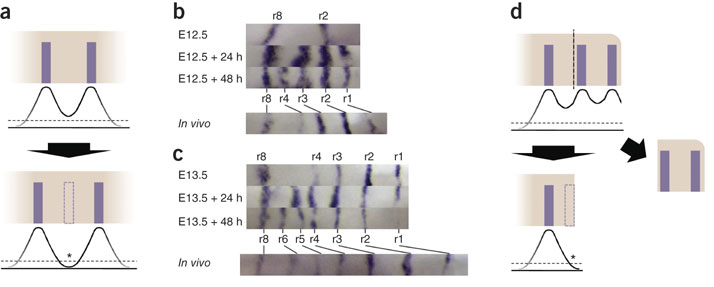
In a paper published in Nature Genetics, researchers discovered that two morphogens worked as an activator-inhibitor pair to develop striped ridges in the roof of a mouse’s mouth. Consider the reaction in Image 2 : A + B react to form C + D, where the product C feeds back autocatalytically to speed its production. C also activates an inhibitor, X*, which inhibits the reaction. Suppose these factors can regulate the genes that make skin pigment, then this interaction can give rise to the Turing patterns shown in the image.

To understand, look at Image 3: As the tissue expands,levels of the inhibitor diffusing from the stripes fall below a threshold (dashed line) so that the activator now gets back to work and produces a new stripe (dashed bar). The other panels show real data from the Nature Gen paper. Notice the appearance of the new stripe r3, first between r8 and r2 and then another (r4) between r8 and r3 both in the excised tissue and in the animal (in vivo). If diffusion of the inhibitor is blocked by making a cut next to the stripe, a new stripe emerges.

Image 4 shows the wonderful range of patterns that can be generated: A) Zebra stripes. B) Fish skin patterning. C) Phyllotaxis (leaf positioning). D) Developmental fields of leg segmentation in Drosophila. E) Cardiac arrhythmias (spiral/scroll waves).

What a neat 100 year birthday present for Alan Turing!

Sources: 1) Nature Genetics Abstract (image 3): http://www.nature.com/ng/journal/vaop/ncurrent/full/ng.1090.html

2) A good free read (images 2, 4): http://www.fasebj.org/content/17/1/1.full

3) Turing’s 1952 paper: http://www.dna.caltech.edu/courses/cs191/paperscs191/turing.pdf

Excerpt from Turing’s Abstract : “The purpose of this paper is to discuss a possible mechanism by which the genes of a zygote may determine the anatomical structure of the resulting organism. The theory does not make any new hypotheses; it merely suggests that certain well-known physical laws are sufficient to account for many of the facts.”

Posted in Rajini Rao | 52 Comments

Title

Posted in Rajini Rao | 2 Comments

A beautiful thought for midweek ….

A beautiful thought for midweek ….

Originally shared by GOOD MUSIC

“A meditation on mortality and the inevitability of death, the lyrical theme bears a striking resemblance to the biblical passage Genesis 3:19 (“…for dust thou art, and unto dust shalt thou return.”), but the actual inspiration was from a book of Native American poetry, which includes the line for all we are is dust in the wind .”

(Wikipedia)

Posted in Rajini Rao | 11 Comments

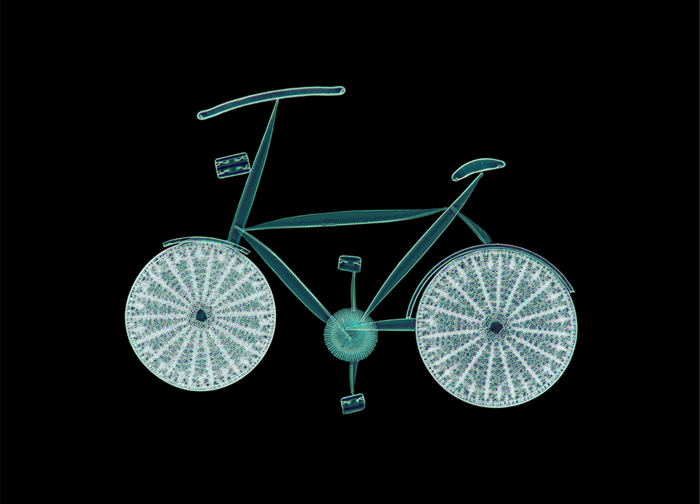
Bicycle around the carbon cycle: Tiny Diatoms could offset global warming.

Bicycle around the carbon cycle: Tiny Diatoms could offset global warming.

About half the photosynthesis on earth occurs at sea, where tiny phytoplankton such as diatoms “fix” atmospheric carbon dioxide by converting it into organic matter. About 15% of this eventually sinks to the ocean depths, along with the diatom skeletons.

A 13-year study recently reported in PNAS revealed an unexpected and previously undocumented late summer deep sea sequestration of carbon by a symbiotic combination of cyanobacteria and diatoms. Although diatoms are tiny (about 30 could fit into the width of a human hair), their glass-like skeletons are heavy, so that when they die they take carbon out of the surface water, locking it into deep ocean sediments. Scientists speculate that the increase in day length could be a cue for the diatoms to begin sinking en masse, usually around August.

Carbon dioxide levels are higher now than the past 2.1 million years. Natural carbon sequestration by diatoms offers a welcome source of remediation.

Paper (open access):http://www.pnas.org/content/109/6/1842.full

Posted in Rajini Rao | 14 Comments

Pay it forward.

Pay it forward. The longest living kidney transplant chain has just been forged. The links involved 30 donors, 30 recipients, 4 months of planning and 17 hospitals around the US.

• Getting a kidney from a deceased donor can take 5-10 years. Living donors, willing to give up one of their two kidneys, may not be the right tissue match. A transplant chain begins when a Good Samaritan donates a kidney, expecting nothing in return. The recipient could have received a kidney from a family member, except that the tissue did not match. So the grateful family member donates their kidney anyway, but to another stranger in need. And so the good deeds propagate, setting up a chain reaction .

• The National Kidney Registry says that such chains have the potential to provide kidneys to as many as 20,000 patients immediately, and 3,000 patients per year thereafter. There are 90,000 people in the United States alone, waiting for a kidney and 4,500 will die each year waiting.

• For information, please call (800) 424-6120 or go to http://www.kidneyregistry.org/.

Watch/read their personal stories: http://abcnews.go.com/Health/kidney-transplant-chain-sets-record/story?id=15752299#.T0MDPMiVPcs

Posted in Rajini Rao | 9 Comments

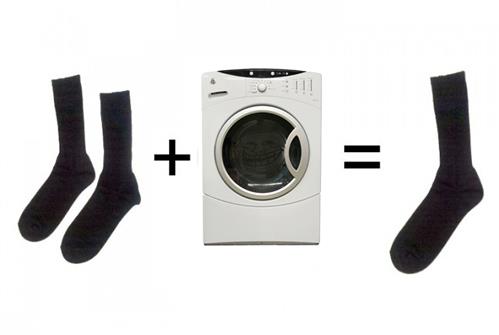
Where do lost socks go?

Where do lost socks go?

Posted in Rajini Rao | 52 Comments

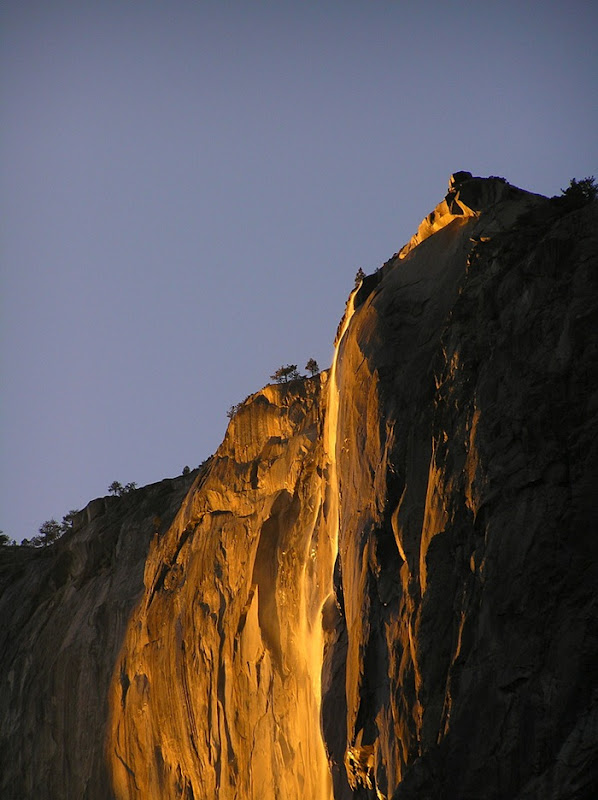
Firefall in Yosemite.

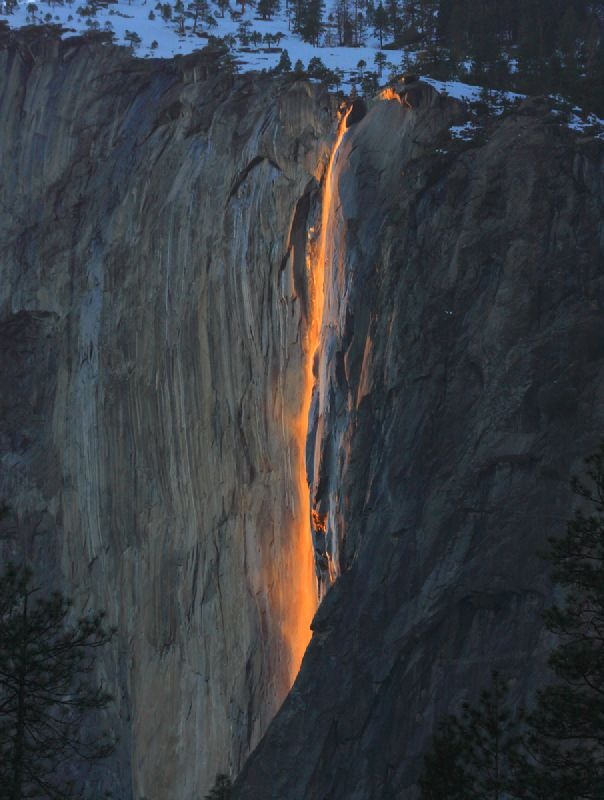
Firefall in Yosemite. For the last two weeks in February, the Horsetail Falls in Yosemite National Park light up with a neon-orange glow resembling a flow of lava.

This spectacular natural event occurs only at this time of the year, when the rays of the setting sun strike the water at exactly the right angle .

For a video of this show: Yosemite Nature Notes – Episode 14 – Horsetail Fall

Photo sources: http://www.amusingplanet.com/2010/05/mesmerizing-yosemite-horsetail-firefall.html

Posted in Rajini Rao | 25 Comments

Title

Posted in Rajini Rao | 3 Comments

Title

Posted in Rajini Rao | 1 Comment