

Recent Comments
Cat Stevens – Morning has broken 1976
“Sweet the rain’s new fall,
Sunlit from heaven
Like the first dew fall,
On the first grass.”
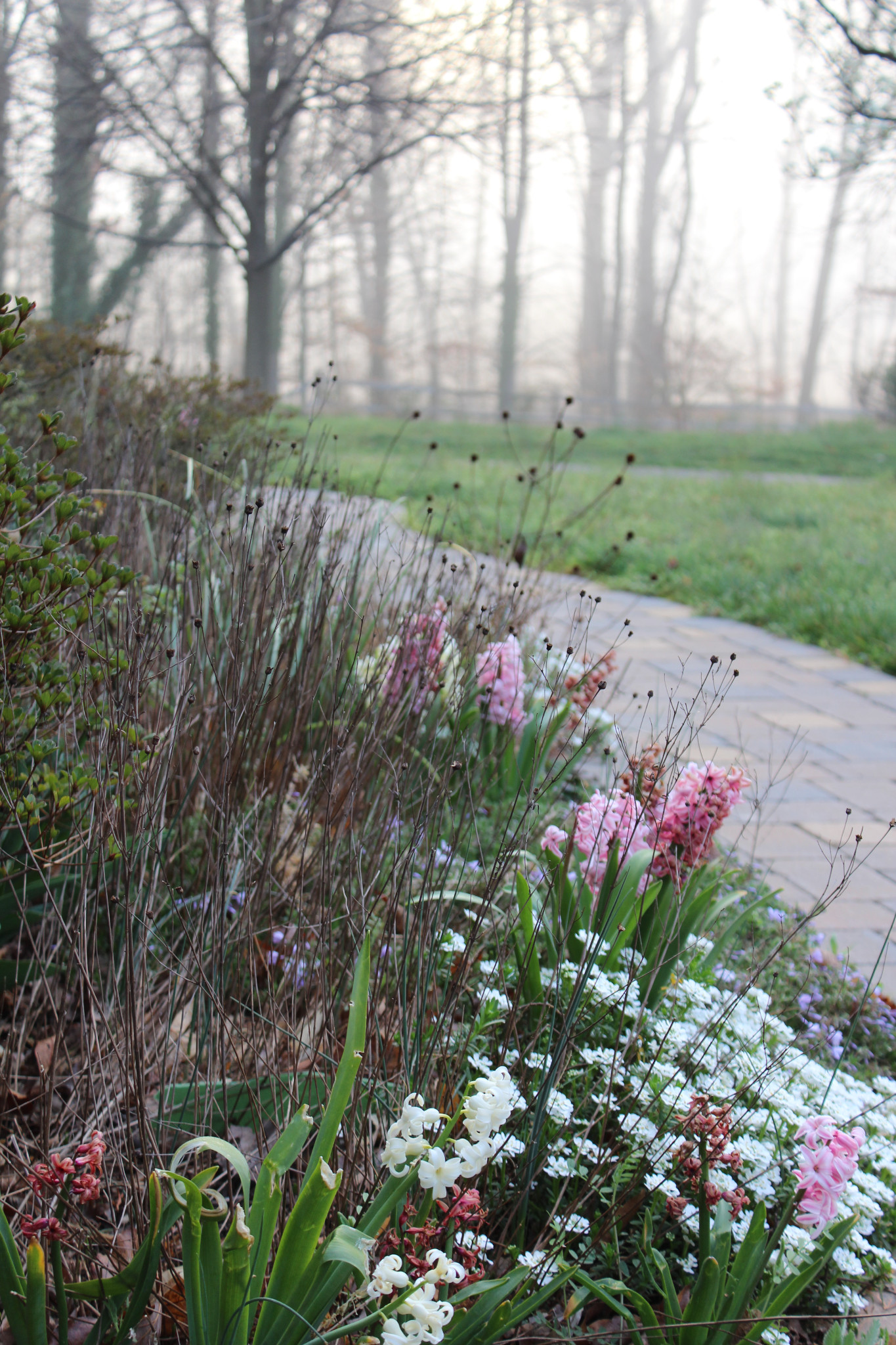
Photos of my Maryland garden in March, 2012


What is it like to ride a rocket? NASA releases dramatic new Hi-Def video and audio from cameras mounted on the booster rockets of the space shuttle. Jaw dropping, heart stopping and awesome ride from launch, until the boosters parachute back into the ocean.
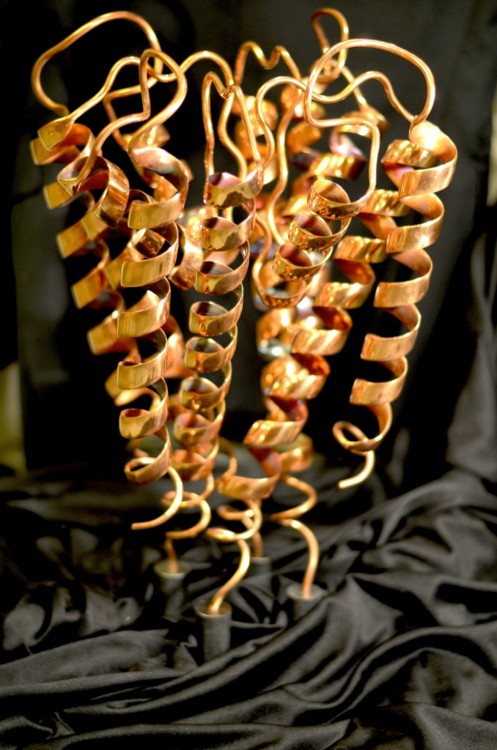
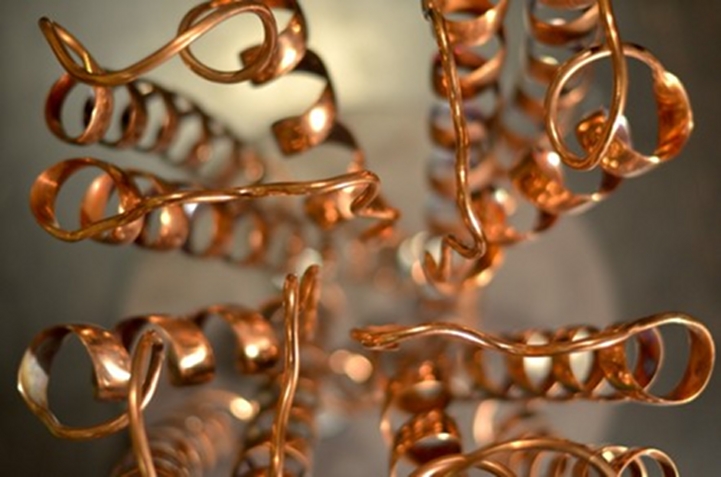
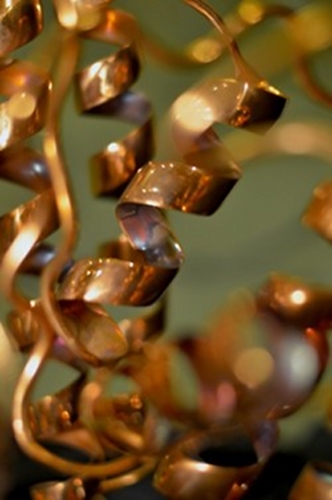
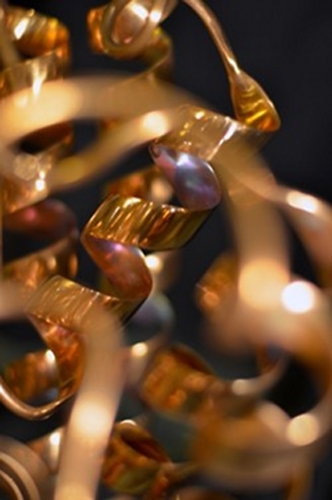
※ SCIENCE AND ART ※ Beautiful copper sculptures of proteins!
Originally shared by Rich Pollett
KcsA Potassium Channel Mike Tyka science and art Copper Steel
#ScienceSunday curated by Allison Sekuler and Robby Bowles
Potassium channels form potassium-selective pores that span cell membranes. They are the most widely distributed type of ion channel found in virtually all living organisms. The four identical subunits are situated in a four-fold symmetrical manner around a central pore, which allows potassium ions to pass freely. At the top of the structure, formed by four loops lining the pore, a selectivity filter is situated which prevents other ions such as — sodium ions — from passing. The correct ions are detected by their size and charge. Note that that no active pumping of ions occurs; it merely allows passive conductance of ions down the con-centration gradient between the two sides of the membrane.
The KcsA is an archetypal membrane protein with eight tightly packed membrane-spanning a-helices. The four short helices in the center where the chain crosses half the membrane and then returns to the top are a more unusual feature.
Beautiful Proteins:
http://beautifulproteins.blogspot.com/2012/03/copper-protein-sculpture.html
Fresh Photons:
http://beautifulproteins.blogspot.com/2012/03/copper-protein-sculpture.html
Mike Tyka is a senior research fellow at the University of Washington and works on protein folding & prediction. He’s the co-founder of ALTS Makerspace in Seattle and co-founder of GrooveLabs who designed and built a 40ft playable Rubiks cube at Burning Man in 2009. In his spare time he enjoys working with metal sculpture and exploring the hidden beauty in world. — Images Mike Tyka.
.


So You Think You Can Dance? The Science of Rhythm. Even the dorkiest amongst us can tap a foot to a beat, or snap our fingers to music. Dancing is a uniquely human trait… or is it? Conspicuously, many of our animal friends (dogs and cats) or close relatives (nonhuman primates) do not show rhythmic entrainment to music , even after extensive exposure and training.
♫ Snowball, a cockatoo cutie, has millions of fans worldwide (I was sold on him after watching him dance to Queen’s Another One Bites the Dust: Snowball dances to Queen). Researchers changed the tempo (beats per minute, BPM) of his favorite song (Backstreet Boys, Everybody) and showed that he could slow down or speed up in response, although he does go out of synchrony occasionally.
♫ Budgerigars incorporate learned sounds in their warble songs. In a recent study, eight budgies were trained to peck a button (rather than move their bodies) in response to a metronome (instead of complex music). Budgies quickly got in the groove, doing better at faster tempos that matched their warbles. Like humans, they show auditory dominance, in contrast to monkeys that show clear preference for visual stimuli and required year-long training to learn to tap to auditory stimuli.
♫ In another study, researchers watched thousands of YouTube videos, or in science-speak, “an extensive comparative data set from a global video database systematically analyzed for evidence of entrainment in hundreds of species”. They concluded that only vocal mimics had the ability to entrain, that is, coordinate their movement rhythmically in response to sound. Vocal mimics include some species of birds (parrots, starlings, budgies), cetaceans(whales, dolphins), pinnipeds (seals) and even elephants.
♫ The conclusion is that rhythmic synchronization evolved as a by-product of selection for vocal learning. “Once auditory-motor coordination in the vocal control system has been established, a similar auditory-motor transformation system for other body parts might be derived from that”,says Yoshimasa Seki of the RIKEN Brain Science Institute.
♫ What are the implications of these findings? First, we now have additional models to study the neural and genetic basis of entrainment. Second, these examples of convergent evolution (when different species that are not closely related evolve the same trait) serve as statistically independent events, that allow us to test hypotheses about the evolution of human language,music and dance. Meanwhile, enjoy another overlap between Science and Art.
♫ Budgie study (check out the free supplemental videos): http://www.nature.com/srep/2011/111017/srep00120/full/srep00120.html
Snowball’s study: http://www.cell.com/current-biology/fulltext/S0960-9822%2809%2900890-2
For #ScienceSunday curated by Allison Sekuler and Robby Bowles .


 madame scientist's not-so-mad musings