




Recent Comments
Announcing a new G+ Page for the STEM Women Database and Posts. Note that you must Follow the Page for your profile to show up in the shared circle and direct your comments to the original post. Thanks, Buddhini Samarasinghe !
Originally shared by STEM Women on G+
Missed you the first time? Not to worry 🙂
If we missed you the first time we shared the STEM Women on G+ shared circle, and you would like to be included in the next update of this circle, there are two things you must do;
1) Enter your information using this form (http://goo.gl/rvKEf).
2) Add this brand page to your circles.
And remember, even if you are already included in the STEM circle, please add this page to your circles if you haven’t already done so.
Thanks!

Uncork the Muse! Is creativity sparked by altered cognitive states brought on by insanity, sleep state, mood, or substance use? Alcohol, in particular, has been credited with inspiring creative geniuses from Socrates to Beethoven, Poe, Hemingway, Coleridge, and Pollock. In contrast to analytical problem solving, which requires high attention span and working memory capacity, creative problem solving involves flashes of intuition. A recent study tested the effect of moderate alcohol consumption on creative thinking.
The Experiment: Male social drinkers were administered alcohol to a blood alcohol level of 0.07 (just below the drinking limit for driving) then given the RAT (Remote Associates Test). For example, participants were given three target words such as PEACH, ARM, and TAR, and were tasked with finding a fourth word, such as PIT, that forms a good two-word phrase with each of the target words. This type of word association involves out of the box, creative thinking. They were also asked if they came by the association intuitively (as in an Aha! moment).
The Results: As seen in the figure, intoxicated participants reported significantly more insightful solutions than sober participants. Even better, they solved significantly more RAT problems (M = .58, SD = .13) than their sober counterparts (M = .42,SD = .16). They also solved them faster (M = 11.54 s, SD = 3.75) compared to sober controls (M = 15.24 s, SD = 5.57). The study concluded that moderate alcohol consumption improved creative memory tasks. Cheers!
Extra Credit: How was the alcohol administered? Why did they choose men and not women? What did the men do while they consumed their drinks?
Source: Uncorking the muse: Alcohol intoxication facilitates creative problem solving. Andrew F. Jarosz, Gregory J.H. Colflesh ,and Jennifer Wiley. Department of Psychology, University of Illinois at Chicago
http://www.sciencedirect.com/science/article/pii/S1053810012000037
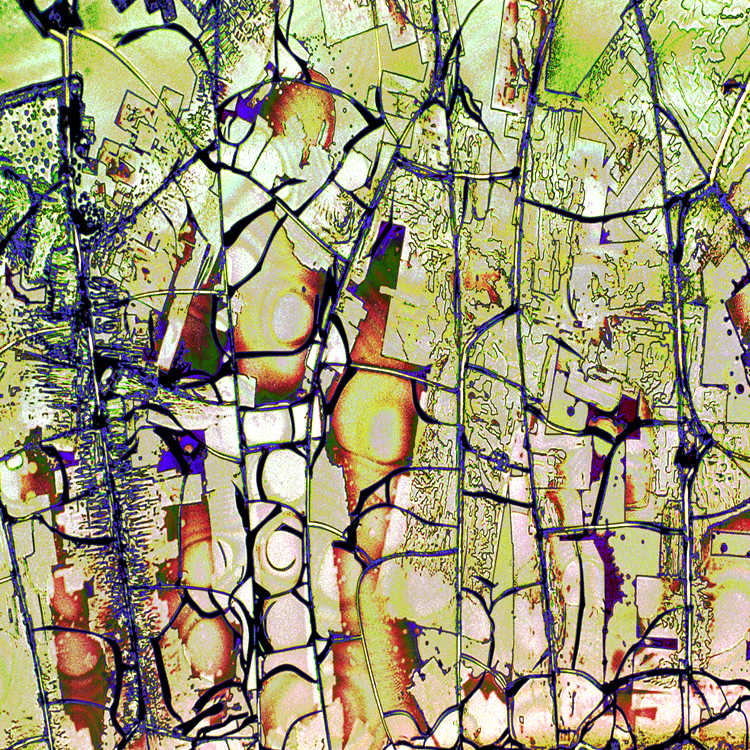
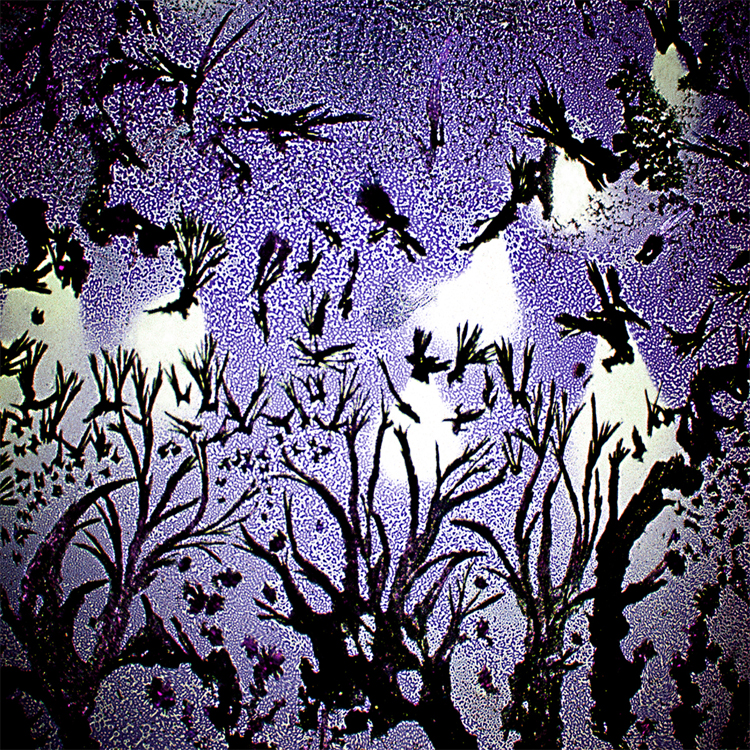
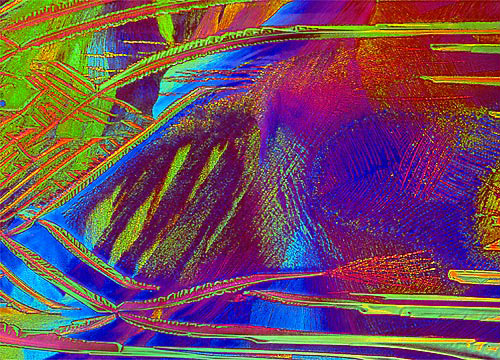
Deadly Beauty: Drugs under the Microscope These gorgeous images are of drugs that kill our cells as surely as they may heal us. Widely used in cancer chemotherapy and other disorders, they make us wonder at their beauty and question how they are used.
• Mitomycin: DNA crosslinker antibiotic from Streptomyces. Used in glaucoma and lasik surgery, bladder, oesophageal and other cancers. Works by blocking DNA replication in dividing cells.
• Azacititine: DNA methylase blocker used to treat myelodysplastic syndrome, and in clinical trials for relapsed acute myeloid leukemia (AML). Masquerades as a “C” nucleoside but cannot get modified so it blocks DNA methyltransferase and thus activate tumor suppressor genes silenced by hypermethylation.
• Mitoxantrone: DNA topoisomerase inhibitor, used to treat metastatic breast cancer, AML, non-Hodgkin’s lymphoma,and prostate cancer. During replication, DNA becomes “overwound” ahead of the replication fork. The topological tension is relieved by topoisomerases.The enzyme binds to “tense” DNA and cleaves the phosphate backbone; the DNA unwinds and, then topoisomerase reseals the break.
• Fluoxetine (Prozac): Antidepressant blockbuster drug, works by inhibiting serotonin reuptake. Also used to treat obsessive compulsive disorder and eating disorders.
• Trastuzumab (Herceptin): A monoclonal antibody that blocks the HER2/neu receptor and is used in the treatment of certain breast cancers. The HER2 gene is amplified in some cancers where it causes excessive cell growth. The treatment is very expensive ($100,000 a year) and cancers tend to become resistant.
ScienceSunday , #sciencesunday



 madame scientist's not-so-mad musings