Mycowood for Maestros: Fungal Violins

Mycowood for Maestros: Fungal Violins

• Hankering for a Stradivarius but don’t have 5 million dollars to spare? Produced in Italy around the turn of the 18th century, only ~600 of these prized violins remain. Their secret lies in the “Little Ice Age” (1645 -1715) when Europe suffered long winters and cool summers which caused trees to grow slowly and uniformly  : ideal conditions for producing wood with excellent acoustic qualities. Low density, high speed of sound and a high modulus of elasticity,  these qualities are essential for ideal violin tone wood.

• Traditionally, wood used in the manufacture of musical instruments is treated with primers, varnishes or minerals to strengthen the adhesion between cell layers. Unfortunately, they also clog up the cell lumen and reduce the speed of sound. The increase in density has an adverse affect on the radiation ratio (R= speed of sound (c)/density (ρ)), reducing the speed of sound and its resonance frequencies.

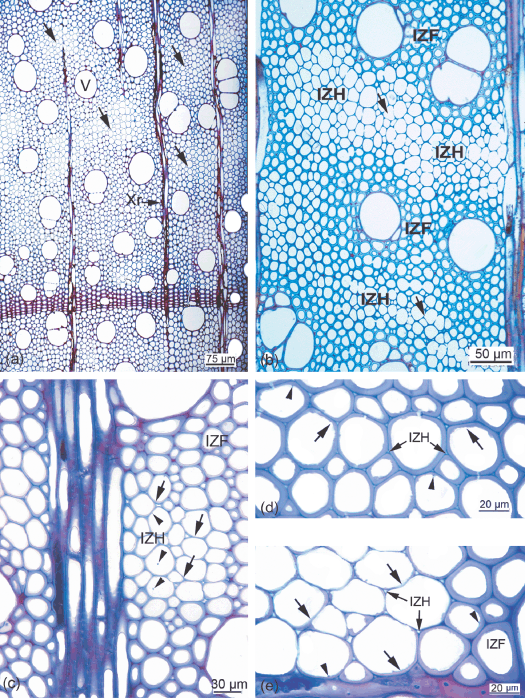
Fungus Amongus! Swiss researcher, Prof. Schwarze has discovered that two species of fungi (Physisporinus vitreus and Xylaria longipes) decay Norway spruce and sycamore in a way that their tonal qualities are improved. “The unique feature of these fungi is that they gradually degrade the cell walls, thus inducing a thinning of the walls. But even in the late stages of the wood decomposition, a stiff scaffold structure remains via which the sound waves can still travel directly.” Don’t worry, the fungi are fumigated with a dose of ethylene gas before the violins are crafted. In blinded tests, experts preferred the fungal violins over the Strads!  O.o

Think you can pick out the fungal magic?

Take the audio test here: http://goo.gl/BCnVO

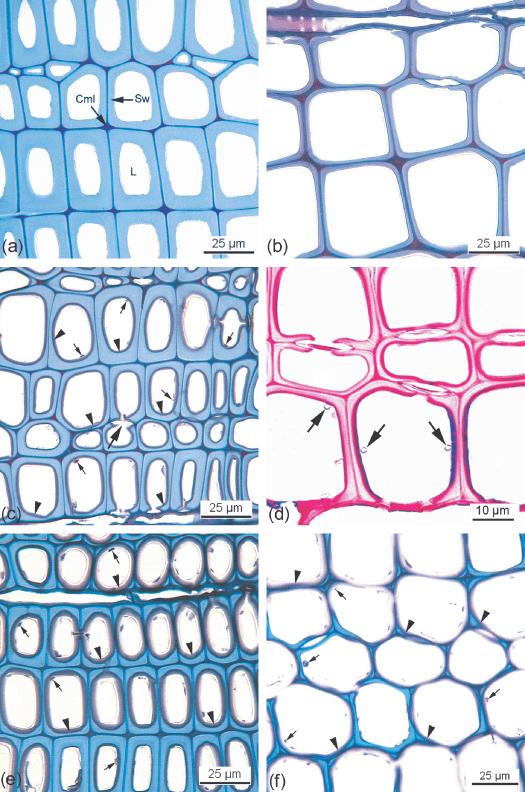
Images: Left, Norway Spruce (untreated on top, treated for 12 wks below); Right, sycamore (untreated top left, treated top right). From, Schwarze et al. Superior wood for violins- wood decay fungi as a substitute for cold climate. New Phytologist (2008) 179: 1095–1104

#scienceeveryday when it’s not #sciencesunday .
Posted in Rajini Rao | Tagged , | 55 Comments

SSHOw: Roundup Ready GM Corn Study

SSHOw: Roundup Ready GM Corn Study

• You may have seen the competing headlines. Shock findings in new GMO study: Rats fed lifetime of GM corn grow horrifying tumors, 70% of females die early! Contrast this to a more critical response, Monsanto’s GM Corn And Cancer In Rats: Real Scientists Deeply Unimpressed. Politics Not Science Perhaps ?

Confused by the Controversy? Watch the ScienceSunday team dig into the dirt to get to the bottom of the issue, along with guest Alan McHughen , UC Davis Professor of Plant Sciences and author of the book, Pandora’s Picnic Basket; The Potential and Hazards of Genetically Modified Foods.

#sciencesunday

Posted in Rajini Rao | Tagged | 98 Comments

Hoysala Temples: Between the 11th and 14th centuries, the Hoysala kings in southern India  built distinctive temples…

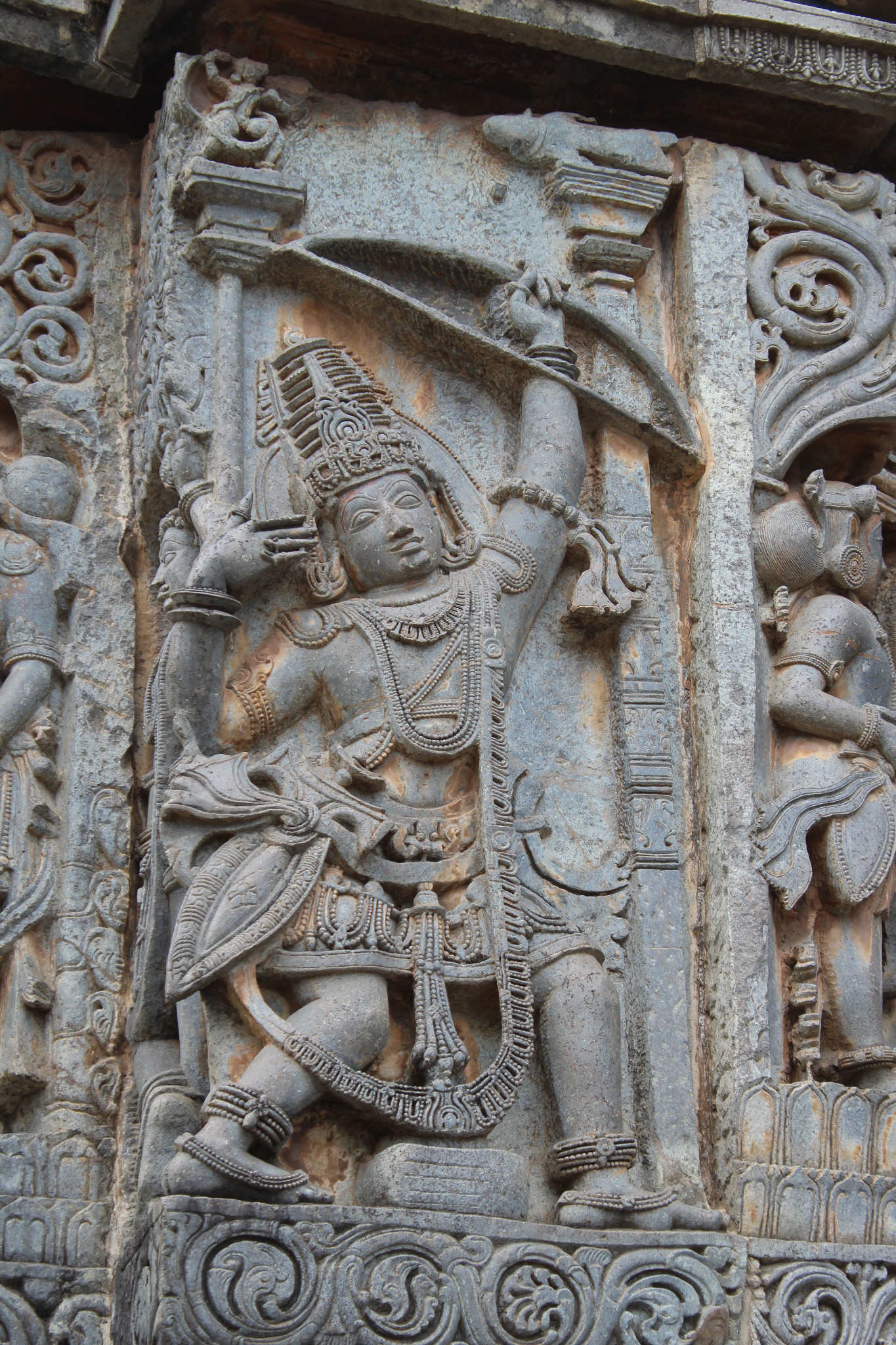
Hoysala Temples: Between the 11th and 14th centuries, the Hoysala kings in southern India  built distinctive temples characterized by a star shaped base built up with a complex profusion of images intricately carved from soapstone (chloritic schist) running in parallel lines along zig-zag walls.

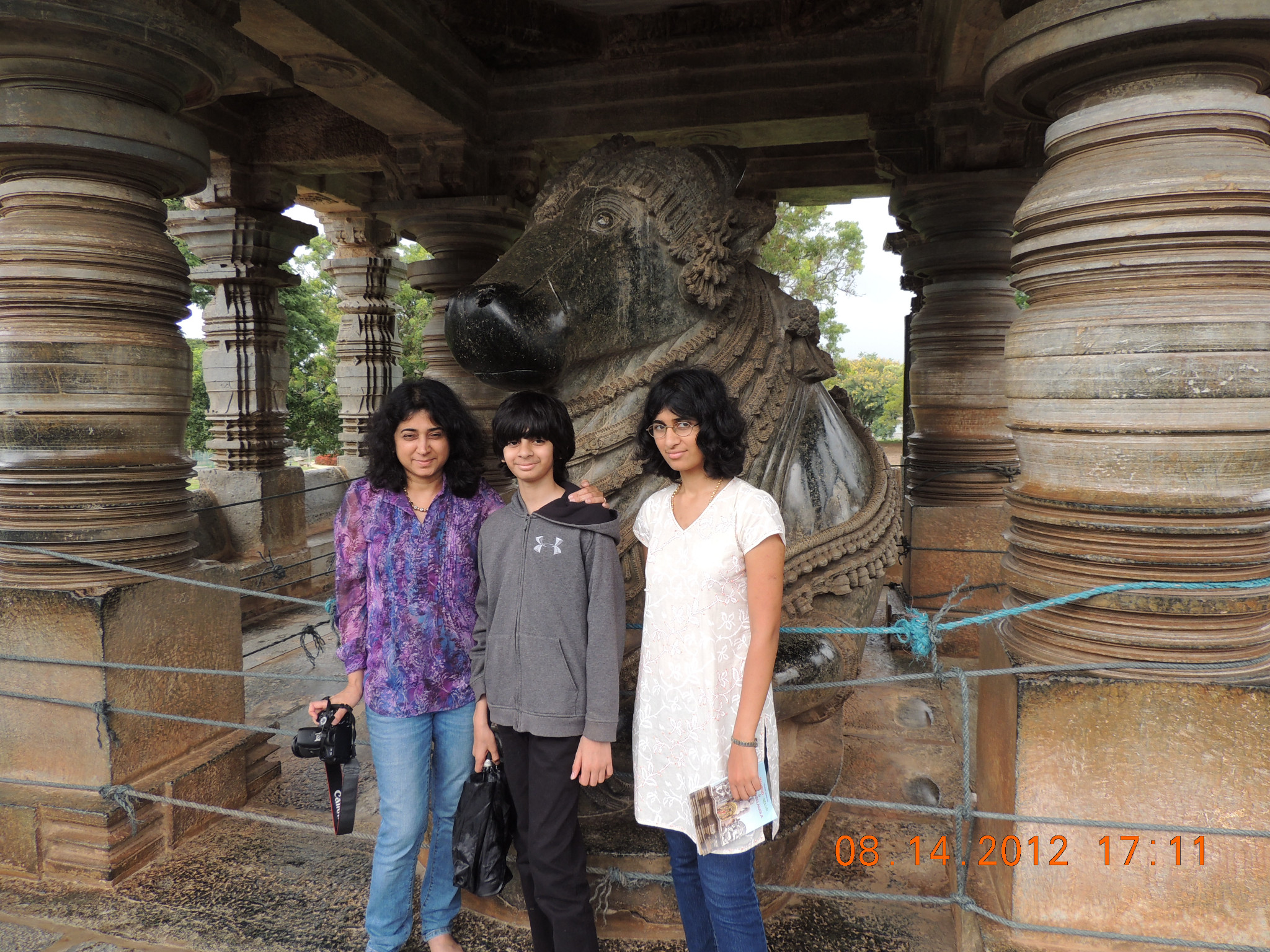
We first visited Halebid, in the Hassan district of Karnataka. After this ancient city was sacked twice by the Delhi sultanate, the capital was moved to Belur where the carvings appeared even finer in detail. One dancing figure has a bangle that moves up her arm. My favorite is the figure of Arjuna, the Pandava prince, aiming an arrow accurately into the eye of a spinning fish overhead, by looking into its reflection in a pool of water -my son’s name is Arjun 🙂 The big Nandi, or bull, is carved out of a single stone. The temples have been proposed to be UNESCO heritage sites..I’m surprised that they are not already.

Posted in Rajini Rao | 66 Comments

Labor of Love: Are these circles in the sand the work of some underwater aliens?

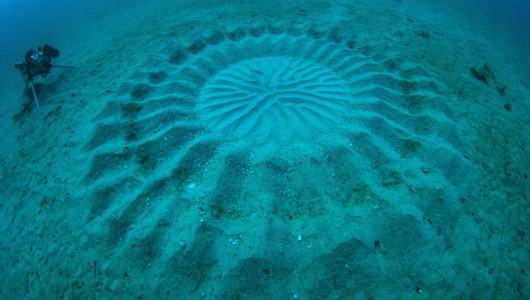
Labor of Love: Are these circles in the sand the work of some underwater aliens? The mystery of these elaborately crafted circles discovered by diver Yoji Ookata off the coast of Japan, has been solved. Spanning ~6.5 feet in diameter, they turned out to be the painstaking work of a tiny species of puffer fish. The male spends days ruffling the sand, decorating it with crushed shells, using only his fin as tool. The groovier the circle, the more females it attracted, to mate with and lay eggs in the center.

• As if puffer fish were not cool enough already! Considered the most poisonous vertebrate, second only to the golden poison frog, puffer fish (Fugu) are considered a culinary (if risky) delicacy.

Tetrodotoxin is deadly, up to 1,200 times more poisonous than cyanide. There is enough toxin in one puffer fish to kill 30 adult humans, and there is no known antidote. The toxin works by targeting voltage gated sodium channels that are needed to fire neurons and trigger muscle contraction. Death usually occurs because the victim’s diaphragm is paralyzed so breathing stops.

Highly elastic stomachs allow the puffer fish to quickly swallow huge amounts of water (or air) and transform into a virtually inedible ball several times their normal size.

More: http://goo.gl/Qf9qx

Puffer Fish photo by Chris Laughlin from Nat. Geo.

#scienceeveryday  

Posted in Rajini Rao | Tagged | 58 Comments

Shinae’s Super Spicy Peanut Sauce

Shinae’s Super Spicy Peanut Sauce

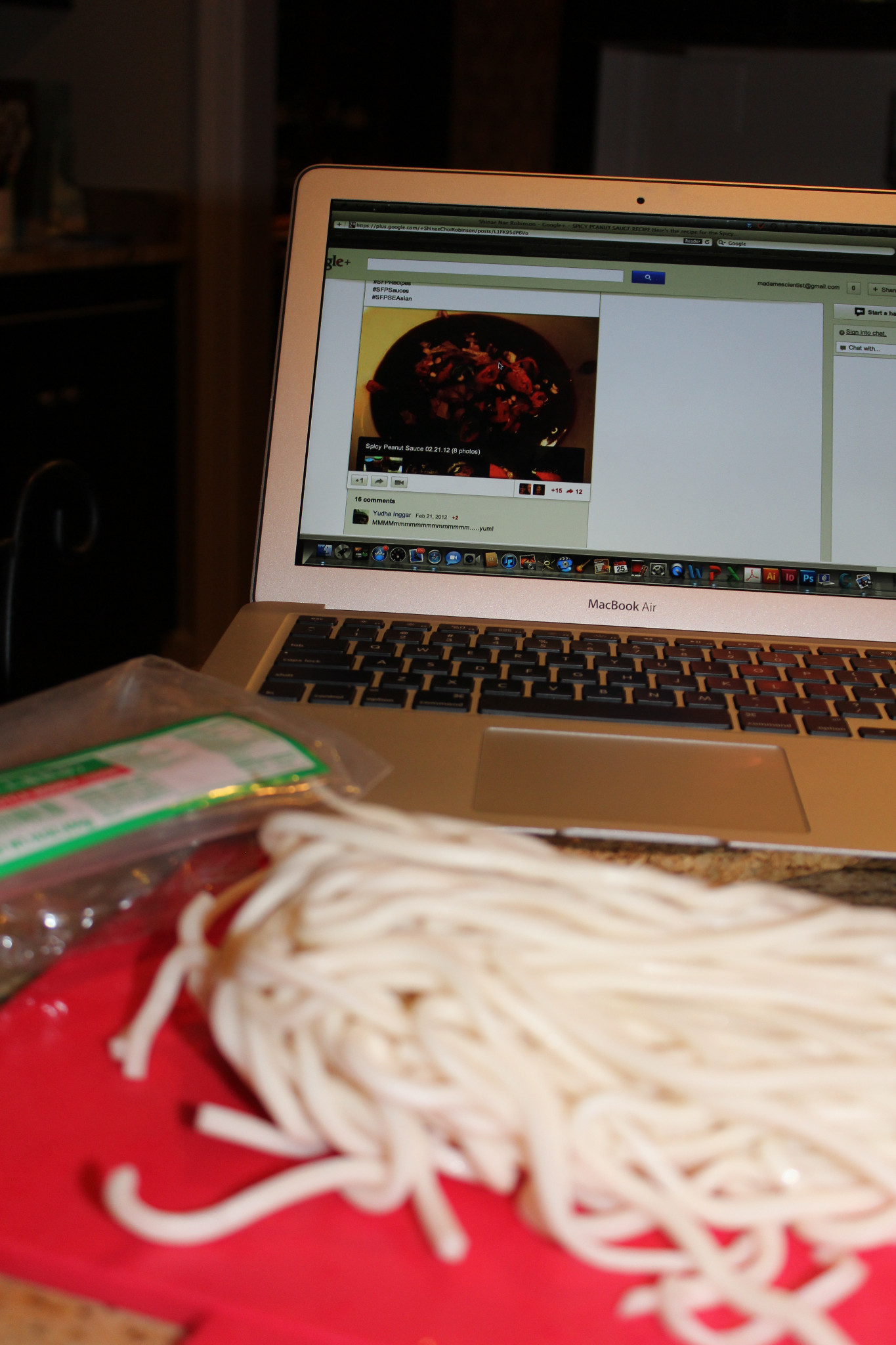
Domestic diva Shinae Choi Robinson recently posted a recipe for a spicy peanut sauce and I promised to share my attempt at recreating it. Here it is, tossed with some udon noodles and quick stir fried veggies. My son is sick with a cold, so I made him a tomato noodle soup.

Recipe ▶ http://goo.gl/VdHIx

Posted in Rajini Rao | 38 Comments

Spider Skin: Up close and personal, a scanning electron micrograph reveals spider skin to be richly textured, with…

Spider Skin: Up close and personal, a scanning electron micrograph reveals spider skin to be richly textured, with emerging spider hairs. The yellow pseudo-colored spheres are brochosomes, secreted by leafhoppers and likely remnants of this spider’s last tasty meal.

• Brochosomes even have a Wiki page all to themselves (http://en.wikipedia.org/wiki/Brochosome). Secreted by the excretory glands of a leafhopper, they are rubbed all over as a protective, waterproof coating. Too bad they don’t work against spiders.

Image: By Maria Barbajo for FEI Company.

#spidersunday #sciencesunday  

Posted in Rajini Rao | Tagged , | 45 Comments

Somewhere, something incredible is waiting to be known – Carl Sagan

Somewhere, something incredible is waiting to be known – Carl Sagan

Share the discovery… share this Special 10,000 Edition Science Circle!

#sciencesunday  

Originally shared by Science on Google+

Science Circle – Special 10,000 Edition

The Science on Google+: A Public Database page recently crossed the 10,000 followers mark! Thanks for all of your support! To celebrate, we have put together a special circle for you. We went through all of the active profiles in the database and selected those individuals who have graduate training or a graduate degree. Fasten your seat belts- you will learn a lot from the people in this circle!

Please help spread the love of SCIENCE by sharing this circle with your followers.

Disclaimer: We apologize in advance if you do have graduate training and we missed you. Please let us know by filling out this form: http://goo.gl/WgrKp.

#sciencesunday  

Posted in Rajini Rao | Tagged | 2 Comments

To Bee or Not to Bee: The caste system is alive and well in honeybee society.

To Bee or Not to Bee: The caste system is alive and well in honeybee society. A female embryo fed on “royal jelly” emerges as a Queen, specialized to lay eggs, while other females are sterile workers. All workers begin as nurses, tending to the eggs.  After a few weeks some nurses switch to become foragers leaving the hive to search for nectar. They are genetically identical, so what determines caste? The answer lies in epigenetics.

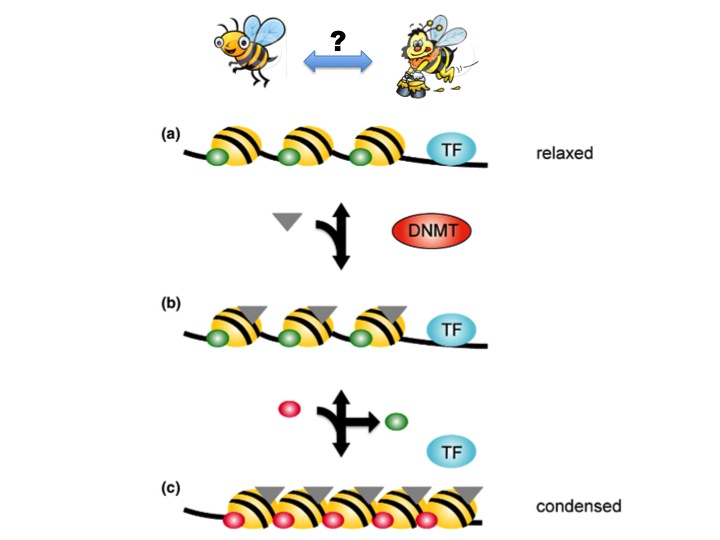
Epigenetics is the bees knees! It is the chemical modification of DNA over and above the underlying genetic code. DNA is wrapped tightly around histone proteins, like beads on a chain. (a) Relaxed DNA has chemically modified histones (green dots). This makes it open for business, inviting transcription factors (TF) to get to work transcribing a gene. (b) DNA methyltransferase (DNMT) adds methyl groups (grey triangles) to CpG dinucleotides. (c) This triggers different chemical modifications (red) to the core histone, to condense and inactivate the DNA structure. Genes are silenced when transcription factors cannot bind to them. So, is the division of bee labor decided by these chemical tags? Not to belabor this, but in short, yes.

Tag Teams: Johns Hopkins molecular biologist Andy Feinberg teamed up with bee expert Gro Amdam (Arizona State Univ, Tempe) to show for the first time, epigenetic changes associated with behavior. Age matched workers and foragers have 155 differences in DNA methylation, mostly associated with genes that regulate other genes. Better yet, these changes are reversible. Using hive trickery, researchers introduced foragers to a new hive. This induced about half of them to revert back to worker bees. Remarkably, DNA methylation tags reverted as well. This may help decipher complex behavioral changes in humans.


REF: Herb et al. (2012) Reversible switching between epigenetic states in honeybee behavioral subcastes. Nature Neuroscience DOI: 10.1038/nn.3218

Image: Modified from Strietholt et al. (2008) http://arthritis-research.com/content/10/5/219

For #scienceeveryday when it’s not ScienceSunday .

Posted in Rajini Rao | Tagged | 50 Comments

Welcome to the SSHOw: Science Sunday HangOut – woot!

Welcome to the SSHOw: Science Sunday HangOut – woot!

Be there, this Sunday at 2 pm ET.

Do you have a question for us?

Originally shared by ScienceSunday

Stick around on Sunday for the SSHOw

This Sunday ScienceSunday will introduce you to SSHOw: Science Sunday HangOut – woot! The curators, Rajini Rao Allison Sekuler Robby Bowles  and Chad Haney will introduce themselves briefly and then each answer a question from you. Start submitting your questions in the comments below. We’ll start at 2 PM ET this coming Sunday, September 23. The HO will be on-air.

Please give us feedback about the time of the HO for future HOs. We want to select a time that will reach the largest  #ScienceSunday  audience. Once we finalize the time, expect us to do approximately 30 min. of HO each Sunday to discuss our favorite post or chat with a guest scientist.

The image below is of a gecko “claw”. It’s what allows it to hang around. However, you don’t need that to hang around #ScienceSunday  

We took a single gecko foot hair (seta) and made the first direct measurement of its adhesive function. These tiny setae are only as long as 2 diameters of a human hair. That’s 100 millionths of a meter long. Each seta ends in up to 1000 even tinier tips. The tips are only 200 billionths of a meter wide –below the wavelength of visible light. We used a microscopic force sensor designed by Tom Kenny at Stanford to measure the tiny forces of adhesion of the gecko seta.

We discovered that the seta is 10 times more adhesive than predicted from prior measurement on whole animals. The adhesive is so strong that a single seta can lift the weight of an ant 200 µN = 20 mg. A million setae could lift the weight of a child (20kg, 45lbs). A million setae could easily fit onto the area of a Dime. The combined attraction of a billion spatulae is a thousand times more than a gecko needs to hang from the ceiling. Maximum potential force of 2,000,000 setae on 4 feet of a gecko = 2,000,000 x 200 micronewton = 400 newton = 40788 grams force, or about 90 lbs! This is 600 times greater sticking power than friction alone can account for. Weight of a Tokay gecko is approx. 50 to 150 grams.

These exciting results were published in the journal Nature v. 405: 681-685.

http://goo.gl/gfofG

#ScienceEveryday  when it isn’t  #ScienceSunday

Posted in Rajini Rao | Tagged , | 13 Comments

It’s Nasty: Thigmonasty (Greek thigma for touch and nastos for pressed close).

It’s Nasty: Thigmonasty (Greek thigma for touch and nastos for pressed close). Closure of the Venus flytrap (Dionaea muscipula), at 40-100 milliseconds, is one of the fastest movements in plant kingdom. Little surprise that it involves action potentials: electrical signals typical of nerve communication in animals. The trap is triggered when at least two of the tiny surface hairs are touched by an insect or spider within 20 seconds of each other. Since the movement costs energy, this coincidence of two stimuli safeguards against waste from accidental triggers.

There’s no chemistry: Unlike chemical signals, like hormones, action potentials can fire within a millisecond and propagate rapidly over long distances. Although plants have the basic necessities for electrical signaling (ion channels, motor proteins), they have nowhere near the sophistication achieved in animals. Still, an action potential can achieve speeds of up to 40 m/s in plants and is used to respond to environment.

Touch me: The first step is the opening of mechanically-sensitive ion channels that sense deformity of the hair. This causes the cell membranes to depolarize by reducing the distribution of charges across the cell. If this depolarization exceeds a certain threshold, additional chloride and potassium channels open to let in more ions. Movement of protons makes the cell wall acidic, allowing it to soften and let the cell elongate rapidly. Despite intensive study for ~130 years, the exact mechanism of signaling is not clear.

Food fight: Recently, the digestive juice of the Venus flytrap was analyzed and found to closely resemble enzymes used in the fight against pathogens, rather than the digestive enzymes of animals. This suggests an evolution from defense pathways to food acquisition in carnivorous plants. Read more: http://www.asbmb.org/News.aspx?id=17935

The Doors – Touch Me

An early submission for #sciencesunday since I will be traveling tomorrow (Viva Barcelona!).

Posted in Rajini Rao | Tagged | 100 Comments