Ode to Mitosis

Ode to Mitosis

Mitosis is a process

For One cell to become Two

There are Four distinct phases

Happening within You

First comes Prophase

The Chromatin strands condense

They now become visible

Through a microscope lens

Next comes Metaphase

The important Stage Two

Chromosomes attach to Spindle Fiber

Using Molecular Glue

Then comes Anaphase

It’s really quite sad

Sister Chromatids separate

To opposite poles- too bad 😦

Finally, it’s Telophase

Nuclear membranes reform

Spindle fibers disperse

And Two new cells are born.

Poem: Playfully plagiarized, willfully altered and spell-checked from the original “reallygoodpoetry” at http://goo.gl/OVTvb

Images: Gifs from http://infinity-imagined.tumblr.com/page/4

Watch original movie here: http://goo.gl/7HjG7

#ScienceSunday  

Posted in Rajini Rao | Tagged | 80 Comments

Scarecrows and Wreaths: Genetic Secrets of Efficient Food Crops

Scarecrows and Wreaths: Genetic Secrets of Efficient Food Crops


• Ancient plants, like rice, wheat and barley, originating in the Mesozoic and Paleozoic eras, still form 95% of the Earth’s plant biomass. They use an enzyme known as RuBisCo (the most abundant protein on the planet!) to fix atmospheric carbon dioxide on to a 5-carbon sugar (ribulose bis-phosphate) to make 2 molecules of a 3-carbon sugar that eventually becomes sucrose. This is the C3 pathway, but it’s not too efficient: the enzyme RuBisCo also catalyzes a competing reaction called “photorespiration” that adds oxygen to the 5-carbon sugar making a byproduct that takes many tedious and expensive steps to convert back to the useful sugar. These plants can also lose 97% of the water absorbed by the roots through stomata or pores on the underside of the leaves. If they close their stomata, they limit the diffusion of CO2 into leaves, so they have limited growth in hot, dry areas.

• Fortunately, in the last 6-7 million years, another group of plants (sugarcane, maize, grasses) began to flourish that bypassed this problem. They evolved from the C3 plants independently, more than 60 times- a spectacular example of convergent evolution.  In these plants, a different enzyme is used to fix CO2 to make a 4-carbon sugar in the leaf cells, that is then shuttled into special wreath-like layer around the veins, known as Kranz sheath (German for wreath).  Kranz cells release CO2 from this intermediate, insulating and concentrating it around the Rubisco enzyme so that the wasteful side reaction does not occur. This highly effective C4 pathway boosts productivity by 50%. Even though C4 plants make up only 3% of plant species, they account for 30% of all carbon fixation on land.

• How does one coax C3 plants to follow C4 pathways and boost food production in hot, dry areas, while removing more CO2 from the atmosphere? C3 plants have all the enzymes needed, but lack the specialized anatomy of the wreaths and the tight spacing between veins. It was assumed that engineering Kranz anatomy would be exceptionally difficult. In a breakthrough study, scientists noted common features of the Kranz sheath with root and stem bundles, suggesting a common developmental pathway. Working on a hunch, they showed that a gene called Scarecrow, regulates the special anatomy in both roots and leaves.  “Recapitulating the evolution of C4 structure in C3 plants is likely to be a much more manageable goal if the underlying regulatory components are already in place in roots and stems”.

Image: Kranz anatomy in French Millet, a C4 plant. Note the bundle sheath, packed with green chloroplasts, around the central vein, and the tight spacing of less than 4 cells between the bundles. http://goo.gl/J004P


Read More: http://www.news.cornell.edu/stories/Jan13/Scarecrow.html

http://en.wikipedia.org/wiki/C4_carbon_fixation

Paper: Scarecrow plays a role in establishing Kranz anatomy in maize leaves. Slewinsky, T.L., et al. Plant Cell Physiol. 2012 Dec;53:2030-7. doi: 10.1093/pcp/pcs147.

#ScienceEveryday when it’s not #ScienceSunday .

Posted in Rajini Rao | Tagged , | 108 Comments

Cutest Protist: Love Actually..or Splitsville?

Cutest Protist: Love Actually..or Splitsville?

If you go down in the woods today, you’re sure of a big surprise. No, not the Teddy Bear’s picnic. Giardiasis is a common and explosive form of diarrhea caused from drinking contaminated water from mountain streams and “clean water” sources, often during camping. Also known as Beaver Fever, wild animals and pets can get the runs too.  Giardia lamblia is wonderfully weird: 

• First described in 1681 by Antony van Leeuwenhoek who examined his own diarrhea under a microscope and wrote, “I have sometimes also seen animalcules a-moving very prettily; some of ‘em a bit bigger, others a bit less, than a blood globule… furnisht with sundry little paws, where with they made such a stir”.

• Despite the heart-shape in the left image, Giardia lacks a love life and reproduces only asexually, splitting inside the cyst into two cells (trophozoites) that are released within the intestine. 

• There are two identical and functional nuclei, which makes the stained Giardia look like it has two eyes (right image). Other organisms that have multiple sets of chromosomes house them in the same nucleus. The “smile” comes from the median body which organizes the cell’s skeleton (microtubules).

• Considered the most primitive of eukaryotes, Giardia was believed to have no mitochondria. But now it appears to have some remnants of them, called mitoplasts. Being anaerobic, they don’t respire or make ATP in their mitochondria. Other eukaryotes, even anaerobic ones, have mitochondria.

Henry Hall & His Orchestra – The Teddy Bear’s Picnic (1932)

IMAGES: Digitally colored scanning electron micrograph of Giardia cells in late stage of cell division, courtesy of CDC/ Dr. Edwin P. Ewing, Jr. (left). Stained Giardia looks like a smiley face with two nuclei eyes (right). More cute images: http://www.tumblr.com/tagged/giardia

#ScienceEveryday     #ScienceSunday  

Posted in Rajini Rao | Tagged , | 106 Comments

Panspermia: Hoax or Hope?

Panspermia: Hoax or Hope?

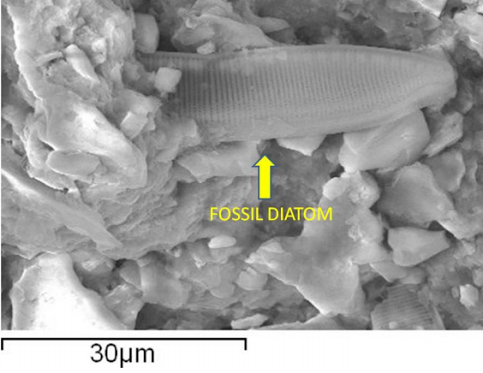
Fire in the Sky: On December 29, 2012 a fireball exploded in the skies above Sri Lanka, followed by a meteorite that fell near the ancient city of Polonnaruwa. A sample was sent to the Buckingham Institute of Astrobiology and Cardiff University. Researchers now report in the Journal of Cosmology of finding fossils of diatoms enmeshed within the meteorite. Because of the way the microfossils were distributed within the rock, they rule out surface contamination.

Panspermia (from the Greek “all” and “sperm”) is the idea that life exists throughout the Universe, distributed by meteoroids, asteroids and planetoids. So, is this compelling evidence of Panspermia or life in outer space?

Red Rain: The researchers claim that the mysterious red rain that fell in the area within days of the meteorite, reported by our own Siromi Samarasinghe (http://goo.gl/dq7Jq), was seeded from the meteorite. Reports of red rain were first made in Homer’s Iliad and may simply be from airborne algal spores. Is this red rain a red herring?

Earthly Origin? Could it be that this rock was initially blasted off from earth, by the Mesozoic-ending impact on the Yucatan Peninsula, and is now falling back to earth after a grand journey? The article does mention that similar fossils have been found that date back to the time of the dinosaurs.

Hasty Science? The meteorite only just landed, less than 3 weeks ago! How much of a review did this paper get? The authors make the grand statement that “identification of fossilised diatoms in the Polonnaruwa meteorite is firmly established and unimpeachable” and with several self-citations, that “the idea of microbial life carried within comets and the theory of cometary panspermia is thus vindicated”. Their final sentence is a WIN, in my opinion: The universe, not humans, must have the final say to declare what the world is really like. What do you think?

Reference (with pictures!): http://www.buckingham.ac.uk/wp-content/uploads/2011/09/Polonnaruwa-meteorite.pdf

#ScienceEveryday  

Posted in Rajini Rao | Tagged | 185 Comments

Gluten Be Gone: Synthetic Biology Solution for Celiac Disease

Gluten Be Gone: Synthetic Biology Solution for Celiac Disease

What is Celiac Disease? Celiac disease or gluten allergy comes from eating wheat, rye or barley. Most common in people of N. European descent, the symptoms include diarrhea, weight loss and an increased risk of cancer. 

Why is gluten allergenic? Gluten contains an unusual protein called alpha gliadin, which has many repeats of the amino acids Proline and Glutamine (PQ motifs) that are resistant to the digestive enzymes in our stomach. In some people, these PQ-rich fragments cause severe allergy and inflammation.  

Clinical trials: A natural bacterial enzyme from Sphingomonas capsulata that can break down PQ motifs is in clinical trials as an Oral Enzyme Therapeutic. But it works poorly in the acidic compartment of our stomach, and attempts to engineer it to become acid tolerant have not worked. 

Trial by Acid: Univ. Washington undergraduates tackled the problem from the opposite direction. They found an enzyme called Kumamolysin-AS in a heat and acid loving bacterium Alicyclobacillus sendaiensis that was already acid tolerant. They tinkered with it, using the Fold-It protein folding game, until they found variants predicted to change the enzyme’s preference from Proline Arginine (PR) to Proline Glutamine (PQ). When they made and tested ~260 engineered enzymes, they found one that had a 116-fold increase in ability to digest the gluten peptide in acidic conditions, with a switch in preference of 800-fold! The new enzyme, KumaMAX, could be used in oral therapy or engineered into common bacteria found in yogurt to make probiotics.

So Much Win!: This work (1) could help millions of gluten allergy sufferers world wide, (2) was done by undergraduates competing in iGEM, an annual synthetic biology competition originally founded at MIT, (3) using gaming software, (4) built on basic research done on an obscure bacterial enzyme, and (5) published with student authors in a peer-reviewed journal. 

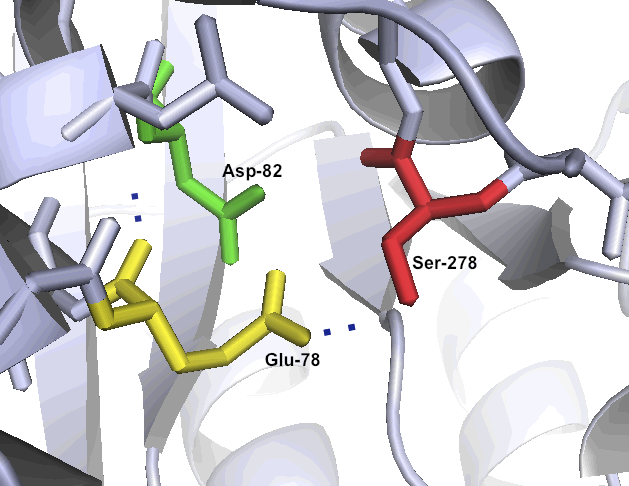
Images: Normal catalytic triad of protease enyzmes (left) and acid tolerant substitution (right) found in bacteria growing in acid, hot springs (middle).

Paper: Computational Design of an α‑Gliadin Peptidase; Gordon et al., (2012) JACS 134, 20513−20520

Team UW iGEMhttp://goo.gl/vgvTX

#ScienceSunday   #syntheticbiology   

Posted in Rajini Rao | Tagged , | 149 Comments

The Genetics of Autism

The Genetics of Autism

Contrary to popular belief (and Jenny McCarthy), autism is the most genetic and inheritable of all neurodevelopmental disorders. Identical twins have >80% chance of shared diagnosis, versus a much lower ~10% chance in fraternal twins, a classic indication of underlying common genetic cause. 

What is autism? Classical autism is part of a broader group of autism spectrum disorders (ASD) characterized by (i) impaired social communication and interaction, (ii) absence or delay in language and (iii) restricted, repetitive behavior. These features vary hugely, from severe intellectual disability to mild personality traits. Intellectual delays occur in 30-60%, and 30% also suffer seizures. Current rates of diagnosis are 1 in 88 children. This is partly due to a broadening of the diagnosis but could also reflect impact of changing environment on genetic susceptibility. 

Monogenic cases of autism are known as syndromes. About 10% of children diagnosed with ASD have mutations in a single gene. The most common is Fragile X syndrome (FXS), which accounts for 5% of autism cases with as many as 50% of individuals with FXS meeting criteria for autistic disorder. Other syndromes that present with ASD are Tuberous Sclerosis, Retts, and Neurofibromatosis. Although the primary diagnosis is not ASD, the symptoms include ASD. 

Polygenic disorders are caused by additive effects of multiple genes. Because inheritance patterns of autism are not Mendelian, it was initially thought to be polygenic, like traits of hypertension, height or skin color. Austism superficially fits this definition because of the continuous spectrum of characteristics. But, it’s a lot more complex because no single gene appears to account for more than 1% of the non-syndromic cases. 

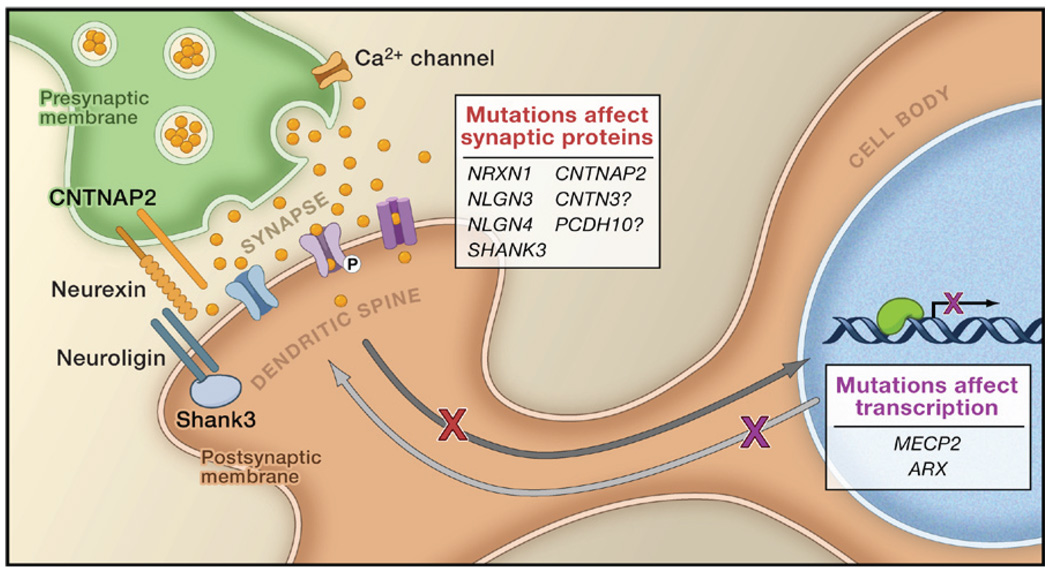
Heterogenic disorders occur when mutations at any of a number of different genes can give rise to the same phenotype. In autism, many of the mutations are unique, rare and arise de novo, not being found in parents or recent ancestry. Most mutations occur on only one allele (one of two copies of the gene). Many are copy number variations, affecting gene dosage, caused by insertions and deletions in the chromosome. The emerging theory is that many different mutations converge on a common function: synaptic transmission

The synapse: Information transfer occurs at the synapse or junction between neurons. The first synapses in human cortex appear 40 days after conception. The most dramatic change takes place around birth. During the first three years of life, more synaptic contacts are formed, but only some will be stabilized. Many genes implicated in autism (image) function at the synapse, and the timing of appearance of autistic characteristics coincides with synapse maturation.

REF: Autism and Brain Development. Walsh et al., Cell (free read) http://goo.gl/hkbsC

#ScienceSunday  

Posted in Rajini Rao | Tagged | 145 Comments

Shaken, Not Stirred: The Science behind Bond’s Martini

Shaken, Not Stirred: The Science behind Bond’s Martini

Moderate alcohol consumption reduces risks of developing cardiovascular disease, stroke, and cataracts. As Mr Bond enjoys perennial robust health, scientists investigated whether the mode of preparing martinis has an influence on their antioxidant capacity.  Reporting in the British Medical Journal, they concluded that 007 was not only astute in matters of clandestine affairs both personal and international, he also had keen scientific and medical insights.

Anti-Aging Antioxidants: Wonder why 007 looks so young? Shaken martinis were more effective in deactivating hydrogen peroxide than the stirred variety, and both were more effective than gin or vermouth alone (0.072% of peroxide remaining for shaken martini, 0.157% for stirred vs. 58.3% for gin and 1.90% for vermouth). More data: http://goo.gl/N44xc

Daddy Cool? When the martini is shaken, not stirred, tiny bits of ice flake into the drink, and as they melt, the drink is distinctly colder. It’s also more dilute, so perhaps Bond was going easy on the alcohol to keep his head clear?

Vespers to Esters: Water, in the form of ice, breaks down the esters to release aromatics. “Shaking will better remove very volatile organic compounds from the liquid” explains George Christou of the University of Florida, “and air oxidizes some of the other organic compounds present, affecting its taste.” This is akin to letting red wine breathe before you serve it.

Recipe: Vesper Cocktail, from James Bond in Ian Fleming’s 1953 book Casino Royale.  “Shake it very well, until it’s ice cold, then add a large thin slice of lemon peel. Got it?”

– 3 oz Gordon’s Gin

– 1 oz Stoli Vodka

– 1/2 oz Kina Lillet

Watch: Dashing Bonds delivering the famous one liner over the years. Vodka Martini, Shaken, Not Stirred

Reference: Shaken, not stirred: bioanalytical study of the antioxidant activities of martinis. Trevithick et al., 1999. British Medical Journal 319:1600

Happy Birthday to our own Mr. Bond, Gnotic Pasta ! #DashingDansVan  

Posted in Rajini Rao | Tagged | 96 Comments

The Physics of Champagne

The Physics of Champagne

Champagne is a multicomponent hydroalcoholic system supersaturated with dissolved CO2 gas molecules formed together with ethanol during the second fermentation process. 

Better Bubbles: Did you know that a bottle of champagne (0.75 L) holds about 10 g/L of dissolved CO2. When uncorked, this equals 9 L of gas (6 times the volume of the bottle!) which quickly escapes the supersaturated liquid to form a new thermodynamic equilibrium with air. The quality of champagne is determined by the fineness and abundance of effervescence: the bubbles tickle mechanoreceptors and taste buds in our mouth and carry volatile aromatics to our nose. 

Tradition vs. Science: In bars and restaurants, champagne is poured vertically to hit the bottom of the glass, providing a thick head of foam, which quickly extends up and then progressively collapses during serving. But if champagne is poured like beer, it flows along the inclined edge and progressively fills the flute. Infrared thermography (left image) and measurement of dissolved CO2 (right image), showed that the beer-like method is best, but this scientifically validated method has not been adopted because of prejudice associated with the more plebian beer.  

Chill It: The colder the champagne, the more dissolved CO2 is retained during the pouring step, as seen in the graph. 

Flute or Coupe?: Measurements of CO2 fluxes outgassing from glasses showed significantly higher losses in the coupe than in the flute, providing analytical proof that the flute prolongs the drink’s chill and helps it to retain its effervescence, in contrast with the wide, broad brimmed coupe.

The Glug-Glug Effect: The first few glasses of champagne have less dissolved CO2, so be gracious and wait your turn! This turns out to be due to the onomatopoeic “glug–glug” effect caused by the liquid first flowing rather chaotically out of the bottle, through a succession of jets of liquid and admissions of air bubble, inexorably accelerating the loss of dissolved CO2 concentration through turbulences and bubble entrapment. Later, as the bottle fills with air, the champagne flows out more smoothly retaining more CO2. 

References: On the losses of dissolved CO(2) during champagne serving.

Liger-Belair et al., 2010 J Agric Food Chem. 58:8768-75. 

Monitoring gaseous CO2 and ethanol above champagne glasses: flute versus coupe, and the role of temperature. Liger-Belair et al.,2012 PLoS One. 7:e30628. 

NPR listen/readhttp://goo.gl/O68Qe

#HappyNewYear   #ScienceEveryday  

Posted in Rajini Rao | Tagged , | 105 Comments

The Venial Vegetarian: Apologies to Asians

The Venial Vegetarian: Apologies to Asians

• I’ve never been able to get past the mental block of eating meat. I like to think that I’m logical enough that should I be stranded on a desert island with nothing to eat but cadavers, the will to live would rule supreme. I once proffered this opinion to an evangelistic vegetarian convert and she never spoke to me again. This pragmatism served me well on a recent trip to South Korea where the concept of vegetarianism is not exactly clear. “It’s just soybean”, Thomas Kang assured me, as I spread the homogenized paste on a cabbage leaf and took a bite, “with only a bit of shrimp”. Oops, sorry! He was all apologies as he guided me to fried and battered zucchini rounds. I savored the humble vegetable with relief and reached for a second one. Too bad it was battered fish.

• What’s a vegetarian to do, but cook up decidedly unauthentic alternatives guaranteed to have no fish sauce (shakes fist at Thai restaurants ) or errant morsels of meat that find their way into the wok? I know I’ve looked down my sharpish nose at those generic “curries” while guiltily making my own transgressions into a foreign cuisine.  So I offer abject apologies to authentic Asian cooks everywhere, while serving up my favorite non-denominational “Asian” dinner…fast, flavorful and free of flesh.

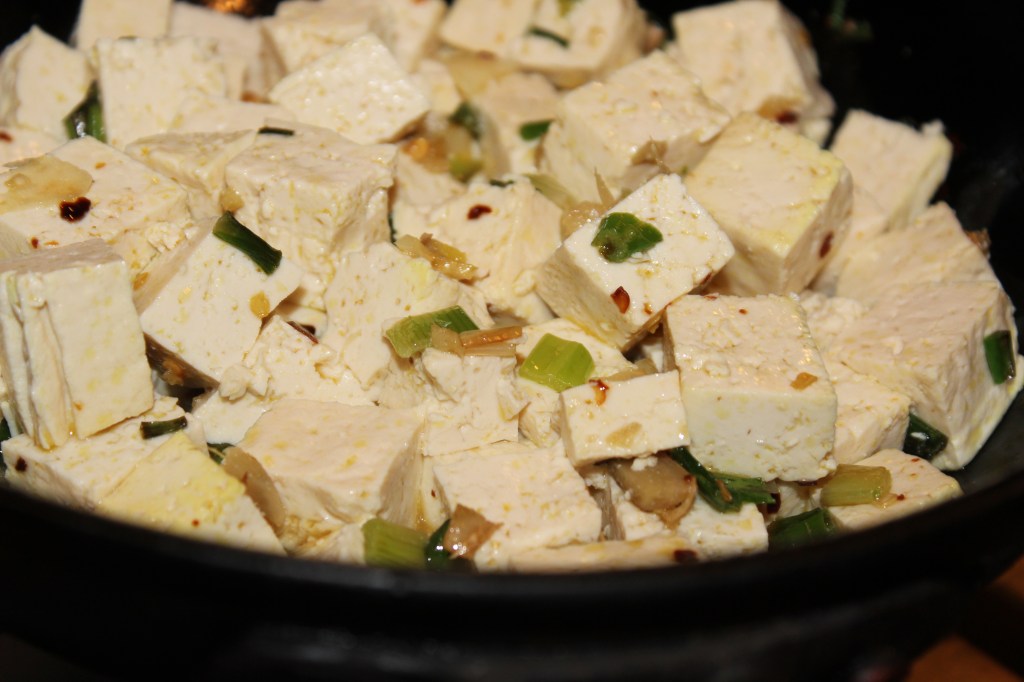
No Recipe Tofu: The tofu is delicate, not deep fried, in this dish. Perfect for soaking up the complex flavors in the spicy sauce.

Baby Bok Choy Stir Fry: This is a recipe adapted from David Crowley ‘s blog Cooking Chat. A feast for the eye, it combines the fresh crunch of stir fried vegetables with the roasted richness of cashew.

Ginger Noodle Salad: From Shinae Choi Robinson ‘s recipe, tossed with baby greens, sesame oil and juliened ginger. I didn’t have sushi ginger (“gari”) on hand so she suggested I make my own.

For Recipes, vegetarian anecdotes and pictures of my trip to S. Korea:

https://madamescientist.wordpress.com/2012/12/26/the-venial-vegetarian-with-apologies-to-asians/

Posted in Rajini Rao | 190 Comments

The Venial Vegetarian: With Apologies to Asians

IMG_1984

It was back in the eighties and the young Chinese waiter must have stepped off the boat just as I had, with a hope for material or mental advancement in the promised land of America. I chose my favorite noodle dish, Lo Mein, which was offered with a choice of pork, shrimp, chicken or beef.

No beef, I said firmly. The young man nodded and bowed. No pork, I continued. No shrimp. No chicken. Puzzled, he left, only to return within minutes. No pork? More vigorous shaking of the head, mutual bowing and smiling. No shrimp? He turned away, hesitated, and gave his last shot at reason, no chicken? Nope. Defeated, he left my table but gazed at me pensively, from the baize door to the kitchen. I watched, as his face lit with comprehension and he hurried back to me beaming! Hindu, he announced triumphantly! Well, I was more of a lapsed Hindu, but since I had been raised on the principle of ahimsa, or non-violence towards all creatures, I shared in his joy of having discovered the reason behind my meatless madness.
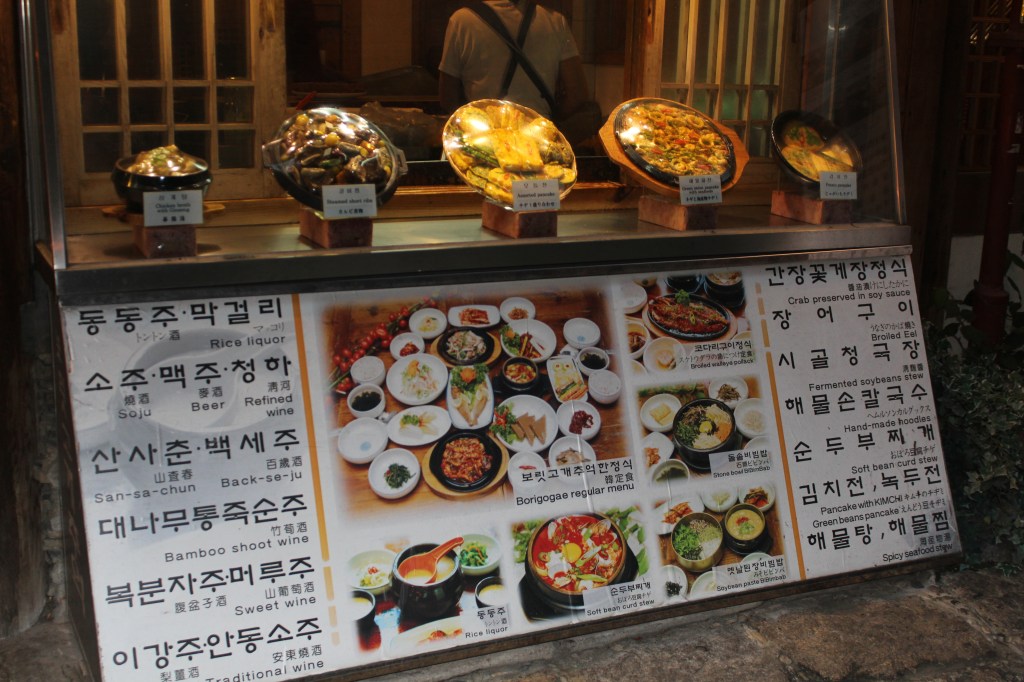
No vegetarian Korean cuisine!

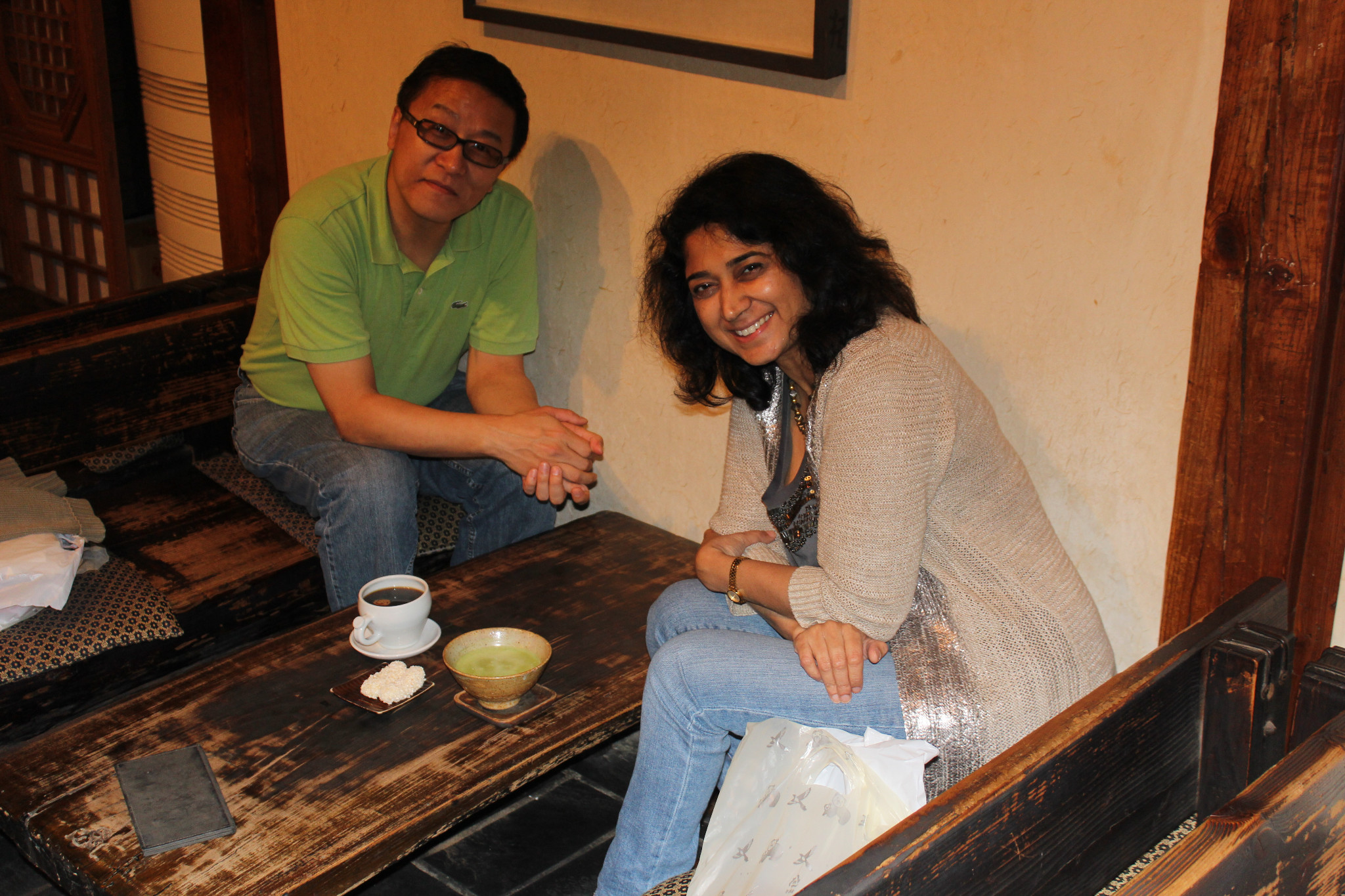
Menu outside Korean restaurant in Seoul- the Bamboo shoot wine could be vegetarian!

I’ve never been able to get past the mental block of eating meat. I like to think that I’m logical enough that should I be stranded on a desert island with nothing to eat but cadavers, the will to live would rule supreme. I once proffered this opinion to an evangelistic vegetarian convert and she never spoke to me again. This pragmatism served me well on a recent trip to South Korea where the concept of vegetarianism is not exactly clear. “It’s just soybean”, my friend assured me, as I spread the homogenized paste on a cabbage leaf and took a bite, “with only a bit of shrimp”. Oops, sorry! He was all apologies as he guided me to fried and battered zucchini rounds. I savored the humble vegetable with relief and reached for a second one. Too bad it was battered fish.
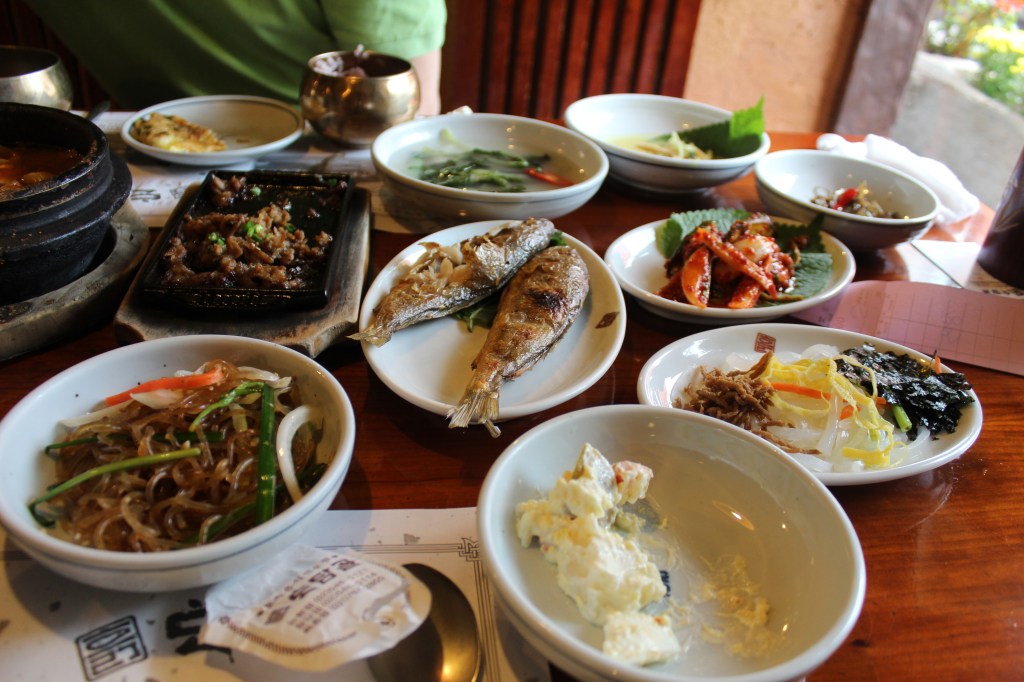
Supper in Seoul

Supper in Seoul

What’s a vegetarian to do, but cook up decidedly unauthentic alternatives guaranteed to have no fish sauce <shakes fist at Thai restaurants> or errant morsels of meat that find their way into the wok? I know I’ve looked down my sharpish nose at those generic “curries” while guiltily making my own transgressions into a foreign cuisine.  So I offer abject apologies to authentic Asian cooks everywhere, while serving up my favorite non-denominational “Asian” dinner…fast, flavorful and free of flesh.

No-Recipe Tofu

The tofu is delicate, not deep fried, in this dish. Perfect for soaking up the complex flavors in the spicy sauce.
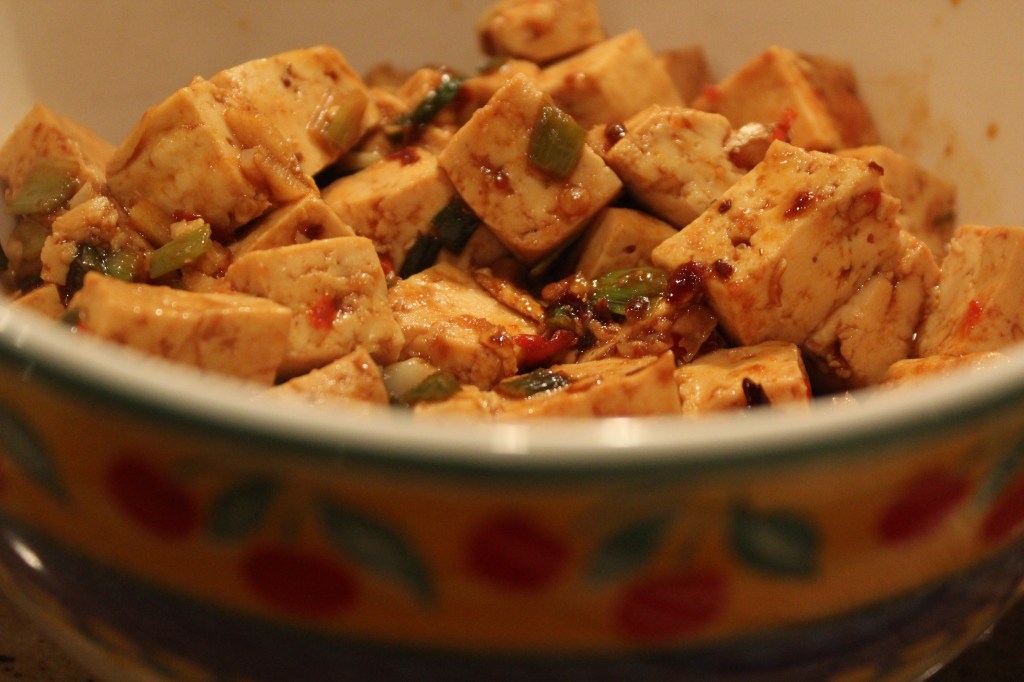
No Recipe Tofu: too simple to write down

No Recipe Tofu: too simple to write down

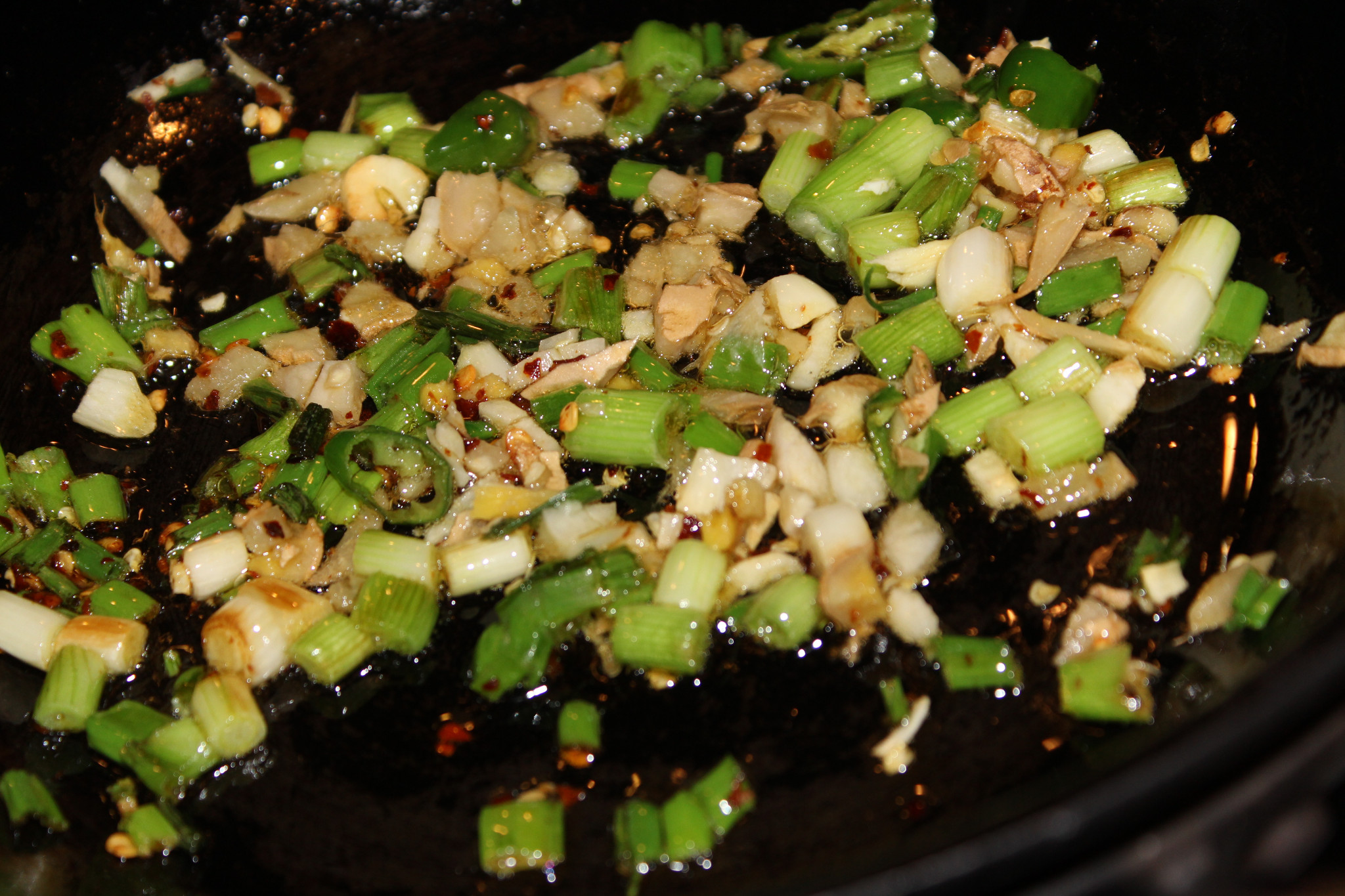
  • Begin by cubing a block of firm tofu. Finely chop an inch of ginger, two cloves of garlic, a couple of fresh green chilies, and a few scallions.
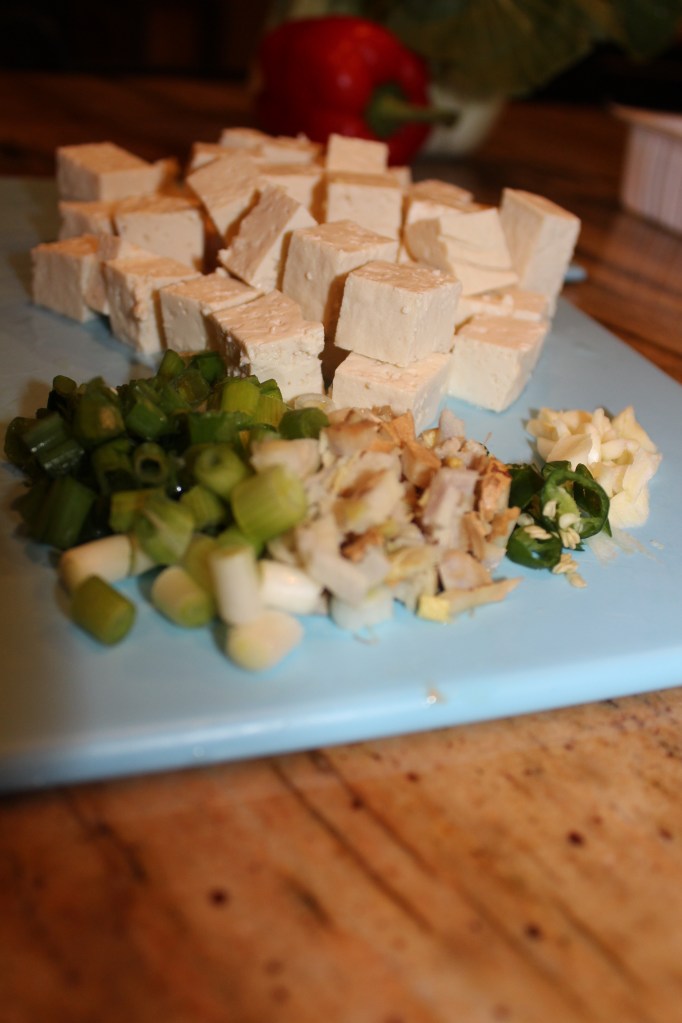
Cube tofu, mince garlic, ginger, green green chilies, and scallions

Cube tofu, mince garlic, ginger, green green chilies, and scallions

  • Heat a tablespoon of vegetable oil in a wok or seasoned pan. Add a pinch of crushed red pepper and let sizzle (not burn!).
  • Add the scallions, chiliesginger and garlic and stir around until they look bright green and smell heavenly.
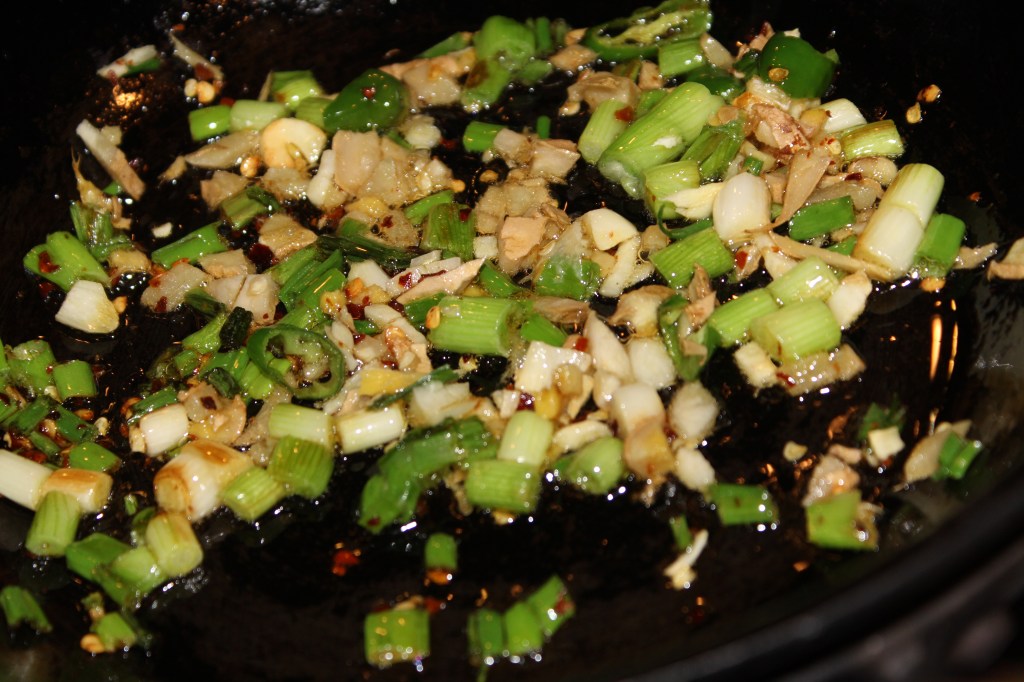
Stir fry scallion mixture

Stir fry scallion mixture

  • Add the tofu cubes and mix gently.

Add the cubed tofu

Add the cubed tofu

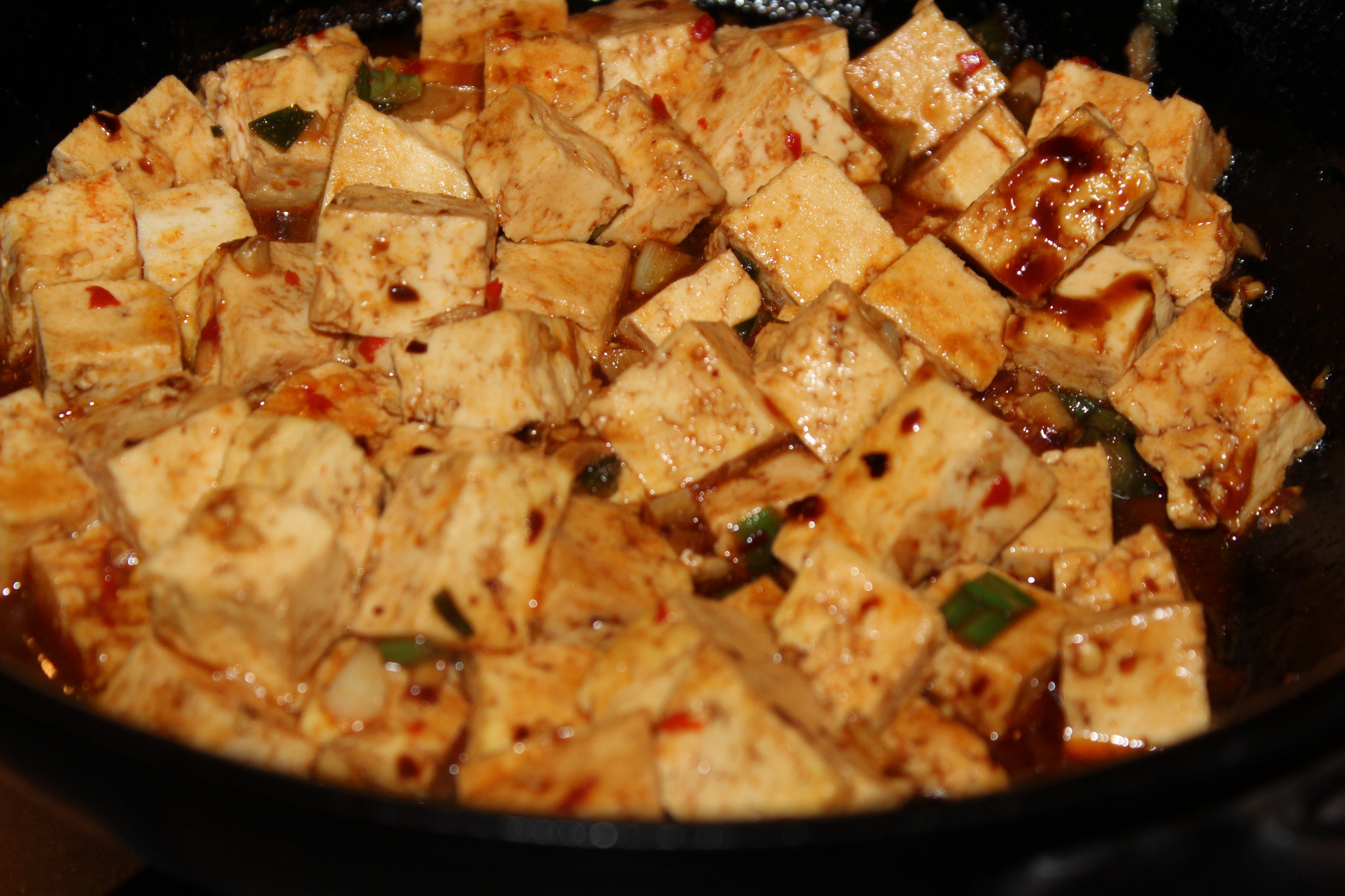
  • Add the trifecta: chilli-garlic hot sauce (Sriracha, store bought or homemade), hoison sauce, and black bean paste. I use about a tablespoon each, but use less hot sauce if you can’t stomach it.
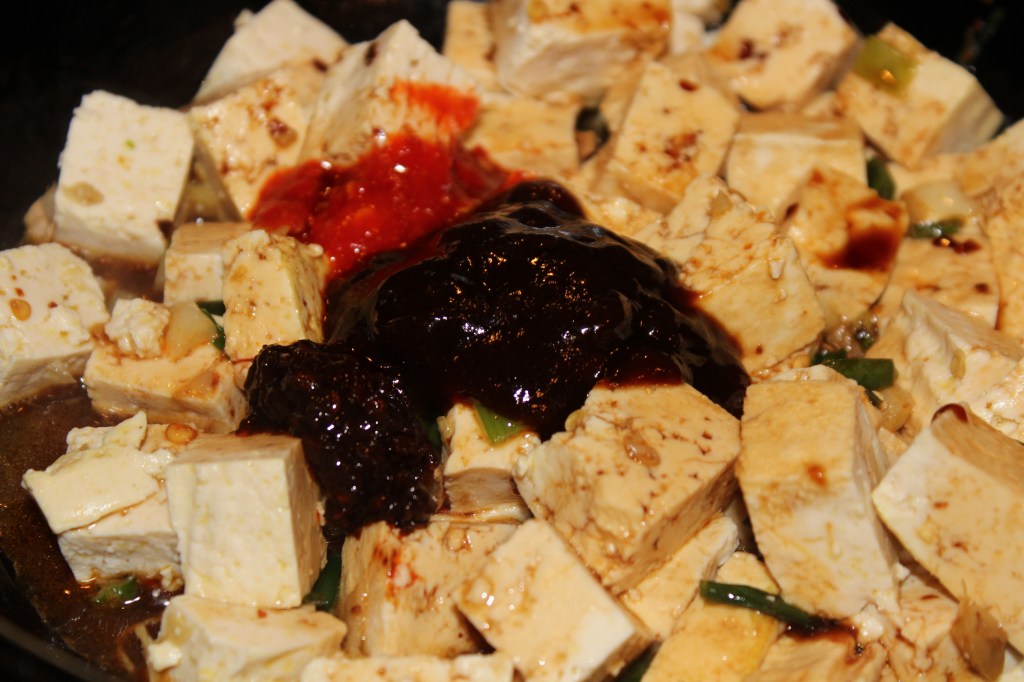
Add sauces

Add sauces

  • Drizzle some soy sauce, a few drops of sesame oil, and stir it all together.
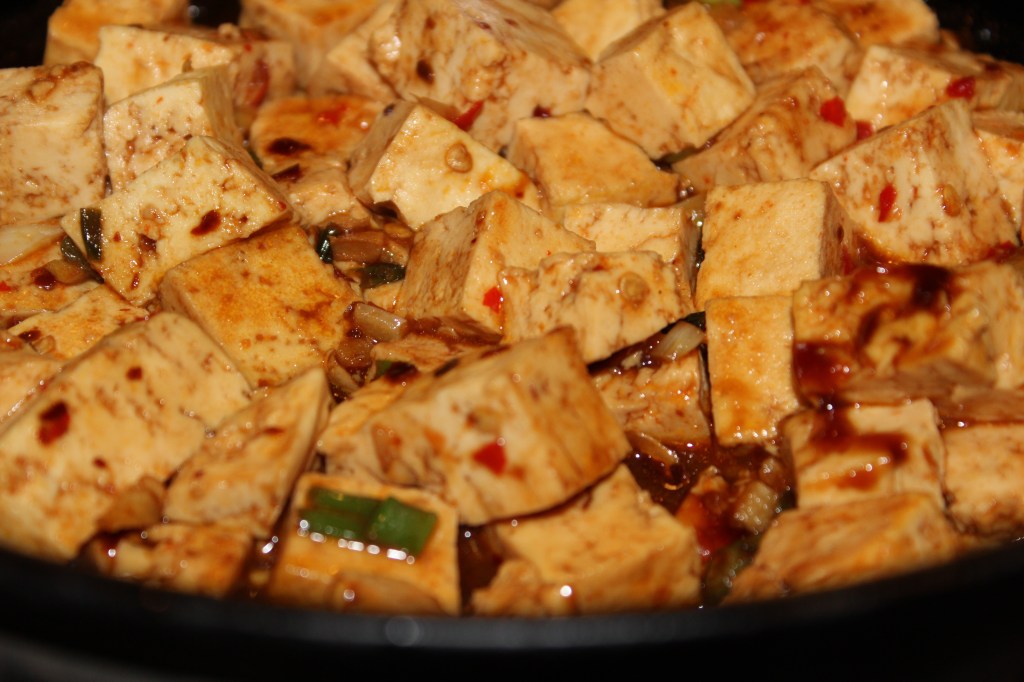
Stir the sauces and tofu gently together

Stir the sauces and tofu gently together

Baby Bok Choy Stir Fry

This is a recipe adapted from my friend David Crowley’s blog Cooking Chat. A feast for the eye, it combines the fresh crunch of stir fried vegetables with the roasted richness of cashew.
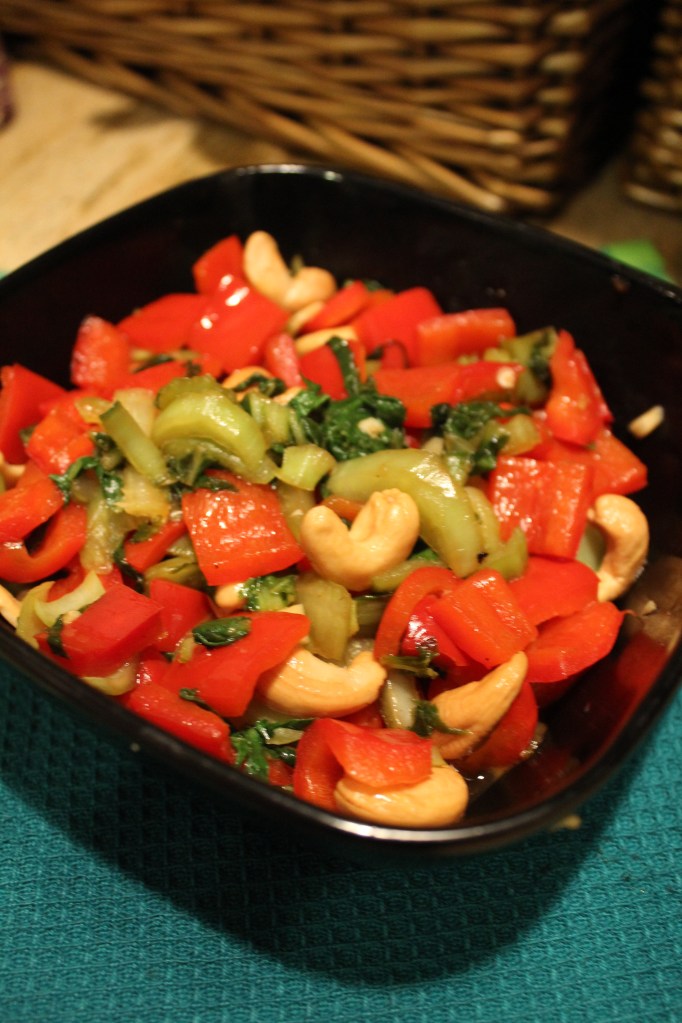
Stir fry of bok choy
Stir fry of bok choy

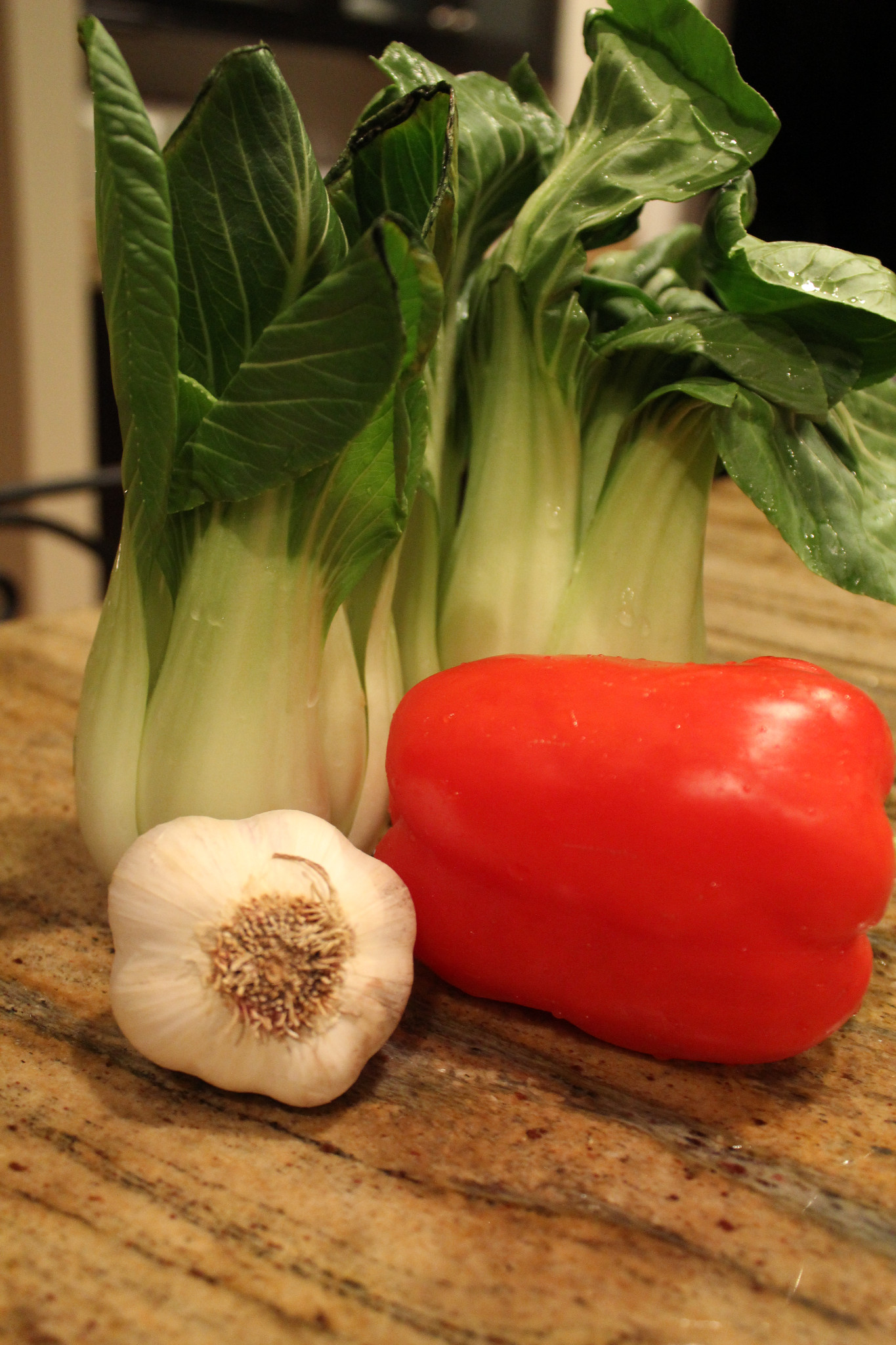
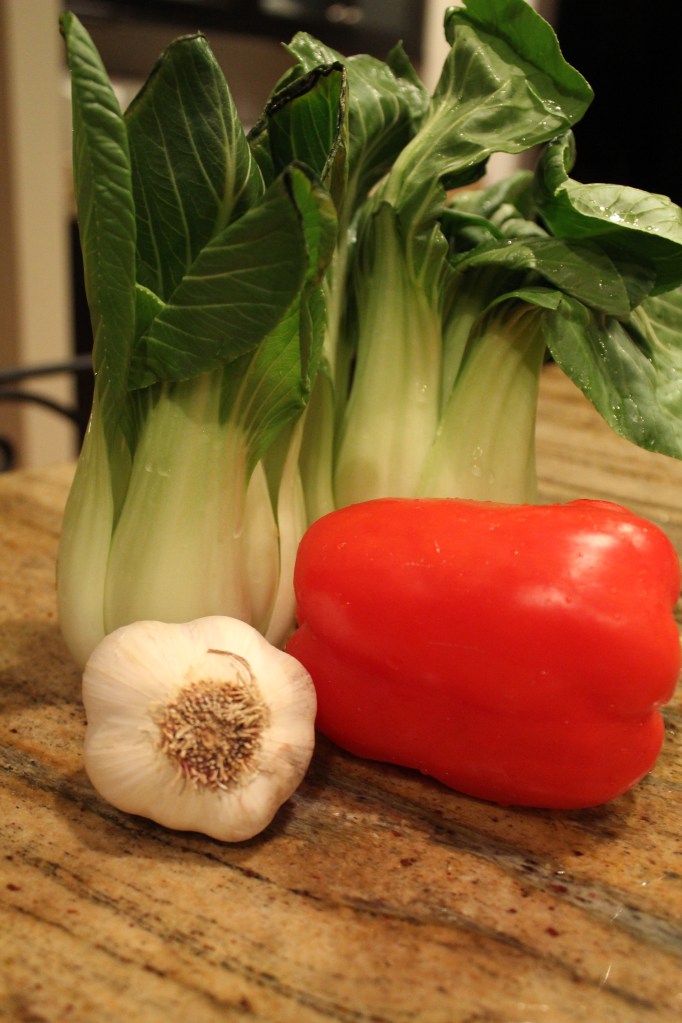
Baby bok choy

Baby bok choy

  • Roughly chop a couple small bok choy, white and green parts. Chop a red pepper into similar size pieces.
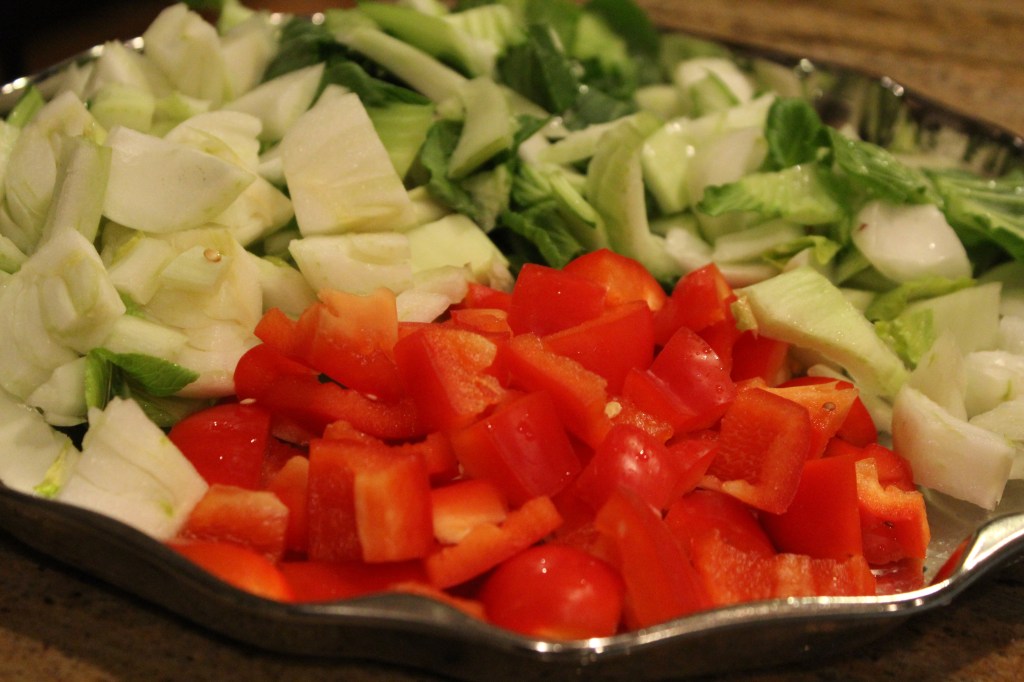
Chopped bok choy and red pepper

Chopped bok choy and red pepper

  • For the sauce: Mix 3 tbs soy sauce, 1 tbs honey, 2 tsp rice vinegar and 1 tsp sesame oil. Add a clove of minced garlic.
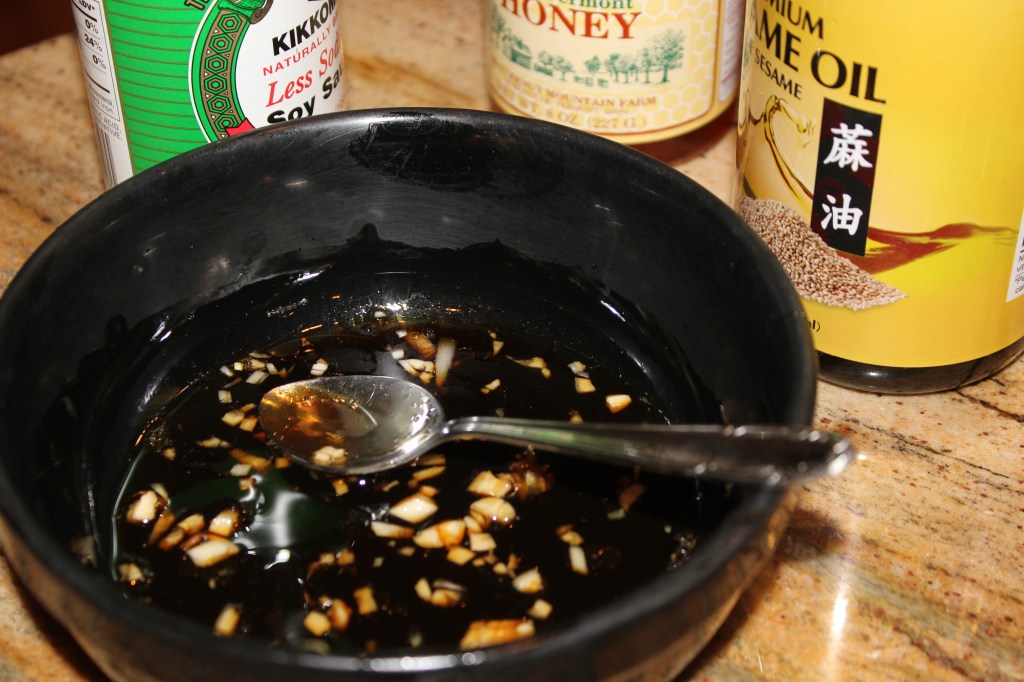
Mix together soy sauce, honey, vinegar, sesame oil and minced garlic

Mix together soy sauce, honey, vinegar, sesame oil and minced garlic

  • Stir fry: In a tablespoon of vegetable oil on high heat, toss together the bok choy and red pepper until just tender but still brightly colored.
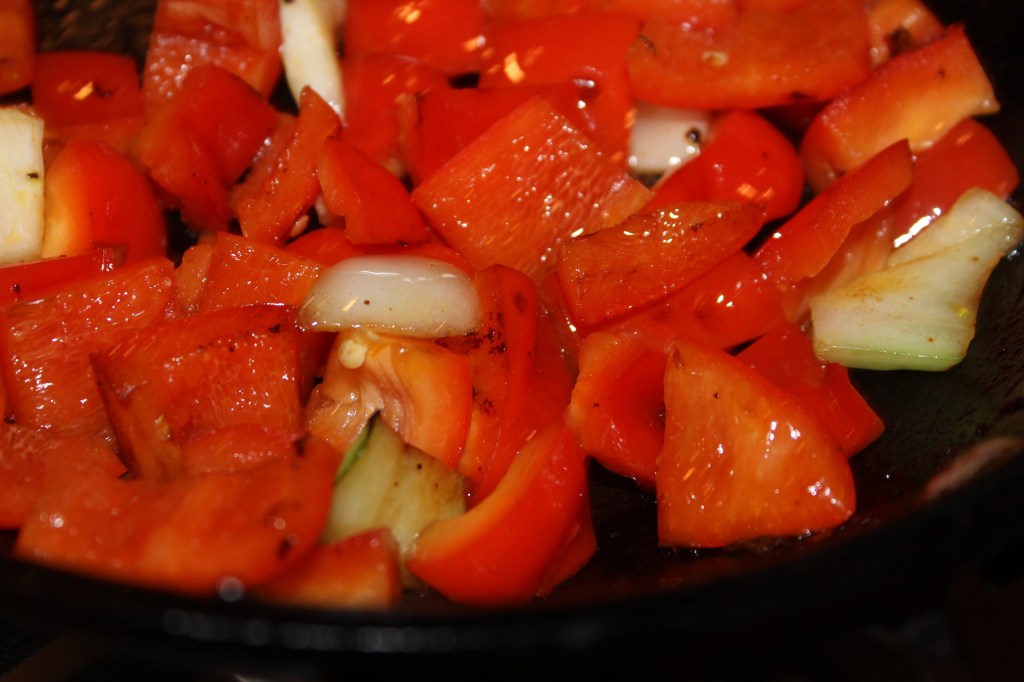
Stir fry the red pepper and bok choy on high heat

Stir fry the red pepper and bok choy on high heat

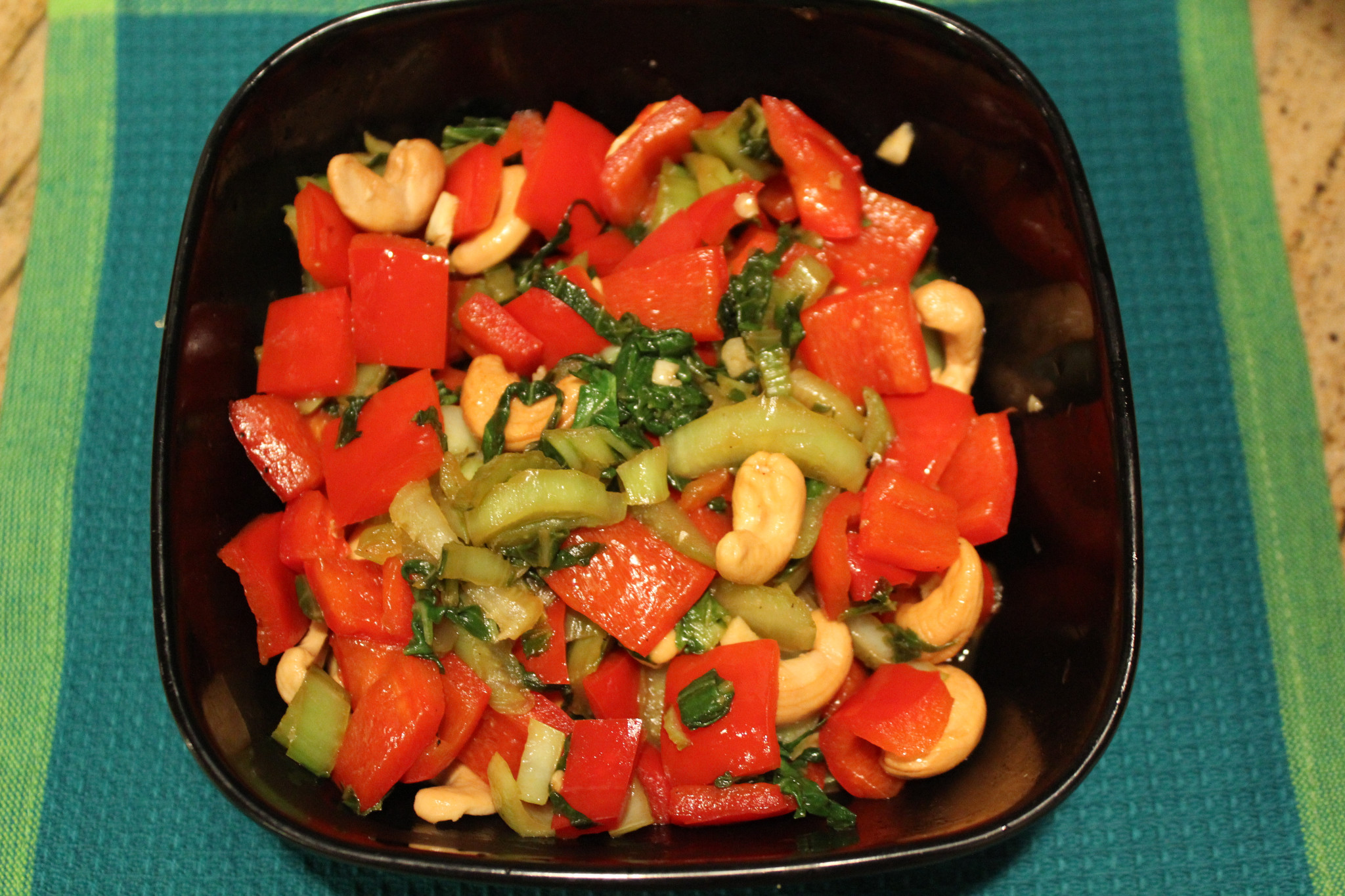
  • Add the sauce, and blend together. Add roasted, whole cashew nuts.
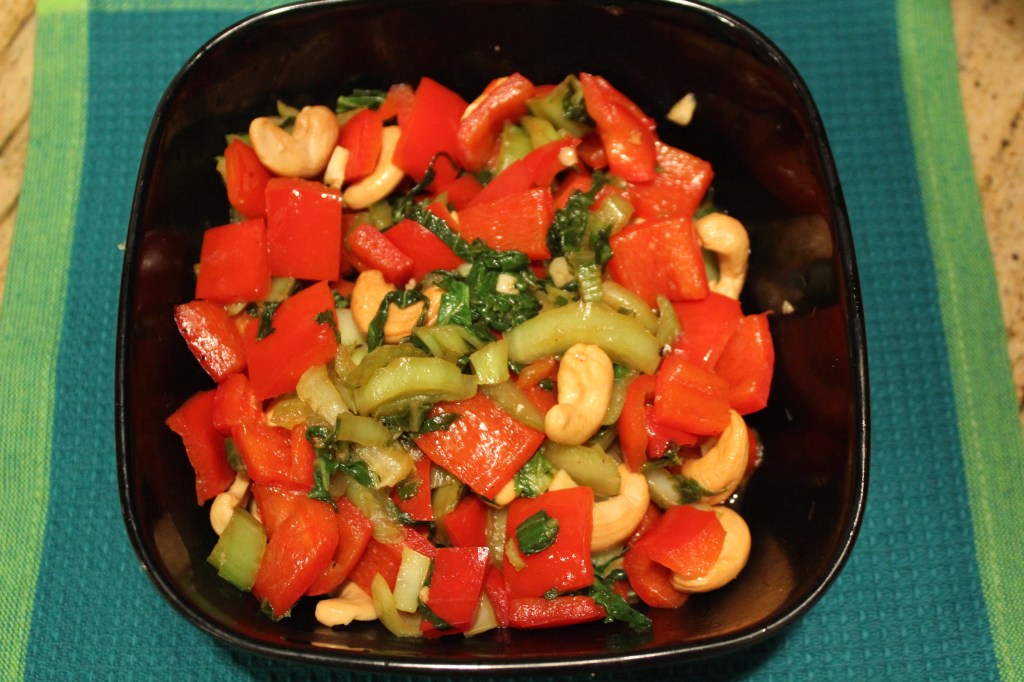
Stir fry baby bok choy with cashews

Stir fried baby bok choy with red peppers and cashews

Ginger Noodle Salad

This one is lifted, with thanks, from my Korean friend Shinae Robinson’s recipe (check out her food blog, Ridiculously Hungry). I didn’t have any pickled ginger (“gari”) on hand, so I quickly made my own with help from the internetz.
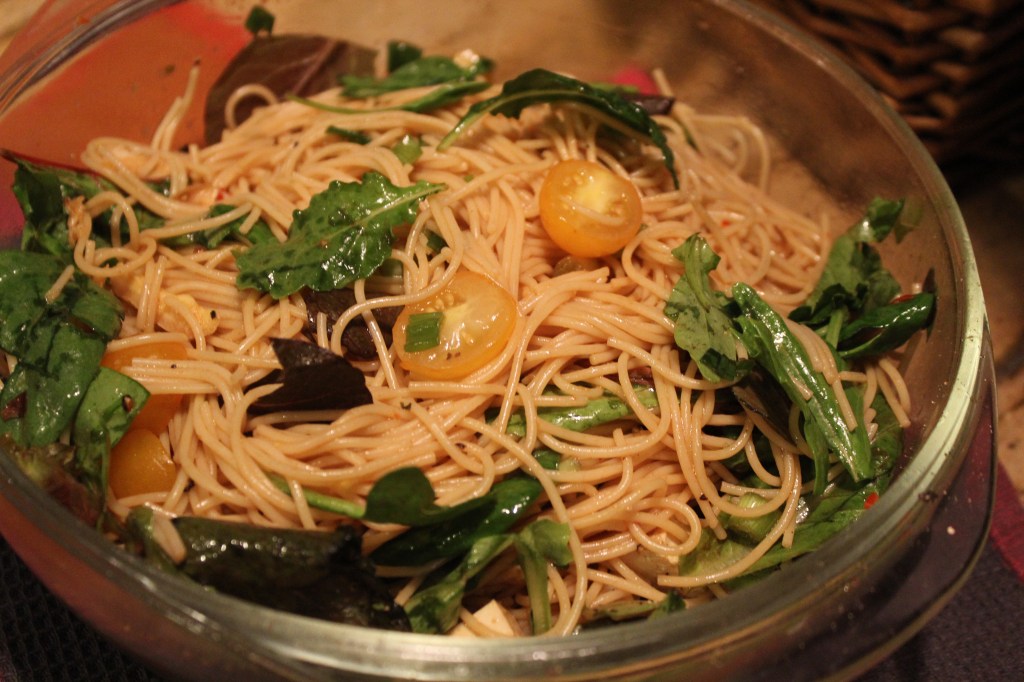
Ginger Noodle Salad

Ginger Noodle Salad

  • Make your own Gari: Thinly slice fresh ginger (I used a vegetable peeler). Sprinkle with coarse salt. Meanwhile, heat some rice vinegar in a small saucepan. Add sugar and wait for it to dissolve. Most recipes call for a third measure of sugar for each of vinegar. Add the ginger and watch in amazement as it turns a little pink. I’m told that a “quality” rice vinegar will enhance the pinkness. I guess mine was of modest “quality”. This keeps in the fridge for months, and can be used right away.
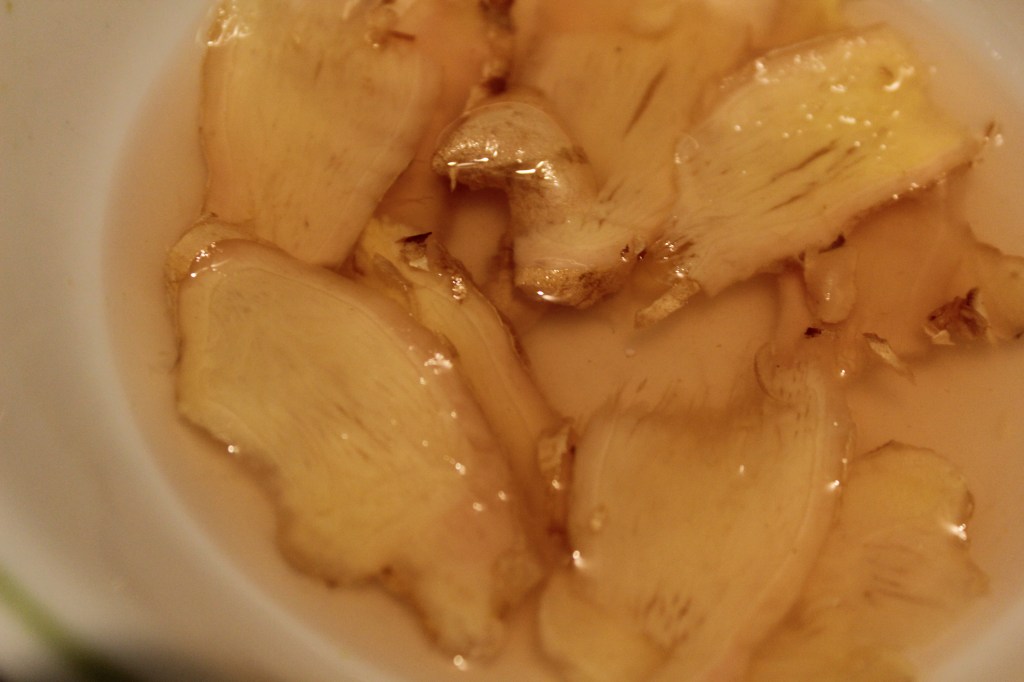
Note to self: Look for tender ginger next time

Note to self: Look for tender ginger next time

  • Cook some noodles– soba would be great, but I only had some spaghetti on hand.
  • Make the dressing: Mix together 1 tbs soy sauce, 1 tbs sesame oil, 1 tsp lemon juice, 1 tsp (more or less) Sriracha or chilli-garlic sauce, 0.5 tsp sugar. Toss in the warm noodles.
  • Add the greens: Mix together with juliened, sushi ginger (a generous fistful), a few handfuls of salad greens (arugula, baby spinach and endive would be delicious), and any thinly sliced fresh veggies you have on hand. You could use scallions, cherry tomatoes, radish or bean sprouts.
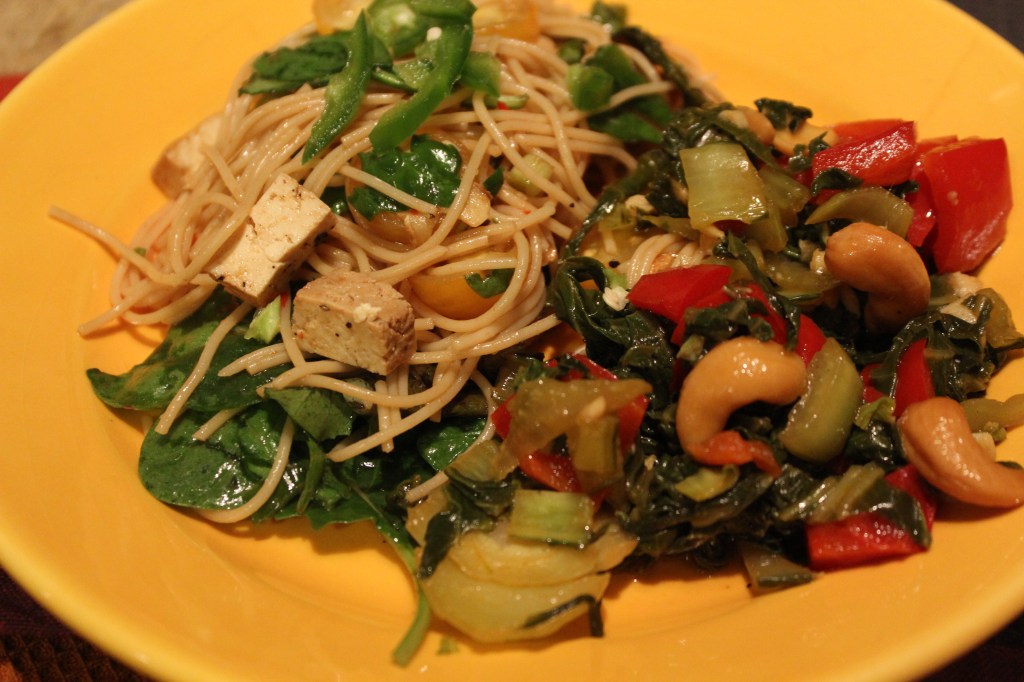
IMG_1848

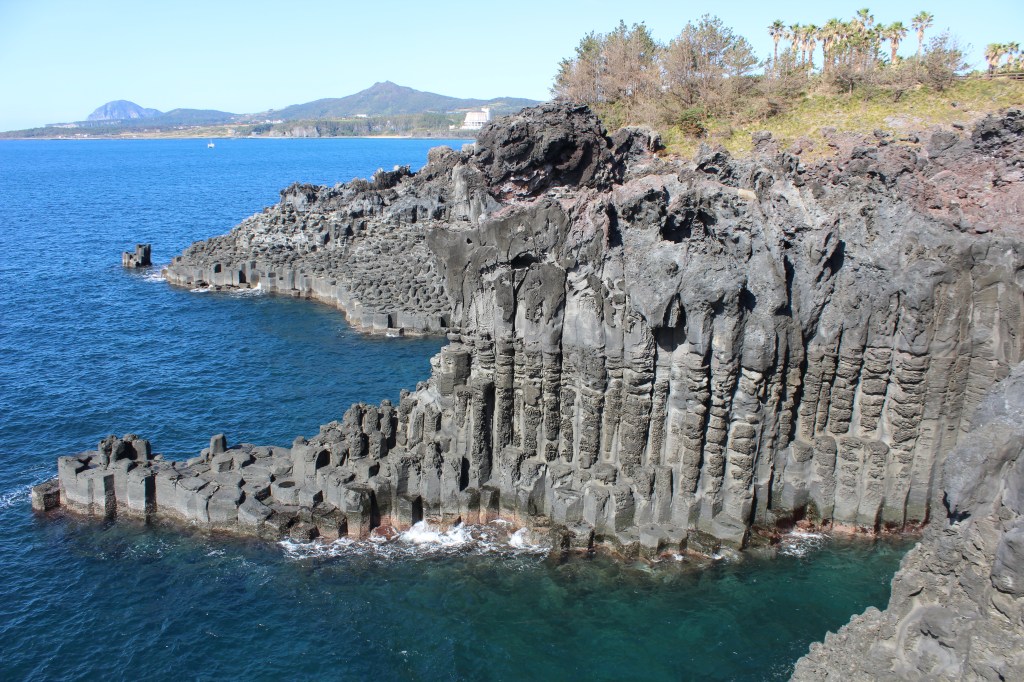
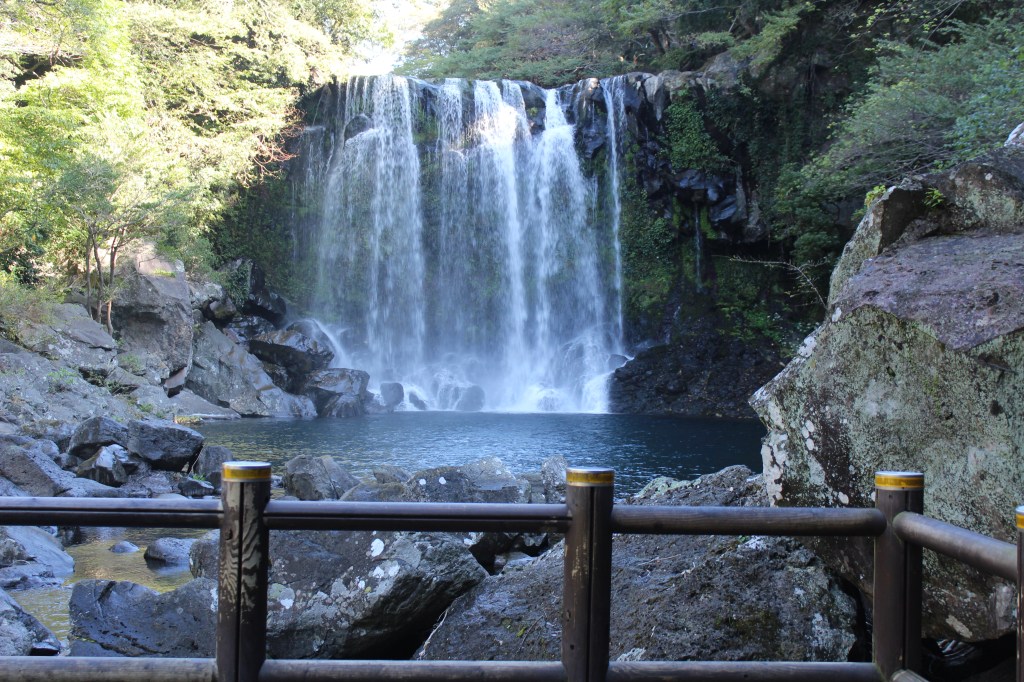
Here are some sights around S. Korea that I managed to catch in between sessions of the International Plant Biology Meeting on Jeju Do.
IMG_1895

Columnar basalt on the southern shore of Jeju island, S. Korea
IMG_1881

Cheonjeyeon Waterfall, the Pond of the Emperor of Heaven. Legend has it that seven nymphs would descend from the heavens at night and bathe in the waterfall’s pond.
IMG_1937

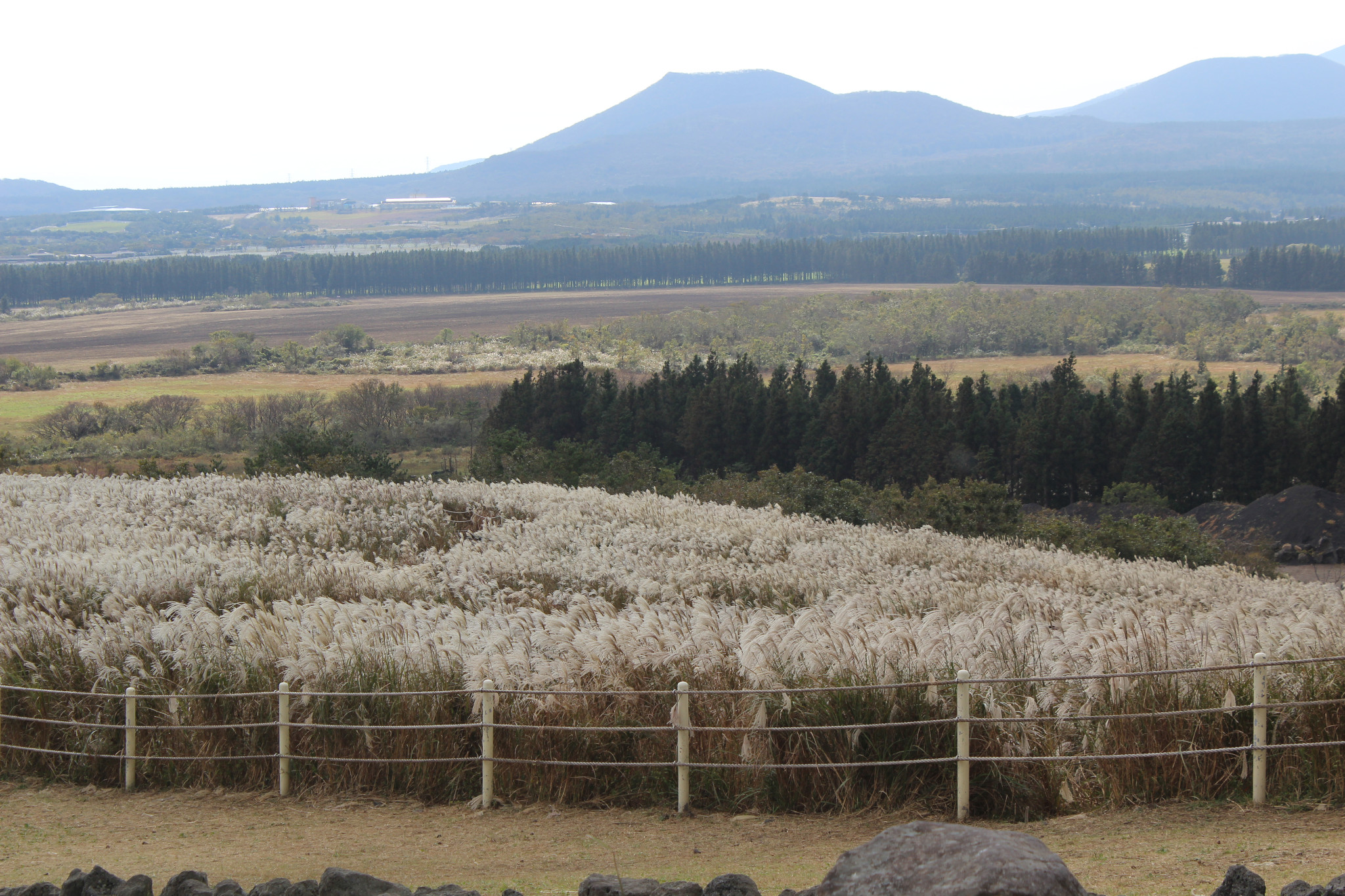
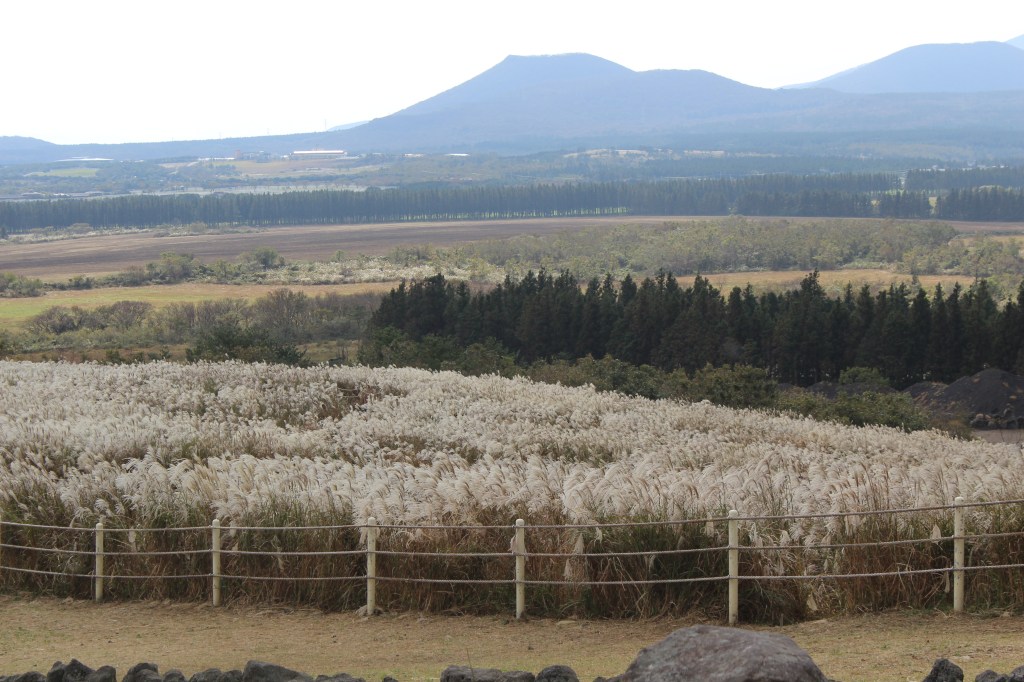
View from the Sangumburi crater where the slopes are covered with Eulalia flowers (Miscanthus sinensis).

IMG_1967

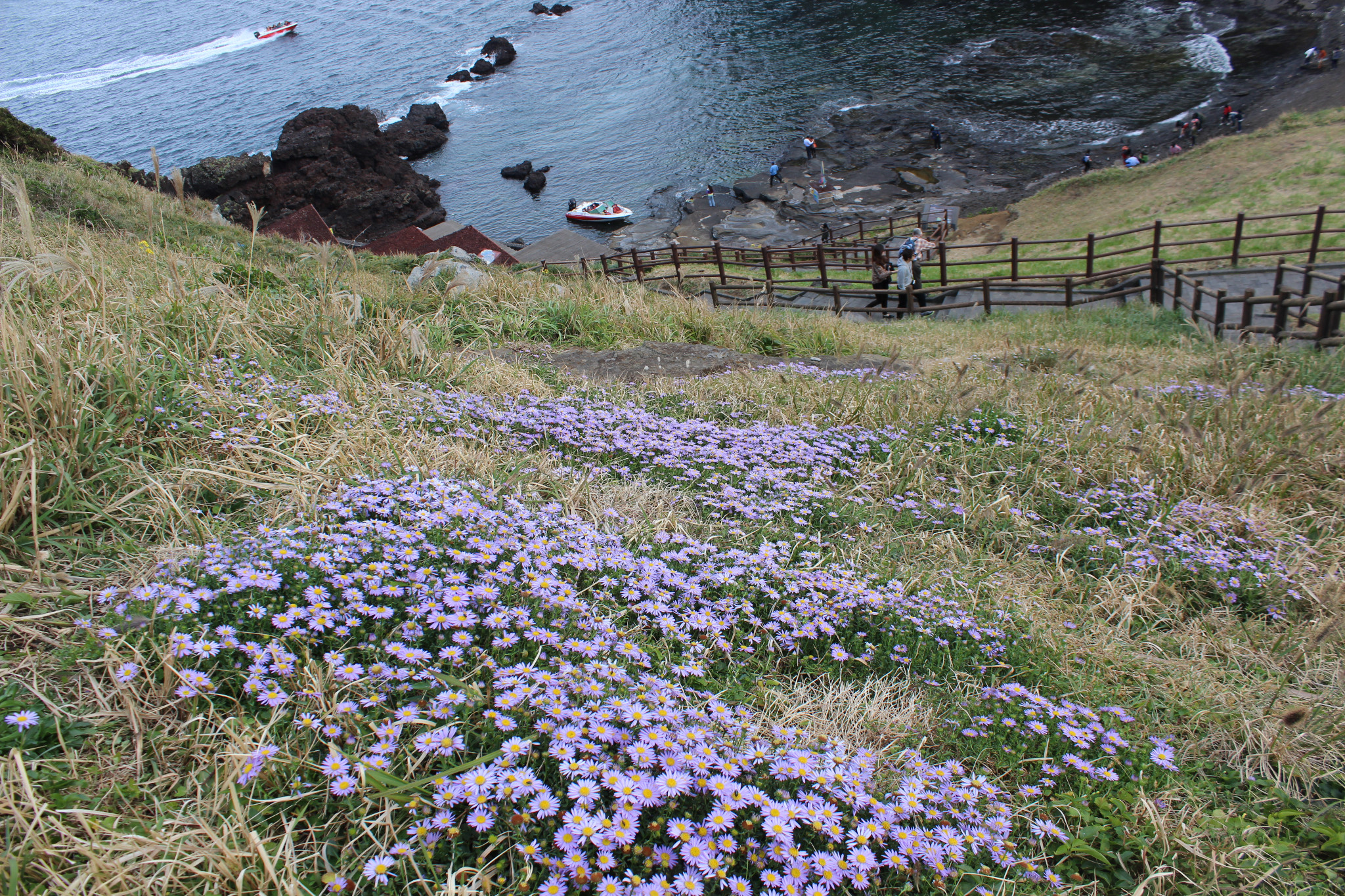
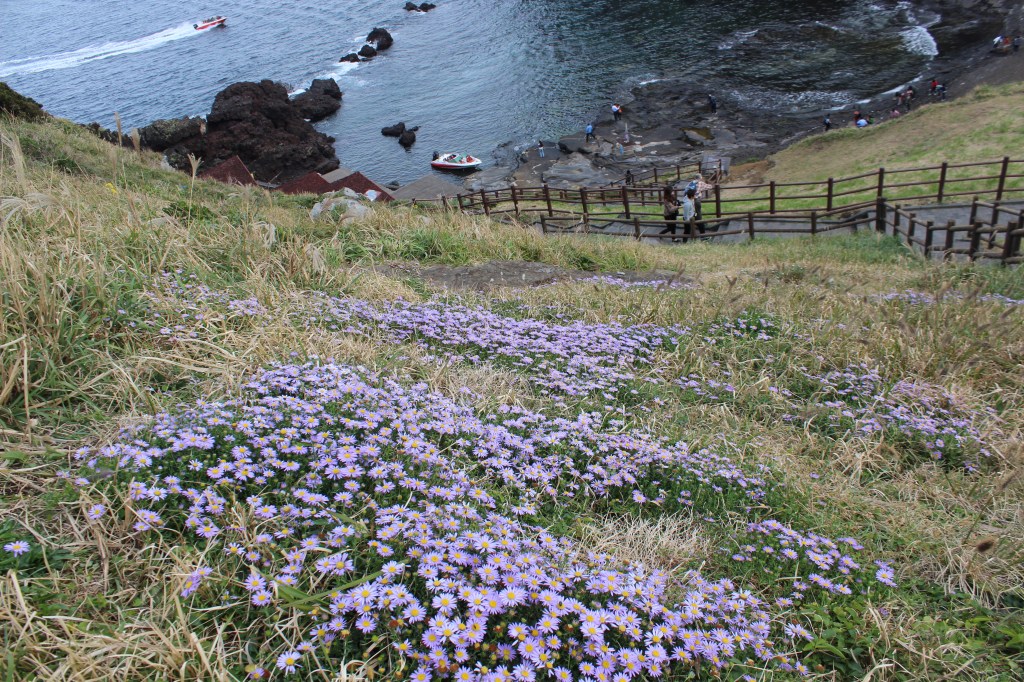
Ilchibung Peak (Sunrise Peak ) is a dead volcano on the eastern-most point of Jeju island.
IMG_1964

View down Sunrise Peak where female divers known as the haenyo, or “sea women”, bring in the sea’s bounty.
IMG_1915

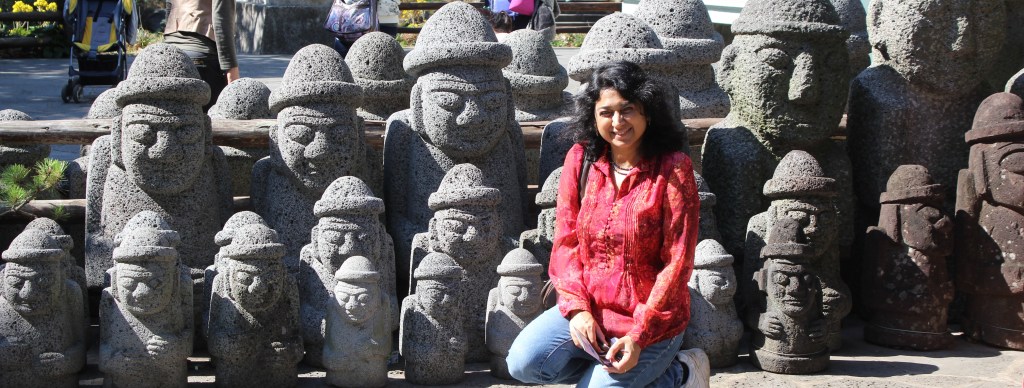
With the dol hareubangs, or stone guardians, of Jeju.
Posted in Asian food, FOOD, Humor, Travel, Vegetarian | Tagged , , , , | 6 Comments