Roses are Red, Blood Cells Blue

Roses are Red, Blood Cells Blue

The heart is a symbol of love, and on this Mother’s Day, let’s consider the cardiovascular changes in a pregnant mother. As the sole provider of nourishment to the baby, the mother’s cardiac output (blood volume) increases by 50% during pregnancy…that’s an extra liter and half. Her heart will enlarge and beat faster, by about 15 beats/min. The growing fetus pushes her heart upwards and to the left. She will need more red blood cells to carry extra oxygen, although the increased numbers do not keep up with the blood volume. The higher requirement for iron and the dilution of red cells in blood can make mama-to-be tired and anemic.

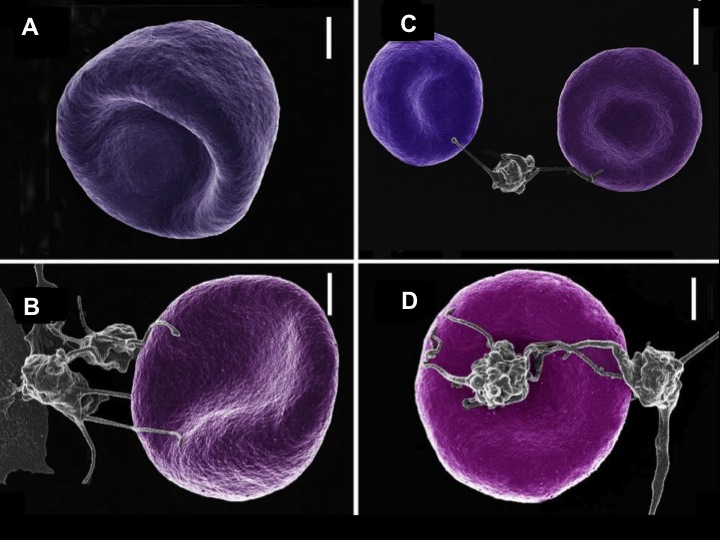
A pregnant woman is hypercoagulable: more likely to form clots. This is thought to be an evolutionary precaution against hemorrhaging after delivery, but it puts the mother at risk for dangerous embolisms. In scanning electron microscope images of blood smears from non-pregnant and pregnant women, clot-forming platelets were never associated with red cells in non-pregnant women (A) but invariably found attached to red cells through early (B) and late (C) pregnancy and 6-8 week postpartum (D). These platelets developed long processes (pseudopodia) that link the red cells together, making it easier to form clots.

A Biologist’s Mother’s Day Song

Just like two strands of DNA are spirally entwined

Your nature and your nurture are inspiringly combined

Scientists remind me and I find that it is true

Slightly more than half of everything I am is thanks to you

Image source ▶ http://goo.gl/QrFOV

Pregnancy and Cardiovascular Changes ▶ http://goo.gl/Quj1t

#ScienceSunday #MothersDay  

Posted in Rajini Rao | Tagged , | 57 Comments

Hair-Raising Science

Hair-Raising Science

Need a lush mustache? Cosmetic surgeons in Turkey now offer mustache transplants so you can channel your inner Tom Selleck. Performed under local anesthetic, the surgery takes five hours and costs up to $5,000. A leading surgeon from Istanbul’s Beverly Hills says, “The mustache is making a comeback. If a man’s mustache doesn’t grow, he wants to know he can have one as a mark of masculinity”. For the full story ▶ http://goo.gl/3Q450

For the Follicly Challenged: Serendipitous science has stumbled on some solutions. For example, the hair loss drug Minoxidil was being used to treat high blood pressure  when it was discovered that patients were growing unusual amounts of hair. Similarly, UCLA researchers experimenting with stress-induced bald mice injected them with the compound Astressin B (a blocker of corticotropin releasing factor receptors) only to discover that the mice grew luxurious coats of hair. Read the paper ▶ http://goo.gl/NROUm We don’t yet know if we can go from stresses to tresses in humans, although trials are on the way. Hair follicles also contain stem cells and these could hold the key to our hirsute pursuit. Did you know that castration prevents baldness? ▶ http://goo.gl/FzAzd It is true that baldness is dependent on testosterone and it has been argued that bald men are more virile. Sean Connery would testify to that 😉

#ScienceEveryday H/T to Jeff Brown for the mustache story 🙂

Posted in Rajini Rao | Tagged | 51 Comments

A Boy and His Atom

A Boy and His Atom

How do you make the world’s smallest movie? By moving atoms, one at a time. Certified by the Guinness Book of World Records, this stop motion animation made by IBM nanophysicists only lasts 60 seconds and shows a tiny atomic “boy” jumping on an atomic trampoline and playing with his ball atom, magnified 100 million times. It took 242 frames, each made by a scanning tunneling microscope that weighs 2 tons and operates at -268 degrees Celsius (or 450.5 degrees below zero on the Fahrenheit scale). A needle comes within 1 nanometer of each atom (actually diatomic carbon monoxide), grabs and drags it across the surface of a tiny chip to a new location..you can hear the dragging sound in the “behind the scenes” movie.

Why was this movie made? According to Moore’s Law, chip performance doubles every 18 months, as the individual transistors become smaller. Currently, it takes about a million atoms to store individual bits of data, but IBM scientists see that number shrinking to 12. At this size, you could fit every movie made on your iPhone. Moving individual atoms precisely becomes important at these tiny dimensions. Hey, scientists like to have fun too! And, as Andreas Heinrich says, if a thousand kids watching A Boy and His Atom decide to go into science instead of law, that’s a win for #STEM . Sorry, lawyers, you had Law and Order 🙂


⚛ Watch: Moving Atoms: Making The World’s Smallest Movie

#ScienceEveryday  

Posted in Rajini Rao | Tagged , | 34 Comments

Test Driving a Tagine

Test Driving a Tagine

Tagine. The very word conjured up a magical mirage of Marrakesh and Casablanca, dashing Berbers and belly dancers, hookahs and saffron-laced spicy stews.  I gazed at the overpriced albeit charming hand painted glazed clay artifact in the Williams Sonoma store, and in a fit of self-indulgence, bought it. My children were less impressed. “It’s a pot”, explained the world weary, newly minted college graduate. The beatnik teenager sniffed the air hopefully, “Mom bought pot?”

• Online, opinions and advice flew in, fast and furious. You’ll need a heat diffuser for the stove top. Don’t place it in a preheated oven. You have to temper it first. Just use it as a serving dish. The clay will leach heavy metals. Never wash it until completely cooled. Intimidated, but determined, I applied the same (lack of) logic I use to call upon divine spirits to bless our laboratory research. I soaked the tagine overnight, then rubbed in some olive oil, and baked it for an hour despite a strong suspicion that the glazing on the pot made this exercise unnecessary. I sent my husband to the store for some tagine spices. Prudently, he purchased every exotic mix he could find: Harissa, Za’atar, Ras-el-hanout.  The aromas were all-too familiar though: cumin, coriander, turmeric, cinnamon. “Mom, you’ve been had”, the 14 year old wisely concluded, “It’s Garam Masala”.

• Clean up was a breeze!  My husband dug into his plate, saying “Mmm…all it needs is some lamb”. He was assigned dish washing duty for making mischief.

For Shinae Choi Robinson ‘s African Food Cookalong  ▶ http://goo.gl/P00Ej

Recipe: https://madamescientist.wordpress.com/2013/04/27/test-driving-a-tagine/

Posted in Rajini Rao | 62 Comments

Test Driving a Tagine

Tagine. The very word conjured up a magical mirage of Marrakesh and Casablanca, dashing Berbers and belly dancers, hookahs and saffron-laced spicy stews.  I gazed at the overpriced albeit charming hand painted glazed clay artifact in the Williams Sonoma store, and in a fit of self-indulgence, bought it. My children were less impressed. “It’s a pot”, explained the world weary, newly minted college graduate. The beatnik teenager sniffed the air hopefully, “Mom bought pot?”

Tagine and harissa sauce

Tagine and harissa sauce

Online, opinions and advice flew in, fast and furious. You’ll need a heat diffuser for the stove top. Don’t place it in a preheated oven. You have to temper it first. Just use it as a serving dish. The clay will leach heavy metals. Never try to wash it until completely cooled. Intimidated, but determined, I applied the same (lack of) logic I use to call upon divine spirits to bless our laboratory research. I soaked the tagine overnight, then rubbed in some olive oil, and baked it for an hour despite a strong suspicion that the glazing on the pot made this exercise unnecessary. I sent my husband to the store for some tagine spices. Prudently, he purchased every exotic mix he could find: Harissa, Za’atar, Ras-el-hanout.  The aromas were all-too familiar though: cumin, coriander, turmeric, cinnamon. “Mom, you’ve been had”, the 14 year old wisely concluded, “It’s Garam Masala”.

Vegetable Tagine

Tagine Vegetables

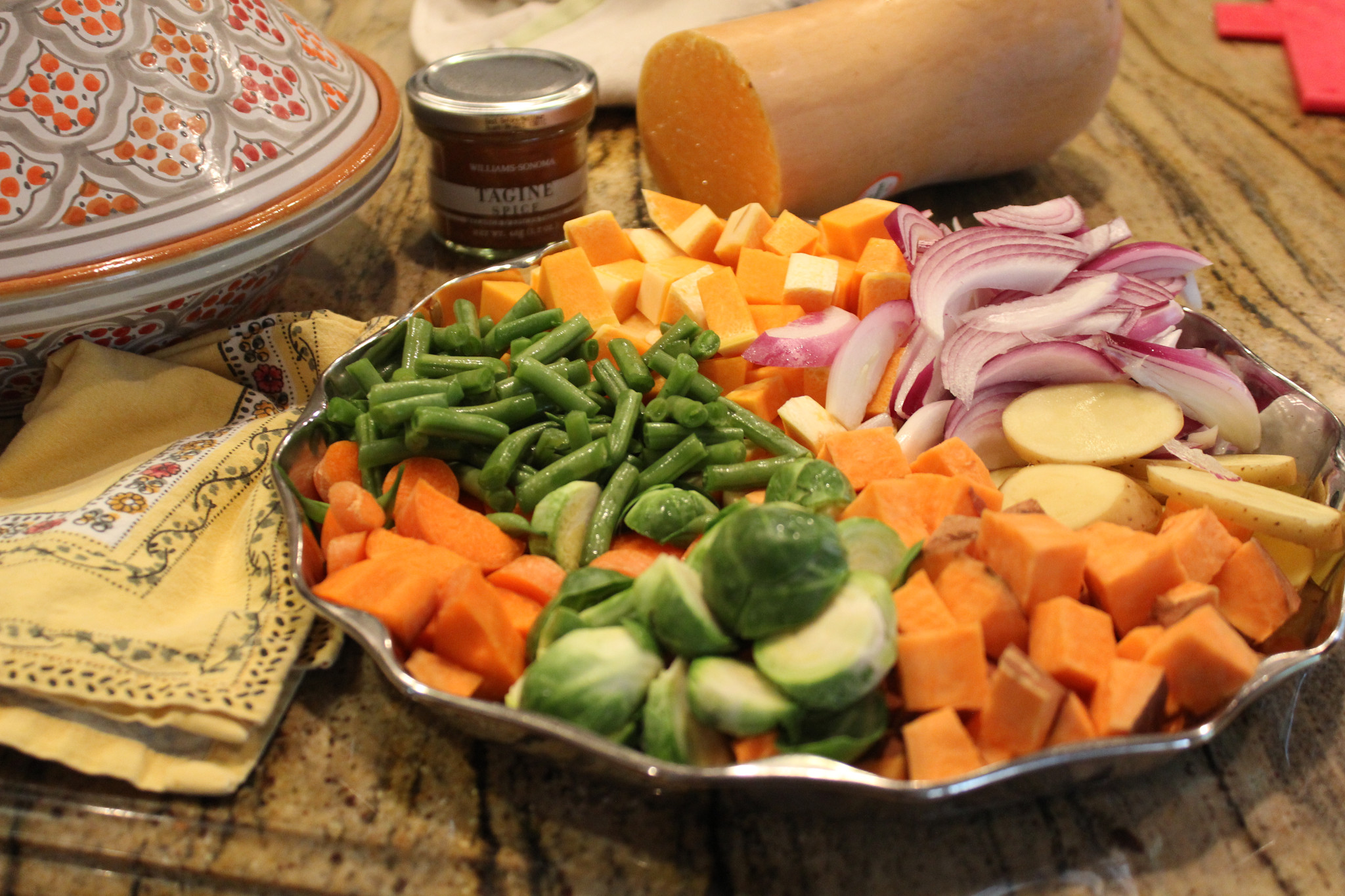
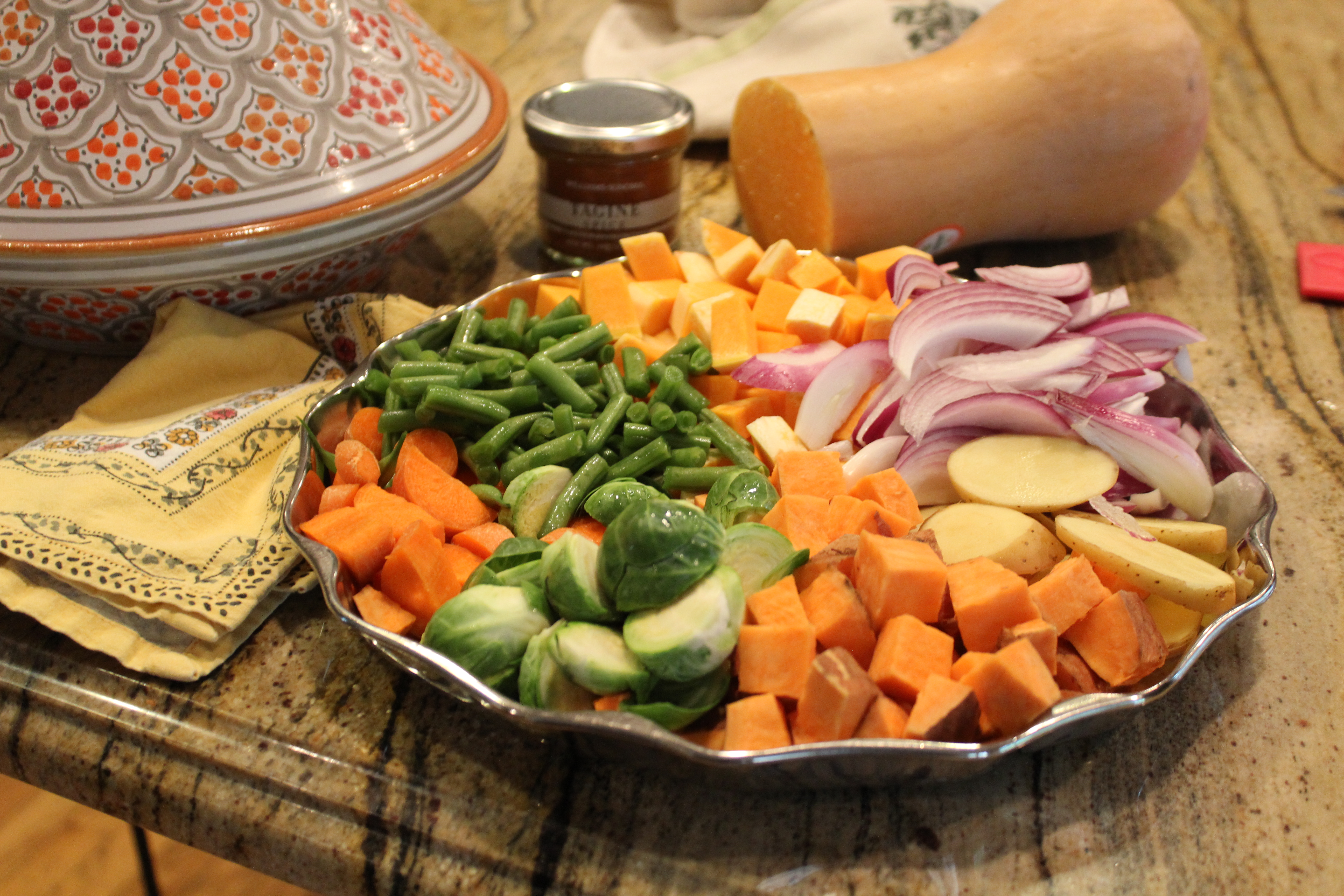
Tagine Vegetables clockwise from top: butternut squash, red onion, potatoes, sweet potatoes, Brussels sprouts, carrots and beans.

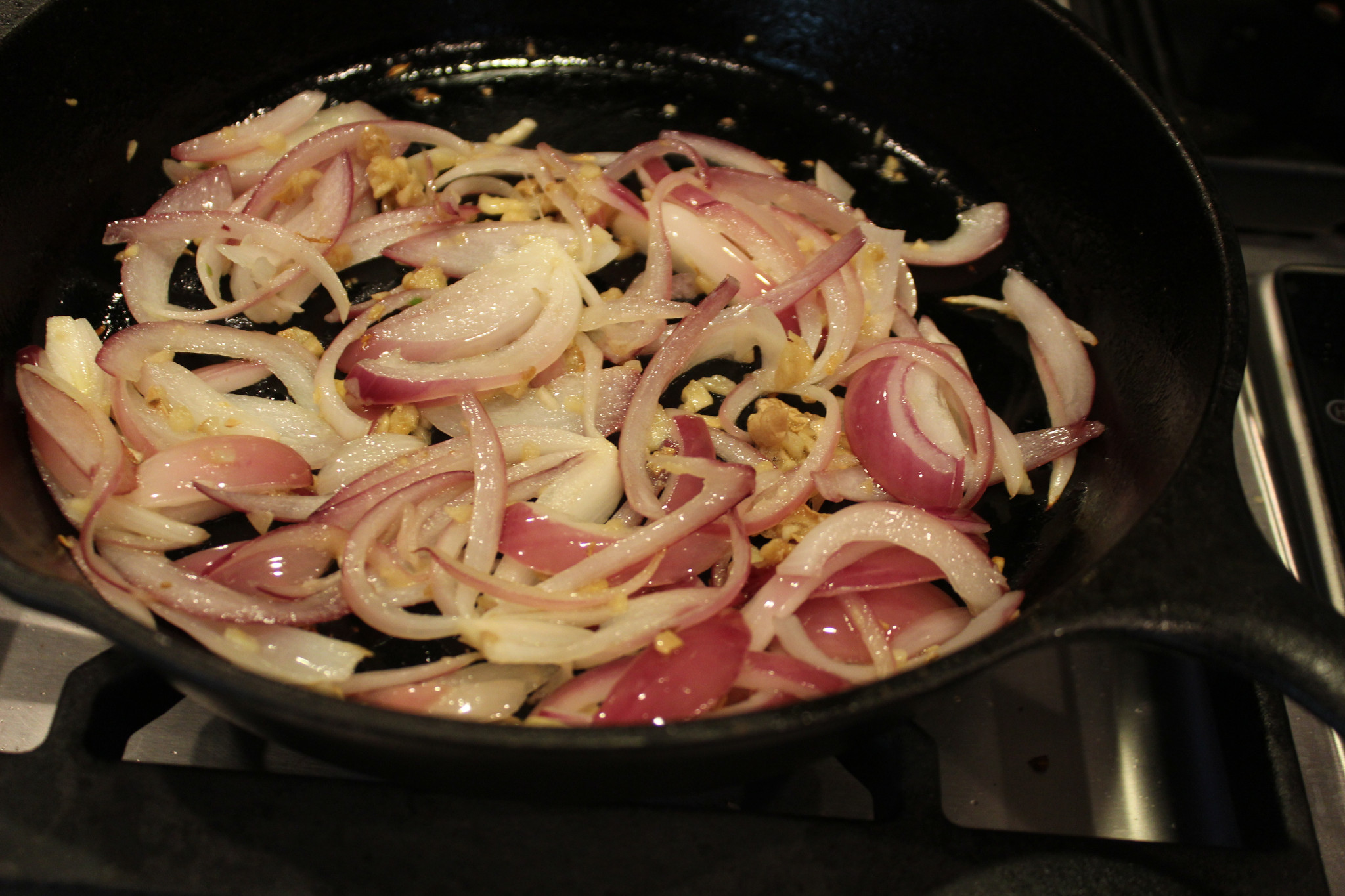
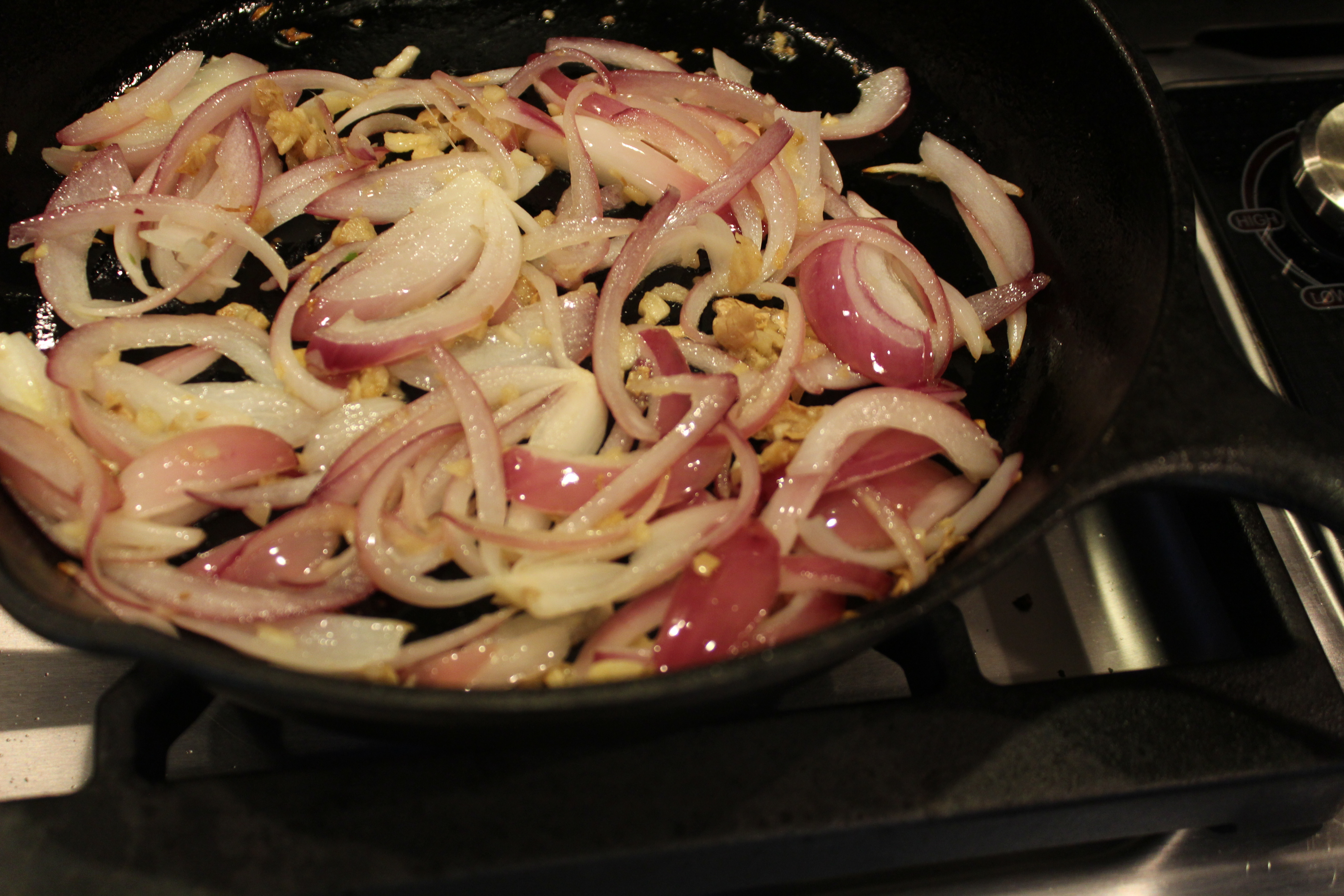
Sliced onion sauteed with minced garlic and ginger

Sliced onion sauteed with minced garlic and ginger

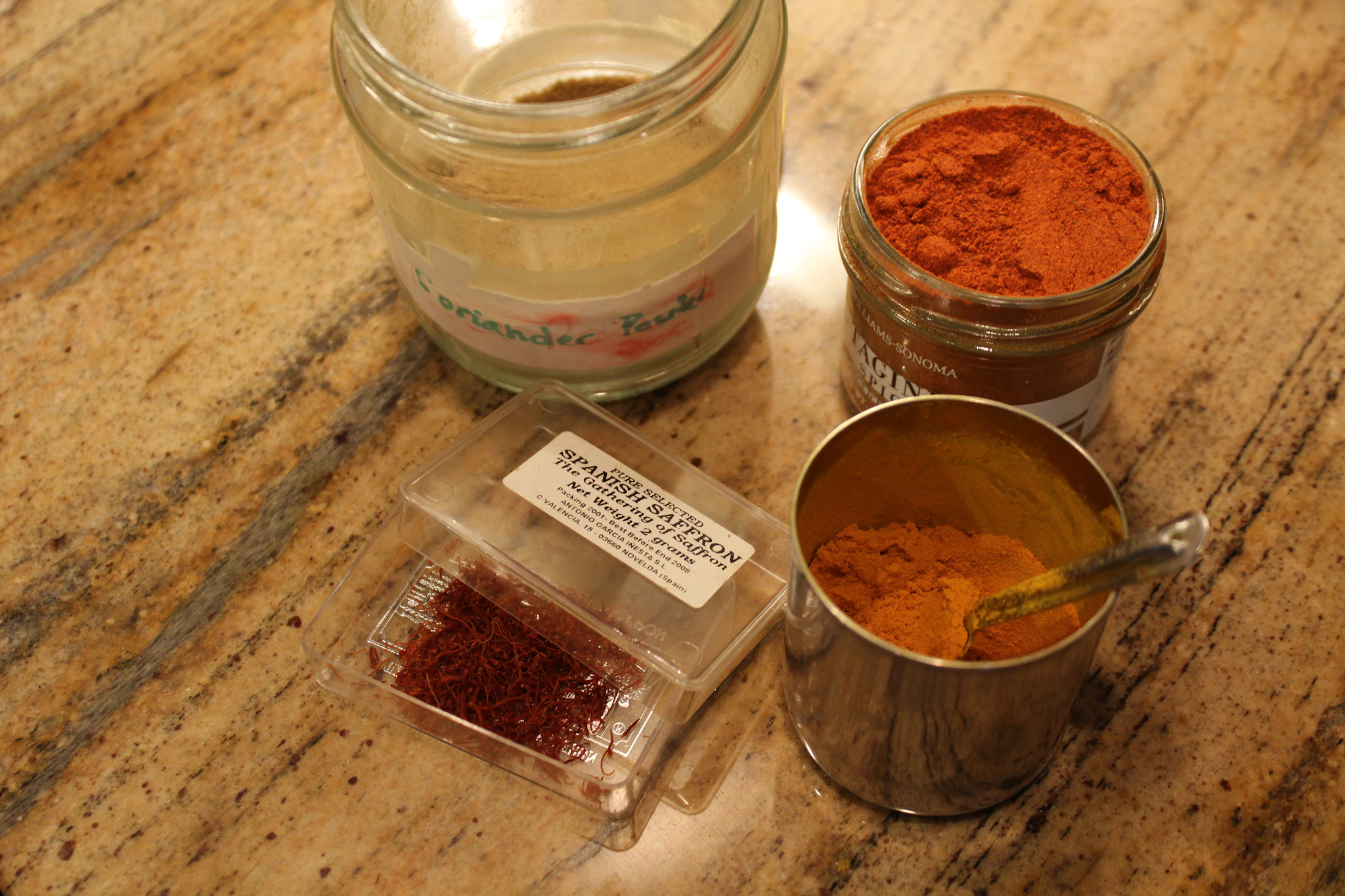
Spices, clockwise from top: coriander powder, tagine spice mix, turmeric and saffron

Spices, clockwise from top: coriander powder, tagine spice mix, turmeric and saffron

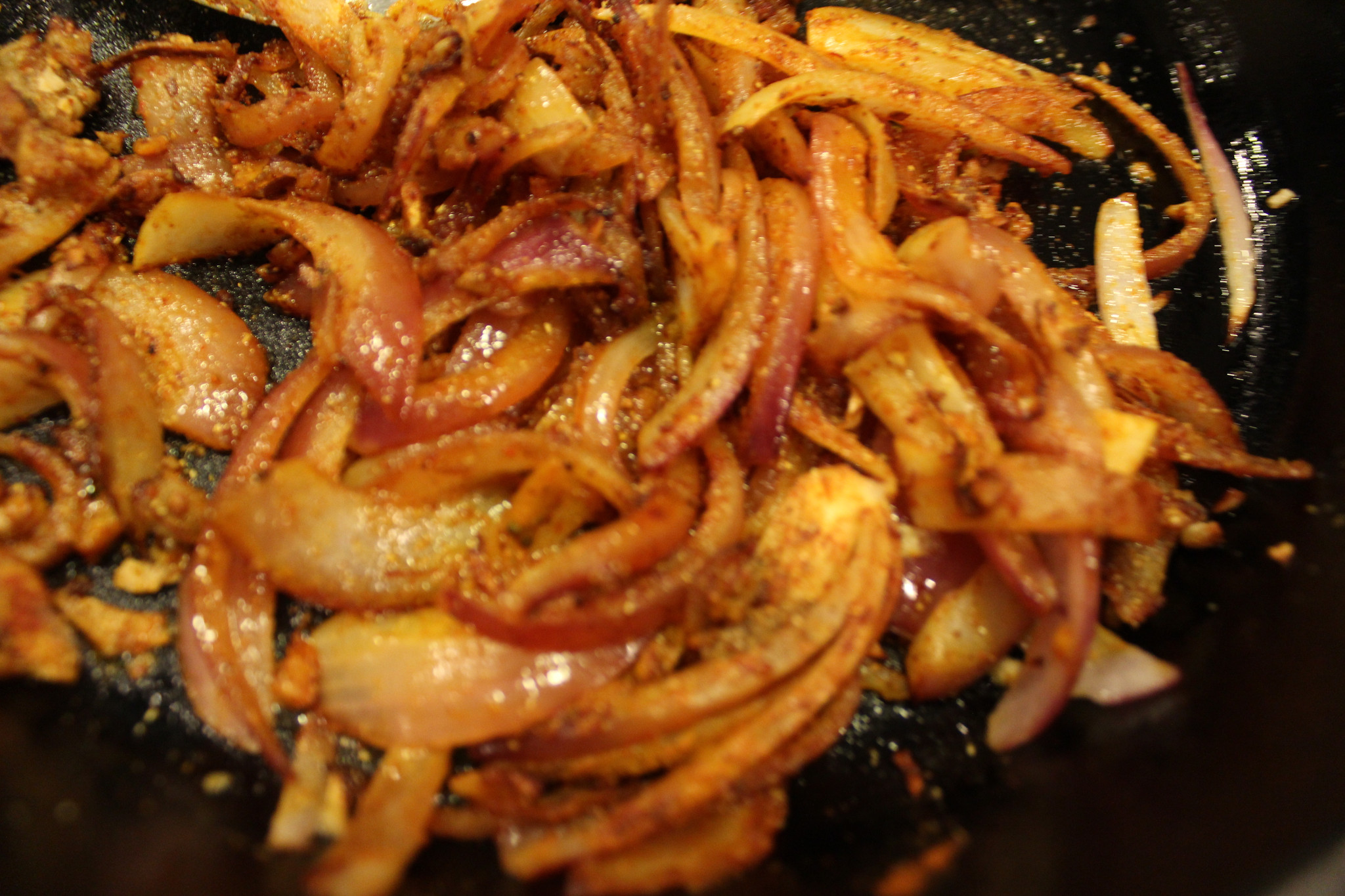
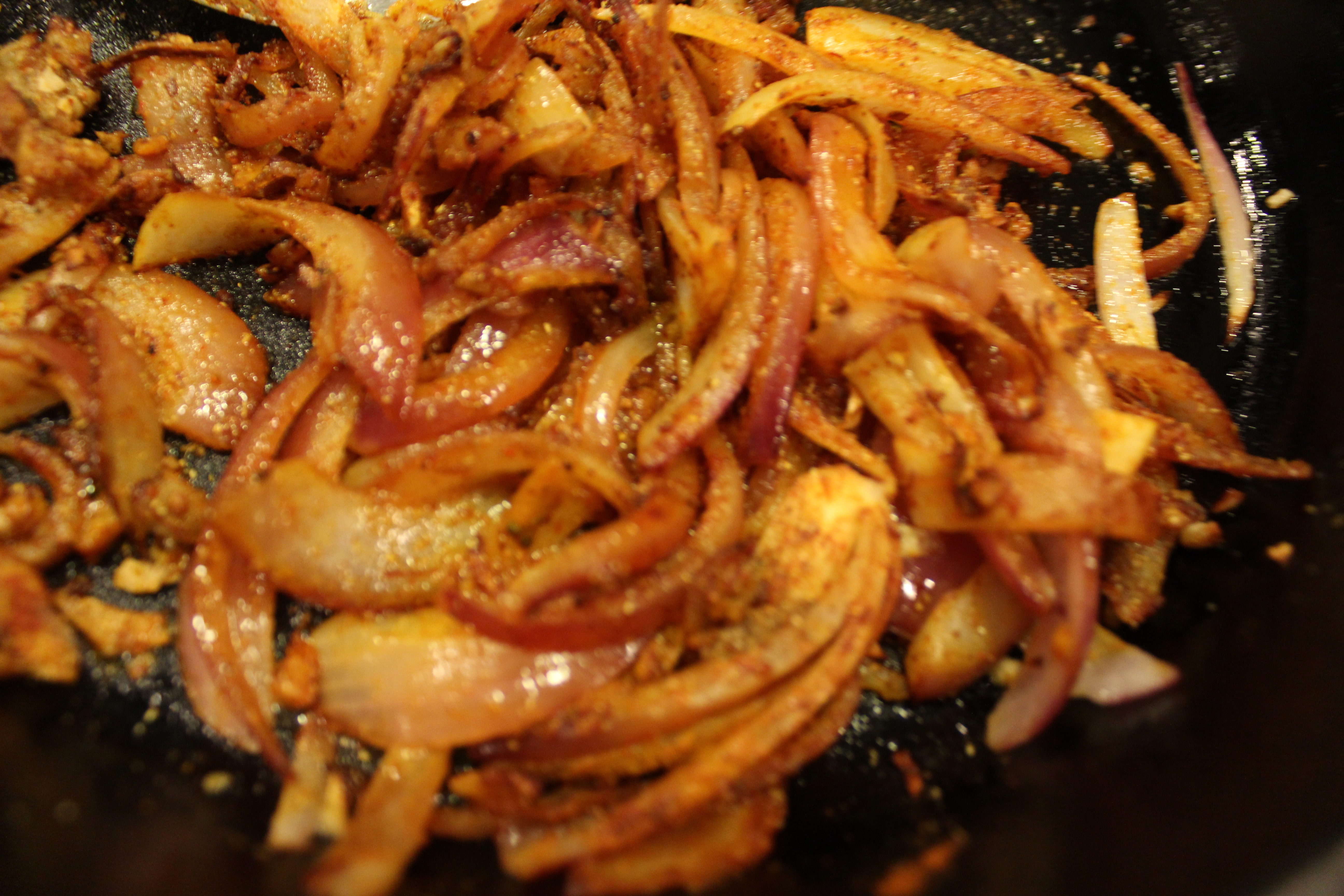
Toast the spices, briefly

Toast the spices, briefly, with the lightly browned onions.

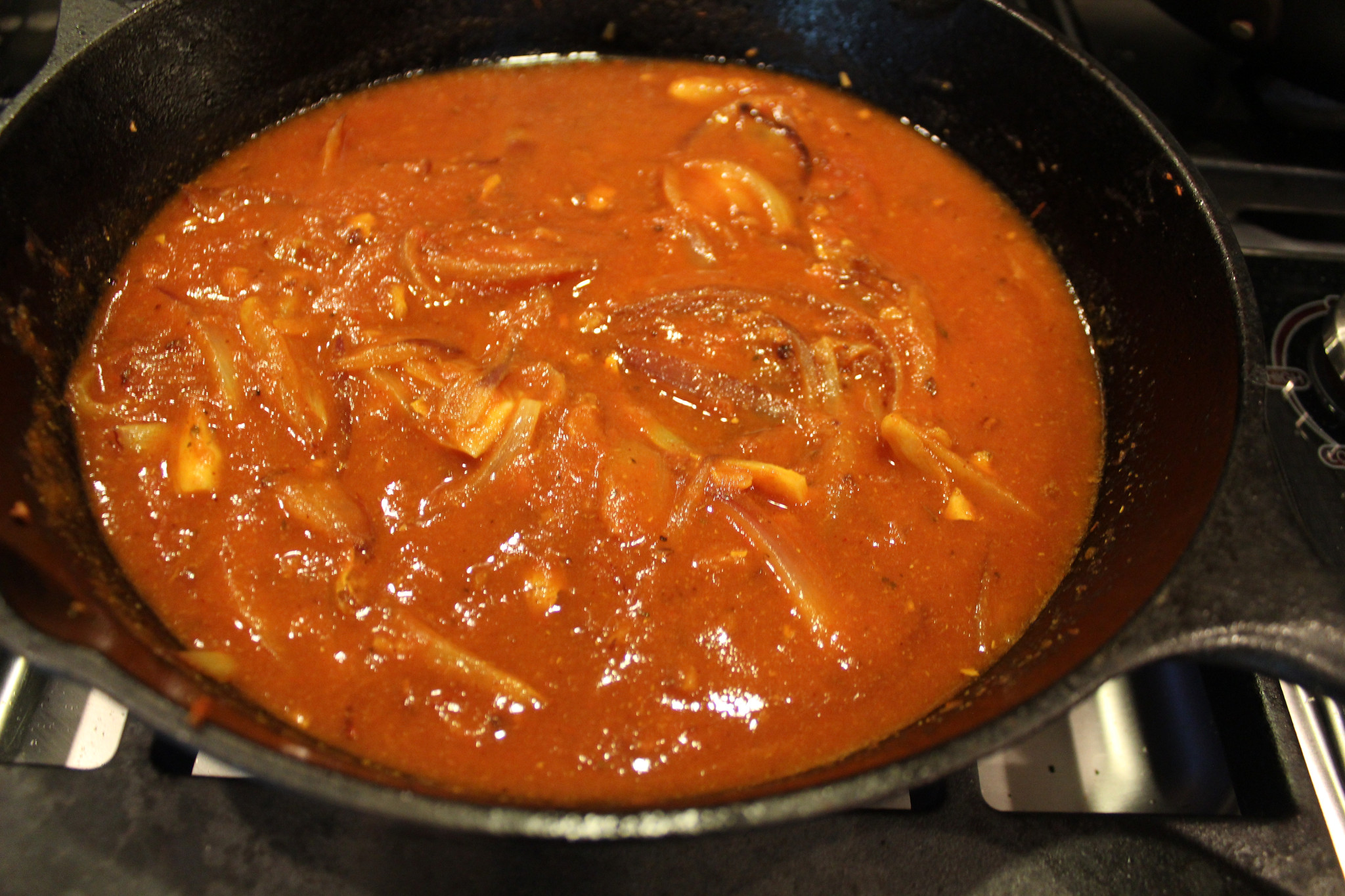
Add a cup of tomato puree

Add a cup of tomato puree. Add salt to taste.

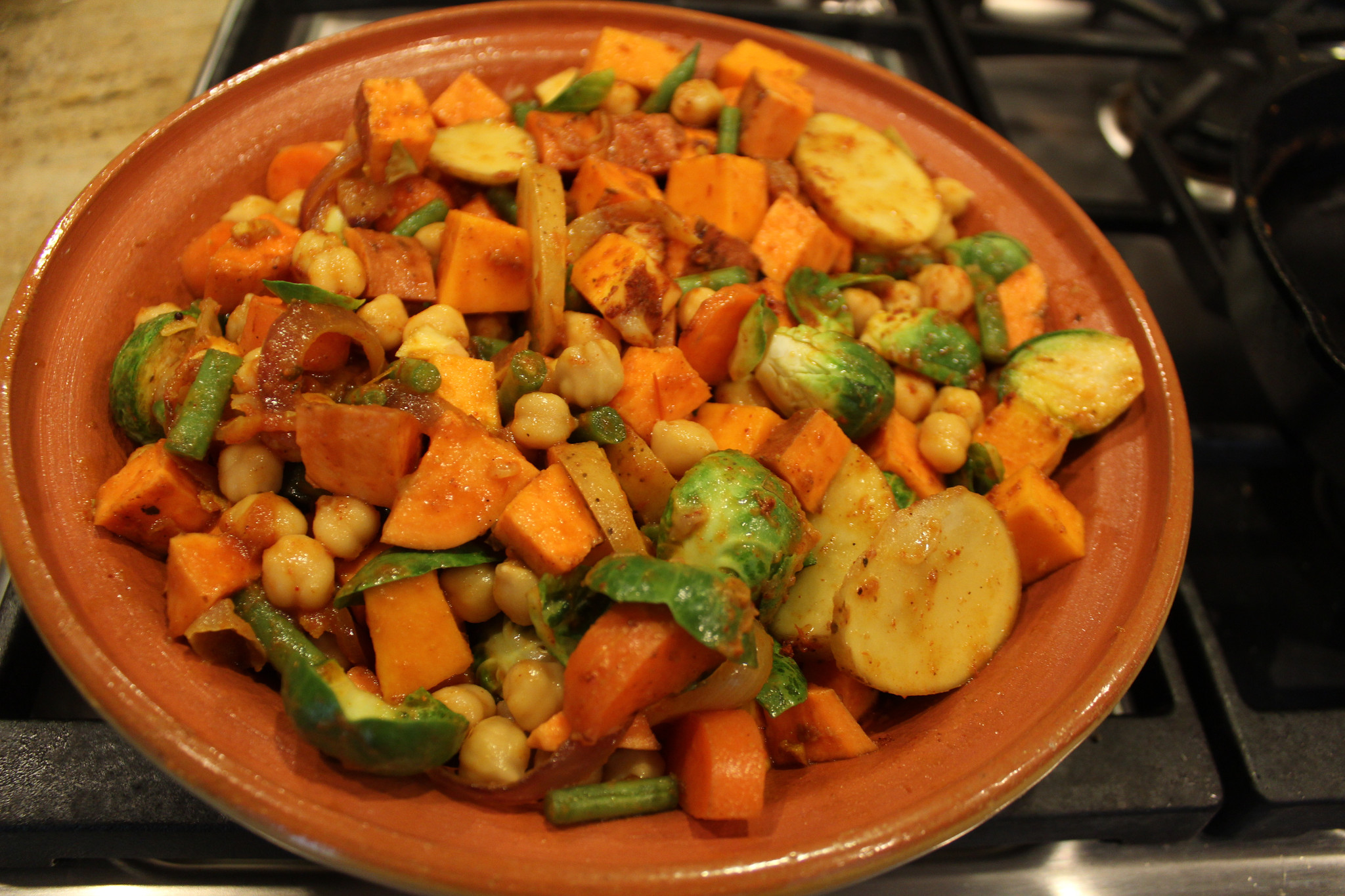
Toss the sauce with the cubed vegetables and mound into the tagine base

Toss the sauce with the cubed vegetables and chickpeas. Mound them into the tagine base. Cover with the cone shaped lid and place in oven. Turn heat up to 350F.

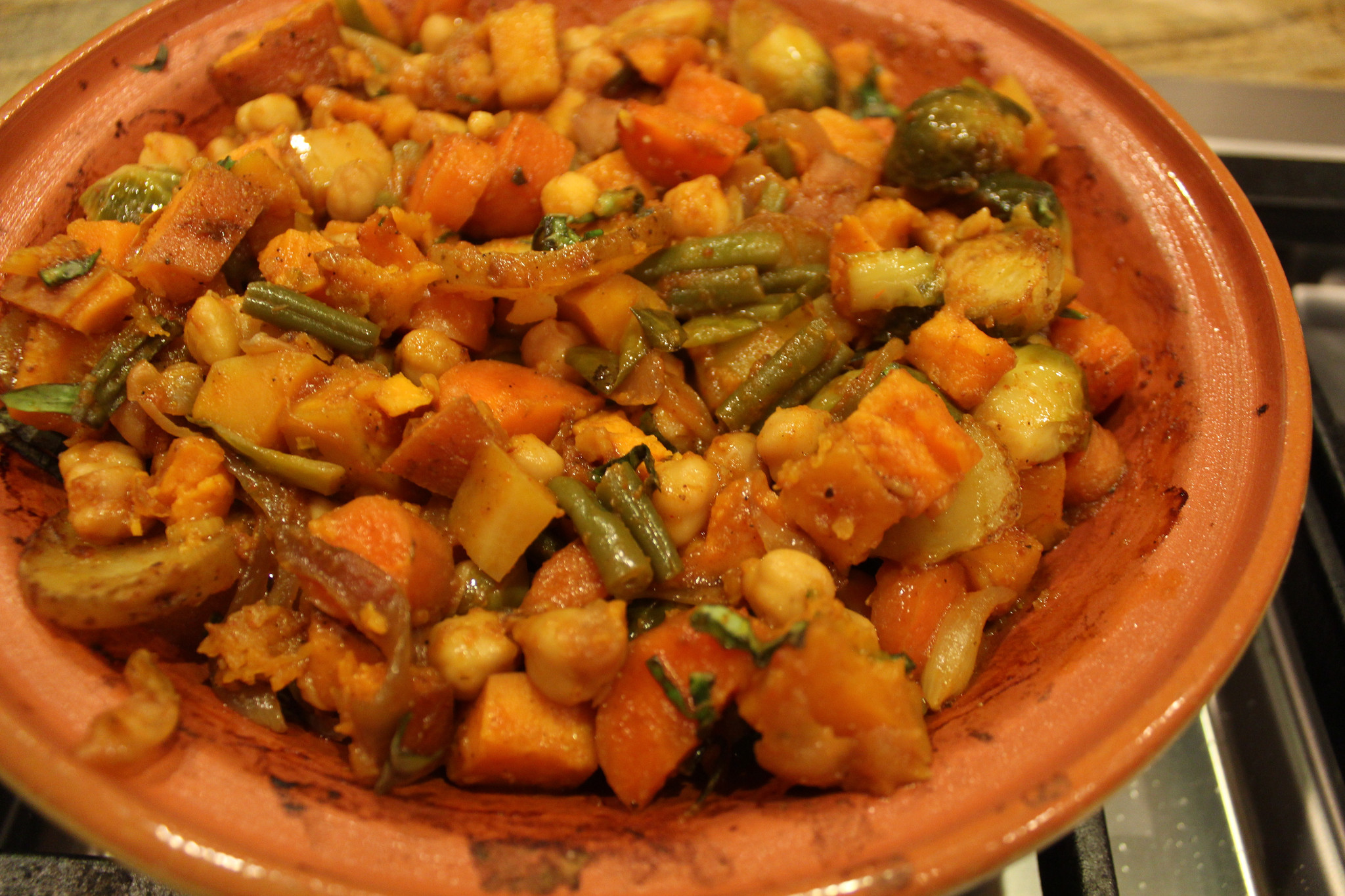
Bake for an hour until the aroma is heavenly and the vegetables are fork tender

Bake for an hour until the aroma is heavenly and the vegetables are fork tender.

Garnish with fresh herbs.

Garnish with fresh herbs.

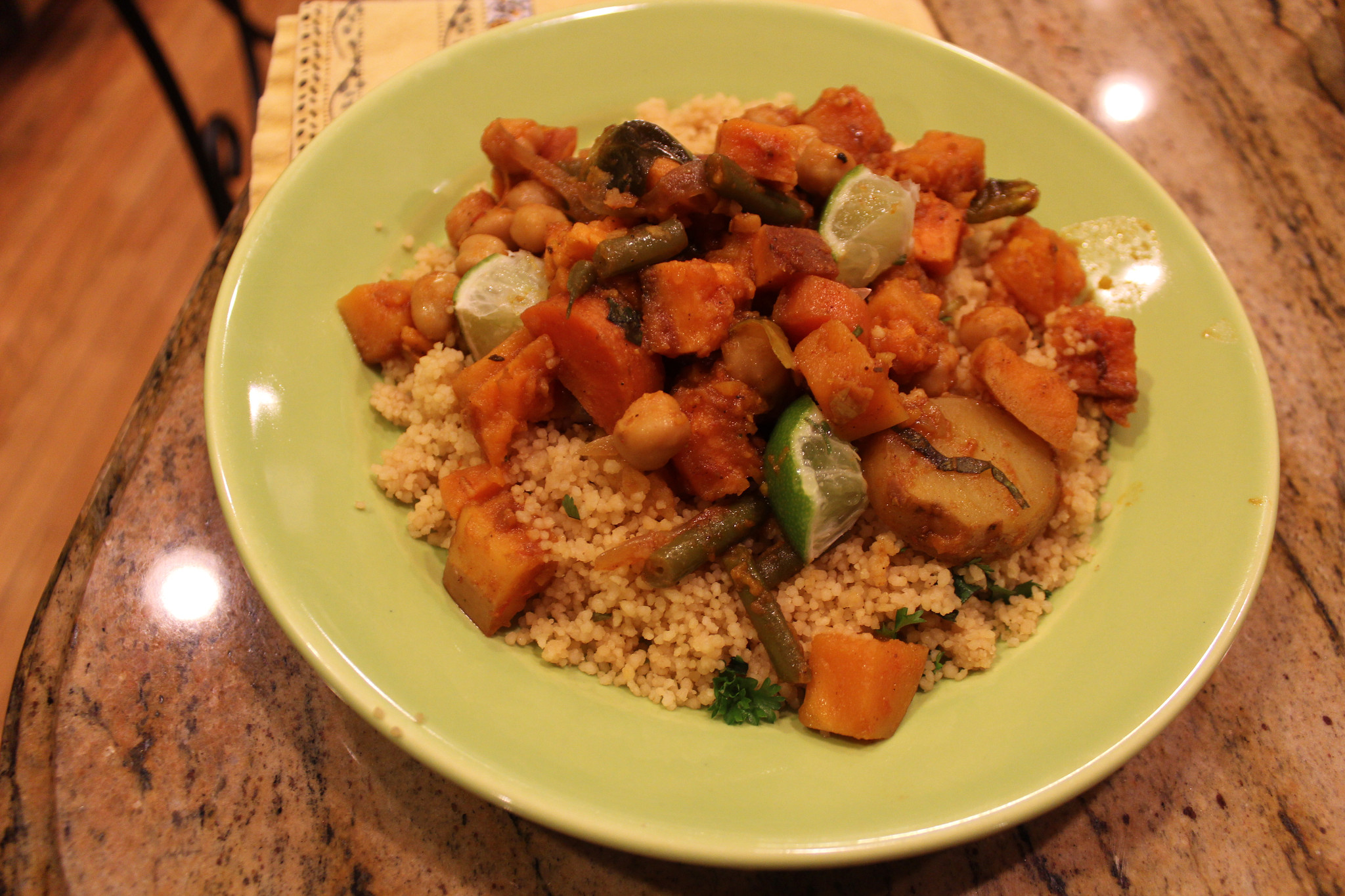
Serve on a bed of couscous cooked with a touch of olive oil, parsley and lemon juice. Garnish with lime wedges

Serve on a bed of couscous cooked with a touch of olive oil, parsley and lemon juice. Garnish with lime wedges.

Clean up was a breeze!  My husband dug into his plate, saying “Mmm…all it needs is some lamb”. He was assigned dish washing duty for making mischief.

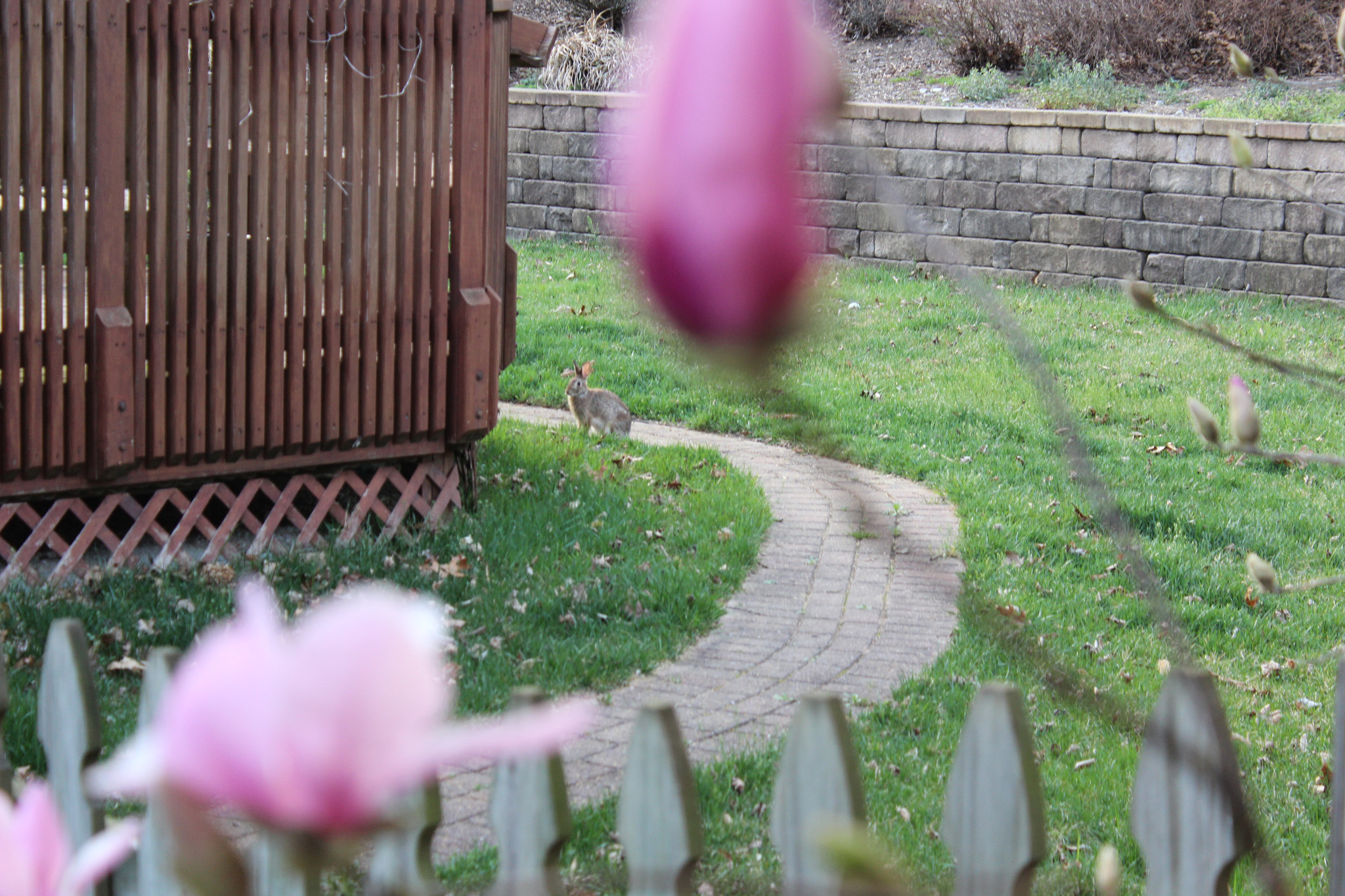
Spring has sprung in Maryland!

Magnolia blooming in the yard.

Magnolia blooming in the yard.

Easter bunny knows I'm a vegetarian and grows bold.

Easter bunny knows I’m a vegetarian and grows bold.

Hyacinths bloom before the opportunistic weeds arrive. I'd better get to work!

Hyacinths bloom even as the opportunistic weeds poke through. I’d better get to work!


Posted in FOOD, Garden, Moroccan cooking, Spices, Vegetarian | Tagged , , | 2 Comments

The Brain on Art

The Brain on Art

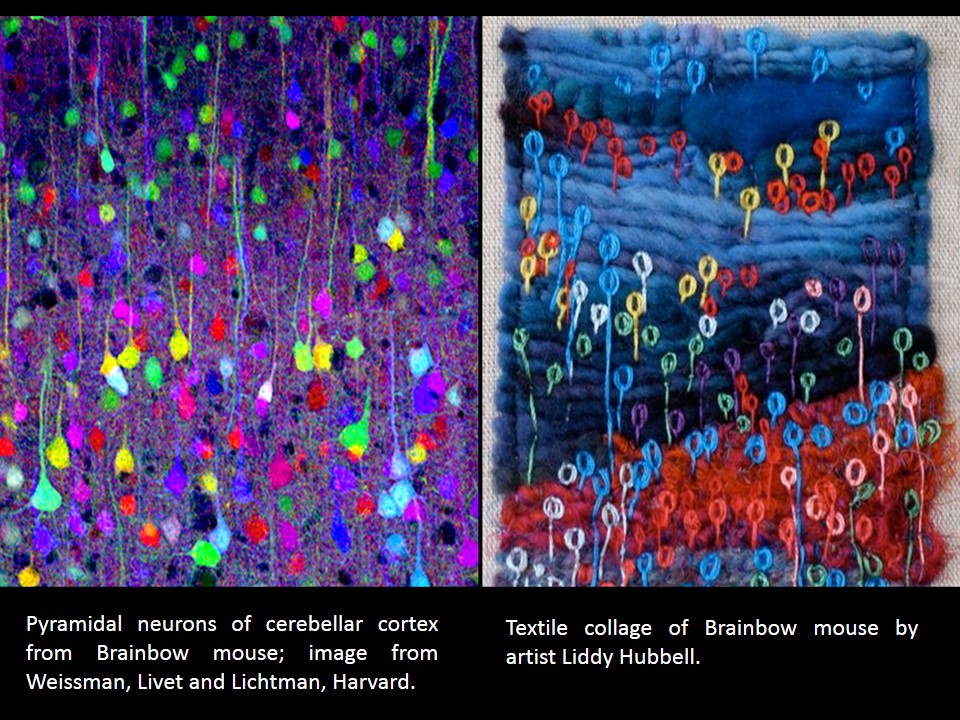
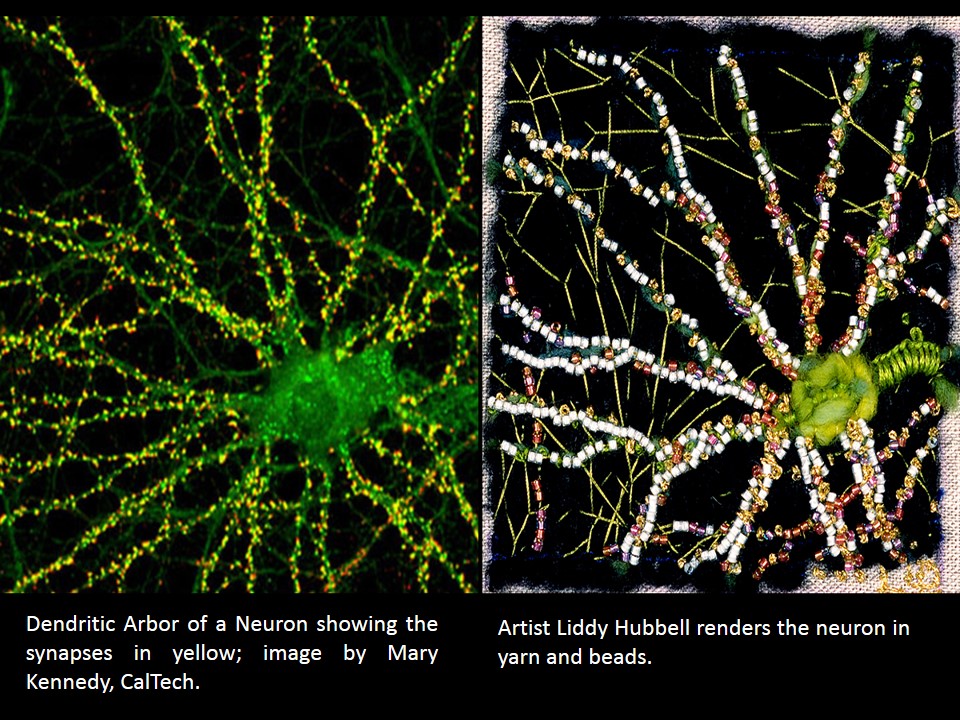
◑ Art and Science combine in the incipient field of Neuroaesthetics. In 1900, Alois Riegl argued that art is completed by the perceptual and emotional involvement of the viewer. This view aligned art history with psychology. It followed that a work of art is inherently ambiguous and each person who sees it has a different interpretation. Your brain is a creativity machine that obtains incomplete information from the outside world and completes it.

◓ Some of this creative process has a structural basis, driven by the way the brain develops. Thus, the ability to be aesthetically moved is universal and common brain areas are activated across all humans. Other areas light up differently, reflecting the wide variety of emotional states associated with viewing art.

Assessing Aesthetics:  In one experiment, Oxford University researchers recorded blood flow in the brain (by fMRI) of subjects who saw a series of Rembrandt paintings that were labeled authentic or copy. Actually, the paintings were mixed up so that some were labeled incorrectly. But the visual areas of the brain that lit up were the same, whether the painting was real or a good copy – not surprising, since the average person would not be expected to tell them apart. What was surprising was that the label of authenticity triggered areas associated with perceptions of reward, pleasure and monetary gain.  The paintings thought to be inauthentic generated strong spikes in working memory, as the people were actively trying to detect the flaws in the presented image. Our aesthetic judgements are subject to a variety of different influences that may be inaccessible to direct introspection but are revealed by neuroimaging. Did you know that changing the price label on wine alters our taste perception? (http://goo.gl/fJ7E1)

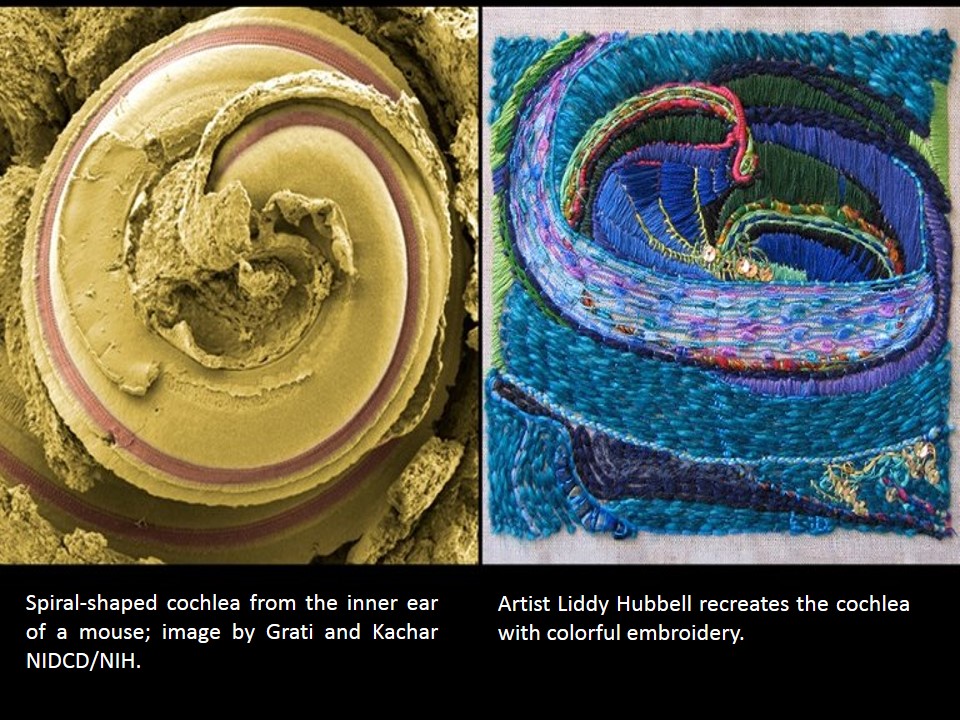
◕ Image Source: http://www.cell.com/cell_picture_show-weaving

◔ Story: http://www.wired.com/wiredscience/2011/12/how-does-the-brain-perceive-art/

#ScienceSunday  

Posted in Rajini Rao | Tagged | 56 Comments

Toxoplasma: Cats, Rats and Mind Hacks

Toxoplasma: Cats, Rats and Mind Hacks

Bizarre and Beautiful: More than a third of the world’s population is infected with the parasite Toxoplasma gondii. We pick it up from uncooked meat or from changing a cat’s litter box. Although apparently harmless to healthy adults, “Toxo” is dangerous to the human fetus and to immuno-compromised people. This is why pregnant women and people with vulnerable immune systems are advised to avoid cats.

Mind Control: The parasite infects the limbic areas of the brain near the fear and sexual attraction regions. Because it carries a gene that codes for an enzyme crucial in dopamine production, it can alter levels of this neurotransmitter. Infected rats become oddly fearless of cats but not of anything else, making it likely that they end up in a cat’s intestine, the only place where the parasite can reproduce! They also make more testosterone and mate more, ensuring the spread of the parasite to other rats. The ability of parasites to manipulate host behavior for their own benefit is extremely rare in mammals because our blood brain barrier is so effective in keeping most pathogens out. But not this one.

Why Cats Rule the Internetz: If this parasite can profoundly affect rats, what about people? Studies have shown that infected men have altered behavior and personality including a tendency to disregard rules, higher suspiciousness and jealousy. Schizophrenics are more likely to be infected with Toxoplasma, and there are disturbing links to suicide as well. A 2006 study published in the journal Proceedings of the Royal Society B found that antipsychotic drugs, commonly used to treat schizophrenia, reverse the fearlessness effects of T. gondii in the brain. This is why the CDC classifies toxoplasmosis as a neglected parasitic disease

Image: A rosette of Toxoplasma gondii cells by Markus Meissner (University of Glasgow, UK) from Nature Methods http://goo.gl/E825h

Facts: http://www.cdc.gov/parasites/toxoplasmosis/

#ScienceSunday  

Posted in Rajini Rao | Tagged | 111 Comments

Spring

Spring

Pictures from my spring garden (and bunny!), although we have leap-frogged into summer. The iris and azalea I shared last spring are not out yet ▶ http://goo.gl/sMmFU

“Now that the winter’s gone, the earth hath lost

Her snow-white robes, and now no more the frost

Candies the grass, or casts an icy cream

Upon the silver lake or crystal stream;

But the warm sun thaws the benumbed earth,

And makes it tender; gives a sacred birth

To the dead swallow; wakes in hollow tree

The drowsy cuckoo and the humble-bee.

Now do a choir of chirping minstrels bring

In triumph to the world the youthful spring.

The valleys, hills, and woods in rich array

Welcome the coming of the long’d-for May”.

                                             – George Gordon Byron, Lord Byron (1788-1824)

Posted in Rajini Rao | 94 Comments

Added photos to African Food Cookalong.

Added photos to African Food Cookalong.

events/cogq0m1m4ev3lstj7b56pl6gb8c?authkey=CKCoidHtuvCnSg
Posted in Rajini Rao | Leave a comment

Molecular Scissors: Restriction Enzymes

Molecular Scissors: Restriction Enzymes

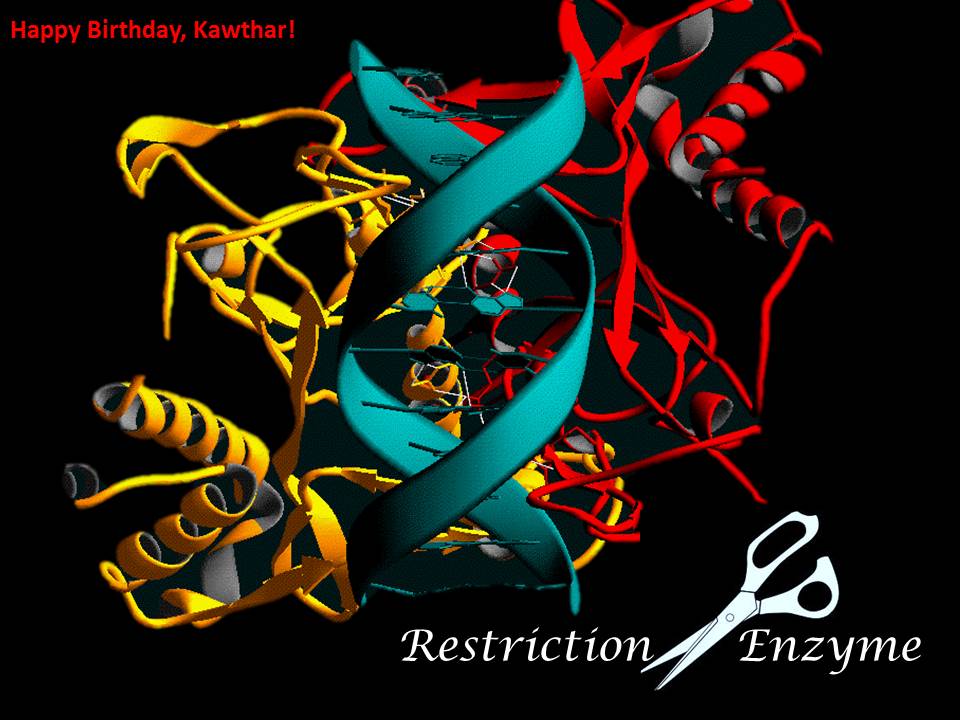
Microbial Underworld: Imagine a cut throat, competitive underworld where intruders are efficiently decimated by a custom-made weapon that slashes right through their life lines. These ancient molecular scissors evolved in bacteria to defend against parasitic viruses, called ‘phages. Better known as restriction endonucleases, these enzymes recognize a specific DNA sequence as their target. A short 6-8 letter sequence effectively marks the hapless victim for destruction. How does the host go unscathed? The same sequence is protected by a chemical modification (methylation) that makes it invisible to a veritable incarnation of Edward Scissorhands.

Snip, Snip! The molecular scissors are named after the bacteria of origin. For example, Eco RI signifies that it was from the E. coli bacterium. Several thousand have been discovered, that recognize some 200 unique sequences. A favorite of the biologist’s tool kit recognizes palindromic sequences, that read the same forward or backward.

Here’s one, that snips straight through (cuts indicated by |), making blunt ends:

                             CCC|GGG

                             GGG|CCC

Here’s another that makes a staggered cut, better known as sticky ends:

                            GA|ATTC

                            CTTA|AG

Nobel Find: The scientists who discovered restriction endonucleases (two from my home ground, Dan Nathans and Ham Smith, along with Werner Arbor) were honored with the Nobel prize. These molecular scissors gave birth to new fields of Recombinant DNA technology and more recently, Synthetic Biology.  We can now cut and paste genes, clone and copy them, and move them in or out of cells, thanks to these precise cutting tools (together with handy glue in the form of ligases or joining enzymes).

Image: Eco RI wrapped around model DNA, by John M. Rosenberg via http://goo.gl/OGb5N

This post is to celebrate the birthday of Kawthar AL ABDALLA , who is beautiful both inside and out. Watch out, Kawthar uses ✄ as effectively as a restriction enzyme!

#KKScissorHands #whatever #HappyBirthdayKawthar #ScienceEveryday  

Posted in Rajini Rao | Tagged , , , | 29 Comments